REVIEW · MUMBAI
Mumbai: Buddhist Kanheri Caves with Golden Pagoda Temple
Book on GetYourGuide →Operated by India Tour · Bookable on GetYourGuide
Buddhist cave walls in Mumbai feel unreal. You get two big wow moments in one outing: the Kanheri Caves (ancient rock-cut Buddhist study and monastic spaces) and the Golden Vipassana Pagoda near Gorai, where Vipassana meditation is explained in a calm, global setting. I like that the guide helps you read the place, not just look at it, and I like the contrast between cool cave interiors and bright coastal views outside. One thing to plan for: you’ll do a fair amount of walking, and the day can be hot, so comfortable shoes matter.
I’m also a fan of the “don’t-mess-around” logistics. Early pickup, air-conditioned transport, bottled water, parking handled, and a separate entrance to keep you from wasting time in queues. Guides you might meet on this tour include Hamid or Fahad, and they’re often praised for answering questions on-site and pointing out carvings, paintings, and inscriptions that you’d otherwise miss.
At $28 per person for a 4–8 hour private group, the value is in the bundle: transport + entry + a live English guide + skip-the-line access. If you’re in Mumbai with limited time and you want meaning behind the sightseeing, this is a strong use of a morning.
In This Review
- Key highlights to look for
- Kanheri Caves: Mumbai’s Quiet Time Machine
- Hotel pickup and the 4–8 hour flow that actually works
- Inside the Kanheri Caves: chaityas, viharas, and why basalt matters
- Sanjay Gandhi National Park: a quick reset between monuments
- Global Vipassana Pagoda near Gorai Beach: peace you can see
- Golden Pagoda logistics: walking, heat, and what to wear
- Price and value: what you’re really paying for at $28
- Who this tour suits best (and who should rethink it)
- Should you book this Kanheri Caves and Golden Pagoda day?
- FAQ
- How long is the tour?
- Where does pickup and drop-off happen?
- Is the guide available in English?
- What’s included in the price?
- Do I need separate entry tickets for the sites?
- Are the Kanheri Caves open every day?
- Where is the Golden Vipassana Pagoda located?
- What should I bring?
- Are pets allowed?
- Is the tour refundable if plans change?
Key highlights to look for
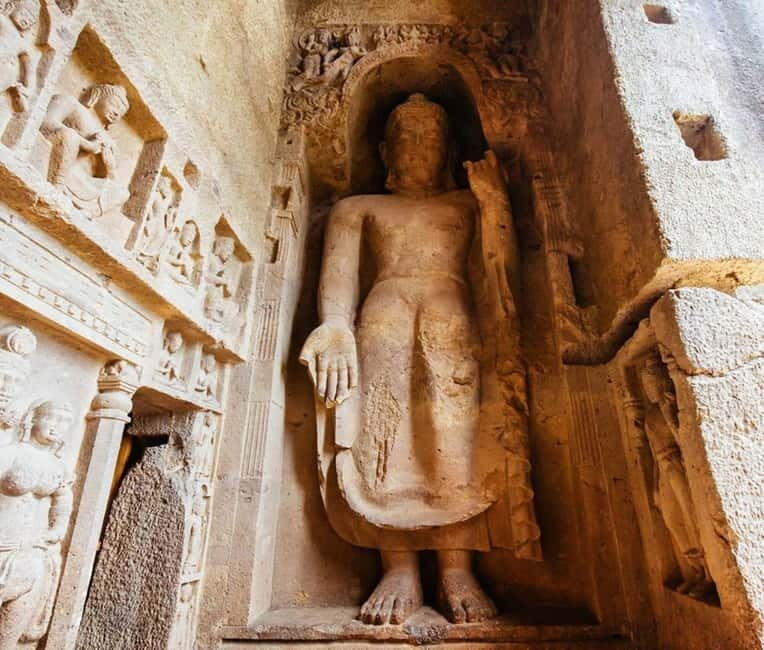
- Kanheri’s rock-cut Buddhist complex: 100+ basalt caves with chaityas, viharas, stupas, and living spaces
- Brahmi inscriptions and carvings: script and sculpture details that explain how Buddhism spread in western India
- Sanjay Gandhi National Park break: a photo stop plus a quick change of pace outside the caves
- Global Vipassana Pagoda near Gorai Beach: a major meditation landmark tied to peace and harmony
- Skip-the-line entrance and hotel pickup options: less waiting, more time on-site
Kanheri Caves: Mumbai’s Quiet Time Machine
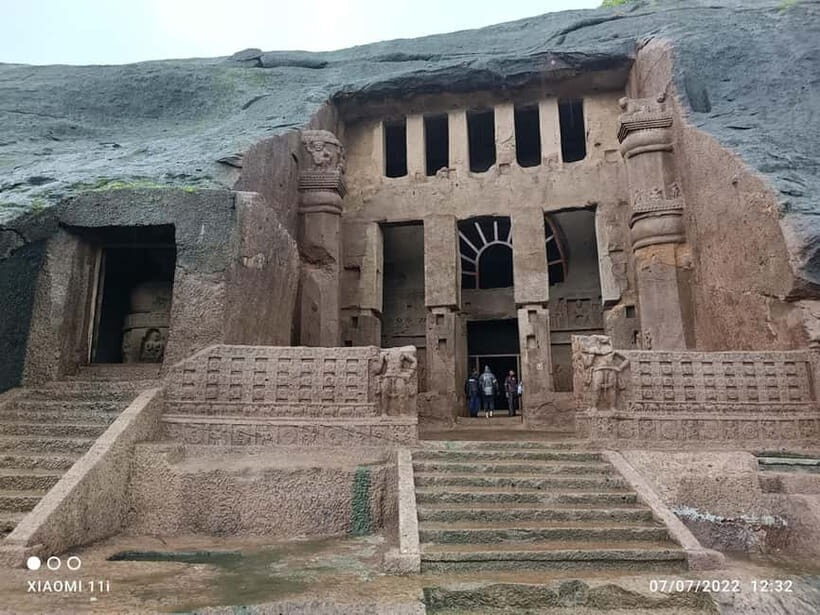
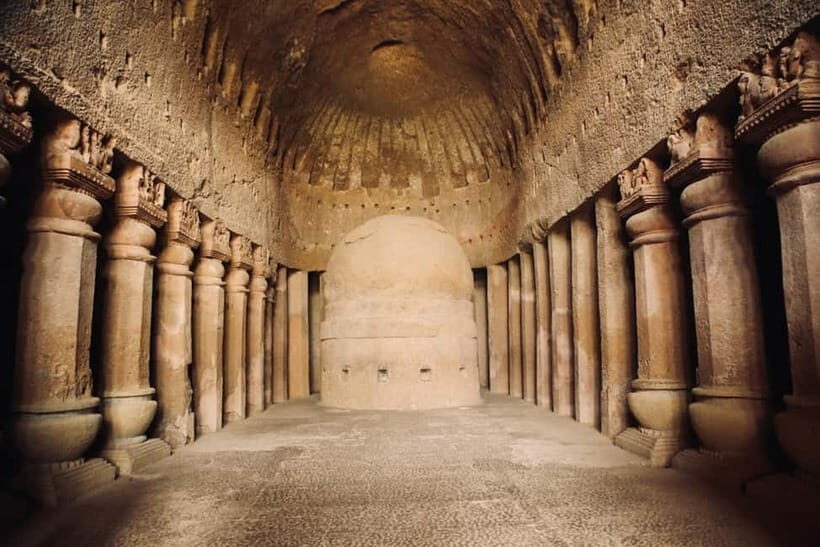
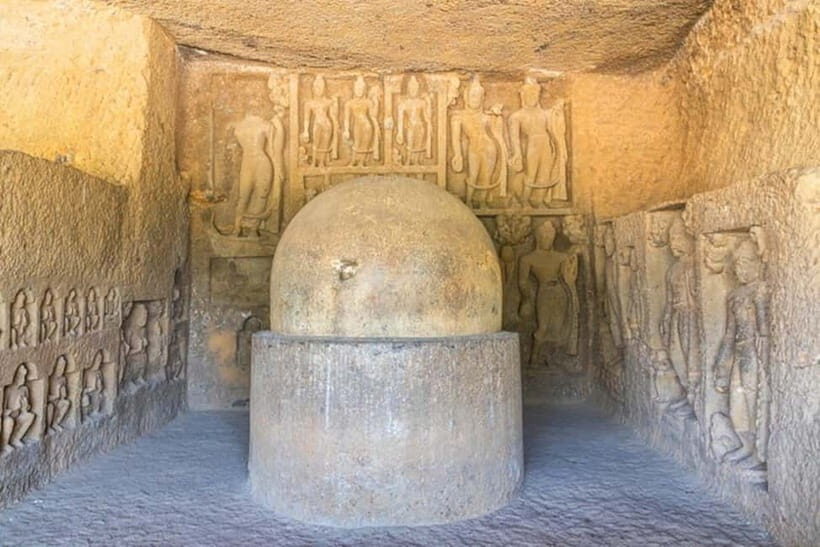
Kanheri Caves sit in Maharashtra’s story of Buddhist learning, carved into volcanic basalt and built for people who studied, prayed, and lived close to the cave walls. The big date marker: the complex goes back to around the 1st century BCE, which is why it feels less like a single “attraction” and more like an entire lost campus.
What I like about Kanheri is the variety packed into the stone. You don’t just see one hall. You move through different types of spaces: prayer halls (often called chaityas), meditation cells, monasteries (viharas), stupas, and residential halls. That mix helps you understand how daily life worked in a monastic setting—part ritual, part study, part quiet.
And then there’s the fine detail: sculptures, carved figures, and inscriptions. You might see ancient Brahmi script and other markings that connect the site to broader Buddhist practice and scholarship in western India. Even if your history background is light, a good guide makes it click. Without help, it’s easy to walk past the details because your eyes get stuck on the size and scale.
You can also read our reviews of more tours and experiences in Mumbai.


Hotel pickup and the 4–8 hour flow that actually works
This tour is designed for a full half-day without burning your energy on transit. You’ll get early pickup from your location (if you choose that option) and ride in air-conditioned transport. The plan is simple: cave time first, then a national park photo stop, then the Golden Pagoda.
Why the order matters: Kanheri can be physically demanding if it’s already warm when you arrive. Getting there early gives you a better shot at comfortable walking and cooler temperatures inside the caves. Then, when you switch to the Global Vipassana Pagoda, you’re not trapped in underground darkness all day—you get open-air views and a different mood.
You also get the practical stuff handled. Entry tickets are included, and there’s a separate entrance so you can skip some lines. Bottled water is included too, which sounds minor until you’re standing in the sun trying to enjoy carvings that are up on a wall.
Inside the Kanheri Caves: chaityas, viharas, and why basalt matters
Kanheri isn’t one cave with a sign. It’s a whole maze of more than 100 caves, carved from volcanic basalt. Basalt is tough stone, which is part of why the carvings and structural shapes survive. But it also means the cave spaces feel distinct—cooler inside, and often shaded in a way that makes the murals, figures, and inscriptions easier to notice once your eyes adjust.
Here’s what you’re likely to focus on as you go:
- Prayer halls (chaityas) where the space supports devotion and gathering
- Meditation cells that signal quieter practice and introspection
- Monasteries (viharas) and residential areas that point to long-term community life
- Stupas and additional structured spaces that tie the complex to Buddhist worship
The other big reason to go with a guide: many of the most interesting elements are not obvious at first glance. One guide style you may experience is the sort that points out paintings, smaller carvings, and inscription details. You might even get help interpreting parts of the script if your guide is comfortable doing so, which is genuinely the difference between seeing old stone and understanding what it was for.
And yes, there can be a long walking stretch and stairs depending on how you move through the site. On hot days, you’ll feel it. That’s not a reason to skip it—it’s a reason to take your shoes seriously and move at a pace that feels safe.
Sanjay Gandhi National Park: a quick reset between monuments
After the caves, you’ll pass through Sanjay Gandhi National Park with a photo stop and sightseeing time. This part of the day is less about one landmark and more about resetting your senses. You come from cool stone interiors and then step into brighter air and more open views.
Even if this section feels brief, it does two useful things for your itinerary:
- It breaks the day into chunks, so you’re not stuck in a single type of environment.
- It gives you the chance to stretch and regroup before the final stop.
Keep your expectations realistic here. This is not a full wildlife outing. It’s a pause—use it to hydrate, take photos from safe spots, and get ready for the walk-and-stand rhythm that the pagoda visit can bring.
Global Vipassana Pagoda near Gorai Beach: peace you can see
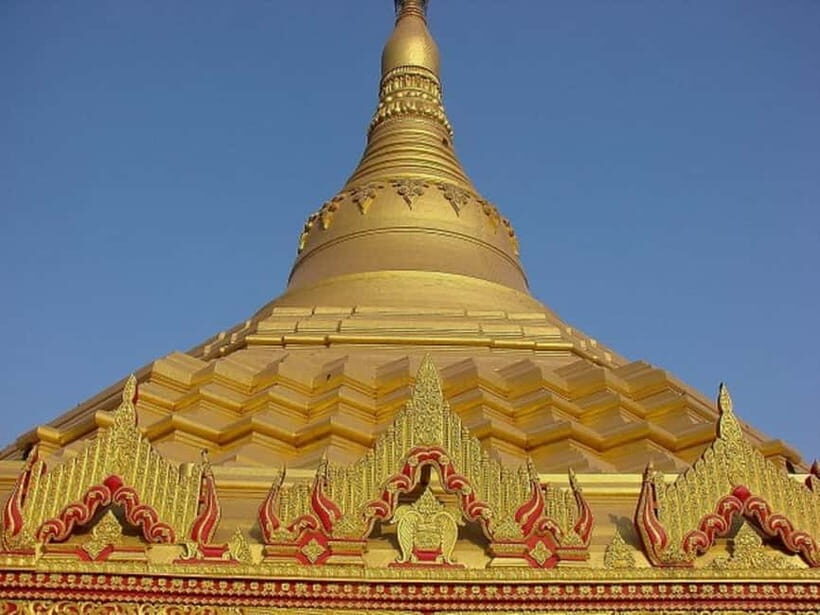
Then comes the contrast: the Global Vipassana Pagoda, a major Golden Vipassana Pagoda landmark built near Gorai Beach. If Kanheri is about ancient monastic spaces, the pagoda is about meditation today, shaped for a global audience.
What you get here isn’t just architecture. You’ll learn about Vipassana meditation, its philosophy, and why it has become significant worldwide. The pagoda is designed as a symbol of peace and harmony, so the visit feels intentional rather than just sightseeing.
The architecture draws your eyes upward, but don’t let that distract you from the main point: this is a place built for quiet understanding. When your guide explains the philosophy, it helps you see why people come here beyond taking pictures.
One practical note from the experience itself: dress rules can matter. Plan clothing that covers your legs, because you may not be allowed inside if your outfit doesn’t meet expectations. I’d rather you bring a lightweight layer than find out at the entrance.


Golden Pagoda logistics: walking, heat, and what to wear
Even though the pagoda stop includes time for photos and visits, it’s still part of a 4–8 hour day. You’ll be on your feet. If it’s hot, you’ll want to make comfort a priority so you can focus on the meaning, not on your feet burning.
My go-to checklist for this tour:
- Wear comfortable shoes with grip
- Bring a light layer for shade/air-conditioning changes
- Aim for a relaxed pace and take breaks when your body asks for them
Also, skip bringing things that aren’t allowed. Pets are not allowed, and the tour is not suitable for pregnant women. If either of these affects you, it’s best to look for a different format that matches your needs and movement level.
Price and value: what you’re really paying for at $28
Let’s talk money without pretending it’s just a number. At $28 per person, you’re paying for more than entry tickets. You’re buying:
- Air-conditioned transport
- Pickup and drop-off (if you select that option)
- A live English guide
- Entry ticket(s) and skip-the-line access
- Bottled water and parking/charges
If you attempted this on your own, you’d still need to solve transport, tickets, and the “what am I looking at?” problem—especially at Kanheri, where carvings, script, and architectural types can blend together. That’s where a guide becomes money well spent.
The private-group aspect also matters. You’re not trapped with someone else’s pace. You can ask questions, slow down for a detail, and move through the caves in a way that fits your comfort.
And the quality signal is strong: the tour shows a 4.8 rating based on 47 bookings. That doesn’t guarantee every guide will be your style, but it does suggest the overall experience is consistent.
Who this tour suits best (and who should rethink it)
This is a great match if you want:
- A meaningful cultural stop, not a quick photo sprint
- A guided interpretation of the Kanheri Caves and their Buddhist context
- A calmer second half of the day at the Global Vipassana Pagoda, where Vipassana is explained
- Hotel pickup convenience in Mumbai traffic
It may be less ideal if:
- You struggle with longer walking in heat (even with a guided pace, you’ll still move around)
- You need accessibility options beyond what this format supports
- You’re pregnant or have mobility limits that make cave walking hard (this is explicitly listed as not suitable)
Should you book this Kanheri Caves and Golden Pagoda day?
Book it if you enjoy cultural sites with real explanations, and you want one efficient morning-to-afternoon plan. The pairing is smart: Kanheri gives you ancient, tangible Buddhist learning spaces; the Golden Pagoda connects that past to a living meditation tradition.
Before you say yes, check your basics:
- Are you comfortable walking in warm weather?
- Do you have shoes that you can trust on uneven surfaces?
- Will your outfit at the pagoda cover your legs?
If you can say yes to those, this is one of the better-value ways to see two major spiritual landmarks in the same day without wrestling logistics. You’ll leave with more than photos—you’ll understand why these spaces mattered, from the basalt walls of Kanheri to the peaceful message of the Golden Pagoda.
FAQ
How long is the tour?
It runs for about 4 to 8 hours, depending on the starting time and how the day flows.
Where does pickup and drop-off happen?
Pickup is available from your Mumbai hotel if you select that option. Drop-off is listed at Mumbai and at the Sanjay Gandhi National Park ticket counter.
Is the guide available in English?
Yes, the live tour guide speaks English.
What’s included in the price?
Included items are air-conditioned transport, guide, entry ticket, bottled water, parking and charges, plus pickup/drop-off if that option is selected.
Do I need separate entry tickets for the sites?
Entry tickets are included, and there’s a skip-the-line separate entrance.
Are the Kanheri Caves open every day?
No. The Kanheri Caves are closed every Monday.
Where is the Golden Vipassana Pagoda located?
It’s near Gorai Beach.
What should I bring?
Wear comfortable shoes.
Are pets allowed?
No, pets are not allowed.
Is the tour refundable if plans change?
Free cancellation is available up to 24 hours in advance for a full refund.