REVIEW · MUMBAI
Private Dharavi Slum Photography Tour With Pickup
Book on Viator →Operated by Young Tours And Travel · Bookable on Viator
Mumbai hides a working city in plain sight. This private Dharavi slum photography tour with pickup blends street-level moments with an education-style visit to real neighborhoods.
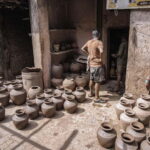
I love the access you get to everyday life, including time that can go beyond the street into local houses, and I love the quick craft stop in Kumbharwada where pottery-making shapes the spaces around it.
One thing to watch is timing: the tour is listed as 3 to 4 hours, but there’s a complaint about a much shorter walk, so confirm your expected tour length before you go.
In This Review
- Key things to know before you shoot photos
- Dharavi is more than a label on a map
- Pickup and meeting point near Mahim: start smart, not stressed
- Stop 1 in Dharavi: two hours to photograph real daily life
- Stop 1 reality check: timing and photo pace can vary
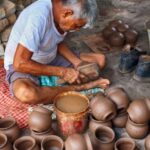
- Kumbharwada pottery village: the short stop that adds depth
- Photography ethics and expectations in people’s neighborhoods
- Guides from Dharavi: why it changes the feel of the tour
- Price and value: $14 is attractive, but check the clock
- Who should book this Dharavi photo tour
- Should you book it? My practical decision guide
- FAQ
- How long is the Dharavi slum photography tour?
- Is pickup included?
- Is this a private tour or a shared group?
- Where do we meet for the tour?
- Where does the tour end?
- Are admission tickets required for the stops?
- How much does it cost?
- Does it include mobile tickets and group discounts?
- What are the cancellation terms?
Key things to know before you shoot photos
- Local guides from Dharavi: you’re learning from people who know the area and its daily rhythms.
- Free entry at both stops: Dharavi and Kumbharwada don’t require paid admission for this tour’s visits.
- Two different photo themes: community daily life in Dharavi, then pottery processes in Kumbharwada.
- Inside-houses access can be part of the experience: not just viewpoints from the pavement.
- Private group with pickup: you get the schedule and pace of your own group, plus a mobile ticket.
Dharavi is more than a label on a map
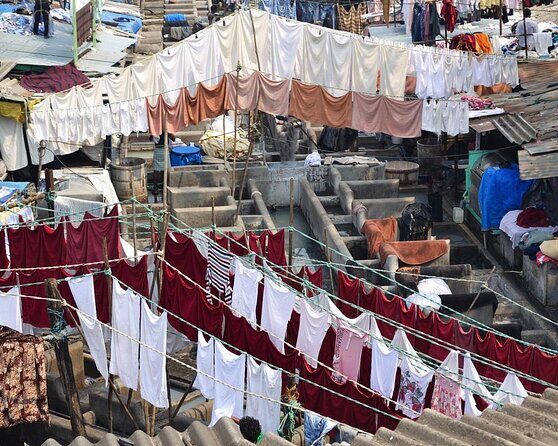
Dharavi gets reduced to one word too often: slum. This tour’s basic framing pushes back. You’ll hear that Dharavi is basically a city-within-a-city, with over 1 million people packed into around 2.7 sq km. It’s not just homes; there are schools, public and private hospitals, playgrounds, theatres, and thousands of tiny workplaces.
That matters for photography because it changes what you’re looking for. Instead of only shooting hardship, you can also focus on work, logistics, and community life. The best pictures tend to be the ones that show how people make systems work—how daily routines run right alongside the challenges.
You’ll also get a learning angle that’s clearly part of the package: the tour is presented as a way to understand life in Dharavi, including both the struggles and the beauty. In practice, that means your guide’s explanations will shape what you notice, not just what you point your camera at.
You can also read our reviews of more private tours in Mumbai

Pickup and meeting point near Mahim: start smart, not stressed
This tour includes pickup. You also have a defined start point, which helps a lot in Mumbai where “nearby” can mean “after a small adventure.”
You start at Third Wave Coffee, Tip Road, Unit no. 58, Ground, Ram Mahal, Senapati Bapat Marg, Marinagar Colony, Station, Mahim, Mumbai, Maharashtra 400016. From there, the tour runs through Dharavi and ends at the operator’s office area for easy onward local transport.
The tour end is listed as Young Tours & Travel, 90 Feet Rd, Muslim Nagar, Kumbhar Wada, Dharavi, Mumbai, Maharashtra 400017. That last detail is useful because it’s one less thing you need to solve after a photo session.
If you like clear boundaries, this format gives them: you know where you start, what stops you’ll hit, and roughly how long you should budget for the whole outing.
Stop 1 in Dharavi: two hours to photograph real daily life
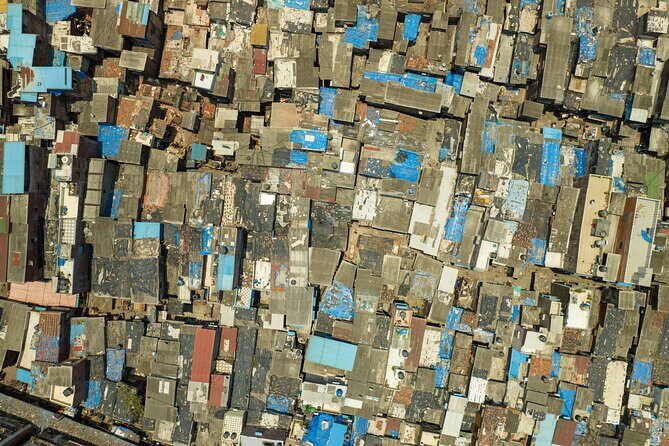
The first stop is Dharavi, scheduled for about 2 hours. Admission is listed as free for this part of the tour, which is nice if you’re trying to keep costs under control while spending real time on the ground.
A big selling point here is that your guide is from Dharavi and can take you into the neighborhood’s everyday spaces, including local houses. That’s where the photography tour becomes more than a photo walk. The explanation is part of the product: you’re meant to see how residents live, work, and adapt in a tight area.
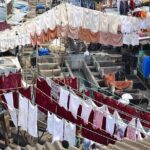
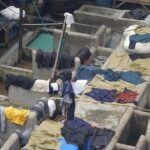
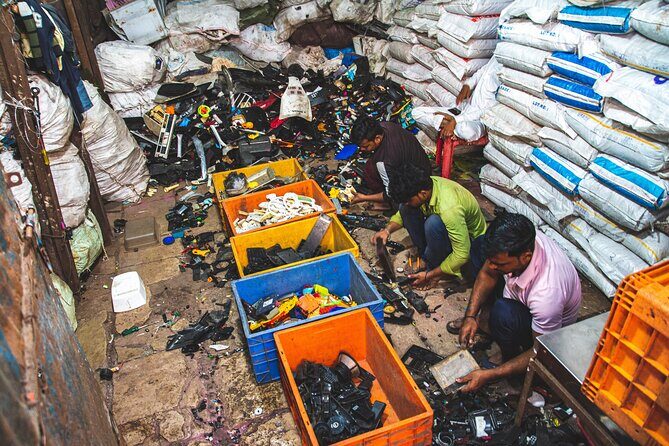
This also affects your photo expectations. You’ll likely spend time looking at small-work setups—single-room production areas, household routines, and the practical choreography of crowded space. Dharavi is described as having over 1500 single room factories, so even if you’re not photographing factories specifically, that scale of micro-industry will show up in the textures of the place.
Safety is explicitly called out as a priority, with “necessary precautions” mentioned. That doesn’t mean everything is risk-free (Mumbai is Mumbai), but it does suggest the operator is thinking about how groups move through dense areas and how guides manage the visit.
Stop 1 reality check: timing and photo pace can vary
Here’s the most important practical consideration for this tour: the schedule says the full experience is 3 to 4 hours, and the Dharavi portion alone is listed as 2 hours. On paper, that leaves room for travel between areas and the pottery stop later.
But there has been at least one serious complaint about the tour ending after a little more than an hour for a private photo tour. I can’t tell you what caused that mismatch from the information provided, so your best move is simple: confirm what your exact booking includes and how long you’ll be in each stop.
If your goal is a longer, more deliberate photography session, don’t assume the itinerary timing will automatically play out the way you hope. Ask the operator to confirm the expected breakdown for your date and group size. It’s the fastest way to protect your time.
Also, for photography, your pace will depend on what your guide needs to explain and where access is possible. A slower guide moment can still be worth it if it helps you get better context, but it can feel like wasted time if you’re on a tight schedule.
Kumbharwada pottery village: the short stop that adds depth
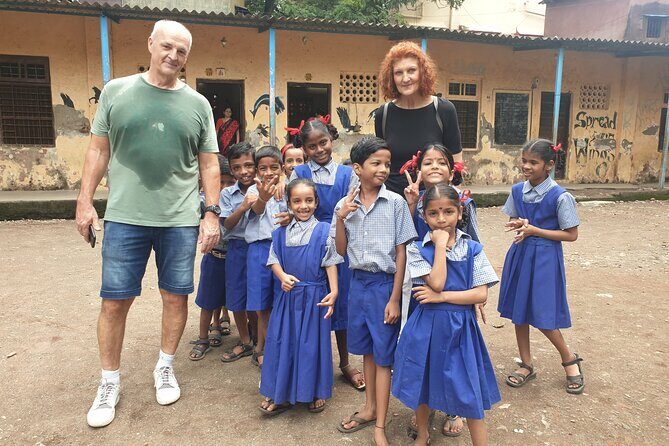
The second stop is Kumbharwada, a pottery village within the wider Dharavi area. This is scheduled for about 20 minutes, with free admission listed for the visit.
Kumbharwada’s story is tied to migration: migrant communities from Gujarat arrived in the late 19th century, bringing age-old pottery traditions and skills. That’s the context you want if your photos include process shots rather than just finished ceramics.
What I like about this stop is that it isn’t framed as a quick look at pottery objects. The tour description focuses on understanding the stages involved in creating pots and how each step affects the usage and characteristics of the spaces around. That’s a photography-friendly idea: you can aim your camera at the relationships between craft steps and the environment—workbenches, storage zones, and the flow of materials.
The trade-off is obvious: 20 minutes is brief. If you’re hoping for a full craft workshop vibe, you’ll probably find this more like a concentrated introduction. But as a complement to Dharavi’s daily-life focus, it adds a different kind of detail—measurable process and tools.

Photography ethics and expectations in people’s neighborhoods
This is a photography tour that can include time in local houses, and that means you should bring your best manners even if the technical part of photography is what you care about most. I always treat home and work spaces as permission-based, not camera-rights territory.
Practical mindset: before you shoot, slow down. Let your guide explain what’s happening, then ask if it’s okay to photograph. If someone seems reluctant or busy, move on. You’ll get better shots when people feel respected, not chased.
Another practical tip: you’ll likely get more useful photos by focusing on small storytelling details—hands at work, the structure of production spaces, and the way people keep life running in close quarters. If you only frame wide, you might miss the human scale that makes the pictures meaningful.
And yes, you’ll probably also take photos that capture contrast: work next to home, craft next to industry, and everyday routines in tight layouts. Try to aim for accuracy and curiosity, not shock-value.
Guides from Dharavi: why it changes the feel of the tour
This tour makes a clear claim: the guides are from Dharavi, which means they have intimate knowledge of the area and the people. That’s not a minor detail. It changes how you interpret what you see.
When the guide understands local context, you spend less time wondering what you’re looking at. You can also ask better questions, like how people manage daily challenges, what jobs look like in single-room factories, and how the community sustains education and family life.
The operator also mentions working with local students and supporting education through an NGO. Even if you only see the tour through the lens of photography, that kind of community tie usually shows up in how the guide talks—less like a script, more like lived experience.
One guide name that pops up in feedback is Sahil, and the praise specifically points to guide quality. That doesn’t guarantee every guide experience will match, but it’s a useful sign that the guide layer matters here. If you care about interpretation more than just photos, choose the time slot that lets you meet the best-matching guide for your style.
Price and value: $14 is attractive, but check the clock
At $14.00 per person, this tour sits in the budget-friendly category for a private format with pickup. That’s the part I like: you get a real neighborhood visit with guided context without pricing yourself out.
There are also value multipliers in the tour description: group discounts and a mobile ticket. The “book around 16 days in advance” note (as an average booking pattern) suggests this is popular enough that planning helps.
Still, the negative complaint about duration is the one value risk to take seriously. When a tour is sold as 3 to 4 hours, your value calculation should include that time. If it collapses toward a 1-hour walk, the cost-per-hour math gets ugly fast.
Here’s the practical way to protect your wallet: ask what “private” includes in terms of time with each stop. Since Dharavi is listed as 2 hours and Kumbharwada as 20 minutes, the remaining time should be travel, introductions, and photography pauses. If your booking is short, you want that explained.
If you want a cheap photo day, you can make this work well. If you need a long, slow photo session, treat duration as part of the deal you confirm.
Who should book this Dharavi photo tour
This tour makes the most sense if you fit at least one of these boxes:
- You want a guided photography-focused understanding of daily life in Dharavi, not just pictures from the curb.
- You like local craft context and want a quick add-on with Kumbharwada pottery.
- You prefer a private group experience where your pace can match your questions.
It may be a mismatch if you have a very strict time window and can’t absorb the possibility that your final time on the ground might land short of the 3 to 4 hours stated. Also, if you dislike visits that involve homes and close human settings, you should think carefully. The tour describes potential inside-house access, and that changes the emotional tone of the visit.
Should you book it? My practical decision guide
If you’re coming to Mumbai to understand how people actually live in dense neighborhoods, this tour has strong potential value—especially at $14. The combination of Dharavi context plus a craft stop in Kumbharwada gives you two different subject types, which usually makes better photos than one long street loop.
My one “don’t skip this” suggestion is to verify the schedule for your exact booking. Ask for confirmation of the expected time in Dharavi and whether the overall tour should reach the full 3 to 4 hours for your group.
If they clearly confirm that, you’re likely to get the kind of guided photography day that feels educational, human, and worth the effort.
FAQ
How long is the Dharavi slum photography tour?
The tour is listed as about 3 to 4 hours.
Is pickup included?
Yes, pickup is offered.
Is this a private tour or a shared group?
This is a private tour/activity. Only your group will participate.
Where do we meet for the tour?
The start point is Third Wave Coffee, Tip Road, Unit no. 58, Ground, Ram Mahal, Senapati Bapat Marg, Marinagar Colony, Station, Mahim, Mumbai, Maharashtra 400016.
Where does the tour end?
The tour ends at Young Tours & Travel, 90 Feet Rd, Muslim Nagar, Kumbhar Wada, Dharavi, Mumbai, Maharashtra 400017.
Are admission tickets required for the stops?
Admission tickets are listed as free for both Dharavi and Kumbharwada stops.
How much does it cost?
The price is $14.00 per person.
Does it include mobile tickets and group discounts?
Yes. The tour includes a mobile ticket, and group discounts are listed.
What are the cancellation terms?
You can cancel for free up to 24 hours in advance of the experience start time for a full refund. If you cancel less than 24 hours before, the amount is not refunded.