REVIEW · KOLKATA
Kolkata’s English History – European Calcutta Tour
Book on Viator →Operated by Calcutta Photo Tours · Bookable on Viator
Colonial Kolkata comes alive on this walk. I love the small-group size and the way guide Manjit turns streets into a real story, with stops across the English-era heart of the city like B.B.D. Bagh, the Great Eastern area, and major churches.
If you want a quick way to understand why the British shaped Kolkata’s architecture and city layout, this tour is built for you.
One thing to consider: it’s a 3-hour walking route that starts around Dalhousie Square and finishes at St. John’s Church, so plan your next stop before you join.
For first-timers and returning visitors alike, I like how it mixes big-picture context (founding and empire-era city planning) with practical on-the-ground views, plus you get coffee or tea, water, and snacks along the way.
In This Review
- Key things to know before you go
- Where B.B.D. Bagh Starts the British Story
- From Great Eastern to Government House: Britain’s Kolkata in Buildings
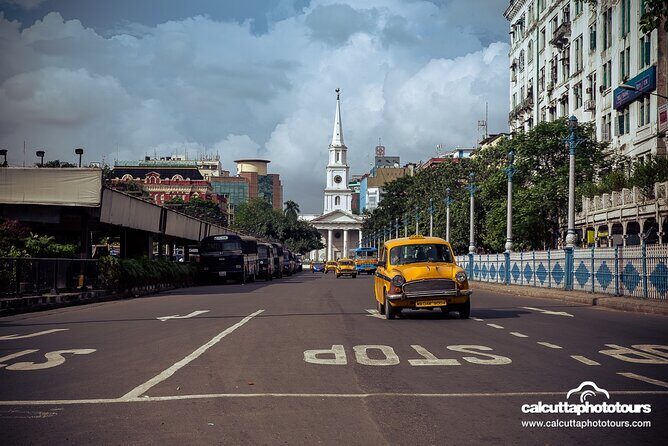
- St. Andrew’s and St. John’s Churches: Architecture You Can Read
- Manjit’s Storytelling: Why This Tour Feels Like a Guided Walk, Not a Lecture
- Price and Value: What You Get for About $40
- Timing, Group Size, and Getting There Around Dalhousie Square
- What to Do Before You Go (So the 3 Hours Fly By)
- Who Should Book This Tour (and Who Might Want Another Option)
- Should You Book Kolkata’s English History: European Calcutta Tour?
- FAQ
- How long is the tour?
- How many people are in a group?
- What’s included during the tour?
- Where does the tour start and end?
- Are start times flexible?
- What is the cancellation policy?
Key things to know before you go
- Small group (max 15): personal attention and easier questions than big bus tours
- Story-first guiding: you’ll connect buildings to the English-era changes in the city
- Coffee or tea plus snacks: a real break, not just “here’s a view”
- Start anywhere in your schedule window: flexible start times help you fit it in
- Hotel pickup optional, mobile ticket included: less hassle, more time for walking
- Covers signature sites: B.B.D. Bagh, Great Eastern area, St. Andrew’s Church, St. John’s Church, Government House
Where B.B.D. Bagh Starts the British Story
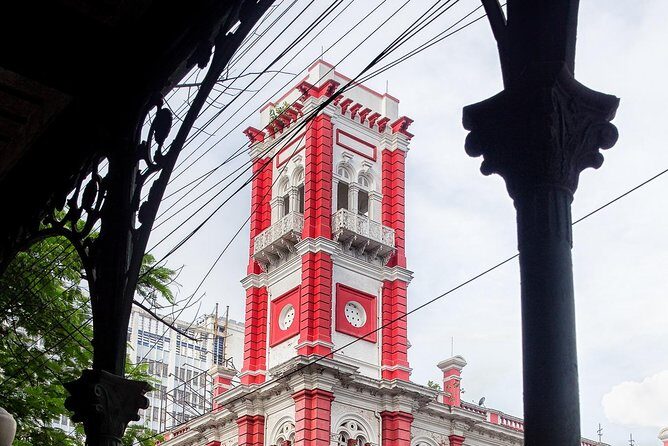
B.B.D. Bagh is the kind of place where you can see planning in action. The tour begins around Dalhousie Square, the central zone that later became known as B.B.D. Bagh, and it’s framed as the nerve centre of early Calcutta—tied to Job Charnock’s influence on the city’s rise. Even if you’ve never studied colonial history, the way your guide explains the area makes the geography click: this wasn’t random growth, it was a city being built with an administrative and commercial purpose.
I like this starting point because it prevents the common problem with “photo tours”—where you end up collecting landmarks without understanding the logic linking them. Here, you begin with the urban center and then watch the story radiate outward into architecture and institutions.
What you’ll likely notice as you walk: the mix of civic space and formal buildings around the square. Your guide helps you read those spaces, so it feels less like passing by walls and more like decoding how power, commerce, and religion were set into stone.
If you’re the type who asks why a city looks the way it does, this stop does the heavy lifting early.
You can also read our reviews of more historical tours in Kolkata


From Great Eastern to Government House: Britain’s Kolkata in Buildings
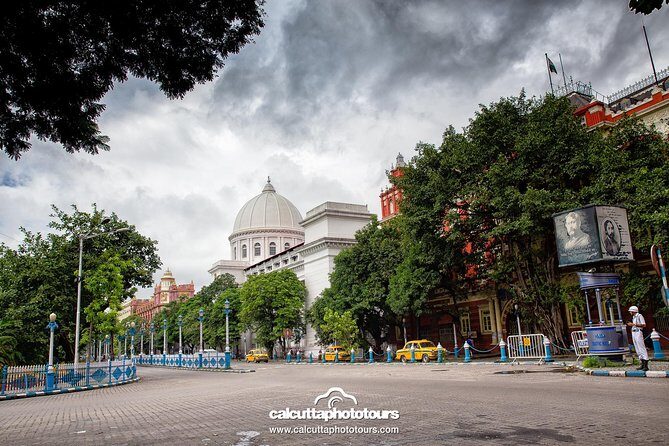
After you get oriented at B.B.D. Bagh, the tour moves through the English-era architectural language that still defines parts of central Kolkata. Two major anchors in the experience are the Great Eastern Hotel area (The LaLiT Great Eastern Kolkata is the listed start location) and Government House.
The Great Eastern connection matters because it represents a broader British push: building grand, recognizable structures that project stability, status, and access to trade. You’re not just looking at a famous facade. You’re learning how English authority showed up in the city’s physical identity—what got built, where it went, and how it shaped daily movement through the center.
Government House brings a more formal tone to the story. In many cities, “government buildings” are easy to spot but hard to interpret. On this tour, you’ll get the context that explains what these institutions were meant to do in the urban system—how they fit into the idea of rule, administration, and public order. It’s the difference between seeing Government House and understanding why it landed where it did.
A practical plus: because the tour is designed around a compact core of sites, you’re not constantly crossing the city to chase one monument after another. You walk with a purpose, and the stops feel like chapters rather than separate errands.
St. Andrew’s and St. John’s Churches: Architecture You Can Read
Churches are often the easiest sites to enjoy on a walk like this because they’re visually strong. But what makes this tour worth it is how your guide helps you treat church architecture like a clue set.
St. Andrew’s Church is one of the stops. I like the way this type of building balances solemnity with detail: you can look up at the structure, notice proportions and design, and then your guide adds the cultural context behind why these English religious institutions appeared in Kolkata and how they related to the wider colonial presence.
St. John’s Church is where the tour ends, which is convenient. You finish at a specific landmark—St. John’s Church on Council House Street, opposite Dewars Garage near Lal Dighi in the B.B.D. Bagh area—so you know exactly where to plot your next move.
On tours that focus only on facts, churches can feel like scenery. Here, they connect back to the same storyline as the square and government buildings: how the English community set up a visible, organized presence through institutions, not just through commerce.
If you enjoy photography, this is also a good segment to slow down. The lighting, angles, and architectural lines tend to reward taking an extra minute rather than sprinting from stop to stop.
Manjit’s Storytelling: Why This Tour Feels Like a Guided Walk, Not a Lecture
The single biggest reason this experience earns high marks is the guiding style. Your guide—often named Manjit—is described as a master storyteller, with a sharp eye for architecture and an honest, local perspective. That matters because colonial history can sound dry if you only get dates and names. Instead, the emphasis is on making the city’s past feel understandable in the present.
I especially like the tone described in the experience: pride without pretending Kolkata is stuck in the past. The guiding style connects buildings to people, and it adds small, human observations that make the history easier to hold in your head.
You’ll also get more than one kind of takeaway:
- You learn what to look for in the architecture
- You learn why those choices fit the English-era version of city life
- You learn how the city’s identity formed through the places you’re walking past
One detail that stands out as practical and memorable: there’s a mention of a cuppa char along the way—meaning the tour doesn’t treat breaks as an afterthought. Coffee or tea, plus water and snacks, keeps the pace comfortable and helps you stay focused. In a 3-hour experience, that little support makes a noticeable difference.
Price and Value: What You Get for About $40
At $40.28 per person for roughly 3 hours, this is priced like a guided walking tour, but it includes extras that make it feel like more than just a human map.
Here’s what you’re effectively paying for:
- A guided route built around major English-era sites (not random stops)
- Small group size so you’re not shouting over a crowd
- Coffee or tea, water, and snacks to keep the tour comfortable
- A mobile ticket for smoother check-in
- Pickup offered (depending on the option you choose)
- An admission ticket included (for at least one part of the experience)
Value-wise, the important part isn’t the number itself—it’s what the number covers. If you were to do this on your own, you could visit the buildings, but you’d likely miss the connections that make the day make sense: why these buildings are here, how they relate to the English influence, and how the urban layout reflects the era.
If you’re short on time and want a concentrated “what matters and why” session in central Kolkata, this price feels reasonable.





Timing, Group Size, and Getting There Around Dalhousie Square
Flexible start times are available, which is a big deal in Kolkata where plans can shift. If you’re trying to fit a tour around other sightseeing, meals, or weather, that flexibility helps.
The group size tops out at 15. For a city-center walk, that’s the sweet spot: small enough to ask questions and hear answers, large enough that the tour still runs smoothly.
Meeting is at The LaLiT Great Eastern Kolkata near Dalhousie Square (listed address includes Dalhousie Square, Old Court House St, Chowringhee North area). Ending is at St. John’s Church near Council House Street, opposite Dewars Garage, in the B.B.D. Bagh area.
Practical tip: because the start and end points are different, treat this as part of a bigger day plan. Choose your next activity near St. John’s Church so you don’t lose time getting back across the center.
Also, since pickup is offered, check what option you select when booking. If you’re staying close by, you might prefer to walk in. If you’re farther out, pickup can be the difference between feeling relaxed or rushed.
What to Do Before You Go (So the 3 Hours Fly By)
This tour works best when you show up ready to walk and ready to look up.
Here are the practical things I’d do:
- Wear comfortable shoes. You’re moving through central Kolkata for about 3 hours.
- Bring your mobile ticket and keep it accessible on your phone.
- If you’re sensitive to sun or heat, dress accordingly and use the included water break.
- Have one question in mind: what did the British change most—administration, religion, or city layout? Your guide can help you see how the sites answer that.
Because it’s small-group, it’s also a good time to ask clarifying questions when something clicks. The tour is designed for that kind of back-and-forth, not just passive listening.
If your goal is photos, don’t treat the stops like checkpoints. Pause for a moment to frame the architecture, then listen to what your guide points out. The photos turn out better when you know what you’re capturing.
Who Should Book This Tour (and Who Might Want Another Option)
This fits best if you:
- Want a fast orientation to English-era Kolkata without getting lost
- Enjoy architectural details when someone explains what you’re actually looking at
- Prefer small groups and a guide who can answer questions
- Like tours where history feels tied to real places, not only facts on a page
You might skip it if you:
- Want a long, museum-style experience with lots of indoor time (this is described as a walking tour)
- Have very tight mobility needs and can’t manage a short urban walk
- Prefer self-guided exploration with minimal structure
That said, even if you’re not a history buff, the way the tour connects B.B.D. Bagh to churches and government sites makes the city easier to interpret. It’s a “get your bearings fast” kind of outing, with enough story to keep it interesting.
Should You Book Kolkata’s English History: European Calcutta Tour?
I’d book it if you want a meaningful introduction to colonial Kolkata in a short window. The strongest reason is the storytelling guide experience, especially with Manjit’s style: he brings the past to life through architecture and city context, not just by reciting dates.
It’s also a smart value pick if you like guided walking tours with small groups, because you’re getting refreshments, included admission, and a compact route across major English-era landmarks.
If you want your first day in central Kolkata to feel organized—where you understand why the city’s buildings matter—this is a solid choice.
FAQ
How long is the tour?
The tour lasts about 3 hours.
How many people are in a group?
The experience has a maximum of 15 travelers.
What’s included during the tour?
Coffee or tea, water, and snacks are provided. An admission ticket is included, and you’ll receive a mobile ticket. Pickup is offered as well (depending on the option you choose).
Where does the tour start and end?
It starts at The LaLiT Great Eastern Kolkata near Dalhousie Square. It ends at St. John’s Church on Council House Street, opposite Dewars Garage, near Lal Dighi in the B.B.D. Bagh area.
Are start times flexible?
Yes, flexible start times are available to fit your schedule.
What is the cancellation policy?
You can cancel for free up to 24 hours in advance for a full refund.