REVIEW · KOLKATA
Kolkata Heritage Tram Tour
Book on Viator →Operated by Trips & Tours · Bookable on Viator
A tram ride teaches Kolkata fast. This guided loop mixes heritage tram fun with real stops tied to temples, churches, schools, and even Mother Teresa’s home. I like that the ride itself feels like a living artifact, not just transport, and I like that you get an organized route to landmarks such as Birla Mandir and Mother House without spending the whole day figuring it out. Expect short, focused stops plus snacks and refreshments to keep you comfortable.
One watch-out: Kolkata streets can be loud, and on at least one run the guide’s voice wasn’t always easy to catch, even when the information was good. If you’re sensitive to noise, consider bringing anything that helps you hear in busy traffic, because street sound can swallow a quiet explanation.
In This Review
- Key highlights to look for on this tram loop
- Why riding the heritage tram beats walking
- Birla Mandir and the second Birla landmark
- Sacred Heart Church, Tipu Sultan Masjid, and other faith stops
- From cemeteries to colleges: everyday Kolkata institutions
- Nonapukur Tram, where Calcutta Tramways started
- Mother Teresa’s Mother House for a calm ending
- Price, snacks, and time: getting value from 2–3 hours
- Noise, early starts, and how to plan your morning
- Should you book the Kolkata Heritage Tram Tour?
- FAQ
- What is the Kolkata Heritage Tram Tour price?
- How long does the tour last?
- What time does the tour start, and is pickup available?
- Are snacks and refreshments included?
- How many people are on the tour?
- What are some of the key stops on the route?
- Do I need to pay entrance fees at the stops?
- What happens if the weather is bad or I need to cancel?
Key highlights to look for on this tram loop
- Century-old tram-car feel: the ride keeps its old mechanical character, so transit buffs get extra joy.
- Morning timing: an early start means you see places while the city is waking up.
- Faith-side architecture: you’ll pass temples and churches and also stop at Tipu Sultan Masjid.
- Local institutions, not just monuments: colleges, academies, and schools show the city’s everyday brainpower.
- Nonapukur Tram + Mother House: history of tramways ends with a notably quiet finish at St. Teresa’s final resting place.
Why riding the heritage tram beats walking
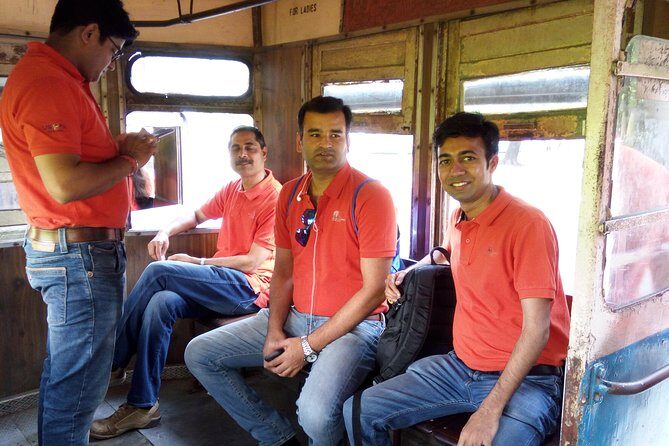
Kolkata is the only Indian city with a tram network still running, and this tour uses that advantage in the smartest way: you’re not just staring at the skyline, you’re moving through old corridors on a vehicle that feels historically “right.” The tram is part of the experience. In practice, that means you get a rhythm to your morning—ride, stop briefly, learn a bit, then ride again—so you’re not stuck doing one long, exhausting walk in heat and noise.
I also like that the guide work tends to connect sites to local life, not just recite dates. You’ll be stopping at recognizable landmarks—then stepping out long enough to understand what they mean in the city. This is great for first-timers who want a clean overview, and it’s also useful if you’ve been in Kolkata before but mostly moved around with a narrow routine.
Logistically, the tour is built for a short window: about 2 to 3 hours, with scheduled stop times that keep the pace moving. The group size is kept at a maximum of 20, so it usually feels manageable, not chaotic. And because pickup is offered and you use a mobile ticket, you’re less likely to lose time at the start.
You can also read our reviews of more historical tours in Kolkata


Birla Mandir and the second Birla landmark
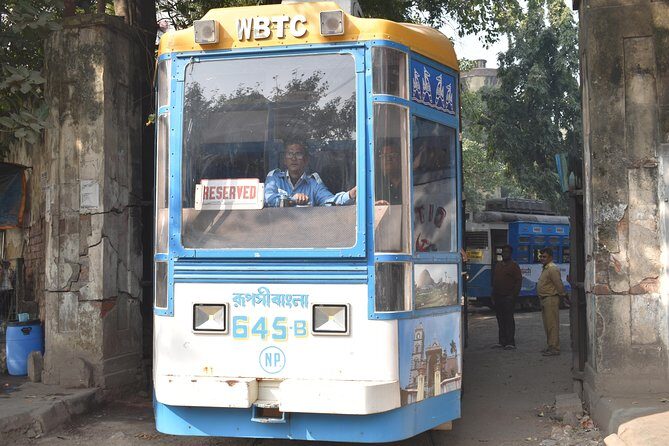
The morning often begins with the kind of landmark that makes Kolkata feel immediately “designed” to visitors. Birla Mandir (dedicated to Vishnu avatars like Rama and Krishna) is a major stop because it gives you a strong sense of Hindu devotional architecture and the modern city’s relationship to major religious sites.
What makes this stop more than a quick photo is how the guide frames it: it’s not only a temple you pass, it’s a place tied to a powerful Kolkata-family story. The tour also includes another Birla family landmark, which helps you see that influence wasn’t one-off. Even if you don’t know the details of the Birla story yet, the repeated naming gives you a pattern to remember when you’re later exploring on your own.
Practical tip: plan for short viewing time. These stops are brief, so don’t expect an in-depth temple tour. Instead, treat Birla Mandir as a “orientation marker” for what you’ll later recognize across the city—religion in public space, big stone-and-symbol design, and the way the city builds places that people return to.
Sacred Heart Church, Tipu Sultan Masjid, and other faith stops
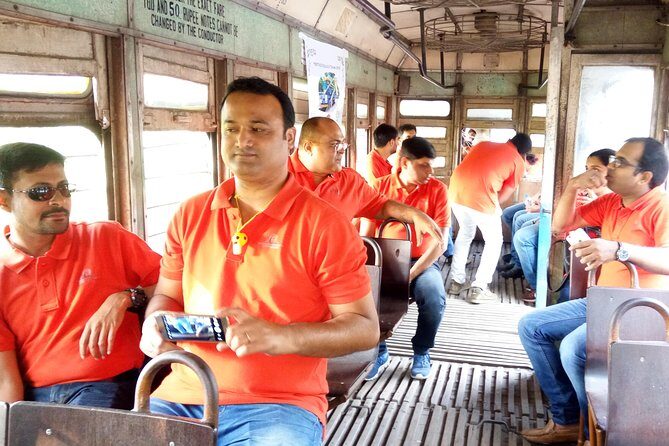
This tour’s biggest strength is its mix of religious and cultural architecture in a tight route. You’re not limited to one tradition, and that matters because Kolkata’s identity shows up in its variety of faith communities and their built landmarks.
One of the early religious stops is Sacred Heart Church, described as tied to the Portuguese legacy in Bengal. That’s a useful detail because it nudges you to look for evidence of old European presence in the city, not just guess based on the building’s style. Next on the schedule is Tipu Sultan Masjid, also called Tipu Sultan Shahi Mosque—named after the Mysore ruler. You get a quick look at the mosque as a heritage relic, and the guide’s explanation helps you place it in Kolkata’s layered past.
The itinerary continues with additional Christian sites, including Thoburn Memorial Methodist Church (established in 1873), plus Lord Jesus Church (a Catholic church in the Taltala area, with history linked to a Presbyterian worship space handed over to the Jesuits in the 19th century). These aren’t random stops. Taken together, they show you how Portuguese-era connections, Methodist roots, and Catholic presence all left visible traces in the city center.
You’ll also see culture and education tied to faith communities, including the Muslim Institute foundation laid in July 1902, and then the language mission of West Bengal Urdu Academy, set up by the Left Front government for the upliftment of Urdu language.
A real-world caution: because these are active neighborhoods, street noise is normal. Some explanations may be harder to hear unless you’re close to the guide or you have some way to handle the sound. Still, the stops are scheduled, and you’ll have time to look first, then listen in pockets.
From cemeteries to colleges: everyday Kolkata institutions
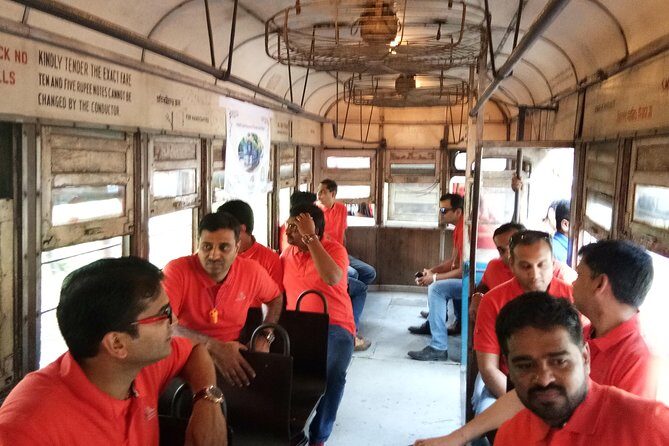
Not every stop is a landmark that screams for attention. Some are quieter, and those are often the most meaningful if you like understanding the city beyond monuments.
For example, the tour includes Lower Circular Road Cemetery, also known as the General Episcopal Cemetery. It was established in 1840 and is still operating as a functional cemetery. The schedule notes around 12,000 graves, including former community members—again, a detail that turns a “place you might glance at” into a real history lesson about Kolkata’s long continuity and the presence of older European-linked communities.
Education also enters the picture. Maulana Azad College is part of the route, founded in 1926 and described as a government-administered liberal arts and science college. The point of including a college on a tram tour is smart: it reminds you Kolkata isn’t only about old buildings and religious facades. It’s also about institutions that keep shaping the city’s future.
The itinerary also references a community-focused effort: an Assembly of God Church School established in January 1964 with 200 children enrolled, set up in response to the plight of poor and homeless children. You don’t get a full social program tour, but you do get a “why this place matters” explanation, which is often what makes a quick stop feel substantial.
As you move through all this, the guide’s job is to connect dots. The best runs reportedly focus on the raw texture of Kolkata—ordinary streets, recognizable institutions, and how local stories overlap. On some days you may be guided by locals like Mr. Arif or Haris, and there’s even a story of the tour owner, Mr. Ariff, guiding directly. If you get a guide like that, you’ll likely hear a lot of small context that you can’t easily pick up on your own in a hurry.
Nonapukur Tram, where Calcutta Tramways started
Then the tour shifts back to the tram story in a way that feels satisfying instead of random. Nonapukur Tram is listed as the birthplace of Calcutta Tramways, and that’s a key moment. It’s one thing to ride the heritage tram for the experience; it’s another to step off and learn that the tram network has specific roots tied to Kolkata’s development.
This is also where you get the “transit nerd payoff,” because the schedule marks a short stop (around 20 minutes) tied to tram history and likely the route’s technical context. Even if you don’t care about mechanics, the broader lesson lands: Kolkata’s tram wasn’t just decoration—it’s part of how the city moved and how neighborhoods formed around transit.
If you love photos, this stop is handy. It gives you a chance to capture the tram story from the ground up rather than only as a ride-in-the-morning blur.





Mother Teresa’s Mother House for a calm ending
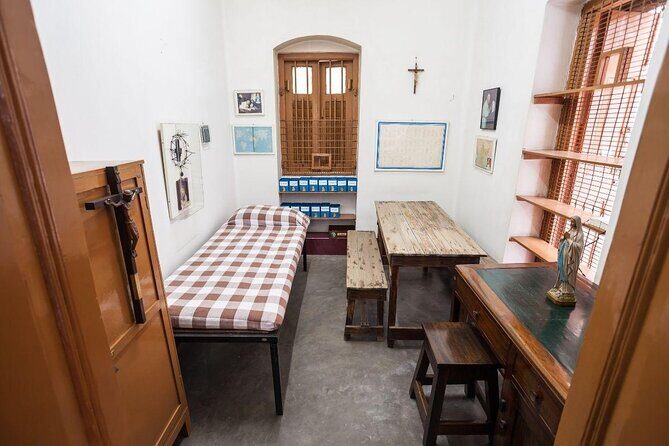
The final stretch is intentionally more reflective. The tour ends at Mother House, described as Mother Teresa’s House and the final resting place of St. Teresa. Stops here are listed at around 30 minutes, so you’re not rushing through a sacred space at the speed of a typical city walk.
Why include this on a tram heritage tour? Because Kolkata’s story isn’t only architecture and transit. It also includes humanitarian legacy tied to place. Even if you already know Mother Teresa’s name, the schedule positions Mother House as an anchor point that shifts your mindset from “overview city tour” to “city with a conscience,” without turning it into a lecture.
The mood matters. A quiet ending can be the difference between a tour that feels like a checklist and one that sticks.
Price, snacks, and time: getting value from 2–3 hours
At $60 per person, you’re paying for a guided, structured route plus the vehicle ride plus the comfort extras. The best value angle here is that the tour isn’t only transport. You also get snacks and refreshments, and the itinerary includes multiple landmark stops where the schedule lists admission ticket free for certain sites.
A few places in the route are explicitly labeled with free admission in the schedule, including Sacred Heart Church, Tipu Sultan Masjid, Nonapukur Tram, and Mother House. That doesn’t mean every single stop is guaranteed free, but it does mean you’re not likely to get hit with big ticket surprises during the core highlights.
Timing also affects value. The tour starts early at 7:00 am, which helps you see things before traffic thickens. If you’ve ever tried to do a similar route on your own, you know the time cost adds up fast. A tight morning plan for about 2 to 3 hours can actually be cheaper than it sounds once you factor in transit time and the mental effort of arranging stops efficiently.
Group size matters too. With a cap of 20 travelers, you’re in a sweet spot—small enough that you can follow the guide’s explanations at stops, but large enough that the tram experience still feels lively.
Noise, early starts, and how to plan your morning
This is the part people don’t always think about until they’re standing on the street. Kolkata mornings can be bright and energetic fast, and street sound can climb quickly. One guide-audio issue was noted, where high noise levels affected how well instructions carried. The operator indicated headsets are planned for the future, but you should still assume that you may need to position yourself a bit closer to hear clearly on your date.
Wear shoes you can stand in for short bursts. The stop times are brief, but you’ll still be standing, stepping off, and moving between tram and sidewalks often enough to make comfort worth it. Bring sun protection even for an early start. Also, since the schedule says the experience requires good weather, keep your schedule flexible. If the tour has to shift due to weather, you should expect an alternative date or a refund.
The best strategy is simple: treat it as an overview route. You’re not trying to memorize every detail. You’re building a map in your head so your later independent wandering makes sense.
Should you book the Kolkata Heritage Tram Tour?
Book it if you want a low-effort overview that mixes tram history with major landmarks and gives you enough context to understand what you’re looking at. It’s especially good if you prefer a guided route for an efficient morning, and if you’d enjoy seeing religious and cultural sites in a single connected loop rather than piecing it together yourself.
Skip it if you’re the type who needs long, slow time at each stop. The tour is designed for short visits across multiple places, so you won’t get a deep, unhurried session at any one site. Also, if you strongly need clear audio in a loud street environment, you may find explanations challenging, though you can work around it by staying attentive and close at the stops.
If you’re visiting Kolkata for the first time and want one morning that helps you understand the city’s texture, this tram tour is a solid way to do it.
FAQ
What is the Kolkata Heritage Tram Tour price?
The tour costs $60.00 per person.
How long does the tour last?
It’s listed as 2 to 3 hours (approx.).
What time does the tour start, and is pickup available?
The start time is 7:00 am, and pickup is offered. You’ll also find the meeting point is near public transportation.
Are snacks and refreshments included?
Yes. The tour includes snacks and refreshments.
How many people are on the tour?
The tour has a maximum group size of 20 travelers.
What are some of the key stops on the route?
The itinerary includes places such as Birla Mandir, Sacred Heart Church, Tipu Sultan Masjid, Nonapukur Tram, and Mother House. It also references other institutions like Lower Circular Road Cemetery and Maulana Azad College.
Do I need to pay entrance fees at the stops?
The schedule specifically lists admission ticket free for several key stops, including Sacred Heart Church, Tipu Sultan Masjid, Nonapukur Tram, and Mother House. Some other stops may have different rules, but those listed are shown as free.
What happens if the weather is bad or I need to cancel?
The experience requires good weather. If it’s canceled due to poor weather, you’ll be offered a different date or a full refund. You can also cancel for free up to 24 hours in advance for a full refund.