REVIEW · KOLKATA
Kumartuli – Where the Gods come to Earth
Book on Viator →Operated by Kolkata Story Tours · Bookable on Viator
Clay gods are made where street life never stops.
This 2-hour Kumartuli workshop walk is fascinating because you see Hindu idol-making as a full system, not just an art project. You’ll learn the complete supply chain, why mythologies matter to the people who commission these figures, and how materials like clay, hay, and bamboo get turned into ready-for-festival idols. I love the way the guide explains the process step by step, and I especially liked the focus on Bengal’s festival rhythm, including the idea of 13 festivals in 12 months.
I also like the people side of the visit: you get to interact with local artisans in a respectful way, without turning their workplace into a stage. One consideration: the area is described as busy, so if you hate crowds or prefer quiet museum pacing, come with patience for noise and activity.
In This Review
- Key things to notice before you go
- Where Kumartuli fits into Kolkata: a 2-hour reality check
- How the idol-making process works in plain steps
- Eco-friendly idols: recycling sounds simple, until you see the tradeoffs
- Meeting artisans respectfully (and why that changes everything)
- Festivals drive the calendar here, so timing changes what you see
- Price, chai, and how to plan the logistics
- Who should book Kumartuli – Where the Gods come to Earth?
- Should you book this tour
- FAQ
- How long is the Kumartuli idol-making experience?
- What time does the tour start, and where do we meet?
- Is chai included in the tour price?
- Does this tour include private transportation?
- Is pickup offered?
- Is this tour private or shared?
- When will I get confirmation after booking?
- What is the cancellation policy for a full refund?
Key things to notice before you go
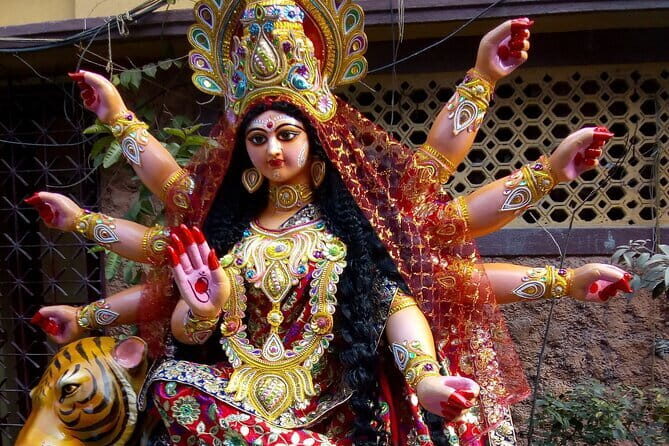
- A workshop hub built for festival season: hundreds of artists and vendors work day and night to supply idols for Bengal’s calendar.
- You get the full supply chain explanation: not just final products, but how the inputs connect to the finished idols.
- Eco-friendly idol-making, with tradeoffs: you’ll hear the pluses and minuses of recycling practices.
- Art that doesn’t require fancy credentials: you’ll see the skill and craft from artists who didn’t come from celebrated art colleges.
- Respectful on-site interaction: you can ask questions while keeping the artisans’ privacy and work intact.
- Chai is included: a small but welcome break during a hands-on, sensory stop.
Where Kumartuli fits into Kolkata: a 2-hour reality check
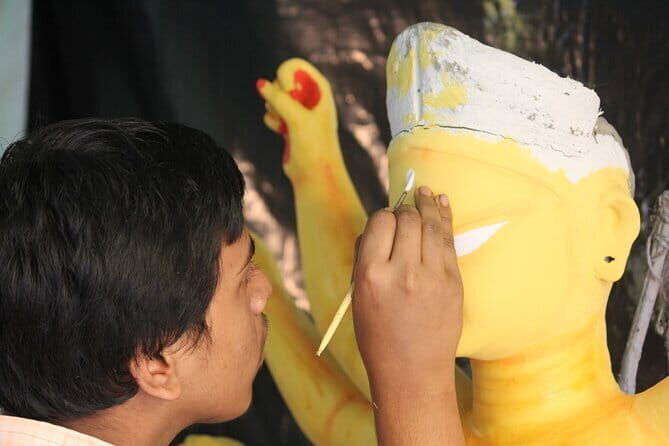
Kumartuli is one of those places where Kolkata doesn’t feel like a postcard. At 11:00 am, you meet at Raja Nabakrishna Street in Sovabazar, and you spend about two hours in the idol-making hub where the city’s major religious festivities quietly depend on daily labor. It’s not a distant tradition shown behind glass. It’s work.
The tour is built for learning without turning into a lecture. You’ll walk through the spaces and see how the idol-making process moves from materials to finished forms. That matters because it helps you understand the idols as cultural objects with practical needs, deadlines, and philosophies behind them.
If you’re here for culture, you’ll probably pick up more than you expect. The experience is framed around Bengal’s mythologies brought to life, plus the ideas people connect to those gods. If you’re here for craft, you’ll get more too. You can watch how artists apply skill with simple tools and basic materials, and how the work fits into festival schedules.
You can also read our reviews of more tours and experiences in Kolkata.



How the idol-making process works in plain steps
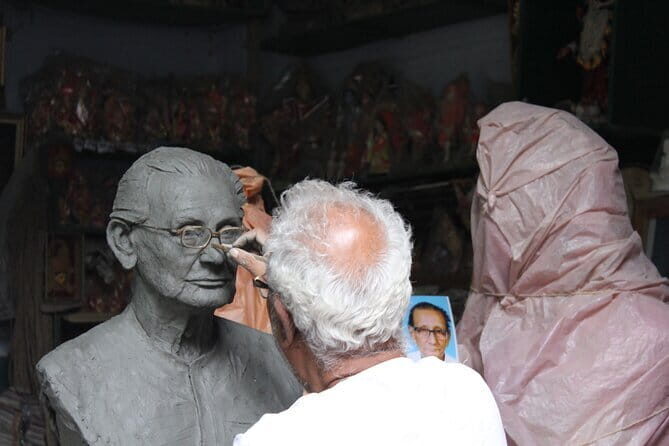
The biggest payoff is that you don’t just see idols at the end. You see the process, and you get a supply-chain explanation. That means you understand that idol-making is closer to a production system than a one-person hobby.
You’ll see how multiple materials come together. The tour description calls out clay, hay, and bamboo, and those ingredients are part of why the idols can be shaped, structured, and prepared for festival use. Even if you know nothing about the craft, the step-by-step approach makes the work legible.
Here’s what that type of walkthrough gives you as a visitor: context. When you later look at idols in other parts of the city, you’ll notice practical details you might have missed before, like how forms need to hold shape and how different parts are planned around the final look. You’ll also start to recognize why timing is so important. Festivals aren’t flexible. Production has to be.
Another smart part is the emphasis on artists’ expertise. The tour specifically highlights that many artists and artisans haven’t gone to celebrated art colleges. That’s not about putting down formal training. It’s about showing where skill comes from: practice, apprenticeship, repetition, and inherited craft knowledge passed through families and workshops.
Eco-friendly idols: recycling sounds simple, until you see the tradeoffs
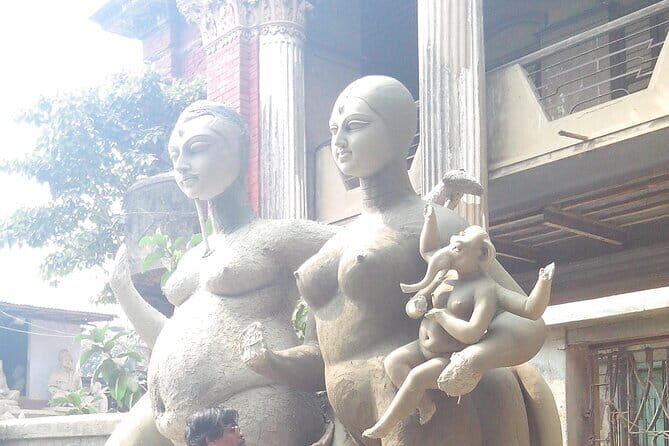
One section of the experience focuses on eco-friendliness and recycling, including both the advantages and the disadvantages. This is useful because idol-making is one of those traditions where “green choice” is not automatically simple.
You’ll hear how eco-minded efforts are being applied in this setting, and you’ll also learn what the challenges are. That balance is important for you as a visitor. It keeps the conversation honest. If someone tells you eco practices are only good and never complicated, they’re selling you an oversimplified story.
At Kumartuli, the eco topic makes more sense because you’re watching the work happen in real production conditions. You’re not just reading a poster about sustainability. You’re connecting environmental goals to how craftspeople actually build idols using available materials and methods.
Practical tip: if this topic matters to you, arrive curious rather than argumentative. Ask how the workshop approaches recycling and what they see as the hardest parts. You’ll get a clearer picture of the real-world constraints.
Meeting artisans respectfully (and why that changes everything)

This isn’t a silent photo-op. You’ll be encouraged to interact with local artists to understand their work better, while the tour stays respectful of their privacy and the pace of their labor. That matters because idol-making is personal work. Artists don’t exist to entertain visitors; they exist to produce.
When a guide keeps the tone respectful, you learn more. You can ask why certain choices are made, how the philosophy behind a creation shows up in its form, and what the workshop expects during the rush months. You’ll also understand that the “gods” aren’t just characters. They’re symbols people treat with seriousness, and that shows in the attention given to process.
From the experience framing, you’ll also get sensitized to the cultural heritage of Bengal and India through mythology and philosophy. In plain terms, you learn the mindset behind the craftsmanship. That’s what turns a workshop visit into a cultural read, not just a craft display.
Festivals drive the calendar here, so timing changes what you see
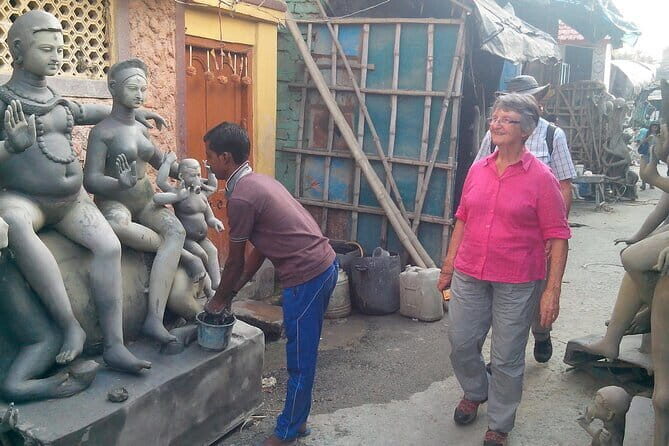
The tour description uses a striking line: in Bengal, there are 13 festivals in 12 months. Whether you take that number literally or as shorthand, the point is real—this city doesn’t slow down. Kumartuli’s workload reflects that nonstop rhythm.
During festival season, hundreds of artists and other fulfillment vendors toil day and night to bring idols into the city. So what you’ll see on your visit is likely shaped by current demand. Some parts of the process may look faster, more crowded, or more urgent depending on where things are in the cycle.
This is why a guided walk is valuable. Without context, you might see tools, materials, and half-finished forms and think, so what? With a guide framing the mythology, philosophy, and supply chain, you can connect those pieces into a story about how Bengal celebrates.
Also, if you’re the kind of traveler who likes to understand how culture runs on logistics, you’ll appreciate this. Festivals involve procurement, timing, craftsmanship, and decision-making. Kumartuli is where the practical work meets the spiritual meaning.



Price, chai, and how to plan the logistics
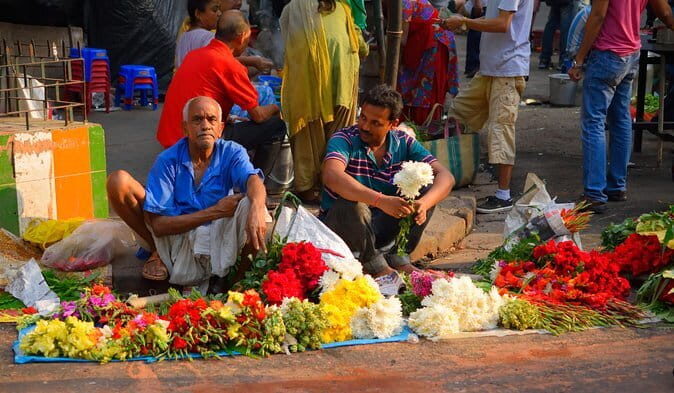
The price is $30.00 per person for about two hours, and it includes chai. At this rate, you’re paying for access to a working craft area plus a guide who can explain what you’re seeing. You’re also paying for time efficiency. Instead of trying to navigate workshop zones on your own, you get the story connected to the place.
One note: private transportation is not included, but pickup is offered in the tour features list, and the meeting area is near public transportation. In practice, that means you should plan to be able to reach Raja Nabakrishna Street on your own if pickup doesn’t perfectly match your schedule. If you want convenience, message ahead and clarify what pickup means for your specific start point.
Because it’s a private activity, only your group participates. That’s a big deal if you want to ask questions without competing for attention. It can also help you move at the pace your guide sets, which is useful in a busy workshop setting.
If you like small, focused experiences that give you a real understanding of local work, this is good value. If you’re expecting a long itinerary with multiple distant stops, note that this is a single hub experience focused on idol-making.
Who should book Kumartuli – Where the Gods come to Earth?
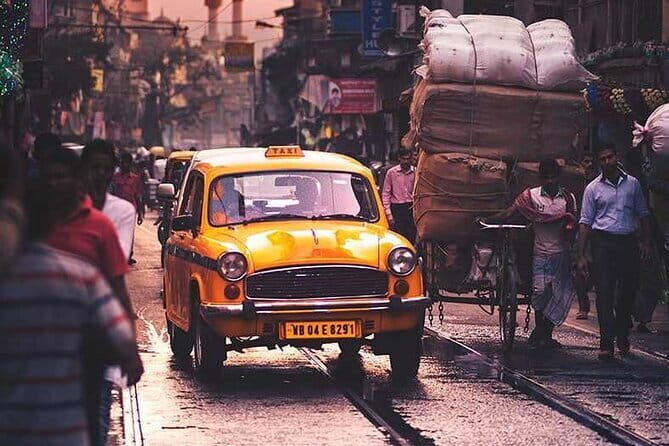
This tour fits best if you want more than sightseeing. Book it if you’re curious about how craft, religion, and everyday labor intersect in Kolkata. It’s also a strong option if you’re interested in eco-friendly discussions that are grounded in real work conditions.
You’ll likely enjoy it if you’re comfortable walking through a working area and staying respectful of artisans’ space. Most travelers can participate, and the structure as a private group helps keep things manageable.
If you’re sensitive to crowds or strongly prefer quiet, controlled environments, consider that the area is described as buzzing with activity during festival season. You’ll still learn a lot, but you may need the right mindset.
Should you book this tour
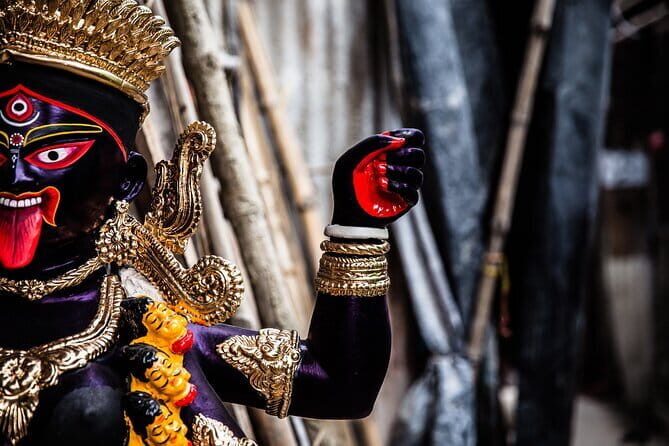
Yes, I think it’s worth booking if you want a hands-on understanding of Kumartuli beyond the final idol. The combination of process + supply chain + eco tradeoffs + respectful artisan interaction makes the experience feel practical, not just ceremonial.
If your priority is a deep dive into Hindu mythology alone, you might want additional time elsewhere too. And if you need a low-noise setting, go in expecting a busy workshop atmosphere.
Bottom line: this is a short, focused visit that teaches you how Kolkata’s festival magic is built, one daily work shift at a time.
FAQ
How long is the Kumartuli idol-making experience?
It lasts about 2 hours.
What time does the tour start, and where do we meet?
It starts at 11:00 am. The meeting point is Raja Nabakrishna Street, Sovabazar, Ward Number 18, Kolkata, West Bengal 700005, India.
Is chai included in the tour price?
Yes, chai is included.
Does this tour include private transportation?
No, private transportation is not included.
Is pickup offered?
Pickup is listed as offered, and the meeting point is near public transportation.
Is this tour private or shared?
It’s private. Only your group will participate.
When will I get confirmation after booking?
You should receive confirmation within 48 hours of booking, subject to availability.
What is the cancellation policy for a full refund?
You can cancel for free up to 24 hours in advance for a full refund. If you cancel less than 24 hours before the experience starts, the amount paid is not refunded.