REVIEW · KOLKATA
Heritage & Cultural Walk of Kolkata (2 Hours Guided Walking Tour)
Book on Viator →Operated by Yo Tours Goa · Bookable on Viator
A city like Kolkata rewards the curious walker. This 2-hour heritage walk threads together big landmarks and lesser-seen corners of the old center, told by an English- and Hindi-speaking guide who mixes history with cheeky city tales. What I like most is the focus on getting your bearings fast and the practical local tips you can use right away, plus the route’s mix of colonial-era buildings and river life. One drawback to consider: the tour depends on the meeting point going smoothly and has had occasional no-show or crowd-management complaints in the wild, so you’ll want a bit of patience and attention on timing.
I’m also drawn to the ending point. Shaheed Minar (Ochterlony Monument) is a strong finish that helps you see how Kolkata’s public memory has shifted over time. If you prefer a quiet, museum-style experience, the storytelling here can be lively—mildly scurrilous in tone—and some pacing may feel repetitive if your group gets the wrong guide or the route is crowded.
Best fit: you want an orientation walk, you like streets over ticketed monuments, and you’re comfortable navigating traffic on foot for a short stretch. If you’re expecting an air-conditioned, sit-down tour, this is not that kind of outing.
In This Review
- Key highlights to watch for
- Getting oriented at Writers’ Building in central B.B.D. Bagh
- Calcutta High Court: old legal power in motion
- Babughat and the Hooghly: colonial river steps you can feel
- Kolkata Town Hall (1813): Roman Doric style in street-level context
- Shaheed Minar: ending at a shifting symbol (Ochterlony Monument)
- How the storytelling actually feels on the ground
- What you’ll likely see besides the big landmarks
- Price and value: $30 for a short guided orientation
- Practical tips for walking well in Kolkata
- Should you book Heritage & Cultural Walk of Kolkata?
- FAQ
- How long is the Heritage & Cultural Walk of Kolkata?
- Where does the tour start and end?
- Who will guide me?
- What’s included in the tour price?
- What’s not included?
- How big is the group?
- What if the weather is poor?
Key highlights to watch for

- Writers’ Building start: you begin in the B.B.D. Bagh/central government zone, not a random hotel lobby
- Calcutta High Court: a real landmark that helps explain how British-era power shaped the city
- Babughat and Hooghly riverfront: colonial-era river steps and a sense of Kolkata’s working waterline
- Kolkata Town Hall (1813): Roman Doric architecture you’ll likely miss if you only chase major temples
- Shaheed Minar finish: Ochterlony Monument history, ending where the city’s layers become obvious
- Small group size: capped at 15 for a more conversational walking pace
Getting oriented at Writers’ Building in central B.B.D. Bagh
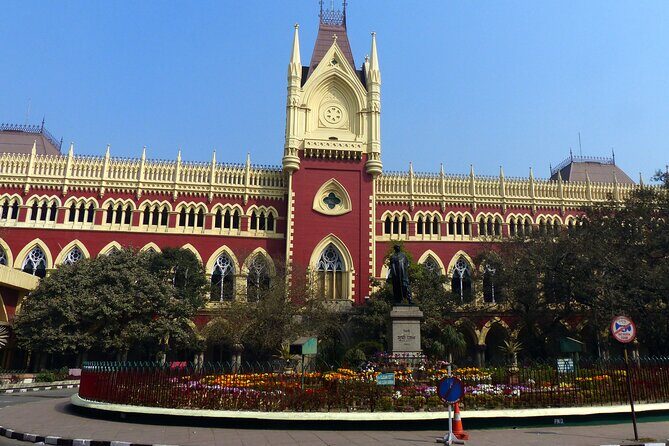
The experience kicks off at Writers’ Building, a landmark that instantly places you in old Kolkata’s administrative core. You meet your storyteller about 10 minutes before the stated start time, which matters because the group has to assemble and then move together through an area that’s busy even by Indian-city standards.
This is where the tour earns its keep. Instead of jumping straight to famous names, you start in the place that explains the city’s organization—government, law, commerce, and the streets that grew up around them. I like that this walk doesn’t try to be a checklist. It tries to give you a mental map: who held power, where people gathered, and why certain buildings got built in certain styles.
If you like photo stops, you’ll find plenty—just don’t expect everything to be postcard-perfect. You’re walking through working neighborhoods, so take your pictures quickly and keep your eyes up. A couple of the best moments tend to be the little street views between the main sights.
You can also read our reviews of more walking tours in Kolkata


Calcutta High Court: old legal power in motion

From the start area, the walk passes Calcutta High Court, noted as the oldest High Court in India. Even if you don’t go inside (the tour is primarily on foot), the exterior makes sense once the guide explains what legal institutions meant in colonial rule—and how those institutions still echo in the city’s layout.
This stop is valuable because it changes how you read the neighborhood. You start noticing the way buildings “face” the streets, how the grand stone-and-column look signals authority, and how the city’s serious architecture sits right next to everyday life. That contrast is the whole point of taking an orientation walk like this.
Possible drawback: if you’re hoping for long, photo-friendly pauses, this stop may feel more like a short explanation-and-move. Kolkata’s foot traffic is real, and the tour keeps moving to hit several key sites within about two hours.
Babughat and the Hooghly: colonial river steps you can feel
One of the most satisfying parts of the walk is the section that turns toward Babughat on the Hooghly River. Here, you get a close-up sense of how the river shaped daily life and transportation routes. Babughat was built during the British Raj, with tall colonial structures, and it served as a landing berth for the ghat.
What I like about this stop is the “why.” You’re not just looking at a waterfront. You’re learning how Kolkata’s riverfront connected the city to wider trade and movement. When a guide points out the river’s role, it helps you understand why so many Kolkata stories—politics, commerce, migration—keep looping back to the water.
Real-world consideration: riverfront areas can be crowded, and crossing between lanes or negotiating with pedestrians can get hectic. In one negative account tied to the tour, the group was left alone on a busy junction after the lights changed. So do this: stay aware of the group leader, and don’t let your spacing stretch when crossing. Keep your phone handy to re-check where the group is.
Kolkata Town Hall (1813): Roman Doric style in street-level context
Next comes Kolkata Town Hall, built in 1813 in a Roman Doric style. This is the kind of architecture stop that can feel dry on a self-guided walk. With a storyteller, it becomes practical: why that style was chosen, what public buildings were meant to signal, and how colonial-era civic design influenced what people expected from “important” spaces.
Even if you’re not an architecture nerd, this works because the guide ties form to function and to the city’s changing identity. You begin to spot recurring motifs—columns, stonework, grand proportions—that show up across Kolkata’s central area.
Drawback to keep in mind: architecture explanations can run longer than you expect in a short two-hour walk. If you’re the type who wants fewer words and more time to wander, you might wish for more room to explore on your own—but remember, the whole strategy is a tight orientation circuit.
Shaheed Minar: ending at a shifting symbol (Ochterlony Monument)
The tour ends at Shaheed Minar, formerly known as the Ochterlony Monument, erected in 1828. I love ending here because it forces you to think about how Kolkata rewrites its past in public spaces. The name change alone is a clue: the city isn’t stuck in one story.
You also get a better sense of scale and place. Ending at a monument (instead of circling back to the start) gives the walk a natural arc. It also helps you plan the rest of your day: you’re in the Dufferin Rd / Maidan area, which is usually easier to reach for onward transport than some of the more maze-like streets in the older quarters.
If you like quiet reflection, this is your moment. If you like photos, it’s also a strong stop. Just don’t expect the city to pause for you—Kolkata continues right up to the edges of every landmark.
You can also read our reviews of more guided tours in Kolkata






How the storytelling actually feels on the ground
This walk is built around a “storyteller” style: historical explanation mixed with fun facts and anecdote-laced talk, including mildly scurrilous references to past and present celebrities and defunct royals. The goal is infotainment—information delivered as a story, not a lecture.
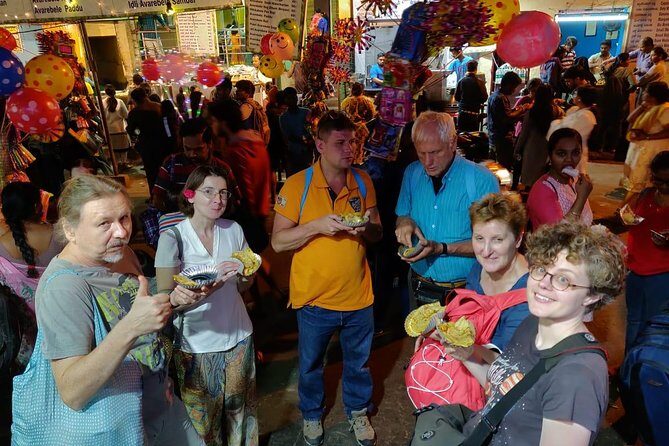
When it clicks, it’s a highlight. Positive notes describe guides who are proud Bengali, energetic, and able to connect what you see to what the city meant at the time. In one detailed account, the walk expanded beyond the headline sites to include practical stops like a tea break at Kona Dukan, a look related to the RBI museum, and even coin exchange street vendors. That’s the kind of add-on that makes an orientation walk feel like a real neighborhood experience rather than just architecture spotting.
But there’s a balance. One negative report described a guide who repeated the same facts and was boring, and another called the experience dreadful and unsafe because the guide ran off and left people at a traffic crossing. That doesn’t mean the tour is always like that, but it does mean you should go in with realistic expectations: this is a street walk, not a controlled set.
Your best move: keep close to your group leader, ask questions when you can, and don’t assume the guide will notice every individual lagging behind. In a busy city, basic “stay together” rules matter.
What you’ll likely see besides the big landmarks
The written outline emphasizes colonial-era architecture, the High Court, a river ghats segment, and the main civic end points. What you might also find—depending on timing and the guide’s choices—is small, practical city texture.
One highly praised account mentioned:
- a stop connected with the RBI museum
- tea at Kona Dukan
- sightlines toward coin exchange street vendors
Those kinds of stops are why I think this tour is worth considering even if you’ve already read a few Kolkata basics. A guided route can show you where locals spend time, where street commerce happens, and where you can recharge without turning it into a formal museum day.
If your main goal is only the maximum number of famous monuments, you might find the schedule a bit storytelling-heavy. If your goal is understanding the city’s “how it works” layer, you’ll probably appreciate these texture stops.
Price and value: $30 for a short guided orientation
At $30 for about 2 hours, the value comes from two things that actually matter on foot tours:
1) A real guide, trained and friendly, who can speak English & Hindi
2) Local tips to save money and explore smart afterward
For a city like Kolkata, that “what to do next” part can be more valuable than one extra photo stop. If the guide helps you find affordable food, good transport choices, or simpler routes for the rest of your sightseeing, the tour pays back quickly.
What’s not included is equally important. You should plan on:
- no hotel pickup/drop
- no air-conditioned vehicle
- no bottled water
- no breakfast
So treat this like a street outing. Wear shoes you can walk in for two hours. Bring water if you need it. If you’re sensitive to heat or sun, you’ll want to choose a time of day when conditions are comfortable.
Group size helps too: max 15 means you’re less likely to feel lost in a giant herd, and you can actually hear the guide.
Practical tips for walking well in Kolkata
Here’s how to make your experience smoother, especially on the type of streets this route uses.
- Arrive early and stay punctual: the tour expects you at Writers’ Building and to meet 10 minutes before. If you drift in late, you can miss the group’s first briefing.
- Keep a tight hold on crossings: some stretches involve busy intersections. Stay with the leader when the lights change or when the crowd shifts.
- Plan for street-level comfort: you’re outside the whole time, so dress for walking and weather.
- Bring water: it’s not included. Even short walks feel longer in humidity.
- Use Google Maps for the exact end: it finishes at Shaheed Minar bus stop area on Dufferin Rd / Maidan, which can be easier if you have the pin.
One more note: the experience requires good weather. If conditions are poor, you’ll either be offered a different date or a full refund.
Should you book Heritage & Cultural Walk of Kolkata?
I’d book this if you want a guided orientation to old Kolkata and you like your history with street stories attached. The strongest case is the combination of central landmarks (Writers’ Building, Calcutta High Court, Kolkata Town Hall) plus the riverfront logic (Babughat) and a thoughtful ending at Shaheed Minar. Add in a guide who gives practical local advice, and the $30 starts to feel like a bargain.
I’d be cautious if you hate walking, dislike any chance of traffic exposure, or absolutely require a perfectly dependable meeting/start. The negatives you have to factor in are real: there have been instances of a guide not arriving and at least one safety complaint tied to crossing. If you do go, show up early, stay close to the group, and don’t let yourself get separated.
If you want a short, high-impact way to understand Kolkata’s layers—colonial architecture, legal power, river life, and public memory—this is a solid bet.
FAQ
How long is the Heritage & Cultural Walk of Kolkata?
The tour runs for about 2 hours.
Where does the tour start and end?
It starts at Writers’ Building and ends at Shaheed Minar (Shaheed Minar bus stop), Dharmtalla area on Dufferin Rd.
Who will guide me?
You’ll be guided by a storyteller/guide who speaks English & Hindi.
What’s included in the tour price?
Included: the guided walking experience, the storyteller/guide, and local tips and recommendations. It also includes a mobile ticket.
What’s not included?
Not included: hotel pickup/drop, air-conditioned vehicle, bottled water, and breakfast.
How big is the group?
The tour has a maximum of 15 travelers.
What if the weather is poor?
The experience requires good weather. If it’s canceled due to poor weather, you’ll be offered a different date or a full refund.