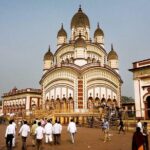
Colonial Kolkata is a walk away. This White Town heritage tour helps you connect the dots between British institutions and street-level life, and I love that it includes entry tickets where they matter most. You also get an efficient route through key sights without turning your day into a map-scramble. One possible drawback: there are reports of a no-show tied to this operator, so I’d treat day-of confirmation as part of your plan and not as an afterthought.
What makes it work in real life is the human layer. Guides like Rahul and Indu (from Lets Meet Up Tours) are the reason this doesn’t feel like a list of buildings. You’ll start at 8:00 am near Dalhousie Square and move in a small group (up to 20), which helps the pace stay friendly for most people.
The itinerary also has smart variety. You’ll mix landmark stops with breaks for photos, plus a Hooghly river ferry ride that gives big bridge views while keeping you from wasting hours on transport. The tour includes packaged water and the guide, and you’re back at the meeting point after about 3 hours—so it fits well into a fuller Kolkata day.
In This Review
- Key highlights worth your time
- Walking Kolkata’s White Town: why this tour clicks
- Price and value: where the $41 really goes
- The morning start: Dalhousie Square and the pace of White Town
- Stop-by-stop: what you’ll see and why it matters
- The First five-star Hotel of Asia and the Governors House area
- Currency Building of Calcutta: the money behind the politics
- Lal Dighi (Red Tank of Kolkata): a famous landmark with local roots
- St John’s Church: Black Hole memorial, Job Charnock, and the Last Supper
- Writers’ Building: where governance becomes stone
- GPO (Headquarters of Post Office) and the Dead Letter office building
- Baboo Ghat ferry: the best photo break of the whole tour
- Calcutta High Court: the first high court of India
- Eden Gardens: cricket stadium energy, seen from outside
- The guides: how the commentary shapes your day
- Logistics that actually matter (and the stuff you should watch)
- Who this tour suits best
- Quick do-not-miss ideas for making the most of your walk
- Should you book Heritage sightseeing tours in Kolkata?
- FAQ
- How long is the Kolkata White Town walking tour?
- What is the meeting point and start time?
- What does the tour include?
- Is food included?
- Is there a mobile ticket?
- How many travelers are in the group?
- Which major sites are included for visiting?
- Are any stops free in terms of admission?
- Is public transportation nearby?
- What’s the cancellation policy?
Key highlights worth your time
- White Town route on foot through British-era institutions, not just random photo stops
- Guides who can answer follow-ups (Rahul and Indu are specifically named in the experience feedback)
- Included entry charges at several major sites, saving you ticket hunting time
- St John’s Church stop with the Black Hole memorial, Job Charnock mausoleum, and a Last Supper painting
- Hooghly ferry ride with scenic views of Howrah Bridge and Vidyasagar setu
- Small group size (max 20) for a more conversational pace
Walking Kolkata’s White Town: why this tour clicks
Kolkata is one of those cities where the streets tell stories—if you’re given a thread to follow. Going solo can be great, but you also risk speeding past the details that explain why certain buildings exist, why they’re where they are, and what they were meant to do. That’s exactly where this heritage walking tour earns its keep.
The best part is that you’re not left with a loose suggestion like walk around and see what you find. You’re guided through the “British Kolkata” zone (often called the White Town), so you get context while you walk. The route is built around landmarks you’d recognize on a postcard, then it tightens into the lesser-noticed corners that make the period feel real.
Two things I value here:
First, the entry tickets are folded in for several stops. That turns what could be a time-wasting “find the ticket counter” problem into straightforward visiting.
Second, the guide’s commentary does the interpretation for you. You don’t just see structures; you understand what role they played in colonial governance, commerce, and daily life.
You can also read our reviews of more walking tours in Kolkata

Price and value: where the $41 really goes
At about $41 per person (plus the listed 5% GST), this is priced like a short, focused guided walk, not a full-day production. The value equation is mostly about two things you can feel immediately:
- Included entry charges. Multiple stops have admission tickets included, and a couple are free. When a tour pays for the tickets, you save money and, more importantly, you lose less time.
- A timed structure. Roughly 3 hours means you can stack this with other plans without turning your whole day into walking.
The only time price becomes a question mark is when you’re booking late and spot that solo pricing may be higher than the base rate shown. If you’re traveling alone or last-minute, check your exact total before you lock it in.
The morning start: Dalhousie Square and the pace of White Town
You’ll begin at the LaLiT Great Eastern Kolkata area, near Dalhousie Square (the listed address is Dalhousie Square 1, 2, 3, Old Court House St). Starting at 8:00 am is a smart choice. Morning is cooler, light is better for photos, and the streets around the colonial institutions are easier to navigate before crowds build.
This is a walking-based tour, and most people can handle it. The group stays capped at 20 travelers, which matters more than you’d think. In a big group, guides talk at the crowd. In a small group, they can slow down, answer questions, and keep everyone moving without breaking the rhythm.
You also get packaged drinking water, which is a practical inclusion for a city where walking can add up quickly. You’ll want comfortable shoes—colonial Kolkata streets are not designed for a fashion-park stroll.
Stop-by-stop: what you’ll see and why it matters
The First five-star Hotel of Asia and the Governors House area
The first stretch sets the “before you look” stage. You start near the LaLiT Great Eastern area, then work through references like the first five-star Hotel of Asia and the first Governors House of India. Even without deep technical detail at this early moment, the message is clear: this part of Kolkata was built for administration, prestige, and control.
I like tours that begin like this because it stops you from treating the rest of the morning as random big-city architecture. You start to see the logic: power buildings first, then the supporting institutions that made the system work.
You can also read our reviews of more historical tours in Kolkata





Currency Building of Calcutta: the money behind the politics
Next up is the Currency Building of Calcutta, with admission ticket included. Buildings tied to finance often feel less dramatic than churches or courts, but they’re often more revealing. This is where colonial governance and economic planning connected.
If you’ve ever wondered why certain corners of a city feel formal and engineered, finance buildings are usually the answer. They were designed to function efficiently, but they also broadcast status.
Lal Dighi (Red Tank of Kolkata): a famous landmark with local roots
You then reach Lal Dighi, the Red Tank of Kolkata. The stop includes time on-site, and notably the admission is free here. The standout value of this stop is that it adds a different texture to the morning.
Tanks and water features matter in Kolkata because they connect the city’s layout to living needs. In a “British White Town” walk, Lal Dighi acts like a reminder: this urban story isn’t only European. It’s Kolkata layering over Kolkata.
St John’s Church: Black Hole memorial, Job Charnock, and the Last Supper
This is one of the strongest stops on the route. You visit St John’s Church, and admission is included. The church houses the Memorial for Black Hole of Calcutta, the Mausoleum of Job Charnock, and a famous painting of the Last Supper.
This is the kind of stop that changes how you walk the rest of the morning. You’re not just seeing colonial architecture; you’re seeing how trauma, myth-making, and European religious imagery got physically preserved in a city environment.
One practical note: church stops tend to have rules on movement and photography. If the guide calls for quiet or careful behavior, follow it. You’re stepping into a place that carries heavy symbolism.
Writers’ Building: where governance becomes stone
After the church, you move toward Writers’ Building. This is where the tone of the walk sharpens. Writers’ Buildings are tied to administration—institutions that ran the colonial state through offices, paperwork, and enforcement.
Even if you’re not a history buff, the effect is real: you understand why these buildings look like they were made to feel permanent and official. They were.
GPO (Headquarters of Post Office) and the Dead Letter office building
You’ll also see the GPO headquarters and later the Dead Letter office building. These stops might not sound as dramatic as courts, but they’re fascinating because they show how the system worked every day.
Postal services in colonial cities weren’t just about letters. They were logistics for governance, trade, and communication across distances. A dead letter office is basically the afterlife of bureaucracy—mail that never reached its destination, records that tell you how communication failed.
It’s the kind of detail that makes you look twice at what you’d normally ignore.
Baboo Ghat ferry: the best photo break of the whole tour
One of the most enjoyable moments is the river part. At Baboo Ghat, you take a ferry across the river (ticket included) for about 45 minutes. This stop isn’t only scenic; it’s a planning win.
You get picturesque views of both Howrah Bridge and Vidyasagar setu. If you’ve seen these bridges in pictures, you already know the shape. The ferry makes you understand their scale and the river’s role in linking city life.
If you hoped to see more of Howrah in the same moment, you might find this portion is mostly about the river views and the ride itself rather than deep station exploration. Still, the tradeoff is good: it’s time-efficient and visually rewarding.
Calcutta High Court: the first high court of India
Finally, the route reaches Calcutta High Court, described as the first High Court of India. Admission is included here.
This is where colonial legal power shows up in stone. Even from the outside and in the way the guide frames the building, you get the message: law was a tool of order, and courts were part of the infrastructure of control.
The tour’s ending at this kind of landmark feels right. You’ve walked through finance, religious commemoration, civic institutions, communication systems, and now legal authority. It’s a clean line.
Eden Gardens: cricket stadium energy, seen from outside
There’s also a quick Eden Gardens stop. You’ll see India’s biggest cricket stadium from outside, and admission is free. It’s short (around 10 minutes), so don’t expect a stadium tour.
But it works as a mood-shift. After a morning of colonial institutions and church symbolism, Eden Gardens injects modern Kolkata identity into the frame.
The guides: how the commentary shapes your day
The tour quality is tightly linked to the guide. In the experience feedback, Rahul and Indu come up as standout personalities. That matters because colonial Kolkata can be dry if it’s only facts. A good guide turns dates into meaning.
There’s also evidence the guide can adjust when needed. One scenario involved turning a surprise open day into a highlight, and another involved tailoring the standard walk to match requests (like adding a street-food detour). That flexibility can make a short tour feel less rigid and more like a conversation.
At the same time, keep expectations realistic: you’ll still be walking a fixed route with a set time window. If you want a fully customized day, pair this with independent time afterward.
Logistics that actually matter (and the stuff you should watch)
This is not a “sit and listen” tour. You’re moving. So the practical details decide whether you enjoy it:
- Start time: 8:00 am. Plan to arrive a bit early at the listed meeting area near Dalhousie Square.
- Duration: about 3 hours. It’s designed to be a morning window, not an all-day conquest.
- Group size: max 20. This supports questions and pace control.
- Mobile ticket: helpful, but still keep an offline backup in case your phone battery misbehaves.
- Near public transportation: good news if you’re coordinating with other city plans.
Now, the one caution worth taking seriously: there are reports of a day where the operator didn’t turn up and communication was difficult. That’s rare compared to the positive experiences, but it’s serious enough that you should treat confirmation as part of your routine.
If something feels off—no guide presence, no clear group—don’t wait too long. Use your saved voucher and check back quickly.
Who this tour suits best
This walk is a strong fit if you want:
- Colonial Kolkata context without reading a stack of books
- A guided structure that keeps you oriented through the White Town
- A balanced mix of architecture, institutional stops, and one scenic ferry break
- A short, efficient outing that won’t eat your whole day
It’s also a good pick for first-time visitors who want the city’s “why” with their “what.” If you’re already a Kolkata specialist, you may still enjoy the ferry and the specific church stop, but you might want extra independent time beyond the 3-hour frame.
Quick do-not-miss ideas for making the most of your walk
A few small habits can level up the experience:
- If the guide mentions specific people tied to sites like St John’s Church, note the name and ask what you should connect it to next.
- On the ferry, give yourself time to look beyond the bridges. You’re learning how the river shapes movement and visibility in Kolkata.
- Wear shoes you can walk in for real. This tour is short, but it’s still city-walking.
Should you book Heritage sightseeing tours in Kolkata?
I’d book it if you want a focused White Town day with meaningful commentary and practical inclusions like entry tickets and the Hooghly ferry. At this price, the biggest value isn’t only cost—it’s time saved and the way the tour helps you connect buildings to purpose.
I wouldn’t book blindly if you’re the type who hates uncertainty. There are serious no-show reports tied to this operator, so confirm day-of and keep your voucher handy. And if you’re traveling solo or booking last minute, double-check your final price.
If you do go in prepared, this walk can turn colonial-era Kolkata from a list of landmarks into a connected story you’ll remember when you’re back on your own.
FAQ
How long is the Kolkata White Town walking tour?
It runs for about 3 hours (approx.).
What is the meeting point and start time?
The tour starts at 8:00 am at the LaLiT Great Eastern Kolkata area near Dalhousie Square 1, 2, 3.
What does the tour include?
The inclusions listed are a tour guide, packaged drinking water, and entry charges.
Is food included?
No. Food is not included.
Is there a mobile ticket?
Yes, the tour uses a mobile ticket.
How many travelers are in the group?
The tour has a maximum of 20 travelers.
Which major sites are included for visiting?
Stops include the Writers’ Building, GPO (Headquarters of the Post Office), St John’s Church, Calcutta High Court, and the Hooghly ferry ride from Baboo Ghat.
Are any stops free in terms of admission?
Yes. Lal Dighi and Eden Gardens are listed as admission ticket free.
Is public transportation nearby?
Yes, it is listed as near public transportation.
What’s the cancellation policy?
The policy states free cancellation is available if you cancel up to 24 hours in advance for a full refund.