REVIEW · KOLKATA
British Raj Walk in Kolkata
Book on Viator →Operated by 5 Senses Walks · Bookable on Viator
Colonial Kolkata reads better on foot. I love the story-led route that ties British-era power to India’s freedom struggle, and I love the small-group pace that keeps the walk organized. One thing to consider: you’ll mostly view major government buildings from outside since parts of the route are active offices.
Guides matter a lot on this tour. Abhishek is described as punctual and well read on colonial history, Sauvik guided groups past key landmarks with sharp, specific stories, and Bratati is praised for keeping the walk going even when the weather turned ugly. You also get entry tickets at each stop and light refreshments to help you stay comfortable for about four hours.
You start at 8AM outside Writers’ Building and the walk ends at Victoria Memorial around 12:30PM, with plenty of time to keep your bearings before the rest of your day. The tour uses a mobile ticket, runs near public transportation, and has a max group size of 12, which helps you ask questions without feeling like you’re shouting over a crowd.
In This Review
- Key things I’d plan around
- Getting your bearings in Kolkata’s British Raj grid
- Writers’ Building at 8AM: East India Company roots you can still feel
- Job Charnock’s Mausoleum: the founder legend and a court ruling twist
- St John’s Church (1787): the Last Supper painting you can actually find
- Raj Bhavan / Governor’s House: Wellesley, Charles Wyatt, and power in stone
- Victoria Memorial by 12:30PM: Victorian marble in a working city
- What you’re paying for: $74.67, tickets, snacks, and a guide who stays on task
- Small-group guiding (really): punctual, adaptable, and specific
- Practical tips for a 4-hour walk that may bring rain
- Should you book the British Raj Walk in Kolkata?
- FAQ
- What time does the shared walk start, and where?
- How long is the British Raj walk?
- Does this tour include hotel pickup and drop-off?
- Are entry fees included for the stops?
- What is included in the price besides the tour?
- How many people are in the group?
- Will I get a mobile ticket?
- Is free cancellation available?
Key things I’d plan around
- 8AM start at Writers’ Building: You’ll beat some of the busiest morning crowds and lock in the route logic early.
- Admission tickets are included: Each main stop comes with an entry ticket, so you’re not scrambling for payments mid-walk.
- You’ll see power from the outside: Writers’ Building and the Governor’s House are active sites, so expect exterior views.
- Job Charnock’s story includes a modern debate: The tour covers both his role in Kolkata’s growth and the later court challenge.
- St John’s Church isn’t just pretty: The Last Supper painting is a standout you can specifically look for.
- Max 12 travelers keeps it personal: With a small group, the guide can slow down for questions and photos.
Getting your bearings in Kolkata’s British Raj grid
Kolkata’s colonial layer isn’t one museum building you can knock out quickly. It’s a whole city shape—roads, institutions, and stone facades that still influence where life happens today. What I like about this walk is that it moves in a clear line through that British-era story, so you’re not just taking pictures. You’re connecting what you see to why it exists.
The route leans heavily into “what the British built and how it worked,” but it also adds the other side of the story—how independence movements unfolded in the shadow of these institutions. That combination makes the walk more than architecture appreciation. You end up with a mental map that stays useful long after the tour ends.
Also, the pace is designed for a normal morning in Kolkata: four hours, multiple short stops, and breaks built in through included refreshment time. If you only have a limited window in the city, this is a tidy way to get oriented fast.
You can also read our reviews of more walking tours in Kolkata


Writers’ Building at 8AM: East India Company roots you can still feel
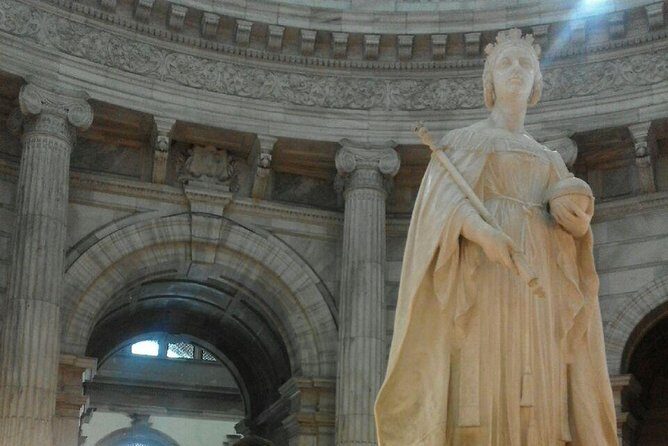
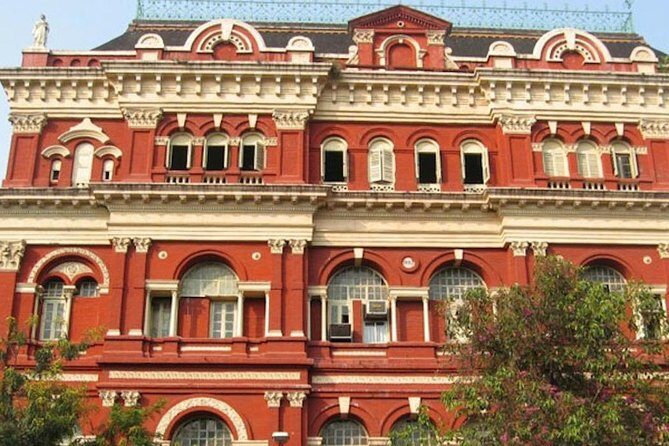
You begin at Writers’ Building, starting around 8AM, and that opening stop sets the tone for the whole experience. Built in 1777 for the lower bureaucracy of the East India Company, it has the kind of classical styling that makes you understand power at a glance. Today it’s the seat of the West Bengal state government, so it’s not a dead monument.
The big win here is the way the guide uses the building as a backdrop for landmark moments in India’s freedom struggle. Even if you never step inside, you still get that “stand here, look, and picture what happened” effect. The tour keeps it practical too: since it’s a working office, you’ll see it from outside and keep moving.
What to watch for:
- Notice the Greco-Roman feel of the structure—this is colonial ambition made visible.
- Keep your eyes open for details the guide points out, because you won’t have an interior tour to rely on later.
- Use this stop to decide how you want to spend the rest of your day near Victoria Memorial, since the walk flows there.
A quick consideration: because you’re mostly viewing from outside, don’t expect a deep interior-style visit at this first stop. The value is in the history narration + the exterior context.
Job Charnock’s Mausoleum: the founder legend and a court ruling twist
Next up is the Mausoleum of Job Charnock, tied to the story of how Kolkata took shape. Charnock is often described as the founder of modern Kolkata. In 1690, he bought villages including Sutanuti, Gobindapur, and Kalikata from Bengal leadership, and over time the British East India Company base grew into a capital.
Then the tour adds a sharper angle: a recent High Court ruling has discredited him as the founder of Kolkata, pointing to evidence that the city existed earlier. That matters. It turns the stop from “one famous name” into a more honest look at how history gets written, repeated, and corrected.
At this point in the walk, I appreciate that the tour doesn’t treat history like a straight line. You get a lesson in evidence and narrative—how even widely repeated origin stories can be challenged when new documentation is reviewed. It’s the kind of detail that makes the walk feel grounded rather than like a postcard script.
How to get the most out of the mausoleum stop:
- Listen closely to the timeline the guide shares, because the meaning of the site depends on the sequence of events.
- If you’re the type who likes to compare “legend vs. documentation,” this is one of the strongest stops for you.
- Keep an eye on the way the guide connects early settlement patterns to later colonial growth.
St John’s Church (1787): the Last Supper painting you can actually find
St John’s Church is one of those stops where you can understand why people cared about architecture during colonial rule. Built in 1787 by architect James Agg, it became the principal Cathedral of Calcutta in 1815. The building is stone and brick, and it has that formal, intentional look of a place designed for public ceremony.
The highlight here is specific: there’s a “Last Supper” painting on the walls. The tour doesn’t leave you guessing. It gives you something concrete to look for during your time inside, which is a big deal on a walking tour. Otherwise, you walk in, take photos, and leave with the feeling that you missed the main point.
Why this stop works well:
- It adds religious and cultural context to the British Raj story, not only political buildings.
- You get interior access here, which balances the mostly exterior view at other sites.
- It’s timed for a comfortable visit window (about 45 minutes), so you can look carefully without feeling rushed.
One practical note: churches can have quiet rules about photography or movement, so follow what the staff and guide ask. You’ll get more out of it by slowing down for the painting rather than trying to see everything at once.
Raj Bhavan / Governor’s House: Wellesley, Charles Wyatt, and power in stone
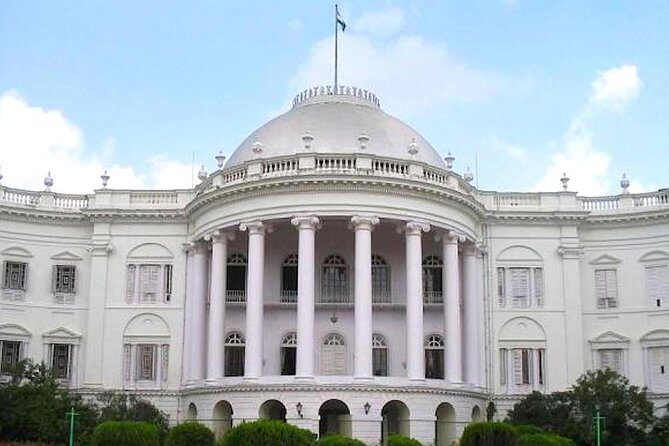
After St John’s, you move to Raj Bhavan—the Governor’s House—another building that explains governance through design. The tour frames it around Marquess of Wellesley, who came to Kolkata in 1798 as Governor General of the East India Company and found his rented accommodation unsuitable.
So a proper residence was built: the Governor’s House was constructed in 1803 by English architect Charles Wyatt. Style-wise, it’s neoclassical with Baroque overtones. That combination—order plus drama—fits what the building represented.
Historically, it changed hands when the British Crown took over control from the East India Company. After that shift, the building became the residence of the Viceroy of India. Today, it still has that official status: it serves as the office and residence of the Governor of West Bengal. Because it’s active, you’ll see it from outside.
What I like about this stop is the continuity. Even though the political system changed, the building kept its role as a center of authority. The guide’s narration helps you read the facade like an institutional document.
Since you’re viewing from outside, you’ll get the most value by:
- Taking a few seconds to look for symmetry and structure lines; those are part of why it feels so official.
- Listening for the names (Wellesley, Charles Wyatt) and the style notes. They help you remember what you’re seeing.
- Using the exterior view to understand the route: this is the city’s “decision-making geography.”





Victoria Memorial by 12:30PM: Victorian marble in a working city
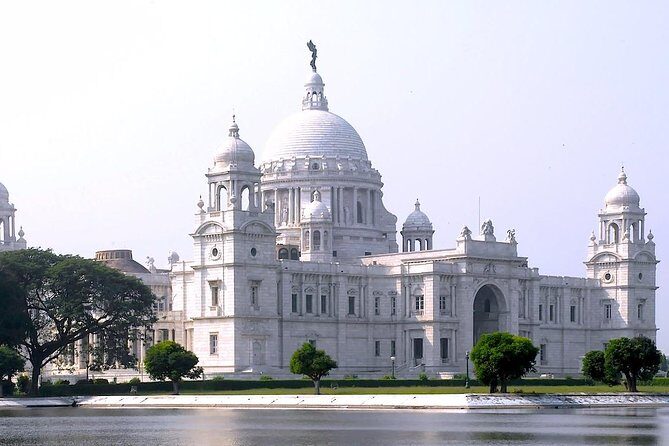
The walk ends at Victoria Memorial around 12:30PM, and it’s a strong closer. This landmark was built by George Curzon, the 1st Marquess Curzon of Kedleston and Viceroy of India. It’s dedicated to Queen Victoria, and the memorial is known for its marble architecture.
Here’s why this final stop feels satisfying: you end with a place that symbolizes the British vision of “lasting presence,” but it sits in modern Kolkata. You experience Victorian-era scale right in the middle of everyday city life.
The included time is about 30 minutes. That’s long enough to:
- Get a sense of the building’s mass and details.
- Take photos from a few angles.
- Sit for a moment and let the guide’s earlier stories connect in your head.
If you want to make this part work even better, plan your next step before you leave the memorial area. This stop can easily turn into an all-day site if you drift into extra museum time. If your schedule is tight, set a rough time goal for yourself and stick to it.
What you’re paying for: $74.67, tickets, snacks, and a guide who stays on task
At $74.67 per person for about four hours, the price is easiest to justify when you look at what’s included, not just the number. This tour includes all taxes, fees, and handling charges. More importantly, it includes admission tickets at the main stops and provides light refreshments plus snacks.
That means you’re paying for:
- Time with a guide who connects the city’s British-era buildings to the independence struggle context.
- Entry access where it matters most.
- Built-in food breaks, so the walk doesn’t turn into an energy crash.
You can also upgrade for hotel pickup and drop-off. If you’re staying far from the start point, that option can be a real value add because it cuts out “where do we meet, how do we get there, and who’s late” stress.
Two other details that help the price feel fair:
- The group is capped at 12 travelers, which makes the guide’s storytelling less like a lecture in a crowd.
- You get a mobile ticket, plus group discounts, which can be a plus if you’re traveling with friends.
The only true “cost” is what you can’t get: deep interior time everywhere. Some major sites are seen from outside because they’re working government spaces. But that tradeoff comes with a benefit—the walk keeps moving and helps you cover major landmarks efficiently.
Small-group guiding (really): punctual, adaptable, and specific
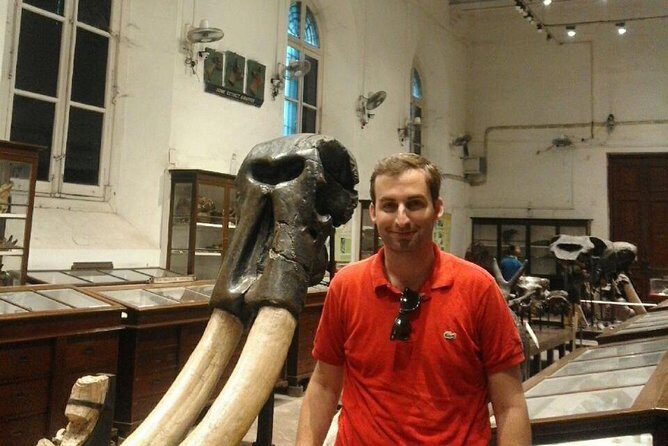
The quality of the guides is a standout theme. Abhishek is described as punctual and well read on the colonial history of Kolkata. Sauvik is praised for taking groups to prominent landmarks like Writers’ Building, Victoria Memorial, the Charnock memorial, St John’s Church, and even a stop involving an older museum site, with specific explanations for each place.
Bratati’s name comes up for a different reason: even during torrential rain and cyclone conditions, the walk still happened, and the guide’s explanations stayed strong. That matters because Kolkata weather can change fast. If your day depends on this tour, having a guide who can keep the schedule moving is practical comfort.
Since the group size is small, you’re more likely to get:
- Clear answers when you ask something.
- Better pacing at stops that need attention, like St John’s Church.
- Less time wasted on regrouping.
If you like history that’s explained in human language (not just dates on a wall), this tour style fits.
Practical tips for a 4-hour walk that may bring rain
This is a walking-focused experience, and four hours adds up. Wear comfortable shoes with grip. Bring a light layer you can adjust if the morning starts cool and warms up.
If you have flexibility, plan for the morning because the tour begins at 8AM and ends around 12:30PM. That schedule helps you make use of your limited time and also gives you a clear finish line for other plans.
You’ll be on foot between stops, but the tour notes it’s near public transportation. So if you need to adjust your route to make it on time, it’s at least easier to catch transit than in a super remote area.
Also, because several sites are active offices, follow the guide’s lead on what’s safe to photograph and where you should stand. You’ll save time and avoid the awkward “can we move?” moment.
If you’re unsure whether to add hotel pickup: consider how easy your hotel is to reach in the morning. If you’re already close to the Writers’ Building area, the walk start is manageable. If you’re farther out, pickup can protect your schedule.
Should you book the British Raj Walk in Kolkata?
Book it if:
- You want a structured way to understand British Raj Kolkata without getting lost.
- You like story-driven tours that connect buildings to the independence struggle.
- You want value through included admission tickets and snacks, not just narration.
- You enjoy asking questions and getting specific answers in a small group.
Skip it or think twice if:
- You mainly want long, in-depth museum time or lots of interior-only access. Several major stops are viewed from outside because they’re working government buildings.
- You dislike early starts. The 8AM timing is part of why the route works so well.
My quick take: if you’re the kind of traveler who wants context while you walk, this tour is a smart use of a half-day. You’ll finish at Victoria Memorial with a clearer sense of how Kolkata’s colonial structures shaped the city you’re standing in today—marble and all.
FAQ
What time does the shared walk start, and where?
The shared walk starts at 8AM from Writers’ Building in Kolkata.
How long is the British Raj walk?
It lasts about 4 hours.
Does this tour include hotel pickup and drop-off?
Hotel pickup and drop-off is not included unless you select the upgrade option.
Are entry fees included for the stops?
Yes. Admission tickets are included for each of the main stops on the walk.
What is included in the price besides the tour?
The price includes all taxes, fees, and handling charges, plus light refreshments and snacks.
How many people are in the group?
The tour has a maximum of 12 travelers.
Will I get a mobile ticket?
Yes, this experience uses a mobile ticket.
Is free cancellation available?
Yes. You can cancel for free up to 24 hours in advance of the experience start time for a full refund.