REVIEW · MUMBAI
Kanheri Caves and Sanjay Gandhi National Park
Book on Viator →Operated by World of Bollywood Tours · Bookable on Viator
Caves in Mumbai beat most city stops. This half-day trip pairs the Kanheri Caves and Buddhist rock-cut art with a nature-and-animals outing in Sanjay Gandhi National Park. I like that the site work stays focused (time for the caves without feeling rushed) and that you get pickup to reduce Mumbai chaos; the trade-off is you’ll be walking outdoors in a park, and the experience depends on good weather.
What makes it smoother is the human factor: you’re with a private group, and a guide like Rahil can make the entrance and park expectations feel far less confusing. The mobile ticket also helps you get your bearings fast, but it is still a park setting, so plan on comfortable shoes and a bit of uphill effort.
In This Review
- Key highlights worth your time
- Kanheri Caves: A Quiet Buddhist City in the Hills
- What you’ll see underground: Sculptures, reliefs, stupas
- Why the viharas and learning center detail is more than trivia
- Getting the timing right: a 5 to 6 hour half-day plan
- Sanjay Gandhi National Park: the safari-style wildlife stop
- The value play: pickup, mobile ticket, and what’s included
- Who this tour is best for (and who might want to skip)
- Practical tips so you enjoy Kanheri more
- How to think about Kanheri versus other Mumbai sights
- Should you book Kanheri Caves and Sanjay Gandhi National Park?
- FAQ
- How long is the tour?
- Is pickup included?
- What’s included in the price?
- Are tickets included for the stops?
- Is this tour private?
- What is the cancellation policy?
Key highlights worth your time
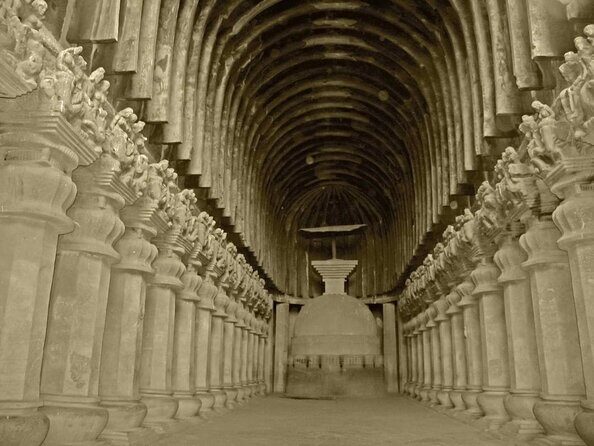
- Kanheri’s 109 caves: a big rock-cut Buddhist complex in forested hills
- 1st-century BCE Buddhist art: sculptures plus relief carvings and inscriptions
- Viharas you can picture: spaces meant for living, studying, and meditating
- Sanjay Gandhi National Park wildlife stop: tiger/lion safari-style outing
- Pickup and drop-off convenience: the day starts and ends without extra hassle
- Coffee and refreshments included: small comfort breaks in the middle of sightseeing
Kanheri Caves: A Quiet Buddhist City in the Hills
If you only know Mumbai for its coastline and street energy, Kanheri changes the picture fast. These caves sit in the western outskirts of the city inside the lush green environment of Sanjay Gandhi National Park. Instead of a quick photo stop, you’re moving through a whole hillside “complex” of rock-cut sites—109 caves and monuments—connected by paths and open forest views.
The big reason I think this works is how layered it feels. You’re not just seeing stone carvings. You’re walking through spaces that were built for daily life around Buddhist practice. Many of the cave structures were viharas, which were meant for living, studying, and meditating. That changes the way you look at the place: you start thinking about routine, not just relics.
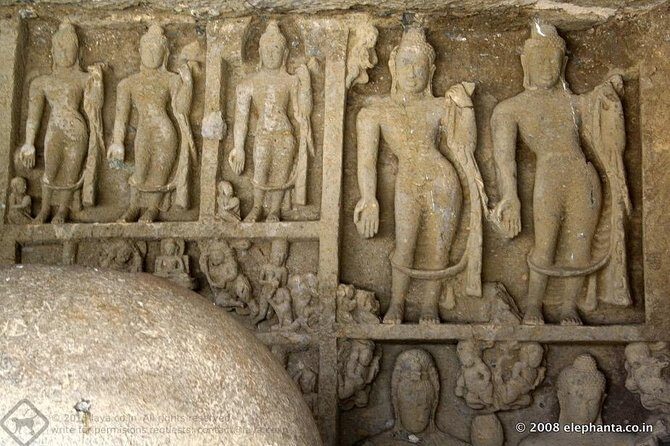
Also, the art style gives you something to focus on. The site includes Buddhist sculptures dating to the 1st century BCE, along with relief carvings, paintings, and inscriptions. Even if some details are faint, you’ll still get the sense of a long-lasting learning and pilgrimage center.
You can also read our reviews of more tours and experiences in Mumbai.



What you’ll see underground: Sculptures, reliefs, stupas
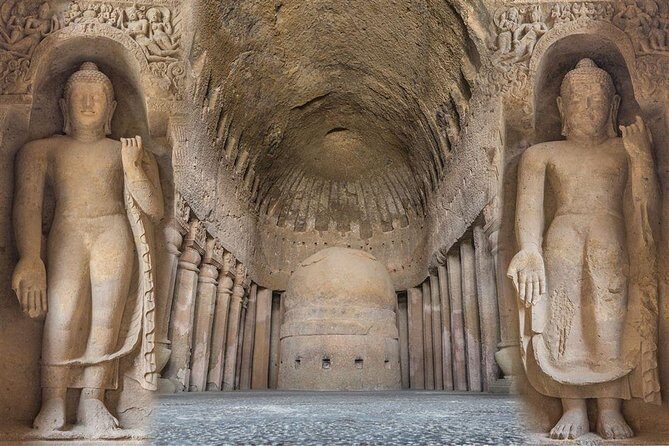
Kanheri is often described as a rock-cut monument set, but the feel is closer to a whole visual syllabus in stone. As you explore, you’ll notice multiple elements showing how Buddhist worship and study were represented in architecture.
Here’s what matters when you’re there:
- Buddhist sculptures from the early period of the site, including works attributed to the 1st century BCE
- Relief carvings and decorative panels, where the stone acts like a storytelling surface
- Inscriptions, which add a documentary layer—names, messages, or references you can’t get from images alone
- Rock-cut stupas and pillared structures, including monumental features that signal devotion and gathering
A practical point: Kanheri is in a park, which means you’ll be outside and moving between caves on a hillside. Bring your patience. The payoff is that the caves don’t feel like a single hallway; they feel like a slow walk through an actual sacred landscape.
Why the viharas and learning center detail is more than trivia
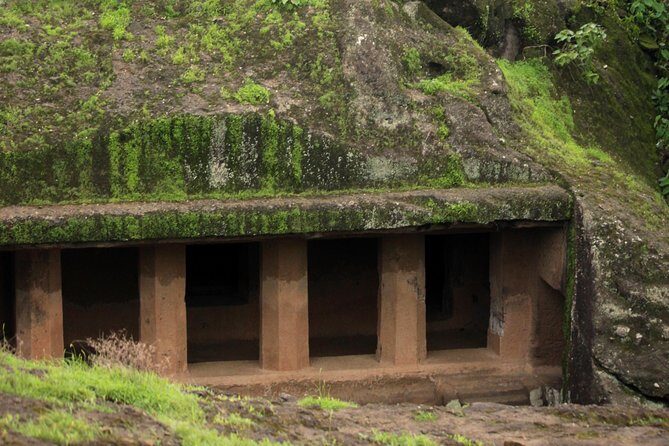
The tour framing includes something useful: Kanheri wasn’t only a place people visited. It was an important Buddhist learning center and pilgrimage site, sculpted by Buddhist monks across a long span of time (between the 9th and the 1st centuries BCE). That means the caves you see weren’t built as one quick construction project—they’re the result of repeated use and improvement over centuries.
When you remember that, your experience changes. Instead of treating the caves as static objects, you start thinking about how monks would have used different areas. Viharas, in particular, were tied to routine: residence, teaching, quiet practice. So when you look at the shape of the rooms and the way openings and carvings are placed, you can form a better mental picture of how life might have worked there.
Also, the site sits in massive basaltic rock outcropping. That geologic fact matters because it explains why the caves look the way they do: basalt holds shape well for carving, and it gives the area its solid, heavy, grounded feel. It’s not flimsy or temporary-looking stonework.
Getting the timing right: a 5 to 6 hour half-day plan
This is designed as a focused outing, not a full-day marathon. The cave time is set at about 4 hours, and then you head into the park for roughly 1 hour more.
That rhythm is a real advantage if you’re visiting Mumbai for a shorter trip. Kanheri can soak up attention because there’s plenty to notice—sculpture details, cave layout, inscriptions if you can get close enough. A tighter schedule helps you see the key pieces without ending the day exhausted.
The catch is that you still need to respect park pacing. Even with a guide handling movement and transitions, you’ll likely spend part of your time walking between cave sections and adjusting to outdoor conditions. Good weather matters because it affects comfort and how easy it is to keep exploring.
Sanjay Gandhi National Park: the safari-style wildlife stop
After Kanheri, the tour shifts from carved stone to live animals and forest atmosphere at Sanjay Gandhi National Park. The plan includes a Tiger/Lion Safari stop.
What you should understand going in: this is presented as a safari-style experience rather than a guaranteed animal viewing promise. Wildlife is wildlife—your best bet is to arrive mentally flexible and ready to enjoy the atmosphere, the park drive, and whatever you might spot.
This stop also makes practical sense. Sanjay Gandhi is the natural setting that contains Kanheri. So instead of finishing your day back in the city, you stay in the same ecosystem that gave the caves their setting. The contrast is satisfying: one part cultural heritage, one part nature time.





The value play: pickup, mobile ticket, and what’s included
At $100 per person, the price makes sense if you care about saving time and keeping the day smooth. In Mumbai, the cost of stress is real. This tour builds in pickup offered and returns you afterward, so you’re not juggling transport while also trying to time cave entry and park access.
You also get the extras that make a half-day outing feel cared for:
- Coffee and/or tea
- Refreshments
- All fees and taxes included
- Mobile ticket included, which can reduce waiting
Alcoholic drinks are not included, so plan on non-alcoholic options during the day.
Another value detail: the tour is private for your group. That usually means you spend less time accommodating other strangers and more time matching your pace to the site. For a place like Kanheri—where it’s easy to slow down for carvings—that matters.
If you’re someone who likes to travel with fewer moving parts, that’s where this tour shines.
Who this tour is best for (and who might want to skip)
This is a strong match if you want a practical way to see major Buddhist cave architecture without turning the day into logistics. It’s also a good fit if you enjoy nature settings—Kanheri is in a park, and the safari-style segment keeps things from feeling museum-only.
It may be less ideal if you need fully flat walking or if you dislike outdoor hiking-style movement. Even though the time blocks are reasonable, it’s still an active park environment on a hillside.
Also, if you’re chasing only the absolute quickest checklist experience, you might feel 4 hours at Kanheri is more than you want. But if you like to look closely—sculptures, reliefs, inscriptions—this pacing helps.
Practical tips so you enjoy Kanheri more
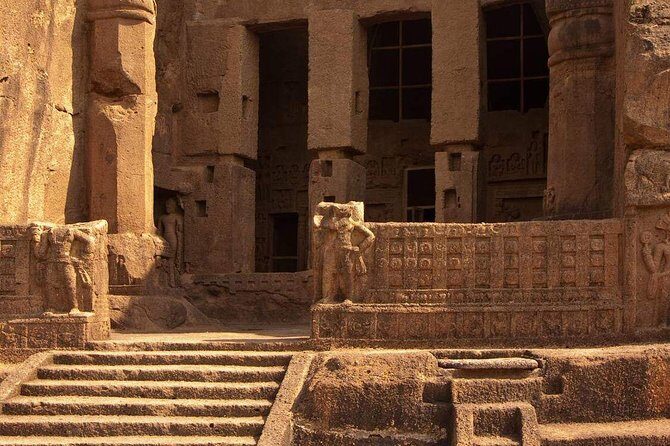
You don’t need special gear, but a few decisions will make the experience smoother.
- Wear comfortable shoes with grip. The park setting and hillside walking matter.
- Bring a light layer. Outdoor shade in forested areas can feel cooler than you expect.
- Use your time wisely at the caves: don’t rush your way through. Spend a little extra time on carvings and any visible inscriptions.
- Expect the day to be weather-dependent. If conditions are poor, the experience may shift dates or you may get a refund. That’s worth keeping in mind when you plan your Mumbai days.
How to think about Kanheri versus other Mumbai sights
Kanheri and Sanjay Gandhi don’t compete with Mumbai’s famous waterfront energy. They complement it. If your itinerary is heavy on markets, beaches, and urban sights, this half-day gives you a different kind of story: deep-time craft carved into basalt, then living wildlife in a protected park.
It also offers a quieter form of sightseeing. The caves are old, but the experience is not stuffy. It’s walking through a green outdoor sanctuary where the stonework reads like an ongoing study resource rather than a one-time performance.
Should you book Kanheri Caves and Sanjay Gandhi National Park?
Book it if you want a well-paced half-day that combines cultural heritage with a real nature setting, especially if you’d rather let someone else handle park entry navigation and timing. The pickup, private group format, and included refreshments are strong reasons to choose this over piecing it together alone.
Skip it if you’re traveling on days where weather is uncertain and you can’t flex your schedule. Also reconsider if you need a fully low-walking itinerary.
Overall, for $100, you’re paying for convenience, guidance, and the chance to see Kanheri’s cave complex in a park environment—then staying in the same ecosystem for a safari-style wildlife stop.
FAQ
How long is the tour?
It runs about 5 to 6 hours total, with roughly 4 hours at Kanheri Caves and about 1 hour at Sanjay Gandhi National Park.
Is pickup included?
Yes. Pickup is offered, and the tour is structured as a private group experience.
What’s included in the price?
The price includes all fees and taxes, coffee and/or tea, and refreshments. Alcoholic drinks are not included.
Are tickets included for the stops?
The tour details list admission tickets as free for the Kanheri Caves stop and the Sanjay Gandhi National Park stop.
Is this tour private?
Yes. It’s a private tour/activity, so only your group participates.
What is the cancellation policy?
You can cancel for free up to 24 hours in advance for a full refund. If you cancel within 24 hours, the amount paid isn’t refunded.