Old Jaipur has a way of grabbing you fast. This guided heritage walk mixes iconic sights with local flavor, plus a fun e-rickshaw ride through the Pink City. I like that you get hotel pickup/drop-off and an English-speaking guide for a very fair price, and I also like the built-in food breaks (tea/coffee and sweet lassi). The main thing to consider is that you’ll be walking and you’ll want comfy shoes, especially with the stop at Isarlat Tower.
If you’re choosing between morning and evening, you’re really choosing the mood of the city. Morning leans into the flower market’s colors and scents, while the evening option gives you Jaipur’s warm light and classic postcard angles. One possible drawback: timing can matter with sunlight and crowds, so if you’re heat-sensitive, the morning or a slightly earlier start can feel easier.
In This Review
- Key Points You’ll Care About
- Morning Flower Market vs Evening Golden Light
- Hotel Pickup, Mobile Ticket, and a Very Fair Price
- Stop-by-Stop: From Hawa Mahal to Govind Devji Temple
- Flower Market (Start): Where Ceremonies Begin
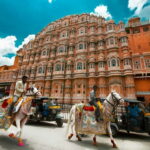
- Hawa Mahal: The Palace of Breeze and Its 900+ Windows
- Isarlat Tower: Climb for the Views and the Story
- Tripolia Gate: A Royal Entrance With a Political Twist
- Jalebi Chowk: The Square Behind the City Palace
- Govind Devji Temple: A Calm Finish and a Chai Q&A
- Pink City E-Rickshaw: Cover More Ground, Feel the Neighborhood
- Albert Hall Museum: Outside Views That Still Earn Their Time
- Food Tastings: Tea, Coffee, Sweet Lassi, and Snacks
- Guides Make the Difference (Sayyed, Ali, Nameera)
- Logistics That Affect Your Comfort
- Who This Tour Suits Best (and Who Might Not)
- Should You Book This Jaipur Heritage Walk With Rickshaw Ride?
- FAQ
- What is the duration of the Jaipur Heritage Walk with Rickshaw Ride?
- How much does the tour cost?
- Is pickup and drop-off included?
- What’s included in the experience besides the walking?
- Do I need to buy tickets for the stops?
- Is this tour private?
- What’s the cancellation policy?
Key Points You’ll Care About
- Hotel pickup and drop-off: It lowers friction, especially if you’re in a busy part of town.
- E-rickshaw through the Pink City lanes: You cover more ground without constant walking.
- Free-time admission stops: Several sights on the route are listed as free.
- Street food tastings included: Tea/coffee, sweet lassi, and snacks help keep the tour from feeling like a lecture.
- Private group option: It’s just your group, not a mixed crowd.
- Guide names vary, but the storytelling matters: People have praised guides like Sayyed, Ali, and Nameera for making the sights feel personal.
Morning Flower Market vs Evening Golden Light
This tour works in either the morning or the evening, and that choice changes the entire feel of Old Jaipur.
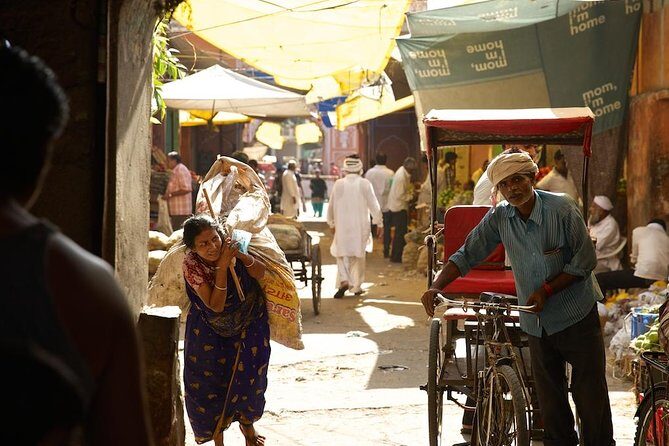
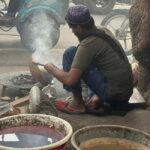
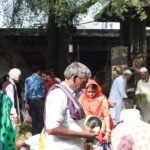
If you go in the morning, you start at the flower market area. You’ll see vendors at work setting up for ceremonies, with colors everywhere and a strong, sweet floral smell in the air. It’s a great start because it helps you understand what drives everyday life here—not just what you’ll see carved into stone.
The evening option tends to feel more cinematic. As the sun drops, Jaipur’s pink sandstone and carved facades pick up a warm glow, and the walk becomes easier to photograph. If you’re in Jaipur around Diwali, the evening experience can be especially electric; one guide, Ali, has handled night bazaars during Diwali for people who made a last-minute plan.
You can also read our reviews of more walking tours in Jaipur

Hotel Pickup, Mobile Ticket, and a Very Fair Price
At about $11.18 per person, the value is strong—mainly because you’re not just paying for a walk. You’re paying for a guide, pickup/drop-off, an e-rickshaw ride, and food tastings.
The tour is listed as 3 to 4 hours, and it’s typically booked about 13 days in advance on average. That’s a good sign: it means enough people take it to validate the format, and you can likely plan without stress if you book in a normal window.
You’ll also get a mobile ticket, so you’re not hunting for paper confirmations. And because it’s a private experience (your group only), you’ll get more control over questions, pace, and small adjustments—especially helpful when you’re mixing walking with photo stops.
If you’re trying to “do Jaipur efficiently” without turning the day into a checklist, this format makes sense. The only catch is that the price doesn’t include meals—so treat the tastings as snacks, not as a full lunch.
Stop-by-Stop: From Hawa Mahal to Govind Devji Temple
This route is designed to give you landmarks with context, not just names. You’ll move in a logical loop through Old Jaipur’s highlights, with short stops that keep you from feeling rushed.
Flower Market (Start): Where Ceremonies Begin
The tour begins in the flower market zone. You’ll spend about 30 minutes there, enough time to watch vendors work and take in the sensory side of Jaipur. I like this kind of opening because it makes the rest of the walk make more sense. Jaipur isn’t only palaces and forts—its traditions run through markets.
You’ll get free admission for this stop, which is handy. Keep in mind: markets can be tight. If you don’t love close quarters, try to keep your group tight and stay aware of foot traffic.
Hawa Mahal: The Palace of Breeze and Its 900+ Windows
Next comes Hawa Mahal, usually one of the first sights people think of in Jaipur. You’ll get around 30 minutes here. The star feature is the pink sandstone facade with the famous lattice style and 900+ windows, built so royal women could observe street life while staying behind the screen-like openings.
Even if you only take quick photos, you’ll likely notice the facade’s detail changes as you walk slightly around it. This stop is listed as free admission, so it’s a low-cost way to get a big-name icon.
You can also read our reviews of more historical tours in Jaipur






Isarlat Tower: Climb for the Views and the Story
Then you’ll visit Isarlat (Tower). The stop is about 30 minutes and includes climbing up to the top. Because the climb is part of the experience, plan for steps and take it at your pace—this is the one spot where comfortable shoes really pay off.
The tower’s value is that it’s not a giant tourist complex. It’s smaller, more focused, and it gives you a different angle on Jaipur’s architecture and layout.
Tripolia Gate: A Royal Entrance With a Political Twist
At Tripolia Gate, you’ll stop for about 15 minutes. What makes it interesting is the story behind it: it historically served as a private entry for the royal family, and there’s a note that it opened to the public only once when the former king ran for election.
This is one of those moments where a gate becomes a time capsule. You’re seeing a structure that carried power and controlled access—and now you’re passing it as a visitor.
Jalebi Chowk: The Square Behind the City Palace
Next is Jalebi Chowk, also around 15 minutes. It’s described as a square in the backyard area associated with the City Palace complex, and the name is tied to a serpentine road connecting east and west. This stop helps you understand how Jaipur’s street network has always been shaped by the palace and court life.
It’s a short stop, so don’t expect long photo sessions. Use it to orient yourself and connect the streets you’ll soon travel.
Govind Devji Temple: A Calm Finish and a Chai Q&A
The tour then reaches Govind Devji Temple, about 30 minutes. It’s dedicated to Lord Krishna and is noted as one of the most renowned Krishna temples. This stop gives the walk a spiritual pause, and it usually feels more grounded than the palace-area sights.
After the temple, you head to a nearby chai shop for a Q&A session. This is one of the better parts of the format because it’s a chance to ask specific questions—what you’re seeing, what it means, and what to do next in Jaipur.
Pink City E-Rickshaw: Cover More Ground, Feel the Neighborhood
After the temple area, you shift gears with an e-rickshaw ride through the old streets of the Pink City. This segment is about 1 hour and is the tour’s “breather” while still keeping you inside real neighborhood lanes.
I like this combination because Jaipur’s highlights can be spread out, and walking the whole time would slow the tour down. The e-rickshaw helps you keep moving while still catching the sights: shopfronts, colorful bazaars, and the texture of street life.
A practical tip: keep your phone or camera ready, but also keep a hand on your balance. Even in a quiet moment, these lanes can change fast with other pedestrians and parked bikes.
Albert Hall Museum: Outside Views That Still Earn Their Time
At the end, you’ll reach Albert Hall Museum. The stop is about 30 minutes, and you’ll mainly admire the museum’s architecture from the outside. That’s intentional: the design is the highlight, with an Indo-Saracenic look that’s photogenic from multiple angles.
This works well as a closing act. You get one last “big Jaipur landmark” moment without turning the end of your tour into a full museum day.
If you’re the type who wants to go inside, you’ll need extra time on your own. But if you want a heritage orientation first, this outside stop is a smart finish.
Food Tastings: Tea, Coffee, Sweet Lassi, and Snacks
One of the most practical things built into the tour is the included tasting set: tea/coffee, sweet lassi, and snacks. You’re not waiting around hungry, and the breaks give you time to regroup after walking.
The lassi and tea stops are also a nice way to experience flavors that are part of everyday street culture, not just formal dining. If you’re sensitive to spice or sweetness, you can always ask for a simpler version during the tasting.
Also, since meals aren’t included, you’ll still want to plan a proper meal either before or after the tour. The tastings are meant to keep you comfortable, not replace a restaurant lunch.
Guides Make the Difference (Sayyed, Ali, Nameera)
The route depends on a good guide. And here’s what stands out from the strongest feedback: the guides don’t just list facts—they explain what you’re looking at and connect it to how Jaipur works.
People have praised guides like Sayyed for being attentive and for adding an Amber Fort visit when timing and interest allow. That’s not guaranteed for every departure, but it shows the guide mindset can be flexible if you want more.
Others have mentioned Ali as warm and responsive, especially in evening scenarios like Diwali when plans may shift toward night markets. Nameera has been noted for guiding the story clearly and also taking people to a spice house area and helping them find a good local lunch spot afterward.
Even if the exact extras vary, the pattern is consistent: you’re better off when your guide treats the sights like living places instead of static photo targets.
Logistics That Affect Your Comfort
Here are the details that can make or break your day.
You’ll have hotel pickup and drop-off, which is huge in Jaipur where traffic and distances can add up. You start at Hawa Mahal Rd, Badi Choupad, J.D.A. Market, Kanwar Nagar, Jaipur and the tour ends back at the start area.
The tour is listed as 3 to 4 hours, and it’s a private experience for your group. That often means fewer standing-around moments and more control over pace.
Admission for the listed stops is shown as free in the route description. Still, always be ready for small on-site changes—especially around towers or temple areas—because local conditions can affect access.
The biggest comfort consideration: the Isarlat Tower stop involves climbing. If you’re managing knee issues, you might want to mention that to your guide at the start so you can plan your pace.
Who This Tour Suits Best (and Who Might Not)
This is a great fit if you want a guided orientation to Old Jaipur without spending the whole day on buses or in lines. It’s especially good for first-timers who want to understand the city’s shape: markets first, then palaces, then temple, then neighborhood streets.
It also suits people who like structure. The stops are timed so you get variety—architecture, street culture, and food—without feeling like you’re wandering.
It might be less ideal if you want a slow, self-paced “wander for hours” day with no set route. This one moves at a guided rhythm, and the stops are short by design.
Should You Book This Jaipur Heritage Walk With Rickshaw Ride?
If you’re doing Jaipur for a limited time, I’d book it. You get major landmarks, a neighborhood e-rickshaw ride, and food tastings, all wrapped into a half-day format with pickup and drop-off. For $11.18, it’s one of the more efficient ways to get a real feel for Old Jaipur.
Book it especially if you:
- want a morning or evening plan with a clear flow
- appreciate guide-led explanations
- like mixing architecture with street culture
- don’t want to plan transport between sights
Skip it if you:
- hate walking and climbing steps
- only want a big museum-focused day
- expect meals (the tastings are snacks)
If you’re choosing the morning vs evening slot, pick the one that matches your energy. The morning is more sensory with the flower market, while the evening tends to feel more atmospheric with sunset light.
FAQ
What is the duration of the Jaipur Heritage Walk with Rickshaw Ride?
The tour lasts about 3 to 4 hours.
How much does the tour cost?
The price is listed as $11.18 per person.
Is pickup and drop-off included?
Yes. The tour includes hotel pickup and drop-off.
What’s included in the experience besides the walking?
You’ll have an e-rickshaw ride through the heritage city, plus street food tastings such as tea/coffee, sweet lassi, and snacks.
Do I need to buy tickets for the stops?
Admission is listed as free for the stops on the route.
Is this tour private?
Yes. It’s a private tour/activity, and only your group participates.
What’s the cancellation policy?
Free cancellation is available up to 24 hours in advance for a full refund. If you cancel less than 24 hours before the start time, the amount paid is not refunded.