Golden Triangle tours can feel like a travel treadmill. This one is designed to keep you moving with a private air-conditioned vehicle, so the big-name sights happen on a sane schedule.
What I like most is how it’s built around pacing: early access to the Taj Mahal at sunrise and a tight sequence of Agra and Jaipur landmarks over four days. You’re also not stuck hunting buses, trains, and ticket lines all day.
The main consideration: monument entry tickets, accommodation, meals, and laundry are not included, so your final budget depends on what you choose at each site.
In This Review
- Key Things That Make This Golden Triangle Feel Worth It
- A Short Golden Triangle Plan That Doesn’t Waste Your Energy
- What the $322.70 Price Means for Your Time and Comfort
- How the Sunrise Taj Mahal Day Works (and Why It’s a Big Deal)
- Agra Fort and Itmad-ud-Daula: Mughals Before the Main Photo
- Agra Fort
- Itmad-ud-Daula (Baby Taj)
- Fatehpur Sikri and Chand Baori: Two Very Different Kinds of Wow
- Fatehpur Sikri
- Chand Baori (Step Well)
- Amber Palace and Sheesh Mahal: Big Views with Interior Drama
- Sheesh Mahal
- Jaipur’s Icon Stops: Hawa Mahal, Jantar Mantar, City Palace
- Hawa Mahal (Palace of Wind)
- Jantar Mantar
- City Palace of Jaipur
- Jal Mahal as Your Scenic Exit Before the Trip Back
- How the Driver and Guide Experience Affects the Whole Trip
- What You’ll Want to Plan for Before You Go
- Should You Book This Golden Triangle Tour?
- FAQ
- How long is the Golden Triangle Delhi–Agra–Jaipur tour?
- What is included in the tour price?
- Are monument entry tickets included?
- Where does the tour start?
- Are accommodation and meals included?
- Is this tour private and can the plan be customized?
Key Things That Make This Golden Triangle Feel Worth It
- Private, air-conditioned car for your group with an English-speaking driver, plus bottled water and WiFi
- Sunrise Taj Mahal timing with a historian guide meeting you at your hotel early
- Agra Fort + Itmad-ud-Daula give you Mughals beyond just the main photo spot
- Fatehpur Sikri + Chand Baori add variety with UNESCO-listed scale and a step-well that’s genuinely different
- Amber Palace and Sheesh Mahal mix big views with smaller, more romantic interior moments
- Jaipur’s core icons in one sweep: Hawa Mahal, Jantar Mantar, and City Palace
A Short Golden Triangle Plan That Doesn’t Waste Your Energy
If you’ve got limited time in North India, the Golden Triangle is the obvious route. The problem is the logistics can eat your day: trains get delayed, buses aren’t where you expected, and the last-minute scramble can kill the fun. This setup keeps the driving in the hands of a driver and keeps the day organized for you.
You get a private vehicle in an air-conditioned car for your group (up to 2 people), with road tolls, parking charges, bottled water, and WiFi included. That matters because “included” here isn’t fluff. It cuts down on constant stop-and-start hassles, and it helps your trip feel like a real plan rather than a series of negotiations.
Also, the itinerary is customizable. That’s useful in a place where you might want to swap time at a viewpoint, adjust for a slower pace, or add an extra photo stop without breaking the whole schedule.
One last point: this is designed as a private tour/activity, so it’s not one of those “you share the van and hope for the best” situations.
You can also read our reviews of more tours and experiences in Jaipur.


What the $322.70 Price Means for Your Time and Comfort
The price is listed as $322.70 per group (up to 2), and that’s a key detail. You’re paying for the convenience of a private, air-conditioned car and guided components—not just sightseeing.
Here’s the practical value equation I’d use:
- You’re getting transport + driver + WiFi + bottled water + road costs covered, which reduces add-on expenses that can pop up fast in India.
- You’re also getting English / other language tour guide support, which helps when you want more context than a quick guidebook skim.
- What you’re not getting is the big-ticket budget items of India comfort: entry tickets, accommodation, and meals.
So if you already know you’ll book a good hotel and buy tickets anyway, the pricing starts to look more like “paying to save effort.” If you’re trying to keep every rupee minimal, the extra monument entry costs may make you rethink upgrades.
Given the schedule—Agra plus Jaipur highlights plus optional-feeling detours—it’s the kind of package that can make a short trip actually feel full, not rushed.
How the Sunrise Taj Mahal Day Works (and Why It’s a Big Deal)
The Taj Mahal is the headline. But the timing is the magic trick.
Your morning starts early. A historian guide meets you at your hotel for the sunrise Taj Mahal experience. That early start isn’t just romantic marketing—it changes the whole vibe of the visit. The air is cooler, light is better for photos, and the day feels less like a sweaty sprint right away.
After Taj Mahal, the plan continues to Fatehpur Sikri and the step well at Chand Baori (the itinerary lists Chand Baori as the step well stop). You end up with a day that’s not only about one monument, but about what powered the Mughal world: major imperial building, then a striking rain-water engineering idea that still works as a visual wow-factor.
Practical note: monument entry tickets aren’t included, so you’ll want to budget for access. Camera tickets may also be extra. If you’re bringing gear, plan for that in advance so you’re not stuck at the gate doing math.
Agra Fort and Itmad-ud-Daula: Mughals Before the Main Photo
Day 1 is built for perspective. Instead of immediately chasing only the most famous Taj Mahal angles, you start with two Mughal-linked sites that help you understand the era.
Agra Fort
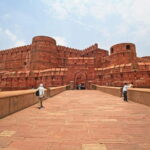
You’ll visit Agra Fort, described as a historical fort that once served as the main residence of Mughal Emperor(s). You’re looking at about an hour here.
This stop is useful because it frames the Taj Mahal story. The Taj is a masterpiece, but it didn’t appear out of nowhere. A fort visit gives you a sense of power, control, and how the rulers lived inside their world.






Itmad-ud-Daula (Baby Taj)
Then you go to Itmad-ud-Daula, often called the Baby Taj. The itinerary calls this one around 20 minutes, with entry ticket not included.
This is a smart “short stop” because it’s compact but meaningful. The details tend to reward slower looking, but if you’re tight on time, 20 minutes can still get you the main visual impact.
If your group likes photos, both of these stops give you angles that feel different from the Taj’s iconic postcard view.
Fatehpur Sikri and Chand Baori: Two Very Different Kinds of Wow
Day 2 after Taj Mahal adds contrast: imperial scale at Fatehpur Sikri, then a weird-and-wonderful practical engineering marvel at Chand Baori.
Fatehpur Sikri
Fatehpur Sikri is listed as once the Mughal capital, with around an hour planned. Entry ticket is marked as free in the itinerary information, which is a nice budget surprise.
This is the kind of place where you can spend time just walking and letting the scale hit you. You get big structures and a sense that the empire was actively designing its own stage.
Chand Baori (Step Well)
Then comes Chand Baori, about 30 minutes.
A step well isn’t just a photo moment. In the real world, it was a way to preserve rainwater—and the design is the point. When you look down, it’s easy to understand why this place keeps drawing people in. It also breaks up the day visually, since you’re not just seeing palaces and tombs back-to-back.
If you want your Golden Triangle to feel varied rather than repetitive, this is where that happens.
Amber Palace and Sheesh Mahal: Big Views with Interior Drama
Day 3 is your Rajasthan spotlight. The centerpiece is Amber Palace, planned for about two hours.
Amber Palace is worth that time because it’s not just one building. It’s a whole experience: palace architecture, hilltop views, and the sense of a royal residence that was designed for power and theater.
Sheesh Mahal
Inside the palace circuit, you have a quick stop for Sheesh Mahal, listed at 10 minutes, with entry marked as free.
Even with a short visit window, this is the kind of room that gives you a clear “why people talk about this” moment. It’s also a nice pacing break: you get the big exterior views at Amber, then shift to a smaller, more intimate interior.
Jaipur’s Icon Stops: Hawa Mahal, Jantar Mantar, City Palace
After Amber, the itinerary jumps into Jaipur’s signature landmarks. This is where you’ll feel why Jaipur is called the Pink City.
Hawa Mahal (Palace of Wind)
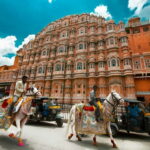
You’ll see Hawa Mahal, about 20 minutes. This is the icon everyone recognizes, the honeycomb-like facade that makes Jaipur look instantly distinct from the other cities in the Triangle.
Even if you’ve seen pictures, seeing it in person helps your brain connect the dots: it’s not just pretty. The design is tied to the way buildings were used socially and in daily life.
Jantar Mantar
Next is Jantar Mantar, around 45 minutes.
This is the ancient astronomy complex. The fun here is that it’s not only “look at old stuff.” It’s old technology with a clear purpose, built into stone and geometry. If you enjoy non-obvious facts, this will reward you.
City Palace of Jaipur
Then City Palace of Jaipur, about 1.5 hours, covering courtyards, places, and a museum component.
This is a strong end to the day because it shifts you from individual monuments to a sense of how the royal family lived and displayed power. It’s also a good chance to slow down after quicker icon stops.
The itinerary’s flow here works well: it keeps you in Jaipur’s main zones instead of sending you across town repeatedly.
Jal Mahal as Your Scenic Exit Before the Trip Back
Day 4 includes a stop at Jal Mahal, about 5 hours mentioned alongside the final return to Delhi.
Jal Mahal is the kind of sight that feels like a palate cleanser after palace and fort days. It’s also a classic “look and breathe” moment—especially because the itinerary is otherwise packed.
After that, your tour ends as you head back toward Delhi. For a short trip, that’s a useful design: you wrap with something pretty instead of ending the day at a transportation desk.
How the Driver and Guide Experience Affects the Whole Trip
In India, the driver is not just the person who moves the car. They control your stress level.
This tour includes an English / other language tour guide and a highly English-speaking driver. On top of that, the service emphasizes practical comfort: bottled water, and WiFi in the vehicle. In feedback from similar trips, drivers have been praised for calm driving in hectic road conditions, punctual timing, and helpful extras like snacks or fast problem-solving when plans shift.
Names that have come up in customer experiences include Sunil, Santosh Kumara, Ujjwal, Guman, Vicky, and coordination support associated with team members like Deepak, DD, Dineshji, Jash, and guides such as Bhoopi. I can’t promise which person you’ll get, but I can say the pattern is consistent: safety, communication, and care for small needs.
That’s the difference between “we got there” and “the day felt manageable.”
What You’ll Want to Plan for Before You Go
Because entry tickets, accommodation, meals, and laundry aren’t included, you’ll want to think about your budget mix early.
- Entry tickets: you’ll pay at monuments.
- Meals: you’ll need to arrange them yourself outside the package.
- Accommodation: you’ll book your own nights.
If you’re traveling with a child, the short-visit stops can work well because the day doesn’t ask you to stand in lines for hours without a payoff. If you’re traveling solo, the private car can still be great value when you want flexibility and fewer surprises.
If your group is the type that likes long shopping detours, you’ll need to add time or customize the plan, since this itinerary keeps a tight sequence.
Should You Book This Golden Triangle Tour?
You should book if:
- You want a private, air-conditioned way to cover Agra and Jaipur efficiently from New Delhi.
- You care about getting the Taj Mahal early with a guide who can explain what you’re seeing.
- You prefer a scheduled route with room for small adjustments.
You might skip or adjust if:
- You’re trying to keep total costs super low, since monument entries and your hotel/meals are extra.
- You want a lot of unstructured time in each city (this plan is tight by design).
My take: for a short North India trip, this is one of the smarter ways to do the Golden Triangle without turning your vacation into a logistics project. The value comes from comfort and timing, especially that sunrise Taj Mahal day.
FAQ
How long is the Golden Triangle Delhi–Agra–Jaipur tour?
The tour runs for about 4 days.
What is included in the tour price?
You get a private air-conditioned car with an English-speaking driver, road tolls and parking, bottled water, WiFi, government service tax (GST), and an English/other language tour guide.
Are monument entry tickets included?
No. Entry tickets at the monuments are not included (camera tickets may also be extra).
Where does the tour start?
The meeting point is in New Delhi, Delhi, India.
Are accommodation and meals included?
No. Accommodation, meals, and laundry are not included.
Is this tour private and can the plan be customized?
Yes. It’s a private tour/activity for only your group, and the itinerary is customizable.