REVIEW · JAIPUR
3-Hour Morning Bike Tour of Jaipur
Book on Viator →Operated by LE TOUR DE INDIA · Bookable on Viator
Morning in Jaipur changes on two wheels. This early bike tour gets you into the historical walled city before the day heats up, with guided culture stops and breakfast-style tastings along the way. I love how you’re not stuck staring at buildings from one viewpoint—you’re moving through Jaipur as it wakes up.
My other favorite part is the food-and-faith mix: you’ll ride to major sights like Hawa Mahal and City Palace (mostly from the outside), then slow down for the Govind Devji temple atmosphere and morning prayers. The only drawback to plan for is that you do not enter the monuments on the itinerary, so this is about views, streets, and experience rather than ticketed inside visits.
In This Review
- Key takeaways before you book
- Why 6:00 am matters in Jaipur’s Pink City
- Your bike and safety setup: Trek, Giant, Marin plus an e-rickshaw
- Pink City riding: the streets inside Jaipur’s walled core
- Albert Hall area tea break and laughing-yoga style fun
- Hawa Mahal photo stop in morning sunlight
- Govind Devji Temple: morning prayers with the city in motion
- City Palace viewpoints without monument ticket stress
- Spice-and-sweets market ride with rooftop pakoras
- Marble-sculpture lane and the lassi finale
- Food stops that feel local, not staged
- What it feels like in the saddle: pace, people, and guides
- Value check: what $32 buys you in three hours
- Who should do this Jaipur morning bike tour
- Should you book this Jaipur morning bike tour?
- FAQ
- What time does the tour start, and how long is it?
- Is hotel pickup or drop-off included?
- What bikes are provided, and are helmets included?
- Can non-riders or less-confident cyclists join?
- Do you enter monuments during the tour?
- What is the minimum age, and how large are the groups?
- Is breakfast and food included, and can you handle dietary allergies?
Key takeaways before you book
- 6:00 am start means less crowd energy and more calm for photos and street life
- Max 8 people with 3–4 guides makes it feel personal, not chaotic
- Trek, Giant, and Marin bikes plus helmets and bottled water keep the ride comfortable
- An e-rickshaw follows so you can switch to car mode any time
- Breakfast tastings include chai and stops known for lassi and pakoras
- Temple + laughing yoga style moments add a cultural angle beyond sightseeing
Why 6:00 am matters in Jaipur’s Pink City
This tour starts at 6:00 am, and that timing is the whole game. Jaipur can get loud later, with traffic and people spilling into every street. In the early hours, you still see daily life—shopfronts waking, morning activity picking up, and the pink-hued city looking at its best.
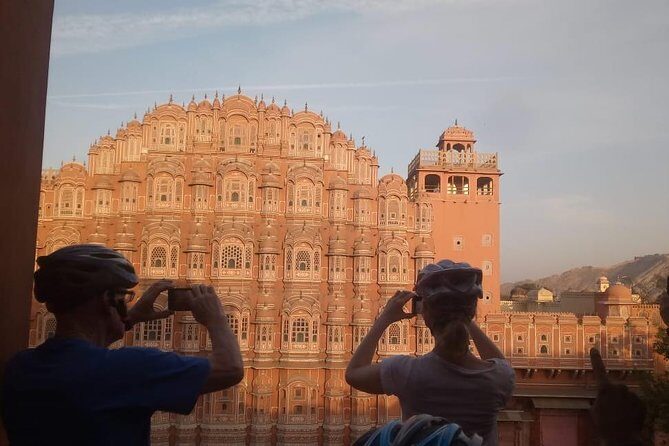
You’re also dealing with morning light. Places like Hawa Mahal photograph much more gently in the sun before the heat hardens everything. It’s not about chasing perfect Instagram angles; it’s about seeing Jaipur when it feels human-sized.
The ride is about 3 hours 10 minutes (approx.). That’s long enough to feel like you covered ground, but short enough that you won’t be cooked by the time you’re done.
You can also read our reviews of more cycling tours in Jaipur

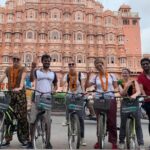
Your bike and safety setup: Trek, Giant, Marin plus an e-rickshaw
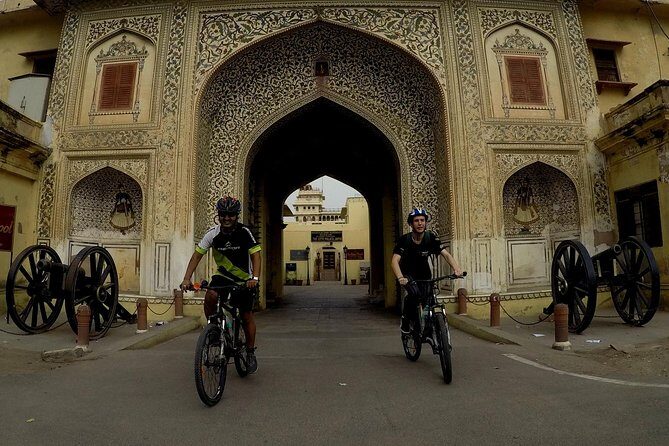
Safety is a big focus here, and it shows in how the tour is set up. You’ll get a properly fitted bike from brands including Trek, Giant, and Marin, along with good helmets and bottled water.
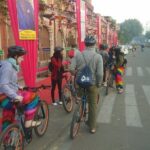
Most groups won’t be 100% on bicycles the whole time. There’s an e-rickshaw that follows, so you can switch anytime if you want a break from pedaling. That also helps families or anyone who’s not fully confident about narrow streets and quick turns.
The tour is built to be family friendly. You’ll see options like e-bikes, tandem bikes, baby seats, and kids bikes, and the minimum age is 5 years. The tour runs with a maximum of 8 travelers, and guides are often 3–4 people for escort and support.
One practical tip: the tour asks you to arrive about 10 minutes early. If you’re late, they can wait if you’ve told them in advance, but don’t treat that as automatic.
Pink City riding: the streets inside Jaipur’s walled core
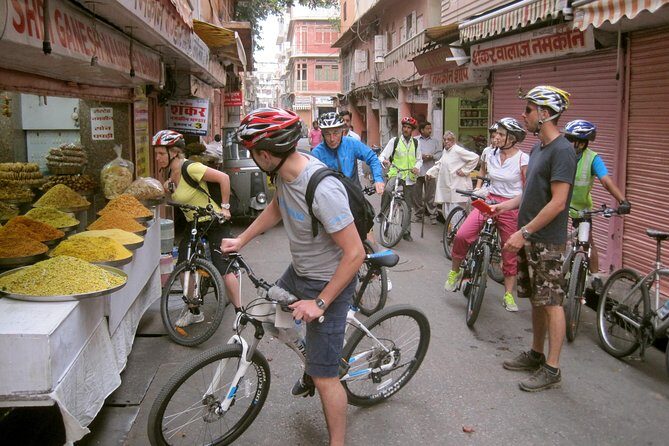
The morning starts by entering Jaipur’s famous walled city, known for being painted in pink—the nickname Pink City. This part matters because you get the real texture of Jaipur: tight lanes, wall-lined streets, and the kind of street rhythm you won’t catch from a bus window.
You spend about 1 hour 30 minutes in this area, and the emphasis isn’t on racing past sights. It’s slow-paced, with guided explanations along the way—how Jaipur’s architecture and city layout connect to daily life.
Expect plenty of “wait, look at that” moments. Even if you’ve seen Jaipur’s big names before, the walled city’s smaller scale makes the details feel closer: doorways, courtyards, temple edges, and the way people move in the morning.
Albert Hall area tea break and laughing-yoga style fun
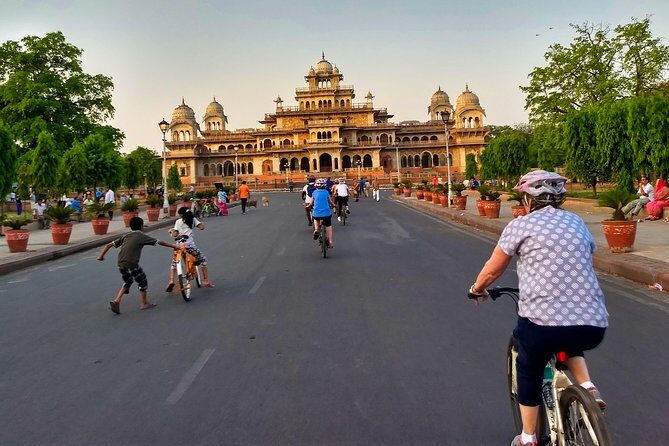
Right after tea, you ride toward the Albert Hall Museum area. Even though you’re not spending time inside a museum here, this stop is useful because it turns into a calmer pocket of public space while the rest of the city is still busy getting started.
You’ll get a break to reset and sip tea—then the tour adds a playful moment that many people remember as a highlight: laughing yoga (the exact format depends on the session and timing, but the idea is you join in, not watch from the sidelines).
This is one of those “only in the moment” experiences. It helps the group relax after the morning ride and gives you an actual taste of how people practice joy and community in everyday life.
Hawa Mahal photo stop in morning sunlight
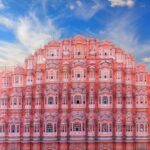
Next comes a quick stop for Hawa Mahal (Palace of Wind). This is where the timing matters again. The tour plans it as a photo stop when morning sunlight makes the building look crisp instead of flat.
You’ll get time to look, shoot a few photos, and absorb the vibe. The practical benefit of handling this as a stop on a bike tour: you reach it as streets are calmer, and you don’t spend half your morning stuck in photo-line traffic.
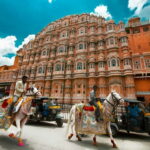
Also, you’ll be approaching Jaipur’s icons from street level and from motion. It changes your perception of the architecture, because you feel its scale against the lane width.
A few more Jaipur tours and experiences worth a look

Govind Devji Temple: morning prayers with the city in motion
The most spiritual stop on the route is Govind Devji Temple. You’ll maneuver through pedestrians headed to ceremony, so it’s active and real—not a quiet “tourist zone” pause.
Once you enter the temple environment, plan on about 30 minutes. This is your window for morning prayers and that slightly unreal feeling of watching devotion unfold without needing to translate every single detail to appreciate it.
A bike tour makes this stop different than a standard walking visit. You see how the flow of people and the flow of bikes coexist, and you get to feel the guiding structure—your escort helps you navigate the busy moments safely.
City Palace viewpoints without monument ticket stress
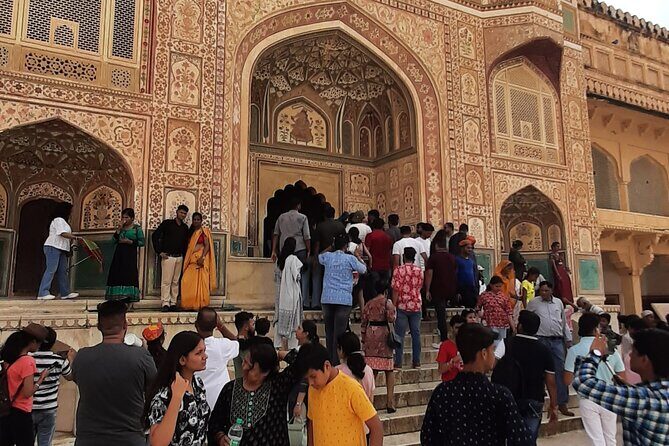
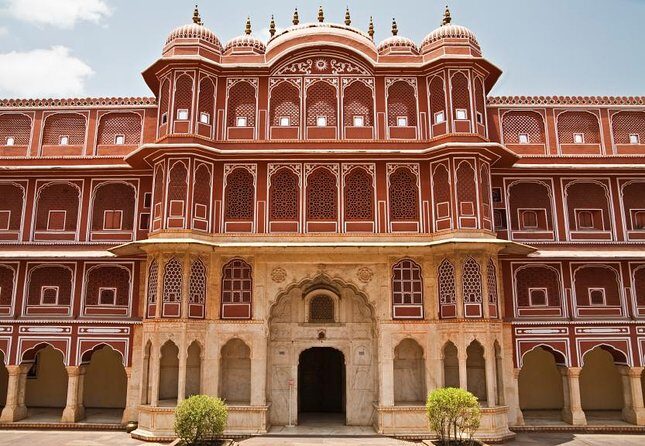
You’ll also pass through the City Palace of Jaipur campus. The tour route goes through the main entrances and key areas when traffic is lighter.
A big point to understand up front: the tour does not enter monuments listed on the route. You view them from outside as they open later. That’s not a flaw so much as a tradeoff.
Here’s the benefit: you avoid wasting time on entry lines and you keep the tour moving with the early-morning schedule. The drawback is simple—if your vacation brain is wired for inside-the-gate sightseeing, you may feel like you’re getting “the postcard version” instead of the full interior.
Spice-and-sweets market ride with rooftop pakoras
One of the most fun parts of any food-focused tour is when it takes you to places you might never find solo. This route does that in the spices and sweets market corridors area (the stop is associated with Isarlat Sargasooli).
You get a brief ride-and-walk moment, plus a food break that’s especially memorable: a tea seller’s rooftop spot above a sweet shop, where the highlight is pakoras (fritters). It’s a classic Jaipur combination—hot tea and fried, crisp snack energy—right when you’re warm from riding but not yet overheated.
The tea-and-snack rhythm also works practically. You’re not just sightseeing; you’re fueling up for the remaining ride through the walled city.
Marble-sculpture lane and the lassi finale
Two final culture-and-food stops close out the loop.
First is Khajane Walon Ka Rasta, a lane known for marble sculptures by artisans. You’ll spend about 20 minutes here, enough time to notice the scale and variety of work rather than just passing through.
Then comes the lassi stop: Lassiwala Kishan Lal Govind Narain Agarwal. This is a famous lassi outlet, and it’s tied to history because the shop was built in the independence era just outside the walled city. You’ll get about 10 minutes here to try the chilled, tangy comfort of churned yogurt shake.
As a food endcap, it works perfectly. You’ve been eating savory bites earlier, and lassi cools everything down—spiritually and physically.
Food stops that feel local, not staged
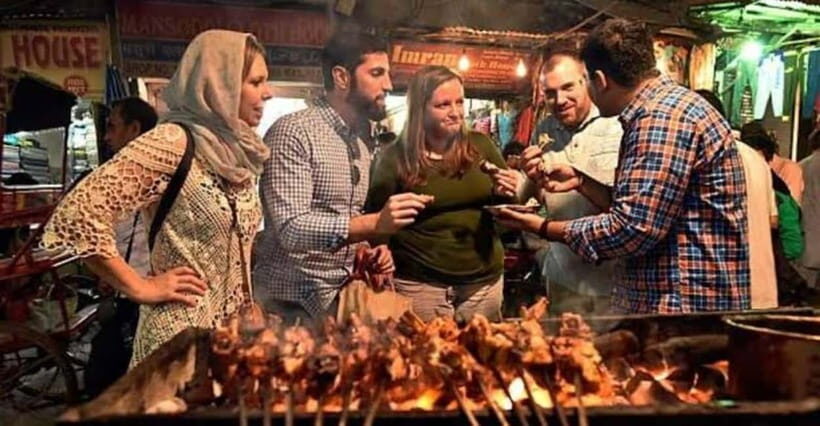
This tour includes breakfast-style tastings, not just one quick snack. You’ll have multiple stops built around Jaipur favorites, including chai and iconic picks like pakoras and lassi.
I like that the tour frames food as part of daily rhythm. It’s not treated like a museum exhibit. It’s something you eat while people are going about their morning—shopkeepers, tea sellers, and temple attendees all sharing the same space on different schedules.
If you’re worried about dietary needs, this is worth noting: they ask you to mention milk or wheat flour allergies in advance, and they keep alternative options ready.
What it feels like in the saddle: pace, people, and guides
The ride is slow-paced, and it’s designed for mixed skill levels. You won’t be doing endurance training. Instead, you’re getting enough movement to cover Jaipur’s historic core, with guided pauses so you don’t just coast through.
Guides are key here. The group is led by experienced cycling guides (typically 3–4), and they help with both riding and cultural storytelling. Names that come up repeatedly include Himmat, Dipesh, Amin, Archit, Umesh, Raghav, Navin, and Jyoti.
From what you can expect on a practical level:
- they manage safety during crossings and tighter lanes
- they help match pace so solo riders aren’t stuck at the back
- they look out for confidence levels, and if someone’s nervous, the e-rickshaw option helps
- photos and short videos are often part of the experience (some guides are especially proactive about capturing the day)
If you’re a first-time bike rider or you usually avoid hectic street traffic, you’ll likely feel better starting early with a team that’s used to guiding people through this exact environment.
Value check: what $32 buys you in three hours
At $32 per person, this tour can be great value if you want more than a generic “see the sights” morning. Here’s what’s included that matters in day-to-day terms:
- Bike rental with reputable brands (Trek, Giant, Marin, Giant)
- Helmets and bottled water
- Breakfast-style food stops with multiple tastings
- A guided team (3–4 guides) for safety and context
- Transport backup via an e-rickshaw if you switch modes
Also, many stops on the route are listed as free admission and the big sights are mainly viewed from outside. That’s part of why this can stay priced reasonably for a guided experience with food.
The one cost you should expect outside the tour price: hotel transfers aren’t included. They meet you at Le Tour De India, 14-B near Mirza Ismail Road, Panch Batti, Jayanti Market, New Colony, Jaipur (302001), and the tour returns to the same meeting point.
Who should do this Jaipur morning bike tour
This is a good fit if you want:
- a high-signal morning in Jaipur (culture + food + sights in a few hours)
- an option that doesn’t punish you for not being an expert cyclist (e-rickshaw, tandem, e-bikes)
- a more local pace than big-bus sightseeing
- temple and street-life context, not only monuments
It also works well for families because bikes come in different sizes and there’s a support setup for kids and less-confident riders.
If you hate early starts or you only want inside visits to major monuments, you might prefer a different style of tour.
Should you book this Jaipur morning bike tour?
If you’re visiting Jaipur and want one experience that ties together Pink City streets, breakfast tastings, and temple atmosphere, I’d strongly consider booking this. The early start gives you calmer streets. The food stops feel real. And the safety-first setup means you’re not stuck stressing about riding in traffic.
Book it if you enjoy getting out into the city while it’s still waking up, and you’re okay with seeing icons from the outside rather than entering every monument. Skip it only if you’re mainly chasing ticketed interiors and you’d rather sleep in than start at 6:00 am.
FAQ
What time does the tour start, and how long is it?
The tour starts at 6:00 am and lasts about 3 hours 10 minutes (approx.).
Is hotel pickup or drop-off included?
No. Hotel transfers aren’t included, and the tour starts and ends back at the meeting point.
What bikes are provided, and are helmets included?
The tour provides high-end bikes from Trek, Giant, and Marin, and includes good quality helmets plus bottled water.
Can non-riders or less-confident cyclists join?
Yes. There’s an e-rickshaw following the group, and the tour also offers options like tandem bikes and e-bikes, so you can switch anytime if you prefer not to pedal.
Do you enter monuments during the tour?
No. The tour does not enter the monuments mentioned in the route. You view them from outside as they open later.
What is the minimum age, and how large are the groups?
The minimum age is 5 years. The booking needs at least 1 person and a maximum of 6 person to confirm, and the tour runs with a maximum of 8 travelers.
Is breakfast and food included, and can you handle dietary allergies?
Yes. Breakfast is included with multiple stops to taste local foods. The provider asks you to share dietary concerns or allergies (like milk or wheat flour) in advance, and alternative options are kept ready.