REVIEW · JAIPUR
Cultural Walk and Food Tasting In Jaipur
Book on Viator →Operated by Rajasthan Cultural Tours · Bookable on Viator
Jaipur’s best bites come with background. This cultural walking + food tasting tour takes you through old markets where the city’s daily rhythms still run on craft, spice, and sweets. I like how it’s not just eating on the move; you also get the stories behind what you’re seeing, from Maniharo Ka Rasta bangles to the historic shop streets.
Two things I really like: the small group size (max 10) keeps it friendly, and the route leans into real local lanes instead of only the obvious photo stops. A possible consideration is that it’s a good-weather, walking-based experience, so if you dislike heat, uneven sidewalks, or you want lots of sitting breaks, plan accordingly.
In This Review
- Key takeaways before you go
- Jaipur cultural walk and food tasting: what you’re really signing up for
- Meeting points and timing: start in Pink City, finish near Choti Choupar
- Your guide: storytelling matters as much as the tasting
- Stop 1: brass, iron, and stainless steel utensils shop street
- Stop 2: tower explanation with history and story
- Maniharo Ka Rasta: bangles, lac, and why this street has a name
- Bhagat Jaipur sweet shop: dessert time, not just a sugar break
- The spice market stop: smell, color, and practical food context
- Street with carved sculptures and marble artwork
- What’s included (and what you’ll likely want to budget for)
- Group size and pace: 3 hours in small-market mode
- How to get the most out of the tasting (without overdoing it)
- Price and value: why $22.37 can still feel like a deal
- Weather and comfort: plan around good conditions
- Where this tour fits best in your Jaipur schedule
- Should you book this cultural walk and food tasting in Jaipur?
- FAQ
- How long is the Cultural Walk and Food Tasting tour?
- Where do I meet and where does the tour end?
- What food and drinks are included?
- How big is the group?
- Is hotel pickup or drop included?
- What’s the cancellation policy if the weather is bad?
Key takeaways before you go
- Max 10 people means you get more attention and quicker chances to ask questions.
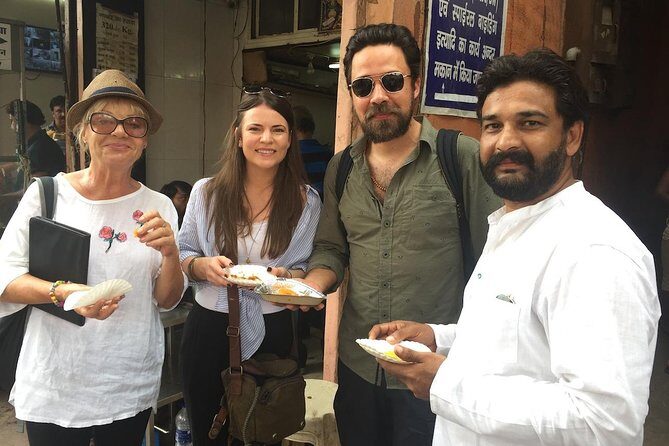
- English-speaking foodie guide who shares city context as you eat.
- Bazaars with purpose: bangles, sweets, spice market stops, plus craft-focused streets.
- Food includes chai and dessert, so you don’t have to budget extra for every stop.
- Mobile ticket and two clear meeting points make it easy to start and finish.
- Ends at Choti Choupar, a convenient spot to keep exploring on your own.
Jaipur cultural walk and food tasting: what you’re really signing up for
This tour is built around a simple idea: in Jaipur, food isn’t separate from culture. It’s how people shop, celebrate, and keep traditions alive. You’ll walk through classic bazaar zones, stop at key spots, and taste a mix of street food-style plates and local favorites, plus masala chai and a traditional dessert.
At $22.37 per person for about 3 hours, the value is in the guidance and the included tastings. You’re not just buying snacks; you’re paying for a route that connects the dots between places (markets and crafts) and what you eat there. And because the group stays small, the guide can pace you, explain what matters, and help you try things without feeling lost.
It’s also nice that the tour includes a few basics that make the outing easier: bottled water plus the set of foods and drinks listed in the package. That matters because Jaipur can be warm, and you’ll want to keep moving without constantly stopping for additional purchases.
You can also read our reviews of more walking tours in Jaipur

Meeting points and timing: start in Pink City, finish near Choti Choupar
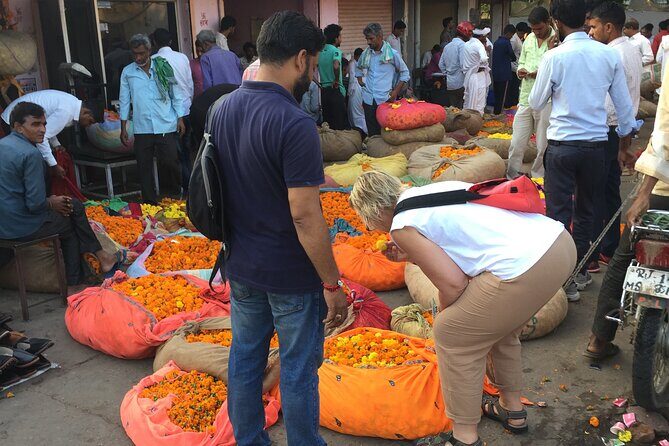
You’ll meet at Golcha Cinema, Chaura Rasta Rd, New Gate, Bapu Bazar, Pink City. The finish is at CHOTI CHOUPAR, Kishanpole Bazar Rd, Pink City.
The tour runs about 3 hours (approx.), and it’s described as a walking tour with multiple market stops. The exact pace can depend on the crowd level in the bazaar lanes that day, but the structure is consistent: you’ll move between themed areas and then wrap up at the end point.
Practical tip: because this starts near New Gate and ends at Choti Choupar, it’s a great slot for your first full day in Jaipur—or for any day when you want to get your bearings fast without turning it into a long commute.
Your guide: storytelling matters as much as the tasting

The experience is guided by an English-speaking foodie tour guide, and the review comments put a spotlight on style and safety in equal measure. Guides like Vivek are described as excellent storytellers who connect history and city culture to the street-level details. Another guide, Raj, is praised for being chatty, informative, and making people feel safe while walking through busy market areas.
Why this matters for you: in a place like Jaipur, it’s easy to eat first and learn later. With a good guide, the food becomes easier to interpret. You’ll understand why a sweet shop is famous, why a specific street is known for a craft, and what you’re likely tasting before you take the first bite.
Stop 1: brass, iron, and stainless steel utensils shop street
One of the early stops is focused on purchasing brass, iron, and stainless steel utensils, along with places selling textiles and furniture. Even if you’re not buying anything, this is a useful window into how Jaipur shops work. You’ll see the kind of everyday goods that locals associate with home cooking, preparation, and daily life.
What I think you’ll get most out of this stop: the sense that food culture is also material culture. Utensils, cookware, and the way vendors present products all shape the cooking habits behind the meals you’ll eat later on.
Potential drawback: if you’re hoping for a stop that’s purely about eating, this one is more about context. It’s still valuable, but your taste buds may want to wait a bit.
Stop 2: tower explanation with history and story
Next comes an explanation about a tower, including the history and the story behind it. This works like a reset button for your brain. You’ve already started in the market world, and now the guide links the street setting to the bigger picture of Jaipur’s layout and its long-running traditions.
For you, this kind of intermission is helpful because it makes the rest of the walk feel more connected. You stop seeing bazaars as random clusters and start seeing how the city makes movement and commerce make sense.
You can also read our reviews of more food & drink experiences in Jaipur






Maniharo Ka Rasta: bangles, lac, and why this street has a name
Then you hit Maniharo Ka Rasta, a street where the word behind the market is part of the point. The tour explains that Manihar refers to people who make bangles, and the area is known for selling all kinds of bangles—especially those made with lac.
This is a great stop because it’s not a generic marketplace. It’s a specialized craft lane with identity. You’ll get a short, focused introduction (about 15 minutes) and then move on, which is a good balance during a walking tour.
What to expect if you enjoy details: you’ll see how craft work and trade overlap with daily life. And if you like shopping, this is the kind of place where browsing feels more meaningful than aimlessly wandering.
Bhagat Jaipur sweet shop: dessert time, not just a sugar break
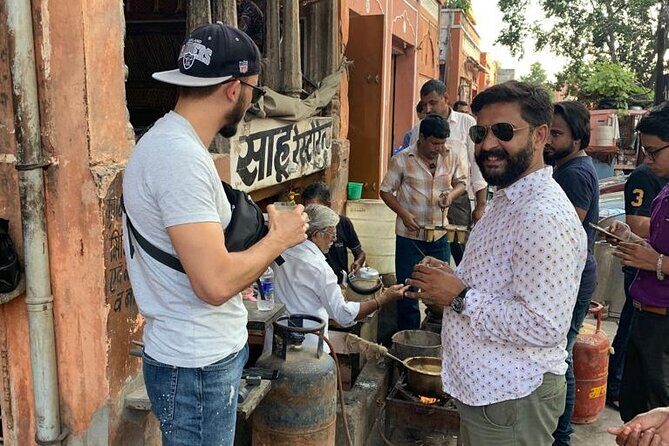
After the bangles, you’ll stop at Bhagat Jaipur, described as a very famous sweet shop. This part includes admission, and the time window is about 10 minutes.
The key value here is timing. You’re already walking through markets, so the sweet stop becomes part of the rhythm of the tour, not an afterthought. Plus, sweets in Jaipur aren’t only for taste; they’re for occasions, gifting, and a whole culture of celebration.
Practical tip: if you’re sensitive to very sweet flavors, pace yourself. The guide can help you choose bites that fit your comfort level, but your best move is to go slowly and taste intentionally.
The spice market stop: smell, color, and practical food context
Next you’ll spend time in a spice market area. This stop is exactly what it sounds like: the senses get loud—aroma, color, and the sheer variety of products.
Why this matters on a food tour: spices are the invisible language behind many Indian dishes. Even if you don’t know every ingredient name, you’ll start recognizing how flavors build. And because you’re later tasting street-style items and chai, the spice market gives your brain a reference point.
A consideration: spice shops can be crowded. If you don’t love tight spaces, keep close to the guide and don’t try to linger in the densest corners.
Street with carved sculptures and marble artwork
The tour ends on a street known for delicately designed stone cut sculptures and marble artwork. This is a smart final transition because it slows you down after the food-focused portion and gives you something visual to carry with you.
It’s also a nice reminder that Jaipur’s identity isn’t only in what you eat. Craft traditions—stonework, carving, and marble detailing—show up in the city’s look and feel. The walk closes in a way that helps you remember the trip as more than a snack crawl.
What’s included (and what you’ll likely want to budget for)
Included:
- Food tasting
- Bottled water
- Traditional dessert
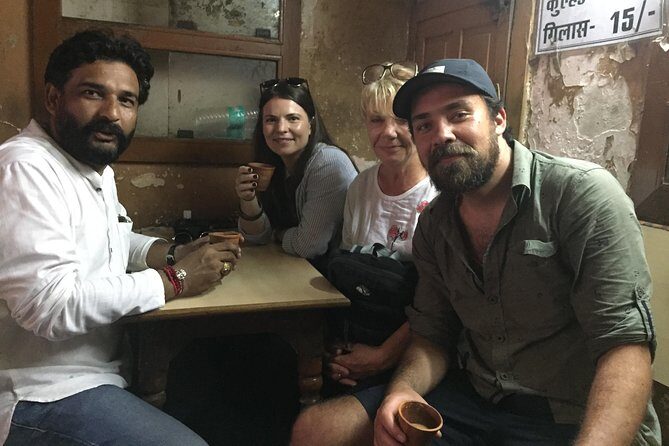
- Masala chai at local tea shops
- English-speaking foodie tour guide
Not included:
- Food and drinks other than what’s specified
- Hotel pickup and drop
This setup is good if you want a guided experience without paying for extras you may not want. You’ll be covered for the main tastings, chai, and dessert, so the tour doesn’t turn into surprise spending at every stop.
That said, if you’re a hungry shopper who wants more than the included tastings, set aside a little cash for additional snacks or drinks beyond the package.
Group size and pace: 3 hours in small-market mode
The tour caps at 10 travelers, and the structure is designed around short stops with movement between them. That’s the sweet spot for many people: you get enough time to see and taste, without turning it into an all-day trek.
For you, this likely means:
- You can ask questions and get answers in real time.
- You won’t spend most of the tour stuck in a bottleneck.
- The guide can adjust pacing when the crowd thickens.
Because the tour depends on walking, wear shoes you trust. Market floors can be uneven, and you’ll be on your feet.
How to get the most out of the tasting (without overdoing it)
You’ll be tasting multiple items during the walk, plus chai and dessert. So the best strategy is to treat this like a “one route, several bites” plan rather than a meal replacement.
Here’s how I’d approach it:
- Start with small tastes and let the flavors come to you.
- Save your favorite item for the second or third bite if you’re deciding between two options.
- Drink the included bottled water early, not at the end.
- If you prefer mild flavors, tell the guide right away so they can steer your order.
Also, keep in mind that this is a cultural walk. Your guide’s explanations will often refer to what you’re about to eat or what you just saw. When you lean into that, the food tasting becomes easier to understand and more fun to remember.
Price and value: why $22.37 can still feel like a deal
For $22.37 per person in a city like Jaipur, value comes down to what you get for that time. In about 3 hours, you’re receiving:
- An English-speaking guide
- Included tastings plus masala chai
- A traditional dessert
- Bottled water
- A route that links market crafts (bangles, utensils, sweets) with food context
If you were to try to build the same day alone, you’d spend more time figuring out where to go and who to trust. The guide reduces that friction. And the small group helps keep it interactive, which is where paid tours can actually justify themselves.
Weather and comfort: plan around good conditions
The tour requires good weather. That’s a polite way of saying it’s outdoors and walking-focused. If you’re booking close to the rainy season or a day with uncertain skies, choose that window carefully.
Comfort matters too. Expect warm conditions at times, and accept that markets can be busy. Bring a water bottle habit if you like, even though bottled water is included.
Where this tour fits best in your Jaipur schedule
This is ideal when you want:
- A first look at Jaipur’s Pink City market life
- Classic street food style tastings with context
- A cultural walk that includes more than just food stops
- A manageable 3-hour plan with a small group
If your days are packed with forts and big-ticket sights, this tour works as a human-scale counterbalance. It’s also a strong choice if you like food but want a guide to help you eat with confidence.
If you’re the type who hates walking or prefers long museum-style breaks, you might find the pacing less comfortable. But for most people, it’s a great “see and taste” format.
Should you book this cultural walk and food tasting in Jaipur?
Yes—if you want a guided, market-based food day that also explains the why behind what you’re seeing. I’d book it if you like street food culture but also care about craft traditions like the bangles at Maniharo Ka Rasta, the sweetness culture of Bhagat Jaipur, and the flavor context from the spice market.
Skip it only if you’re aiming for a mostly seated experience, you strongly dislike walking in busy lanes, or you’re expecting every stop to be purely food-related. Otherwise, this tour is one of the easiest ways to understand Jaipur through what people actually eat and trade day after day.
FAQ
How long is the Cultural Walk and Food Tasting tour?
The tour lasts about 3 hours.
Where do I meet and where does the tour end?
You meet at Golcha Cinema, Chaura Rasta Rd, New Gate, Bapu Bazar, Pink City, Jaipur. The tour ends at CHOTI CHOUPAR, Kishanpole Bazar Rd, Pink City, Jaipur.
What food and drinks are included?
The tour includes food tasting, masala chai from local tea shops, a traditional dessert, and bottled water.
How big is the group?
The tour has a maximum of 10 travelers.
Is hotel pickup or drop included?
No. Hotel pickup and drop are not included.
What’s the cancellation policy if the weather is bad?
You can cancel for a full refund up to 24 hours in advance. If the tour is canceled due to poor weather, you’ll be offered a different date or a full refund.