REVIEW · JAIPUR
Jaipur Heritage Walk – Artisans | Bazaars | Culinary | Temples (Awarded)
Book on Viator →Operated by Vedic Walks Rajasthan · Bookable on Viator
Jaipur by foot beats the usual route. This walk ties Jaipur’s street plan to working artisans and daily rituals, with craft demos and food stops led by guides like Nidhi or Ani. I love the hands-on artisan watching—metal beating and sealing-wax bangles in action—and I also love the local food sampling that actually fits the neighborhoods you’re walking through. One thing to consider: you’re on narrow lanes and market streets for hours, so it can feel tight if you’re not into crowded, close-up city walking.
In This Review
- Key Highlights You’ll Feel on This Walk
- Getting Oriented at Golcha Cinema and Jaipur’s Seven Gates
- Narrow By-Lanes: Metal Beaters, Paani Puri Wholesale, and Ayurveda Centers
- The Royal Gate Stop That Changes the Mood
- Sodhya Halwai: The Bridal Market and Mohanthal Taste
- Maniharo Ka Rasta Bangle Demo with Sealing Wax
- Tripolia Bazar Flower Market and Isarlat Sargasooli
- Food, Water, and Souvenirs: What You Really Get for $30.04
- Timing and Pace on a 2.5-Hour Heritage Walk
- Who This Walk Suits Best in Jaipur
- Should You Book This Jaipur Heritage Walk?
- FAQ
- How long is the Jaipur Heritage Walk?
- Where does the tour start and end?
- What’s included in the price?
- What will I see during the walk?
- Is the tour suitable for most travelers?
- What if the weather is bad?
Key Highlights You’ll Feel on This Walk
- Seven-gates orientation at the start so the walled city makes sense fast
- Live metal beating from families who’ve practiced the craft for generations
- Paani puri wholesale energy plus an Ayurveda stop to broaden what you see
- Bridal market color and a taste of mohanthal at Sodhya Halwai
- Sealing-wax bangle demo that shows how tradition becomes wearable
- Tripolia Bazar ending at the flower side of the city, near Isarlat Sargasooli
Getting Oriented at Golcha Cinema and Jaipur’s Seven Gates
You start at Golcha Cinema in Bapu Bazar (Chaura Rasta Rd, New Gate, Pink City). It’s a good choice because you begin in the older part of Jaipur where the city’s design is still the main character.
Before you get lost in the lanes, your guide sets the scene with the importance of the seven gates of Jaipur’s walled city. This matters more than you’d think. Jaipur can look like a maze from the outside, but once someone points out how the walled-city layout works, you start to notice patterns in what you see—street geometry, where markets cluster, and why certain areas feel like entrances rather than random stops.
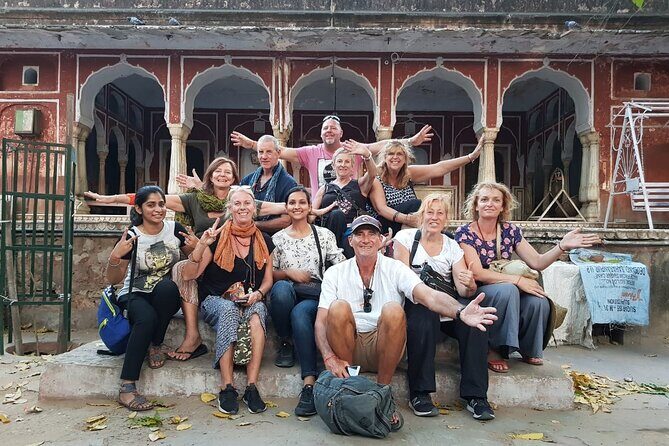
Right after that orientation, you visit a local priest family living in a heritage mansion. This gives the walk a human scale. You’re not just collecting sights; you’re seeing how religion and daily life sit side-by-side in the same neighborhoods, with real people who have kept their roles for a long time.
If you’re the type who likes to understand what you’re looking at—before you start photographing everything—this opening is a smart way to spend your morning or afternoon.
You can also read our reviews of more walking tours in Jaipur


Narrow By-Lanes: Metal Beaters, Paani Puri Wholesale, and Ayurveda Centers
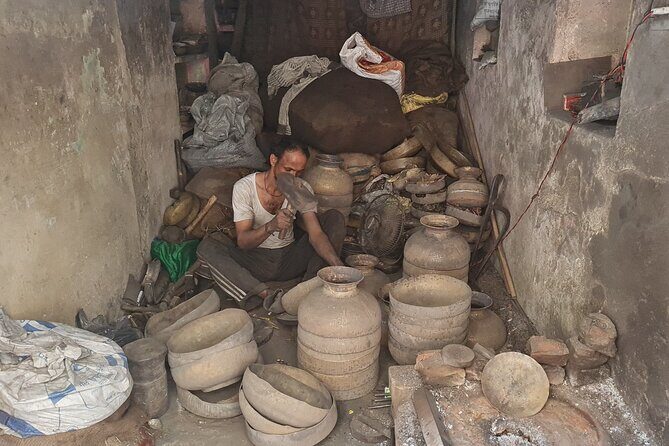
After the start, the walk moves into the narrow by-lanes where Jaipur’s day-to-day energy lives. The big draw here is how practical the stops are: you’re not waiting for a ticket line, you’re watching work happen.
You’ll see a community of metal beaters, where metalwork is practiced by local families over generations. Watch for how repetitive motion turns into precision. This kind of craft is slow to learn but quick to understand: you can see the rhythm, the tools, and the care that goes into shaping metal into something wearable or useful.
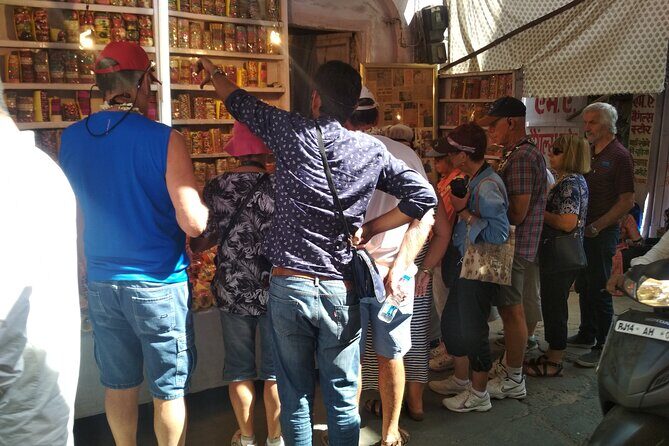
Then you pass through a wholesale market for paani puri. Even if you don’t know the full menu, you’ll quickly get the idea: this is where ingredients and preparation culture show up in bulk. It’s one of those stops that makes Jaipur feel like a place with supply chains, not just tourist displays.
Next is an Ayurveda center. This is a useful counterpoint to the street-level craft and food focus. You’ll get a window into traditional health thinking as part of everyday life, not as a museum topic.
You also walk heritage lanes that were once visited by Prince Charles. That detail adds an interesting layer to your mental map. You’re standing in a neighborhood that has attracted attention from the outside world, yet the daily flow keeps going—vendors, artisans, and people moving through their routines.
Practical note: the group stays small (maximum 15 travelers). That helps on narrow lanes. You won’t get swallowed by a huge crowd, and your guide can keep you moving without leaving you sprinting.
The Royal Gate Stop That Changes the Mood

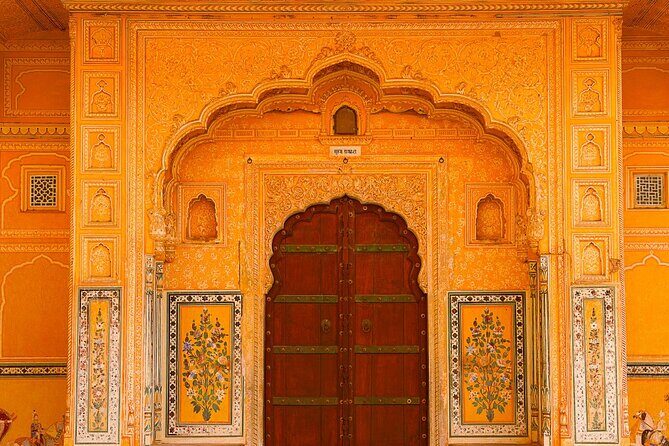
At some point, you reach a big heritage gate—also described as an entry gate for the residence of Jaipur’s royal family.
This stop is a mood shift. Markets and workshops are one kind of atmosphere. Gates tied to royal space make you slow down, look up, and notice construction choices: entrances are built to communicate status and control, even when the street life around them is noisy.
It’s also a good reminder that Jaipur’s city planning isn’t only about beauty. It’s about boundaries—who belongs where, and how the city organizes movement from public lanes to private spaces.
If you want photos, keep in mind that you’ll likely be moving in a place with real daily activity. Ask your guide where it’s respectful to pause and where you should just keep walking.
Sodhya Halwai: The Bridal Market and Mohanthal Taste
Sodhya Halwai is where the walk turns playful and colorful. You’ll be right in the bridal market of Jaipur, where brides shop for traditional wedding dress.
This is one of the stops you’ll remember because it’s not staged. You’re seeing the shopping moment as part of a cultural rhythm—garments, attention to detail, and the bustle of people helping with choices. Even if fashion isn’t your main interest, it’s hard to not get swept into the scene.
From there, you get to try a local sweet: mohanthal. This is a great kind of food stop for a walking tour because it’s specific to Jaipur. You taste the city, not just something generic sold everywhere.
If you’re sensitive to sugar-heavy sweets, take a smaller bite and pace yourself. The walk continues, and markets can be a lot even without a full sugar load.
Also, the experience is described as including the chance to enjoy a hot cup of masala chai. On a walking day, chai is more than a drink. It’s a reset button—heat in your hands and a slower tempo that helps you keep enjoying the next lane without feeling rushed.
Maniharo Ka Rasta Bangle Demo with Sealing Wax
Next comes Maniharo Ka Rasta, a street known for bangle making artisans.
Here’s the magic: you don’t just look at finished bangles behind glass. You get a live demo of making traditional wrist bangles from sealing wax.
The demo is the kind of stop that makes you appreciate craftsmanship fast. You can see how raw material becomes form, and how the maker’s skill replaces luck. It also helps you understand why bangles aren’t just jewelry in India—they can be daily markers of identity, celebration, and family tradition.
If you want a souvenir, this is one of the places where it makes sense to look closely. The tour includes a souvenir from local artisans, and the bangle area is exactly where you can feel the value behind the purchase.
One consideration: if you’re prone to hand-cramp from holding up your phone for photos, plan a few moments where you just watch. The demo is short enough that constant filming can make you miss how the process actually works.
You can also read our reviews of more historical tours in Jaipur






Tripolia Bazar Flower Market and Isarlat Sargasooli
You finish at Tripolia Bazar, moving through the oldest flower market of Jaipur and a spice market, then walking past the tall minaret called Isarlat Sargasooli. The end point is the Flower Market at Choti Chaupar.
This ending works because it gives all your senses something different. Earlier stops lean more toward metal, sweets, and shopping. At Tripolia, the city smells like flowers and spices. Even if you’re not buying anything, you’ll understand why this area holds value in the city’s rhythm.
The Isarlat Sargasooli minaret is a good visual anchor too. You’ll likely see it while walking, not from a dramatic viewpoint—so it feels connected to street life rather than a postcard moment.
The flower market ending is also practical. It gives you a clear place to regroup, head to lunch, or continue exploring in the same neighborhood on your own.
Food, Water, and Souvenirs: What You Really Get for $30.04
This tour costs $30.04 per person and runs about 2 hours 30 minutes. That price is low compared to many guided experiences, mainly because it’s built around walking, street stops, and included food tastings—no monument ticket requirements.
Here’s what’s included:
- Packaged drinking water
- An experienced English-speaking city explorer
- Two local food tasting opportunities
- A souvenir from local artisans
From the stops on this route, your tastings are likely tied to the food you see—especially paani puri and mohanthal. If you’re the kind of person who wants to eat during a city walk (not just watch others eat), this structure is a good match.
You’re also not paying extra for transfers in the standard format. That means the value is mostly in the guide time and access to working neighborhoods.
One more value signal: the group maximum is 15 travelers. That helps you ask questions and actually hear explanations, instead of surviving through noise.
Timing and Pace on a 2.5-Hour Heritage Walk
The program is designed in short blocks:
- A 15-minute start segment at Golcha Cinema
- About 45 minutes covering the lanes, artisans, snack wholesale, and Ayurveda
- Smaller 15–20 minute focused stops at Sodhya Halwai, Maniharo Ka Rasta, and Tripolia Bazar
That pacing matters because Jaipur streets can shift fast—crowds tighten, storefronts squeeze in, and smells change when you turn corners. Breaks are built into the schedule, so you’re not stuck for long stretches with only walking and no context.
It also means you can still do other things that same day. If you’re planning a second activity later, this tour usually won’t eat your whole daylight.
Weather is listed as important. The experience requires good weather, and if it can’t run due to conditions, you’ll be offered another date or a full refund. That’s a rare but honest detail for a walking-heavy day.
Who This Walk Suits Best in Jaipur
This is a strong fit for:
- First-time visitors who want Jaipur beyond the big monument circuit
- People who love craft demos and watching artisans work
- Food-first travelers who want local bites connected to the neighborhood
- Anyone who appreciates temples and cultural explanations as part of street life
It’s also described as suitable for most travelers. If you walk fine on uneven, crowded lanes, you’ll likely enjoy the experience without feeling trapped by logistics.
If your travel style is more about “big-view, big-ticket monuments,” you might find this less satisfying. This tour focuses on everyday heritage—workshops, bazaars, and city design—rather than a lineup of major monuments. Monument visits aren’t included unless specified.
Should You Book This Jaipur Heritage Walk?
Book it if you want a guided walk that teaches you how Jaipur works at street level: city gates, artisan skills, market routines, and tasting stops that fit the neighborhoods you’re in. At $30.04 with water, two food tastings, and an artisan souvenir, the value is clear, especially if you’ll actually use the included tastings instead of skipping them.
Skip it (or choose a different tour) if you hate close-quarters crowds, strong smells, or lots of walking with frequent turns. Also pass if you expect monument tickets as part of the standard package. This one is about the living city—metal, bangles, sweets, flowers, and the people who keep those traditions running.
If you do book, arrive ready to walk and ask questions. The best part is how fast the city starts making sense once your guide links the lanes to the planning, crafts, and rituals.
FAQ
How long is the Jaipur Heritage Walk?
The tour runs for about 2 hours 30 minutes.
Where does the tour start and end?
It starts at Golcha Cinema (Chaura Rasta Rd, New Gate, Bapu Bazar, Pink City, Jaipur) and ends at the Flower Market (Choti Chaupar, Tripolia Bazar, Modikhana, Jaipur).
What’s included in the price?
Included are packaged drinking water, an English-speaking city explorer, two local food tasting opportunities, and a souvenir from local artisans.
What will I see during the walk?
You’ll see artisan communities and demonstrations, including metal beaters and bangle makers, plus bazaars such as a paani puri wholesale area, a bridal market at Sodhya Halwai, the flower and spice market area at Tripolia Bazar, and you’ll also pass Isarlat Sargasooli. You also visit a priest family in a heritage mansion and include temple-related stops.
Is the tour suitable for most travelers?
Yes, it says most travelers can participate.
What if the weather is bad?
The experience requires good weather. If it’s canceled due to poor weather, you’ll be offered a different date or a full refund.