REVIEW · NEW DELHI
Delhi Agra Jaipur Tour 4 Nights 5 Days
Book on Viator →Operated by Freddy Driver India Tour · Bookable on Viator
Five days, three legends of North India.
This Delhi–Agra–Jaipur Golden Triangle package strings together Mughal monuments, Red City glamour, and the Taj Mahal in a guided, early-start rhythm that’s built for first-timers.
I like two things most: the day-by-day coverage with a professional guide in the driver’s seat for context, and the private car setup for a group of up to five (plus mineral water and tolls handled). I also appreciate that not every stop is a paid ticket—Raj Ghat and Fatehpur Sikri are listed as free.
One consideration: most major sights’ entrance fees and your meals are not included, so you’ll want to budget for tickets and lunch/breakfast on your own, especially on long sight days.
In This Review
- Key highlights to expect
- The vibe: a Golden Triangle tour built for getting it right
- Starting point in New Delhi: 6:30 am and a smooth launch
- Delhi Day 1: Qutub Minar to India Gate in a Mughal-to-modern mix
- Qutub Minar (about 1 hour)
- Lotus Temple (about 1 hour)
- Humayun’s Tomb (about 1 hour)
- India Gate (about 30 minutes)
- Delhi Day 2: Rashtrapati Bhavan, Akshardham, Red Fort, Old Delhi, Gandhi
- Rashtrapati Bhavan (about 1 hour)
- Swaminarayan Akshardham (about 1 hour)
- Red Fort (about 1 hour)
- Jama Masjid (about 1 hour)
- Raj Ghat (about 1 hour, listed free)
- The drive to Agra and the Taj-day reality check
- Agra Day 3: Taj Mahal, Agra Fort, and Baby Taj
- Taj Mahal (about 2 hours)
- Agra Fort (about 1 hour)
- Tomb of Itimad-ud-Daulah (about 45 minutes)
- Day 4: Fatehpur Sikri’s abandoned grandeur and Jal Mahal’s water palace
- Fatehpur Sikri (about 1 hour, listed free)
- Jal Mahal (about 30 minutes)
- Jaipur Day 5: City Palace, Jantar Mantar, Amer Fort, Hawa Mahal, Birla Mandir
- City Palace of Jaipur (about 1 hour)
- Jantar Mantar (about 1 hour)
- Amer Fort (about 1 hour)
- Hawa Mahal (about 30 minutes)
- Birla Mandir Temple (about 1 hour)
- Price and value: $128 per group with the real costs in mind
- The driver factor: safety, timing, and scam-smart guidance
- Who this tour fits best (and who should rethink it)
- Should you book this Delhi Agra Jaipur Golden Triangle tour?
- FAQ
- What time and where does the tour start in Delhi?
- Is the tour private, and how many people are included?
- What’s included in the price?
- Are monument entrance fees included?
- Are breakfast and lunch included?
- Can I cancel, and is it free?
Key highlights to expect
- Private group, up to 5 people, with a car and guide throughout
- Early 6:30 am start from Rajpath Area, Malka Ganj in New Delhi
- Real-world time management across Delhi, Agra, and Jaipur highlights
- Free stops included: Raj Ghat and Fatehpur Sikri
- Agra’s holy trio: Taj Mahal, Agra Fort, and the Baby Taj (Itimad-ud-Daulah)
The vibe: a Golden Triangle tour built for getting it right
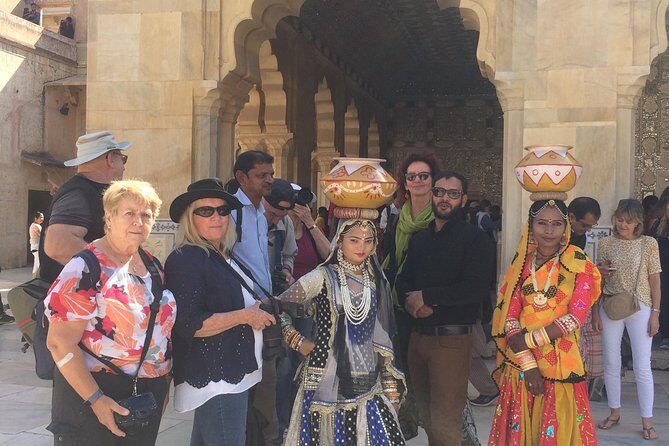
Delhi, Agra, and Jaipur can feel like an overload before you even leave the hotel. This tour helps because it treats the circuit like a plan, not a scramble—morning sights in Delhi, core monuments in Agra, and classic Jaipur viewpoints across the final two days.
The structure is simple. You move by private car with a guide, spend a set amount of time at each highlight, then roll onto the next part of the triangle. It’s not about staying forever in one place. It’s about seeing the big statements without losing your entire day to logistics.
A few more New Delhi tours and experiences worth a look



Starting point in New Delhi: 6:30 am and a smooth launch
Your day begins at 6:30 am at 1956, Rajpath Area, Malka Ganj, New Delhi, Delhi 110011. The tour ends back at the same meeting point, which matters more than people think in a city where traffic and navigation can eat time fast.
Because sightseeing starts early, you’re likely to get a head start on crowds and heat. Do plan for that early departure: comfortable shoes, a light layer for morning air, and water awareness help a lot.
Delhi Day 1: Qutub Minar to India Gate in a Mughal-to-modern mix

Day 1 is a strong first taste of Delhi, with monuments that show different eras and styles back-to-back. The pacing works because each stop has its own “why it matters,” so you don’t feel like you’re repeating the same kind of photo.
Qutub Minar (about 1 hour)
Qutub Minar is in the Qutab complex and is a tapering minaret whose floors were built across the 12th to 14th centuries. It’s often called a Mughal victory tower and is seen as marking the beginning of Muslim rule in India. Even if you’re not a history nerd, the scale and the layered construction dates give you something concrete to look for.
Entrance isn’t included, so plan to pay on-site or via your guide’s instructions.
Lotus Temple (about 1 hour)
Next comes Lotus Temple, famous for its lotus-shaped design. It’s described as a modern-style, non-religion oriented temple and is one of the most visited sites around. What I like here is the shift in mood: from old stone minaret to a calmer, architectural modern icon.




Humayun’s Tomb (about 1 hour)
Humayun’s Tomb is the resting tomb of Mughal king Humayun, initiated by his first wife in the 16th century. You’re visiting the first garden tomb in Asia, and the complex includes more than one monument—so you’ll get walking time beyond just the main tomb.
If you only know this by Instagram photos, go anyway. The garden layout is the point, and that takes a bit of time to absorb.
India Gate (about 30 minutes)
India Gate is a war memorial in the Rajpath region, originally called the All India War Memorial. It remembers more than 70,000 soldiers who died in the First World War and the third Anglo-Afghan war.
The visit is shorter on purpose. India Gate works best as a “pause and orient” stop after a full run of earlier monuments.
Delhi Day 2: Rashtrapati Bhavan, Akshardham, Red Fort, Old Delhi, Gandhi
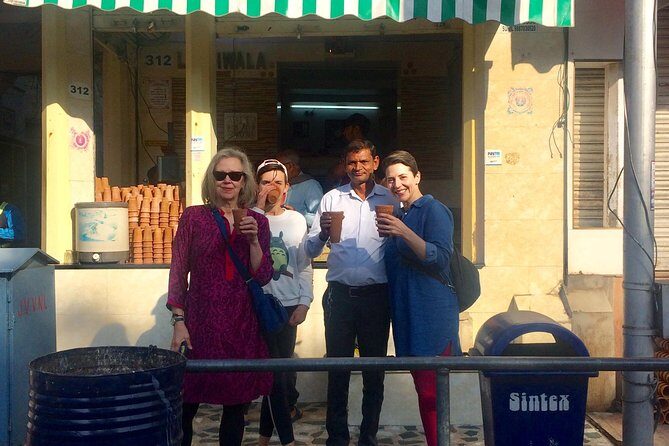
Day 2 is where Delhi turns into its real form: big state architecture, a modern spiritual complex, Mughal power, and then Old Delhi lanes.
Rashtrapati Bhavan (about 1 hour)
Rashtrapati Bhavan is described as one of the world’s largest residential head-of-state buildings. It mixes Mughal and European architectural traditions, and the scale is hard to ignore—19,000 square metres, four floors, 340 rooms, and a massive campus.
Entrance isn’t included, so don’t plan on a deep interior visit unless your guide indicates otherwise.
Swaminarayan Akshardham (about 1 hour)
Akshardham is a Hindu temple and spiritual campus built in 2005 near the Yamuna River. The tour frames it as a must-visit for many travelers, and it’s clearly set up for both sightseeing and pilgrimage.
This stop is often the “reset” moment. After hours of fortifications and memorials, it’s a different kind of visual language.
Red Fort (about 1 hour)
Red Fort is the Mughal-era fort known for red sandstone and its ceremonial royal use. The tour also points out that it’s not just the outer wall: there are halls, palaces, and museums inside.
Entrance fees apply here, so consider this a paid highlight day.
Jama Masjid (about 1 hour)
Then you shift to Old Delhi with Jama Masjid, described as a walk through the walled city of Shahjahanabad. What you’ll likely notice is the everyday texture: traders, older-style homes, and alleyways that keep the Mughal character.
This is one of those “more than monument” moments, because you’re seeing the city’s human side as much as the architecture.
Raj Ghat (about 1 hour, listed free)
Raj Ghat is a memorial dedicated to Mahatma Gandhi on the Yamuna riverbank. The tour notes it’s a black marble platform built at the spot of Gandhi’s cremation, and it also references other nearby memorials, including Jawaharlal Nehru’s forest of peace.
This is listed as free, which makes it a great cost-saving stop while still being powerful.
The drive to Agra and the Taj-day reality check
The tour takes you from Delhi into Agra and then focuses on the “cannot-miss” monuments. Agra is the part of the triangle that many people talk about first, and this itinerary delivers the essentials without adding too many side trips.
A quick practical note: Taj-area sightseeing can be crowded. Your guide and driver handle timing across multiple stops, and having a private car reduces the stress of hopping transport mid-day.
Agra Day 3: Taj Mahal, Agra Fort, and Baby Taj
This day is basically the holy triangle inside Agra: the main wonder, the defensive power, and the elegant in-between.
Taj Mahal (about 2 hours)
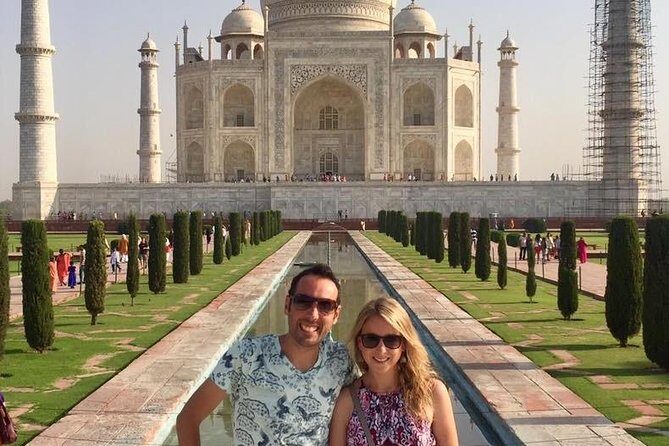
The Taj Mahal is presented as a UNESCO World Heritage Site and a symbol of Mughal culture and architecture. You’re given a longer visit time here (about two hours), which I appreciate because Taj Mahal photos don’t prepare you for the way details change as you move around.
Entrance isn’t included, so budget for the ticket.
Agra Fort (about 1 hour)
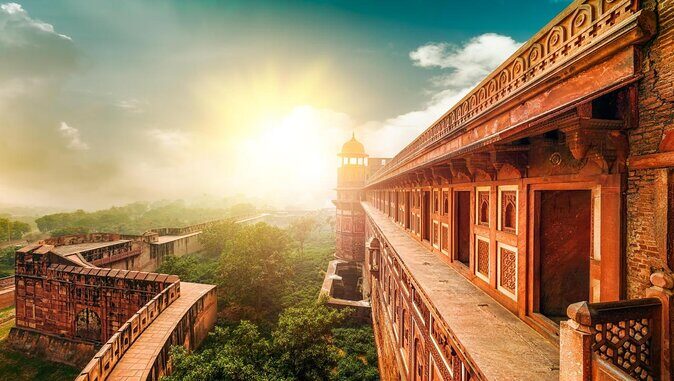
Agra Fort is described as a cluster of sandstone and marble palaces within a large fortress. It’s a bit overshadowed by the Taj, but it’s a serious monument in its own right. If the Taj is the romance, the fort is the power—and you’ll feel the difference.
Entrance isn’t included.
Tomb of Itimad-ud-Daulah (about 45 minutes)
Also called the Baby Taj, Itimad-ud-Daulah is framed as an inspiration for the Taj Mahal but with a more delicate style. Expect marble lattice screens and fine carvings, plus the importance of its position on the Yamuna’s banks.
This is a shorter stop, but it’s one I’d treat as a “detail day.” If you enjoy carvings and stonework, you’ll get your money’s worth in the extra attention you give.
Day 4: Fatehpur Sikri’s abandoned grandeur and Jal Mahal’s water palace
Day 4 is a mix of major history and a scenic Jaipur landmark, which is a smart pairing for end-of-trip energy.
Fatehpur Sikri (about 1 hour, listed free)
Fatehpur Sikri is described as a town that thrived in the 16th century under Akbar, then was abandoned and now is a major tourist destination. The tour ties it to Akbar and to the birthplace of Jehangir.
This stop being listed free is a big plus. You get a major site feel without adding another ticket cost.
Jal Mahal (about 30 minutes)
Jal Mahal means water palace. It’s described as an exquisite palace built in the middle of Man Sagar Lake with five floors, four of which remain underwater. It’s a short stop, but the visual idea is clear: you’re not looking at a fort today; you’re looking at a reflection of palace life.
Entrance isn’t listed as included, so treat this as a short paid-site-or-viewpoint depending on on-site policy.
Jaipur Day 5: City Palace, Jantar Mantar, Amer Fort, Hawa Mahal, Birla Mandir
This final day is a greatest-hits tour of Jaipur’s identity: royal spaces, science-and-geometry, the hill fort, and the signature pink architecture.
City Palace of Jaipur (about 1 hour)
City Palace sits at the center of Jaipur and the city is described as planned and divided into nine blocks. The tour also mentions the shift from Amer to Jaipur in the 1700s and credits Maharaja Sawai Jai Singh and architects Vidyadhar Bhattacharya and Shilpa Shastra with the city’s design principles (Vastu and Indian science of architecture).
Even if you don’t go super deep, the “why Jaipur looks the way it looks” explanation helps you see the rest of the day more clearly.
Jantar Mantar (about 1 hour)
Jantar Mantar is an astronomical observatory used to measure distances and positions of celestial objects. Jaipur’s version includes 19 large instruments, and the tour highlights the Samrat Yantra as the largest sundial in the country.
This is one of those places where you’ll appreciate it more if you’re willing to look slowly. It’s not just stones—each structure has a purpose.
Entrance isn’t included.
Amer Fort (about 1 hour)
Amer Fort (also called Amber Fort) is near Jaipur’s main city. The tour ties it to Akbar’s general Maan Singh in the 16th century and to the later Amer state.
If you want one fort experience in Rajasthan, this is it. Expect time for views and ramparts, and plan on walking.
Hawa Mahal (about 30 minutes)
Hawa Mahal, the Palace of Winds, is the famous five-story pink sandstone facade with carved jharokha balconies. The tour notes a key concept: the design allows cool air to pass through, which is why the building is named for wind.
This stop is short by design. It’s a photo-and-stare moment that works best when you’re not exhausted.
Entrance isn’t included.
Birla Mandir Temple (about 1 hour)
Birla Mandir (Laxmi Narayan temple) is presented as a modern temple with grand architecture and serene surroundings, commissioned by the Birla family. It’s not “ancient Rajasthan” in the classic sense, but it gives you a calmer ending to the day.
Entrance isn’t included.
Price and value: $128 per group with the real costs in mind
The price is listed as $128.00 per group (up to 5), with the tour using a mobile ticket. For a private Delhi–Agra–Jaipur package, that’s the kind of rate that can work—especially because several practical costs are bundled.
Included items cover: all sightseeing with a private car, a professional tour guide, mineral water, all toll tax and parking fees, and fuel surcharge. In other words, you’re paying for movement plus interpretation, not just a list of stops.
But you must budget separately for: monument entrance fees, and also gratuities/tipping and any breakfast and lunch. Since many of the biggest names here are ticketed sights, your final spend will depend on how many paid sites you hit and what local entry rules apply.
If you’re traveling as a small group, private value usually improves fast. Up to five people means you’re not paying per person for the car.
The driver factor: safety, timing, and scam-smart guidance
This is where the tour’s human element matters. The operation is tied to a driver named Surendra, who is also referred to as Freddy. In practice, that kind of consistent driver-guide team is what keeps a Golden Triangle tour from turning into stress.
From the feedback style you shared, I’d pay attention to three strengths: safe driving in India’s traffic, punctual service, and a habit of helping with tourist-trap thinking. One note that stands out is that the driver didn’t just “drive and drop”—they helped with practical problem solving, like guiding people away from overpriced ticket-broker options.
Also, having a guide and driver who can adjust to your pace helps. This itinerary includes set time blocks, but your comfort depends on real-world timing—rest stops, photos, and how quickly you can move through checkpoints.
Who this tour fits best (and who should rethink it)
This works best if you want a structured first-timer circuit with minimal hassle. You’ll like it if you enjoy seeing famous monuments in a tight loop, you’re comfortable with walking at major sites, and you don’t want to coordinate transport city by city.
You might rethink if you hate early starts or you want long, unhurried hours inside museums. The itinerary times are fairly fixed, and the day-to-day emphasis is on coverage rather than deep study.
Should you book this Delhi Agra Jaipur Golden Triangle tour?
If your main goal is to hit the Golden Triangle highlights with a private car, a guide, and a clear plan, this is a solid choice. The value comes from bundling transport, guide support, and car-related costs, while still keeping the itinerary packed with recognizable must-sees.
I’d book if:
- you’re traveling as a group of up to five and want private comfort
- you appreciate guided context for Mughal and Rajput landmarks
- you’re okay budgeting separately for entrance fees and meals
I’d pause if:
- you want meals included
- you’re planning to rely on ticket costs being low (most top sights here are not included)
If that sounds like you, you’ll likely find this itinerary hits the right balance of famous sights and practical pacing.
FAQ
What time and where does the tour start in Delhi?
The tour starts at 6:30 am at 1956, Rajpath Area, Malka Ganj, New Delhi, Delhi 110011, India. The experience ends back at the meeting point.
Is the tour private, and how many people are included?
Yes, it’s a private tour/activity. Only your group participates, and the listed price is per group up to 5.
What’s included in the price?
The price includes all sightseeing with a private car, a professional tour guide, mineral water, all toll tax and parking fees, and fuel surcharge.
Are monument entrance fees included?
No. Monument entrance fees are listed as not included. Some stops are marked free, such as Raj Ghat and Fatehpur Sikri.
Are breakfast and lunch included?
No. Any breakfast and lunch are listed as not included.
Can I cancel, and is it free?
Free cancellation is available. You can cancel up to 24 hours in advance of the experience for a full refund. If you cancel less than 24 hours before the experience starts, the amount paid will not be refunded.