REVIEW · NEW DELHI
Golden Triangle India Tour 4 Days
Book on Viator →Operated by Indian Travel Online · Bookable on Viator
Delhi to Jaipur in four days sounds intense, and that’s the point. This private Golden Triangle keeps the logistics tidy while you hit the big names—Qutub Minar, the Taj Mahal, and Amber Fort—without spending your time negotiating transport. I like that it’s set up with a meet-and-greet pickup plus air-conditioned private car transfers, so you start the trip already in motion. I also like the simple daily rhythm: breakfast included, then a full day of sights.
The one drawback to plan for is also the biggest reality check: monument entrance and camera fees are not included, so you’ll want cash/card ready on-site. If you’re the type who dislikes crowds and midday heat, you’ll need to pace yourself during long sightseeing blocks.
In This Review
- Key points before you commit
- Private Golden Triangle, four days, one smooth route
- How the tour starts: Delhi pickup that prevents day-one chaos
- Day 1 in Delhi: Mughal monuments, a Lotus Temple break, and key government landmarks
- Day 2 to Agra: Sikandara on the way, then the Taj Mahal in the afternoon
- Day 3: Agra Fort in the morning, then Fatehpur Sikri and the Buland Darwaza to Jaipur
- The road to Jaipur: Fatehpur Sikri and the giant gateway
- Arriving in Jaipur
- Day 4 in Jaipur: Amber Fort, City Palace, Jantar Mantar, and the Hawa Mahal photo moment
- Price and value: what $375.67 per person really buys
- Guides and drivers: the small details that change the experience
- Who this tour fits best
- Should you book this 4-day Golden Triangle?
- FAQ
- What’s the duration of the Golden Triangle India Tour?
- Where does the tour start and end?
- What time does the tour begin?
- Is this a private tour?
- What’s included in the price?
- Are monument entrance and camera fees included?
- FAQ
- Is free cancellation available, and how close to the start can I cancel?
Key points before you commit
- Meet-and-greet pickup in Delhi from the airport or railway station helps you avoid the first-stress scramble.
- Private AC transfers mean you travel in a chauffeured vehicle rather than hopping between vehicles.
- Three included breakfasts set you up for packed sight days (and save you a daily decision).
- Taj Mahal and Agra Fort get their own dedicated day parts, so you’re not doing the big sights in a blur.
- Photo stops are built into the Delhi and Jaipur days for major landmarks (entrance fees still extra).
- Driver and guide support can make a difference; in feedback, specific guides like Ajay Verma and Jagjeet Singh were called out for professionalism.
Private Golden Triangle, four days, one smooth route

A “Golden Triangle” is basically India’s greatest hits: Delhi for imperial-era grandeur, Agra for the Taj, and Jaipur for royal palaces and forts. What makes this version worth a look is the way it’s designed to reduce friction. You’re not just buying a checklist of places—you’re buying transportation, daily planning, and the day-to-day handholding that keeps the trip moving.
Because it’s private, your group controls the pacing more than on big group tours. That matters on these routes, where the days can start early and then stretch into hot, busy sightseeing hours. Your comfort level will depend on how you handle that rhythm.
And yes, the route is the classic triangle—but the day-by-day structure keeps the emphasis where it should be: Delhi’s standout monuments first, then Agra’s signature sights, then Jaipur’s forts and palaces.
A few more New Delhi tours and experiences worth a look
How the tour starts: Delhi pickup that prevents day-one chaos
The tour begins at 9:00 am, with pickup from Delhi Airport or the railway station, followed by transfer to your hotel after sightseeing on Day 1. This type of meet-and-greet is practical. In a city where signage can be confusing and lines can be long, having someone coordinate your arrival reduces that first-day headache.
On Day 1, you’re also rolling straight into sightseeing instead of “getting your bearings” for a full day. That can feel efficient, especially if you’re arriving by train or flight. Just know that you’ll likely be doing a lot in one day, so keep your energy for walking and photo stops.
You also get a welcome drink on arrival, which sounds small, but it’s the kind of detail that helps right when you’re tired from travel.
Day 1 in Delhi: Mughal monuments, a Lotus Temple break, and key government landmarks
Day 1 is a full Delhi sweep, and it’s clearly built around the most recognizable sights. Here’s what you’ll cover and why it’s worth your time:
Jama Masjid and Red Fort
These are the kind of places that instantly anchor Delhi’s identity. Jama Masjid gives you the visual scale of Mughal-era architecture, while Red Fort is tied to the political heartbeat of the city.
Raj Ghat and Humayun’s Tomb
Raj Ghat is reflective and low-key compared to the forts. Humayun’s Tomb, meanwhile, is a major example of Mughal design—especially if you like seeing how architectural styles evolve rather than just visiting random “pretty buildings.”
Lotus Temple (Bahai)
This is a nice contrast day-ender. It’s calmer in feel than the historic Mughal sites, and it gives your eyes a break from forts and arches.
Qutub Minar
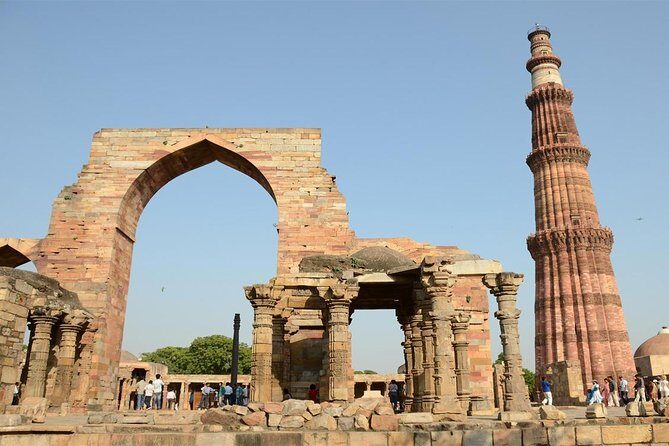
If you want one monument on this day that feels iconic no matter how many photos you’ve seen, Qutub Minar is it. Plan for steady walking and don’t rush the details.
Rashtrapati Bhawan, Parliament House, and Jantar Mantar (photo stops and views)
These show up as part of the route, and since monument entrance and camera fees are not included, you may spend time seeing them from the outside or in designated viewing zones. Still, they’re a helpful way to understand how Delhi layers modern government over older timelines.
If you’re sensitive to heat, this is where you should slow down. Delhi can be intense in summer, and one review specifically mentioned having plenty of cold water on the road—proof that small comfort touches matter.
Day 2 to Agra: Sikandara on the way, then the Taj Mahal in the afternoon
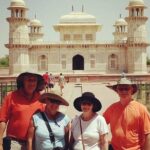
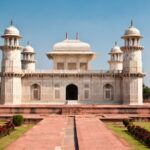
After breakfast, you drive to Agra, with an enroute stop at Sikandara, the mausoleum of Emperor Akbar. This is a strong add-on. It’s not as instantly famous as the Taj, but it helps the story make sense: you see how Mughal power and aesthetics weren’t built overnight around one building.
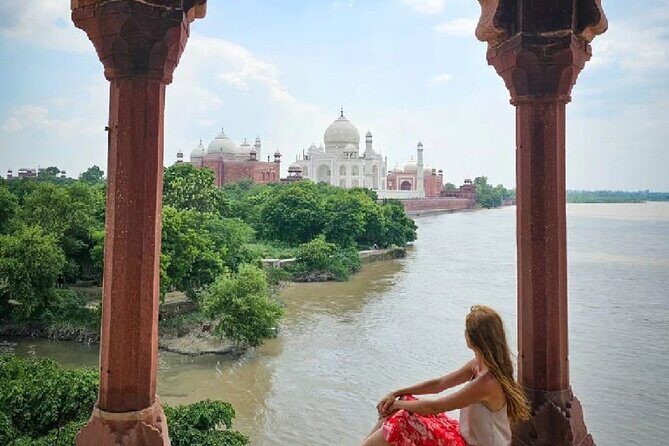
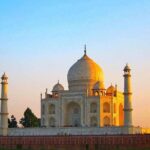
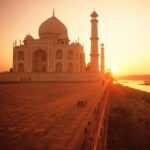
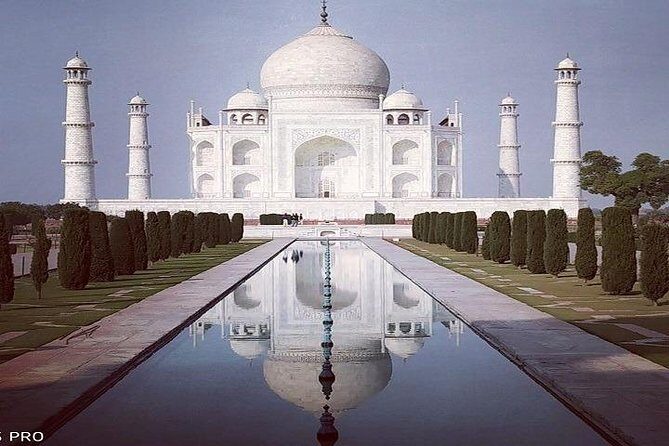
Once you arrive, you check in to your hotel, then the afternoon is dedicated to the Taj Mahal. The timing is the key advantage here. The Taj feels best when you’re not arriving exhausted right at opening. Afternoon visits can also mean you’ll catch different light conditions across the marble surfaces.
A practical note: the Taj Mahal is the #1 attraction on this whole trip, so you should expect crowds and photo lines. The tour structure helps because you’re not splitting your attention across multiple “big ticket” sites that day—you focus and then move on.
Day 3: Agra Fort in the morning, then Fatehpur Sikri and the Buland Darwaza to Jaipur
Day 3 starts with Agra Fort, then you head toward Jaipur. This is a good combo because it keeps you anchored to Agra first, instead of moving immediately after breakfast.
Agra Fort works well in the morning because you’re walking and looking while your energy is still intact. It also gives context to the Taj. You get the sense that the Mughal story isn’t one monument; it’s a whole complex of power, defense, and residence.




The road to Jaipur: Fatehpur Sikri and the giant gateway
On the way to Jaipur, you visit Fatehpur Sikri, once the capital of Mughal Emperor Akbar. Then you see Buland Darwaza, described as the largest gateway in the world. That’s the kind of scale that reads differently in person than in photos—especially if you like architecture and want a break from “just another fort.”
Again, entrance and camera fees are not included, so if you’re planning to photograph a lot, budget for it. This day is also longer on the travel side because it includes two major historical stops enroute.
Arriving in Jaipur
You reach Jaipur and check in. After a travel-heavy day, this matters. A lot of tours cram too much, and then you arrive to find you can’t recharge. Here, the structure keeps your arrival connected to a real check-in block rather than a rushed drop.
Day 4 in Jaipur: Amber Fort, City Palace, Jantar Mantar, and the Hawa Mahal photo moment
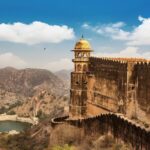
Day 4 is the classic Jaipur finish, starting with Amber Fort and Palace. Amber is a major “wow” stop, and it’s also a great one to visit earlier rather than late. You get better light and more energy for climbing and exploring.
Then you get a photo stop at Jal Mahal—a scenic break that adds variety without forcing you into hours of extra walking. Next comes City Palace and Museum, which helps you connect Jaipur’s royal image to objects, designs, and museum context.
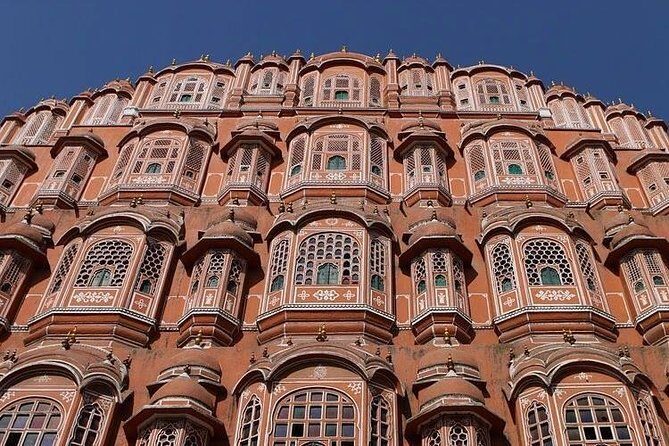
Jantar Mantar follows, and this is where Jaipur shows its science side through instrument-based timekeeping and observation. Finally you do a photo stop at Hawa Mahal, the iconic Palace of Winds. You’ll likely enjoy it most if you treat it as a visual moment rather than a long museum visit.
After sightseeing, the day ends back at the meeting point. So you’re not left wondering where you’ll be transferred at the end.
Price and value: what $375.67 per person really buys
At about $375.67 per person for a 4-day trip, the value question is simple: does it include the stuff that normally costs you time and hassle? In this case, it does.
You’re getting:
- 3 nights of accommodation (double sharing basis)
- Private AC car transfers and airport/rail pickup
- Sightseeing as per the itinerary
- Breakfast for 3 days
- Welcome drink
- Toll taxes, parking, fuel, driver allowances, and GST/government taxes
What’s not included:
- Monument entrance and camera fees
- Lunch and dinner, plus personal expenses
- Travel insurance
- Air or train ticket
So you’re not paying extra every day for local transport, and you’re not stuck figuring out how to stitch Delhi–Agra–Jaipur together. If you’d otherwise spend your vacation time coordinating rides, negotiating tickets, or guessing opening hours, this package format can feel like a bargain.
Just keep your budget realistic: the biggest surprise costs for many people on this route are entrance and camera fees. If you’re doing lots of photos or you want to enter every major site, plan ahead.
Guides and drivers: the small details that change the experience
The most consistently praised part of feedback wasn’t just the monuments—it was how the day felt with the people running it.
Names that came up in positive feedback include:
- Ajay Verma, credited with making the trip special and providing great overall service
- Ajay Singh, mentioned in connection with a separate Golden Triangle journey
- Akash, noted for being professional and the car being clean and well kept
- Jagjeet Singh, described as a good go-to for Delhi with solid knowledge
Even without assuming anything beyond what’s written, the pattern is clear: a smooth driver and a good guide help you handle heat, crowds, and timing. That’s especially useful in Delhi when you’re bouncing between big sites and photo stops. It’s also useful in Agra and Jaipur when you want the experience to feel guided rather than purely mechanical.
Who this tour fits best
This is best for you if:
- You want a private Golden Triangle without the headaches of organizing transport.
- You like classic highlights—Delhi’s major monuments, the Taj Mahal, Amber Fort.
- You’d rather spend time in sights than scheduling rides.
It might be less ideal if:
- You’re the type who wants long, unstructured free time between places.
- You’re extremely budget-sensitive and don’t want to add entrance and camera fees.
- You need a very slow pace; the days can be full.
If you’re traveling as a couple, a small family, or a group of friends who want one vehicle and a clear plan, it’s a strong fit.
Should you book this 4-day Golden Triangle?
I’d book it if you want the triangle highlights with private AC comfort, meet-and-greet pickup, and the work of planning days handled for you. The price looks reasonable given that accommodation, breakfasts, taxes, and private transfers are built in.
I wouldn’t rush if you hate crowds and long walking days, or if you’re not willing to budget for monument entrance and camera fees. In that case, you might prefer a shorter plan or a version where entrances are included.
If you do book, my practical advice is to pack light, keep water handy, and treat the first and last days as “big sightseeing days.” Day 2 and Day 3 are your anchors; Day 1 and Day 4 set the pace.
FAQ
What’s the duration of the Golden Triangle India Tour?
The tour runs for 4 days (approximately) from Delhi through Agra and Jaipur.
Where does the tour start and end?
It starts with pickup from Delhi Airport / Railway Station and ends back at the meeting point.
What time does the tour begin?
The experience starts at 9:00 am.
Is this a private tour?
Yes. It’s listed as private, and only your group will participate.
What’s included in the price?
The included items are sightseeing per itinerary, 3 nights accommodation on a double sharing basis, private AC transfers, tolls/parking/fuel and driver allowances, a welcome drink, and breakfast for 3 days.
Are monument entrance and camera fees included?
No. Monument entrance and camera fee are not included.
FAQ
Is free cancellation available, and how close to the start can I cancel?
Yes, free cancellation is available. You can cancel up to 24 hours in advance for a full refund. If you cancel less than 24 hours before, the amount is not refunded.