REVIEW · NEW DELHI
Essence of Royal India: Golden Triangle in Four Days
Book on Viator →Operated by Luxe Timetravel · Bookable on Viator
A quick way to feel like India hits all at once. This Golden Triangle tour stitches together Delhi landmarks, an early Taj Mahal sunrise in Agra, and a full sweep of Jaipur’s royal sights with a private guide and air-conditioned driving. What I like most is the pace that actually fits four days, and the way the day-to-day logistics are handled so you can focus on the monuments instead of the map.
I also really appreciate the mix of big-ticket icons and smaller stops, like Qutub Minar and Lotus Temple in Delhi, plus Agra Fort and Itmad-ud-Daula on the way to Jaipur. The main drawback is that the schedule is fairly full (and Day 2 starts early), and the entrance fees are extra—the tour lists an approximate total of about USD 90 per person.
In This Review
- Key highlights worth planning for
- Why the Golden Triangle in 4 days makes sense for first-timers
- Day 1 in New Delhi: Qutub Minar, Lotus Temple, and the capital’s big-axis views
- Qutub Minar (first stop for a reason)
- Lotus Temple (quiet contrast)
- Agrasen Ki Baoli (urban legends, real atmosphere)
- India Gate, plus Lutyens/Baker-style New Delhi
- Parliament House stop (context without the fuss)
- Food stop and drop back to your hotel
- Day 2 Agra morning: Taj Mahal sunrise, Agra Fort, and Itmad-ud-Daula
- Taj Mahal at sunrise: more than a photo
- Agra Fort: the blend that makes the city feel alive
- Itmad-ud-Daula: the “marble firsts” stop
- Lunch time in Agra, then straight to Jaipur
- Day 3 Jaipur: forts, palace-city order, and the day’s photo stops
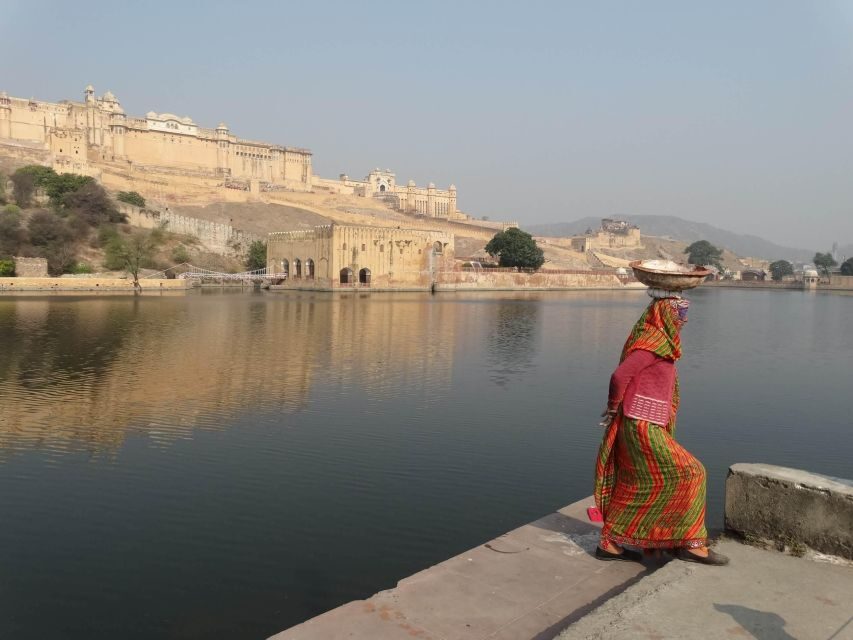
- Amber Fort: the big fortress start
- Panna Meena ka Kund and the “quick hit” stop
- Jal Mahal: the famous lake palace viewpoint
- City Palace: where the Maharaja’s story stays visible
- Jantar Mantar: UNESCO-listed science in stone
- Hawa Mahal: the iconic wind-face facade
- Rooftop Jaipur and Rajasthani food break
- Day 4 back to Delhi: a final handoff, not a second big day
- Price and logistics: where your money goes in real life
- Is this tour a good fit for you?
- Should you book this Golden Triangle tour or not?
- FAQ
- FAQ
- What cities are included in this Golden Triangle tour?
- How long is the tour?
- Is pickup and drop-off included?
- Are entrance tickets included in the price?
- Which meals are included?
- Is lunch or dinner included during sightseeing days?
- Do I need to buy tickets for all monuments separately?
- Is transportation included?
- Is the experience private or shared?
- What is the cancellation policy?
Key highlights worth planning for
- Taj Mahal sunrise start with time to explore, then breakfast back at the hotel
- UNESCO sights included in the route: Qutub Minar, Agra Fort, and Jantar Mantar
- Private, live guide at the monuments so you’re not reading signs alone
- Old Delhi tuk-tuk ride thrown into the Delhi day
- AC private transportation plus pickup and drop across Delhi/NCR areas
- Jaipur photo stops like Jal Mahal plus the classic trio of City Palace, Jantar Mantar, and Hawa Mahal
Why the Golden Triangle in 4 days makes sense for first-timers
If you’ve only got a short window, this kind of loop is the cleanest way to see India’s headline culture: Delhi’s historic layers, Agra’s Mughal masterpieces, and Jaipur’s royal-city geometry. Four days sounds tight, but it’s built around the “most efficient sightseeing route” idea—cover the distances in cars, then spend real time inside the major sights with a guide.
The value here is that you’re not just getting a checklist. You’re getting a private setup: an air-conditioned vehicle, pickup/drop across common Delhi/NCR zones, and a live guide for the monuments. That combination matters on this route because each city rewards context. A guide can explain what you’re looking at while you’re standing there—especially at places where the architecture looks like it’s doing something too fancy to be random.
One more practical point: breakfast is included for the three nights if you choose the 4-star/5-star hotel option. That’s a small detail that turns into real time and stress savings. Instead of hunting for food after travel drives, you start your day ready to go.
A few more New Delhi tours and experiences worth a look


Day 1 in New Delhi: Qutub Minar, Lotus Temple, and the capital’s big-axis views
New Delhi day is where you get your bearings fast—because the city shows you two styles of history right away: early Delhi Sultanate-era architecture and modern state-era landmarks.
Qutub Minar (first stop for a reason)
Qutub Minar is a 73-metre tall, five-storey tower linked to Qutub-ud-din Aibak and the Delhi Sultanate, built in 1193. It’s UNESCO-listed, and the height is the whole point. Even if you know almost nothing about the period, you’ll quickly understand why it became famous: it’s a major vertical statement in a flat urban setting.
Just note the practical bit: Qutub Minar entrance is not included. You’ll want to budget extra for ticketing early in the trip so you don’t end up negotiating cash in the middle of sightseeing.
Lotus Temple (quiet contrast)
Next is Lotus Temple, dedicated in December 1986 and known for its flower-like form. It’s a Bahá’í House of Worship, and it works as a breather between louder, more historic monuments. In practice, I like this stop because it breaks up the heavy-hitting architecture with something calmer and more spacious.
Good news: Lotus Temple is free on this itinerary.
Agrasen Ki Baoli (urban legends, real atmosphere)
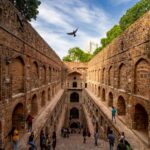
Agrasen ki Baoli is famous for local legends and spooky stories—people associate it with hauntings and paranormal activity. Whether you’re into that or not, you’ll still see why it holds attention: it has the feel of an old, enclosed stepwell in the middle of the city.
The catch: Agrasen Ki Baoli entrance is not included. Also, it’s one of those stops where you’ll do best if you keep expectations flexible. Think atmosphere and history-adjacent storytelling more than “big guided experience.”





India Gate, plus Lutyens/Baker-style New Delhi
India Gate is a war memorial near Rajpath (now Kartavya Path). It’s free here, and it’s a solid place to slow down for a moment before continuing. After that, the tour includes the grand architectural planning of New Delhi—highlighting the 330-acre core designed by Sir Edwin Lutyens and Herbert Baker.
One of my favorite practical takeaways from this part is that you don’t just jump from monument to monument. You get an explanation of why the city looks the way it looks: broad ceremonial avenues, planned sightlines, and a sense of order. That’s useful when you later try to navigate or understand what’s “old” versus “planned.”
Parliament House stop (context without the fuss)
The itinerary includes a visit to Parliament House. You’re told it houses Lok Sabha and Rajya Sabha, which helps you connect the building to how modern India runs. Just keep expectations realistic: this isn’t necessarily a long interior tour kind of stop based on the schedule—it’s included as part of the larger New Delhi overview.
Food stop and drop back to your hotel
The day wraps with a local food break where your guide recommends restaurants. Lunch and dinner are not included in the package, so treat these recommendations like part of the value. A good local pick can save you from tourist pricing or a boring meal after a long day.
Finally, you get a hotel drop in central Delhi for the overnight stay.
Day 2 Agra morning: Taj Mahal sunrise, Agra Fort, and Itmad-ud-Daula
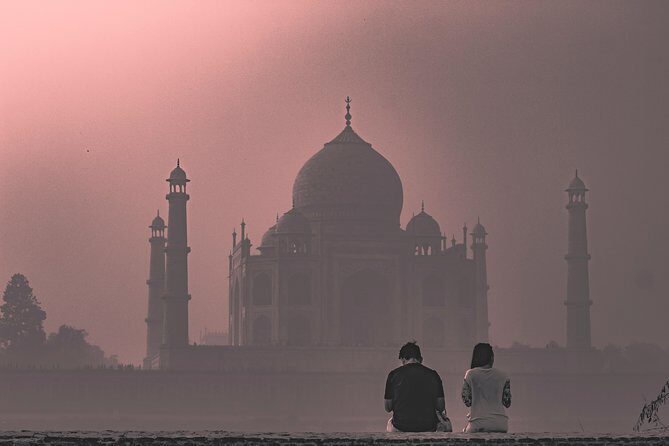
Day 2 is the “wow” day. It starts with a sunrise plan designed to catch the Taj Mahal when the light is gentler and the crowds can be different than later in the day.
Taj Mahal at sunrise: more than a photo
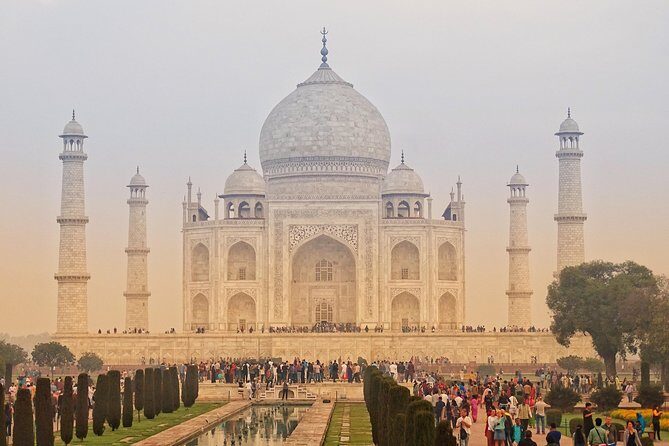
You’ll be picked up early for a sunrise view over the Taj Mahal, the marble mausoleum built by Emperor Shah Jahan for his wife, constructed starting in 1630. The tour then gives you time to explore and learn its story.
This is the kind of stop where having a guide helps. The Taj is visually obvious, but the meanings—who built it, why, and what the style communicates—are what turn “beautiful building” into something you’ll remember later.
Important: Taj Mahal entrance is not included. Budget for it as part of that “approx USD 90 per person” entrance-fee estimate.
After exploring, the plan has you return to the hotel for breakfast. That’s smart scheduling. Sunrise sightseeing can drain you fast, and this structure keeps the day from falling apart.
Agra Fort: the blend that makes the city feel alive
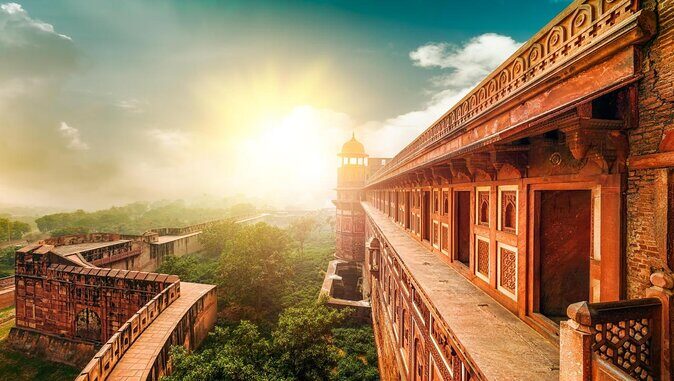
Next comes Agra Fort, another UNESCO World Heritage site, described as constructed in the 17th century. The key detail here is the blend of Indian and Islamic art and architecture. Agra Fort doesn’t just look powerful—it feels like a place where design choices were part of the message.
Again, entrance is not included on the itinerary.
Itmad-ud-Daula: the “marble firsts” stop
Then you’ll visit Itmad-ud-Daula. The tour notes it as the first Mughal structure built completely from marble, with extensive pietra dura (inlay work), and also the first tomb built on the banks of the Yamuna after earlier gardens.
I like this stop because it’s quieter than the Taj but still Mughal-craft central. If you’re tired of seeing “the big one” only, this balances the day.
Entrance is also not included.
Lunch time in Agra, then straight to Jaipur
You’ll pause for local cuisine recommendations, then the drive to Jaipur starts. The schedule lists about 250 km / about 3 hours. You’ll check in at your hotel in Jaipur afterward.
This is where you’ll want to pack smart: keep water and basic snacks handy for the drive. The itinerary doesn’t mention included lunch/dinner, so plan to eat when you have the chance.
Day 3 Jaipur: forts, palace-city order, and the day’s photo stops
Jaipur day mixes monumental fort energy with royal city symbolism and a few classic photo moments.
Amber Fort: the big fortress start
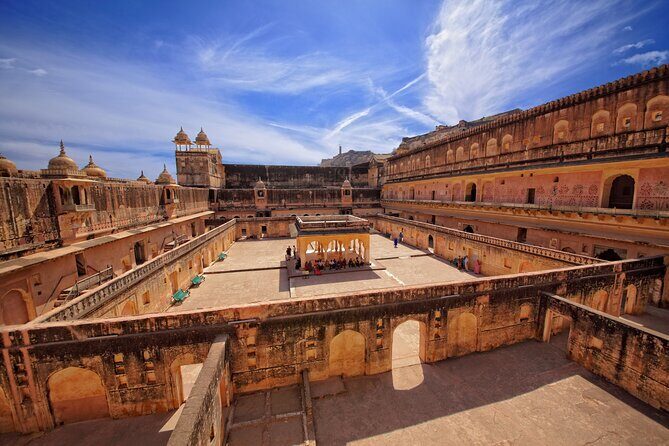
Amber Fort is first, with about 2 hours on-site. The tour doesn’t go into the architecture details here, but it does give you the time to actually see the fort rather than just entering and sprinting out.
Entrance is not included.
Panna Meena ka Kund and the “quick hit” stop
Panna Meena ka Kund is a smaller visit with about 30 minutes. It’s not long, but it’s a useful reset between the big fort and the photo-stop vibe later in the day.
Entrance is not included.
Jal Mahal: the famous lake palace viewpoint
Then there’s Jal Mahal, described as a palace floating on Man Sagar Lake, expanded and renovated in the 18th century by Maharaja Jai Singh II. You get a photo stop, and the scenery is the main draw here.
Entrance is not included, but this stop is typically worth it for the visual payoff if you like photography. Even if you’re not a “take 200 pictures” person, the lake setting breaks up the day’s forts and halls.
City Palace: where the Maharaja’s story stays visible
Lunch comes next with guide recommendations, then City Palace takes over. You’ll have about 1 hour to explore the Maharaja’s City Palace, built in 1721 as the administrative and ceremonial hub. The description also notes the museum inside and that part of the palace still serves as a residence of the Jaipur royal family.
Entrance is not included.
This is one of the stops where I’d pay attention to how the palace functions—not just how it looks. You’ll see why it was built as a power center.
Jantar Mantar: UNESCO-listed science in stone
After that, Jantar Mantar gets its own about 1 hour, and it’s UNESCO-listed, built in 1734 by Rajput King Sawai Jai Singh II. You’re told it has nineteen astronomical instruments designed to observe celestial bodies without telescopes.
Entrance is not included. This stop is valuable because it shows a different side of royal power: not only courts and forts, but scientific design carved into public space.
Hawa Mahal: the iconic wind-face facade
Hawa Mahal, the Palace of Winds, is described as a five-storey pyramid-shaped building made from red and pink sandstone, built in 1799 by Sawai Pratap Singh. You get a 30-minute visit.
Entrance is not included. This one is all about the exterior impact and the idea of the wind-facing design, so don’t let yourself get too rushed when you’re here.
Rooftop Jaipur and Rajasthani food break
The day ends with Dagla – The Rooftop Jaipur, including about 2 hours for local cuisine, with guide suggestions for what to order and when to pause.
Entrance is not listed as part of that segment, and it’s a welcome way to end without more walking.
Day 4 back to Delhi: a final handoff, not a second big day
Day 4 is straightforward. After breakfast, you check out and head back to New Delhi. The itinerary then has you dropped according to your flight details.
That’s a good design choice. After three heavy sightseeing days, you don’t need one more full schedule day. You get time to reset your bags, recharge, and not arrive at the airport looking like you just did the sprint of the year.
Price and logistics: where your money goes in real life
This tour is listed at USD 280 per person for the four-day package. On top of that, entrance fees are estimated at about USD 90 per person, and lunch and dinner are not included.
Here’s why I think that’s still decent value: you’re paying for more than “transport.” You’re getting a private air-conditioned vehicle, parking, tolls, fuel, service charges, and a private live guide at monuments. For the Golden Triangle route, that kind of support can easily save you time and confusion.
You also get a pickup option to hotels and airports across Delhi, Noida, Gurugram, Faridabad, and Ghaziabad. That matters because the Golden Triangle is spread out, and transfers can wreck your schedule if you start from scratch.
The itinerary also mentions a mobile ticket, which tends to reduce hassle on the ground. Just remember: entrance fees for specific sites are still your responsibility, so don’t assume everything is prepaid.
Comfort-wise, the plan expects moderate physical fitness. You’ll be doing plenty of walking through monument grounds and climbing stairs at some sites (especially the tower/fort style stops). Comfortable shoes aren’t a luxury here; they’re the difference between “fun day” and “why do my legs hate me?”
Finally, the trip is private: only your group participates. That can be a big quality upgrade compared with shared tours that force you to move at the slowest pace in the vehicle.
Is this tour a good fit for you?
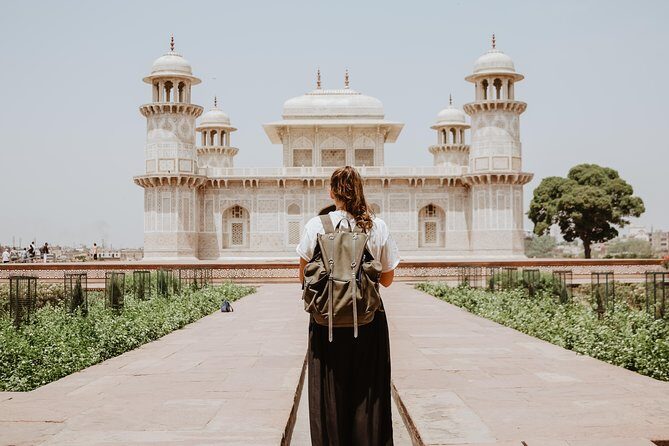
I’d put this Golden Triangle in Four Days on your shortlist if you:
- Want the headline India circuit—Delhi, Agra, Jaipur—without piecing together trains and transfers
- Like the idea of a private guide explaining what you’re seeing (especially for Taj Mahal and the fort-and-palace stops)
- Are okay with an early start for sunrise Taj Mahal
- Prefer having breakfast handled with a central hotel option for the three nights
I’d think twice if you:
- Hate tight schedules or don’t handle early mornings well
- Want a very budget-focused trip where you’d rather pay fewer entrances
- Need lots of free hours with no driving between cities (because Day 2 includes major travel: Agra to Jaipur about 250 km / about 3 hours)
Should you book this Golden Triangle tour or not?
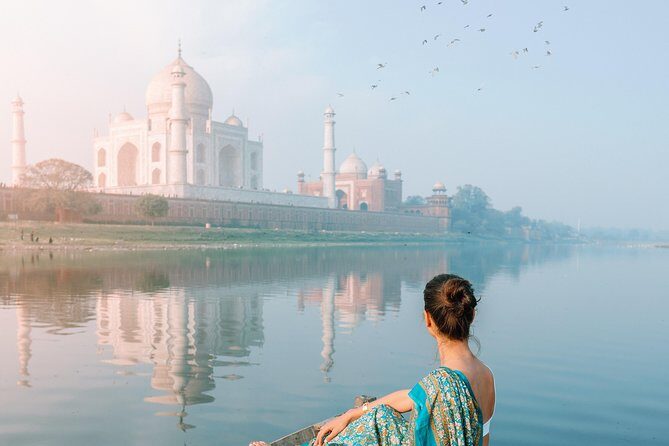
If your goal is to see Delhi, Agra, and Jaipur in a short time while keeping comfort and guidance high, this is a strong pick. The plan is built around the sights that people actually travel for—Taj Mahal sunrise, Qutub Minar, Agra Fort, Amber Fort, City Palace, Jantar Mantar, and Hawa Mahal—while still giving time for meals and photo stops.
Book it if you value the private guide, AC transport, and pickup/drop support. Skip it (or adjust expectations) if you want a relaxed, slow trip with lots of unplanned time, because this route is designed to cover ground.
FAQ
FAQ
What cities are included in this Golden Triangle tour?
This tour covers New Delhi, Agra, and Jaipur in a four-day route.
How long is the tour?
The duration is listed as 4 days (approx.).
Is pickup and drop-off included?
Yes. Pickup and drop-off are offered to any hotel and airport in Delhi, Noida, Gurugram, Faridabad, and Ghaziabad.
Are entrance tickets included in the price?
Entrance fees are not included. The tour lists an approximate additional cost of USD 90 per person for entrances.
Which meals are included?
Breakfast is included for the 4-night package in the sense that it lists 3 nights stay with breakfast (if you choose the 4-star or 5-star hotel option). Lunch and dinner are not included.
Is lunch or dinner included during sightseeing days?
No. Lunch and dinner are not included, though your guide will recommend places to eat.
Do I need to buy tickets for all monuments separately?
For many of the monuments, the itinerary marks tickets as not included. You should plan to pay entrance fees on top of the tour price.
Is transportation included?
Yes. The tour includes an air-conditioned vehicle and private transportation, along with parking fees, tolls, fuel, and taxes.
Is the experience private or shared?
It’s private. The tour states that only your group will participate.
What is the cancellation policy?
Cancellation is free, and you can cancel up to 24 hours in advance for a full refund. If you cancel less than 24 hours before the start time, the amount paid is not refunded.
If you want, tell me your travel month and whether you’re choosing the 4-star/5-star hotel option. I can help you estimate the realistic total budget (tour + entrances + meals) and suggest a sensible packing list for the sunrise day.