REVIEW · AHMEDABAD
Dwarka Somnath Diu Spiritual Circuit Gujarat
Book on Viator →Operated by Deja-vu tours treks and travel · Bookable on Viator
Three days, three sacred moods. This Dwarka–Somnath–Diu loop along India’s Saurashtra coast is built for anyone who loves temple moments plus sea-air breaks, all with a handy mobile ticket.
I especially like how the route stacks major stops you actually want to see: Krishna’s Dwarka and Shiva’s famous jyotirlingas.
One possible drawback: it’s a packed schedule with long drives and a couple of places that depend on tide timing and weather.
On the road, I like that you’re not stuck figuring logistics alone. You get an AC vehicle, meals, and a small group size (max 12), which makes it easier to keep moving even when the schedule is tight.
The trade-off is that you should plan to walk inside temples and along coastal areas in heat, plus bring some patience for travel time between towns.
Value-wise, I think this is a fair deal for what’s included: 3-star dual-sharing hotel (2 nights), breakfast every day, plus 2 lunches and 2 dinners. If you’re someone who wants a spiritual trip without constantly pulling out your wallet, that part is solid.
Still, I’d consider whether you want a slower pace—some highlights are short on-site, and timing matters at tide-washed temples like Bhadkeshwar Mahadev and Gangeshwar Mahadev.
In This Review
- Key Highlights You’ll Actually Feel on This Circuit
- Why Dwarka–Somnath–Diu Feels Like One Story
- Meeting in Ahmedabad at 10:00 pm and How the Group Trip Moves
- Day 1: Dwarka’s Bridges, Beyt Dwarka Island, and Swayambhu-Linked Shiva
- Beyt Dwarka (Shankhodhar): Krishna’s Island Mood
- Nageshwar Jyotirling: One of the 12 Self-Existing Jyothirlingas
- Rukmini Devi Mandir: The Connection Through Krishna’s Life
- Dwarkadhish Temple (Jagat Mandir): A Temple With Claimed Ancient Roots
- Sudama Setu: A Bridge Named for Childhood Friendship
- Bhadkeshwar Mahadev Temple: Hilltop Shiva With Tide-Submerged Stairs
- Day 2: Jambuvan Caves, Porbandar Coastal Drive, and Somnath by the Sea
- Jambuvan Caves (Near Porbandar): Ramayana-Era Atmosphere
- Sudama Mandir: Friendship Remembered in Marble and Carving
- Porbandar to Madhavpur Coastal Route: Road Views and Windmills
- Somnath Mahadev Mandir: A Jyotirlinga With Old Text Credits
- Triveni Sangam: River Symbolism Meeting the Arabian Sea
- Day 3: Diu Fort, INS Khukri Memorial, and Cave Shiva at High Tide
- Diu Fort: Portuguese Walls and Sea Views (1535–1541)
- INS Khukri Memorial: Naval Tribute at Chakratirth Beach
- Gangeshwar Mahadev Temple: Cave Temple, Five Lingas, Tide Wash
- Nagoa Beach: White Sands, Calm Water, Sunset Time
- Price and Value: What $91 Really Buys You Here
- Practical Tips: What to Bring for Tide Temples and Coastal Walks
- Who This Trip Fits Best (and Who Might Want Another Plan)
- Should You Book This Dwarka–Somnath–Diu Spiritual Circuit?
- FAQ
- What’s the duration of the Dwarka Somnath Diu spiritual circuit?
- What’s the starting point in Ahmedabad and when does it begin?
- How many travelers are in the group?
- Is mobile ticketing included?
- What’s included in the price?
- What temples and religious sites are covered?
- Are the temple admissions included or free?
- Are there any extra costs during the trip?
- Does the tour depend on weather?
- What are the cancellation terms?
Key Highlights You’ll Actually Feel on This Circuit
- Sudarshan Setu bridge views linking Beyt Dwarka to Okha, a cable-stayed stretch with serious road-picture potential
- Nageshwar Jyotirling and other Shiva stops on the Dwarka side, including temples treated as among the self-existent jyothirlingas
- Somnath by the Arabian Sea, plus Triveni Sangam where three rivers are said to meet the ocean
- Diu Fort (Portuguese, 1535–1541) with imposing coast views that make the trip feel different from mainland Gujarat
- Gangeshwar Mahadev cave temple at high tide, where sea water can wash and even submerge the lingas
- INS Khukri Memorial on a hillock at Chakratirth beach, mixing devotion with naval history
Why Dwarka–Somnath–Diu Feels Like One Story
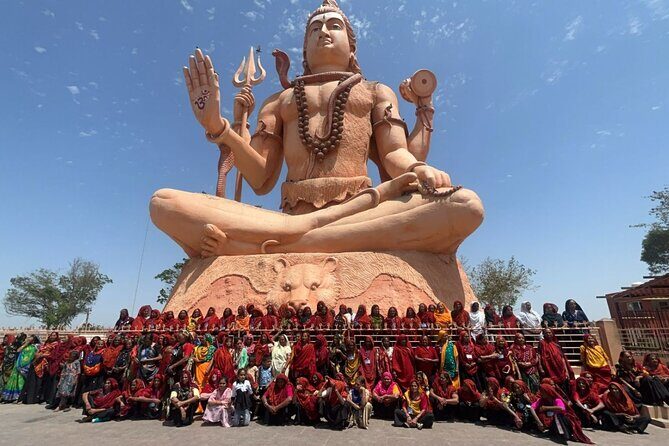
This circuit works because it’s not just a checklist of famous names. It stitches together three big themes: Krishna’s Dwarka, Shiva’s jyotirlingas, and Diu’s coastal identity shaped by seafaring influence.
Dwarka gives you the Krishna side—temples tied to his life and companions, plus spots like Beyt Dwarka (a small island near Dwarka) and the many bridges and mandirs named for those relationships. Then Somnath shifts you into Shiva focus with one of the 12 jyotirlingas and a sea-front ritual place at Triveni Sangam. Finally, Diu adds a different flavor: Portuguese fort walls, a naval memorial, and cave shrines that respond dramatically to the tide.
If you like traveling where faith and scenery talk to each other, this route does that well. And if you prefer variety—temples plus bridges plus beaches—you’ll feel that too.
You can also read our reviews of more tours and experiences in Ahmedabad.

Meeting in Ahmedabad at 10:00 pm and How the Group Trip Moves
You start from Ahmedabad at Kalupur Railway Station Road (Ahmedabad Junction / Kalupur Railway Station Rd). The start time listed is 10:00 pm, and the tour ends back at the same meeting point.
What I like about the structure:
- You travel with an air-conditioned vehicle.
- It’s capped at up to 12 travelers, so you’re not swallowed by a giant bus crowd.
- You get meals and hotel sorted: 2 nights in a 3-star hotel, dual sharing, with breakfasts plus lunches and dinners.
What to keep in mind:
- The trip is “guided and moving,” not slow sightseeing. You’ll likely spend fewer hours lingering at any one spot.
- There’s a note that you may need local transit such as an auto for street transit (budgeting around 100 rupees is mentioned), so keep a little cash handy even though most stops are covered.
The mobile ticket matters too. It helps you avoid last-minute paper searching and makes quick check-ins easier when you’re on the move.
Day 1: Dwarka’s Bridges, Beyt Dwarka Island, and Swayambhu-Linked Shiva
Day 1 is the most Krishna-heavy day, and it’s arranged like a sequence of “come closer, feel the legend, then look outward.”
Beyt Dwarka (Shankhodhar): Krishna’s Island Mood
You begin at Beyt Dwarka, also known as Shankhodhar, a small island near Dwarka. The Beyt Dwarka temple is dedicated to Lord Krishna, linked with the idea that Krishna lived there when he arrived.
I like this stop because it feels like a step away from the busy mainland. Even if your time is short, the setting gives you that island-temple feeling, and it pairs well with photos later from the bridge area.
Nageshwar Jyotirling: One of the 12 Self-Existing Jyothirlingas
Next comes Nageshwar Jyotirling, on the route between Dwarka city and Beyt Dwarka. It’s considered one of the 12 swayambhu (self-existent) jyothirlingas.
This is the kind of stop where you don’t need a lot of extra explanation to feel why people treat it with care. It’s a Shiva temple moment that anchors the day spiritually after the Krishna focus.
Rukmini Devi Mandir: The Connection Through Krishna’s Life
Then you move to Rukmini Devi Mandir, dedicated to Goddess Rukmini, Krishna’s chief queen. It’s listed as about 2 km from Dwarka.
I like including Rukmini because it adds a relational layer. It doesn’t just stay in battlefield-era myth; it points toward household devotion and character importance in Krishna stories.
Dwarkadhish Temple (Jagat Mandir): A Temple With Claimed Ancient Roots
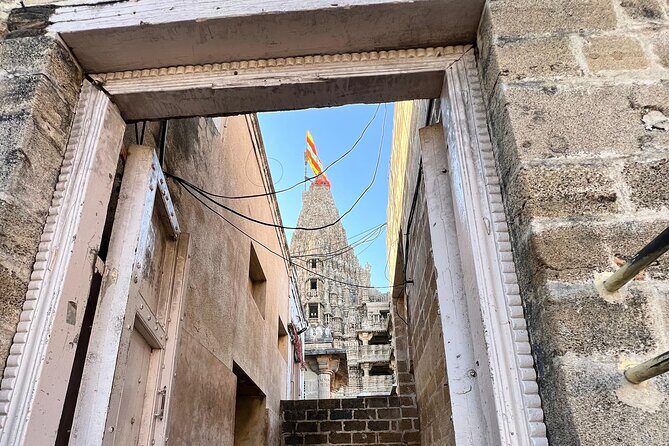
The big set-piece is Dwarkadhish Temple, also called Jagat Mandir. It’s believed to have been established more than 2500 years ago by Vajranabh, Krishna’s great grandson. The temple has been renovated multiple times.
Even if you’re not counting years like a historian, you’ll notice the scale and the ongoing nature of temple life. This is where Dwarka starts to feel like a living pilgrimage center.
Sudama Setu: A Bridge Named for Childhood Friendship
After Dwarkadhish, you cross at Sudama Setu, a pedestrian suspension bridge named for Sudama, Krishna’s childhood friend.
This is short, but it’s a great “breather” stop. Bridges are good travel punctuation: you move, you get views, and you reset your legs before the next shrine.
Bhadkeshwar Mahadev Temple: Hilltop Shiva With Tide-Submerged Stairs
Finally on Day 1, you visit Bhadkeshwar Mahadev Temple, a hilltop Shaiva temple dedicated to Chandra-Moulishwar Shiva. The stairs can be submerged during high tides.
This is where your practical planning matters most. If you go when water is high, you might find access or comfort affected. If conditions are right, the reward is both spiritual and scenic: you’re looking out over the coast from a higher perch.
Day 2: Jambuvan Caves, Porbandar Coastal Drive, and Somnath by the Sea
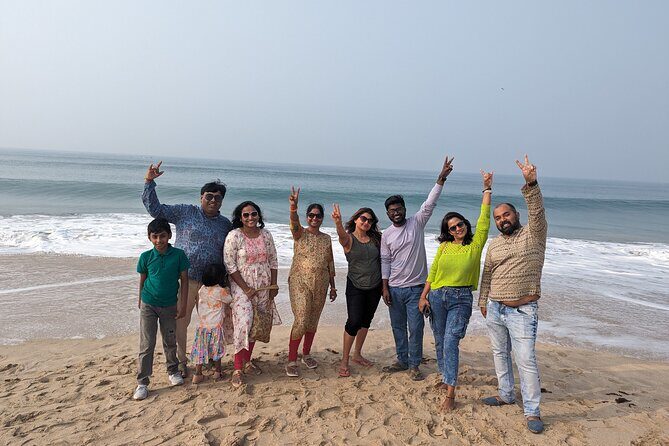
Day 2 swings between mythic cave settings, coastal road scenery, and the emotional weight of Somnath.
Jambuvan Caves (Near Porbandar): Ramayana-Era Atmosphere
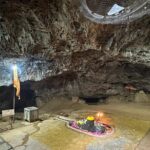
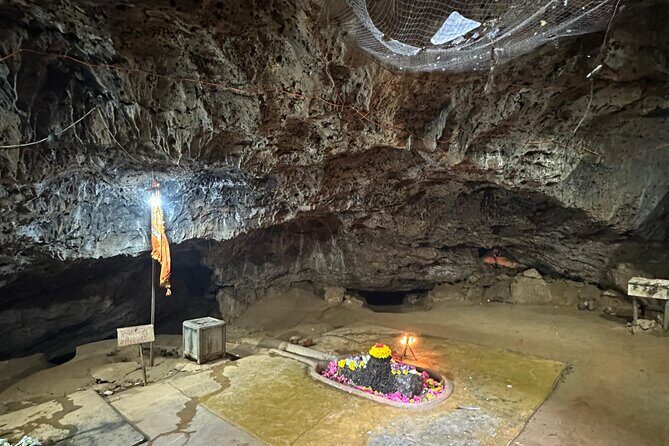
You visit Jambuvan Caves, in Ranavav taluka of Porbandar district, about 15 km from Porbandar city. The cave is tied to Jambuvan, a figure from the Ramayana age, described in the tour notes as living there and spanning different eras.
I like caves on temple circuits because they slow you down. You’re not just moving from shrine to shrine—you feel the change in environment. Even with limited time, it gives the day a grounded, earthy tone.
Sudama Mandir: Friendship Remembered in Marble and Carving
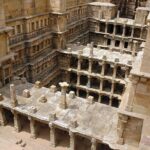
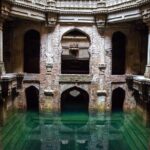
You then go to Sudama Mandir, built to commemorate Krishna and Sudama’s friendship. It’s described as simple, with marble pillars and an intricately sculpted shikhara, plus a small stepwell in the complex.
This stop has a quieter kind of beauty. Instead of big dramatic scale, you get details: stonework, pillar rhythm, and the stepwell area that suggests old-world water rituals.
Porbandar to Madhavpur Coastal Route: Road Views and Windmills
Next is a scenic stretch along the coastal route from Porbandar to Madhavpur. The notes highlight a clear coastline line and windmills along the way.
Even if you don’t get out much, this is a good reminder that Gujarat’s coast can feel very modern alongside very old devotion. You’re watching wind energy on the same drive where you’ll soon stand near ancient temples.
Somnath Mahadev Mandir: A Jyotirlinga With Old Text Credits
Your Somnath stop is the big Shiva finale of Day 2. Somnath Mahadev Mandir sits in Sagar Kant of Saurashtra and is one of the 12 holy jyotirlingas of Shiva. It’s also mentioned in the Rigveda.
This is one of those places where the setting supports the faith. Being near the sea makes the air feel different around the temple, and that matters on a spiritual circuit.
Triveni Sangam: River Symbolism Meeting the Arabian Sea
You also visit Triveni Sangam, known as Triveni Ghat, a holy spot where the Hiran, Kapila, and Saraswati rivers meet the Arabian Sea. The story symbolism is clear: rivers joining the ocean represent human birth, life, and death.
I like this stop because it turns a geography detail into a life metaphor. It’s a short visit, but it tends to stick.
Day 3: Diu Fort, INS Khukri Memorial, and Cave Shiva at High Tide
Day 3 changes your vibe: you’re in Diu, with sea walls, coastal memorials, and shrines that react to water.
Diu Fort: Portuguese Walls and Sea Views (1535–1541)
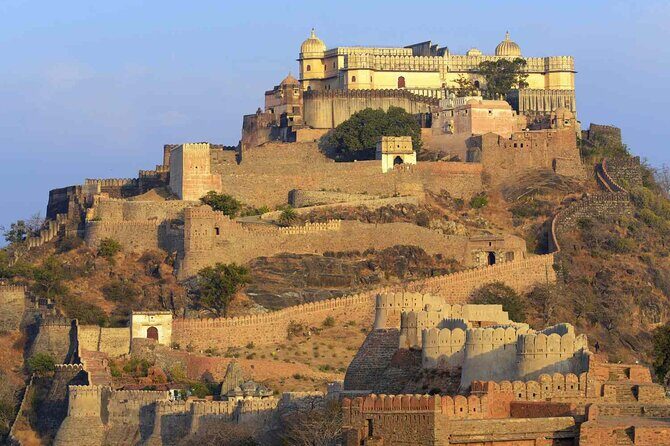
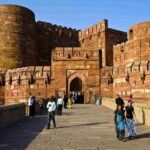
You start at Diu Fort, built by the Portuguese between 1535 and 1541 AD. The fort is described as expansive and imposing and offers commanding sea views.
I love this kind of contrast after temple-heavy days. Forts show a different side of history—trade routes, military presence, and a coastline shaped by the sea.
INS Khukri Memorial: Naval Tribute at Chakratirth Beach
Next is the INS Khukri Memorial, inaugurated on 15 December 1999. It’s erected on a hillock at Chakratirth beach and is a replica of the INS Khukri naval ship, dedicated to the Indian Navy frigate.
Even if you’re not a naval history person, this can be moving because it’s quiet and grounded. It also helps you understand Diu as more than just old walls and beaches.
Gangeshwar Mahadev Temple: Cave Temple, Five Lingas, Tide Wash
Then you visit Gangeshwar Mahadev Temple, a unique cave temple dedicated to Shiva with five Shiv Lingas believed to be built by the five Pandava brothers. At high tide, sea water washes the lingas and can even submerge them completely.
This is the other tide-dependent highlight after Bhadkeshwar. If you want the full effect, try to be flexible. Weather and sea conditions are not fully controllable, so manage expectations. If conditions allow, this is the kind of sight that feels rare.
Nagoa Beach: White Sands, Calm Water, Sunset Time
Finally, there’s time at Nagoa Beach, described as a long sandy beach with white sands, calm waters, and swaying palm trees. It’s also noted for water sports and a beautiful sunset.
This is where you turn off your temple brain and let the coast do its job. Even if water sports aren’t your thing, sunset at this kind of beach area is usually the easiest win.
Price and Value: What $91 Really Buys You Here
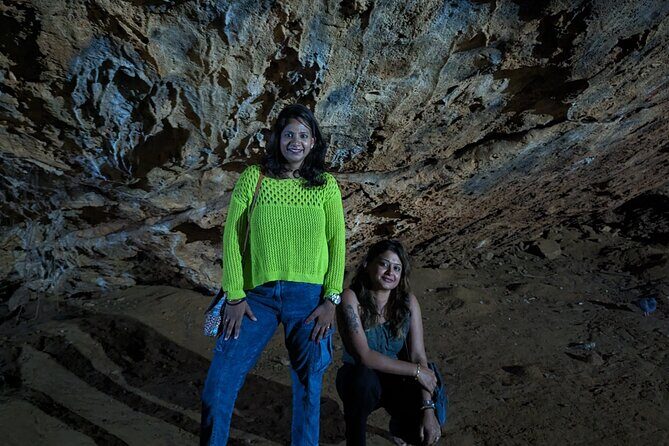
At around $91 for the 3-day circuit, the value isn’t just the low headline price. It’s the fact that the “big costs” are handled for you:
- AC vehicle for the route
- 2 nights in a 3-star hotel (dual sharing)
- Meals included: 3 breakfasts, 2 lunches, 2 dinners
- Most temple admissions are listed as free
- Diu Fort admission is included, while other sites are described as free
So you’re not paying entry after entry, and you’re not paying for accommodation separately. That’s what makes budget-friendly trips actually feel affordable: fewer small add-ons.
Where you might spend extra:
- Any optional local rides during street transit, since auto/local transport like 100 rupees is mentioned
- Personal snacks, bottled water, and any paid water sports at Nagoa Beach (the data only says water sports exist, not whether they’re included)
Practical Tips: What to Bring for Tide Temples and Coastal Walks
You’ll be happier on this circuit if you plan for hot sun, short stops, and changing water levels.
- Wear grippy shoes. Bridges, temple steps, and coastal paths can be uneven.
- Plan for tide reality at Bhadkeshwar and Gangeshwar. If high tide is in play, you may see stairs submerged or lingas washed more dramatically. Don’t force rigid expectations.
- Bring a hat and sunscreen, especially on the drive and at beach time in Diu.
- Keep a small amount of cash for the mentioned street transit auto option.
- If you’re sensitive to long travel days, consider that this is structured around seeing major highlights, not slow wandering.
Also, since the tour notes say the experience requires good weather, keep an eye on forecasts. Poor weather can affect what you get to see comfortably.
Who This Trip Fits Best (and Who Might Want Another Plan)
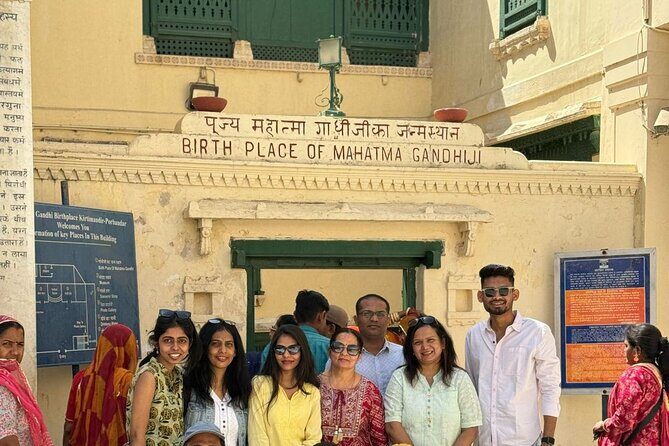
This circuit is a strong match if you:
- Want both Krishna and Shiva in one trip
- Care about famous pilgrimage sites like Dwarkadhish, Nageshwar Jyotirling, and Somnath
- Like coastal scenery as a partner to faith stops—bridges, sea-front ghats, and Diu beaches
- Prefer a small group with guided movement rather than self-planning every leg
It may feel less ideal if you:
- Want lots of free time to linger in one town
- Hate travel days packed with multiple stops
- Strongly need predictable access at tide-affected temple stairs/caves
Should You Book This Dwarka–Somnath–Diu Spiritual Circuit?
If you want a budget-friendly, high-hit-rate spiritual route with hotel + meals + transport handled, I’d book this. It’s the kind of trip that gives you big names (Dwarkadhish, Somnath, jyotirling moments) plus Diu’s different coast history (Portuguese fort and the INS Khukri memorial).
Just go with the right mindset. This is not a leisurely coastal stroll. It’s a guided circuit where you’ll get memorable moments, then move on to the next. If you can handle that rhythm—and you’re okay with tide and weather playing a role—you’ll likely leave with those rare “how did we fit all this in?” memories.
FAQ
What’s the duration of the Dwarka Somnath Diu spiritual circuit?
It runs for 3 days (approx.).
What’s the starting point in Ahmedabad and when does it begin?
The tour starts at Ahmedabad Junction / Kalupur Railway Station Rd and the start time listed is 10:00 pm. It also ends back at the meeting point.
How many travelers are in the group?
The tour has a maximum of 12 travelers.
Is mobile ticketing included?
Yes, the tour uses a mobile ticket.
What’s included in the price?
Included items are AC vehicle, 2 nights accommodation in a 3-star hotel (dual sharing), meals (3 breakfasts, 2 lunches, 2 dinners), and most admission is listed as free, with Diu Fort ticket included.
What temples and religious sites are covered?
The circuit includes Dwarkadhish Temple, Nageshwar Jyotirling, Somnath Mahadev Mandir, Triveni Sangam, Gangeshwar Mahadev Temple, and more stops like Beyt Dwarka, Sudama Mandir, Rukmini Devi Mandir, and cave temples.
Are the temple admissions included or free?
Most stops are listed as Admission Ticket Free. Diu Fort is listed as included.
Are there any extra costs during the trip?
The notes mention that local transport such as auto during street transit may cost around 100 rupees if needed. Personal expenses and any paid activities are not listed as included.
Does the tour depend on weather?
Yes. The experience notes say it requires good weather and may be rescheduled or refunded if canceled due to poor weather.
What are the cancellation terms?
There is free cancellation. You can cancel up to 24 hours in advance for a full refund.
If you tell me your travel month (and whether you prefer early mornings or slow afternoons), I can help you judge how well the tide-dependent temple parts will likely fit your comfort level.