REVIEW · AHMEDABAD
Easy Private Tour at Sun Temple and Rani Ki Vav by Car
Book on Viator →Operated by TripXcia · Bookable on Viator
Two stops, one smooth, private day. I like how this trip pairs Rani Ki Vav with Modhera Sun Temple without the usual hassle of buses or confusing connections. You also get a calm ride and real-time direction from a careful, on-time driver like Mr. Ravi, so the day feels organized from start to finish.
My favorite part is the sites themselves: Rani Ki Vav’s carved stepwell is the kind of architecture you can actually study, not just look at. Modhera’s Sun Temple then gives you a totally different feel, with Hindu sun-worship traditions tied to Vedic ideas and local stories. The main catch to plan for is cost at the gate: both entry fees are not included, and there is no tour guide included, so you may want to bring your curiosity (or your own guide) for deeper explanations.
In This Review
- Key highlights you’ll notice right away
- Private Car Comfort Between Ahmedabad and Modhera
- Rani Ki Vav: An Inverted Temple Made for Water
- What to watch for during your 1.5 hours
- Reading the Sculpture and Architecture Without Needing a Guide
- Modhera Sun Temple: Sun Worship, Local Legends, and Carved Stone
- Practical advice for your Sun Temple visit
- Optional Lunch Break That Won’t Break Your Day
- Price and Value: What You’re Really Paying For
- Who This Private Car Day Trip Suits Best
- Should You Book This Ahmedabad Private Car Day Trip?
- FAQ
- How long is the private car tour?
- What stops are included in the day trip?
- Are entrance tickets included in the price?
- Is lunch included?
- Do you get pickup from your hotel?
- What kind of vehicle will you use?
- What is the cancellation policy?
Key highlights you’ll notice right away
- Private, just-for-you car: no mixing with strangers, plus hotel pickup included
- AC comfort for a long day: an air-conditioned sedan like a Honda City, Hyundai Xcent, or similar
- Rani Ki Vav’s inverted-temple design: seven levels down, plus 500+ major sculptures
- Two major monuments, matched pacing: about 1 hour 30 minutes at each site
- Driver updates that keep the day easy: you’ll know what’s next and where you’re going
Private Car Comfort Between Ahmedabad and Modhera
This is a true private transfer day: you ride in an AC sedan, you stay with your group, and the schedule is built around getting you to two big cultural sites without wasting time. The tour runs about 7 hours total, and each main stop gets roughly 1 hour 30 minutes. That timing is practical. It gives you enough space to walk, look closely, and still avoid the kind of rushing that makes carvings blur together.
The value here is how much stress the private car removes. With public transport, you usually spend energy on routes, waiting, and last-minute changes. With a private vehicle, you can focus on the monuments. Even better, the driver provides updates during the day, and one recent group specifically praised how Mr. Ravi showed up on time, drove carefully, and communicated clearly about what site came next.
You’ll also get mobile ticket support and confirmation at booking, which helps if your plans are tight. And there’s an optional lunch time slotted in. Lunch itself isn’t included, but having that pause avoids the common problem of “we’ll eat whenever” when you’re on a timed cultural day trip.
You can also read our reviews of more private tours in Ahmedabad
Rani Ki Vav: An Inverted Temple Made for Water
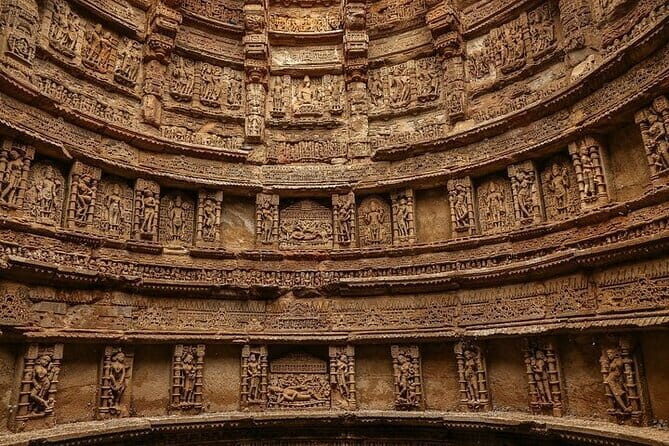
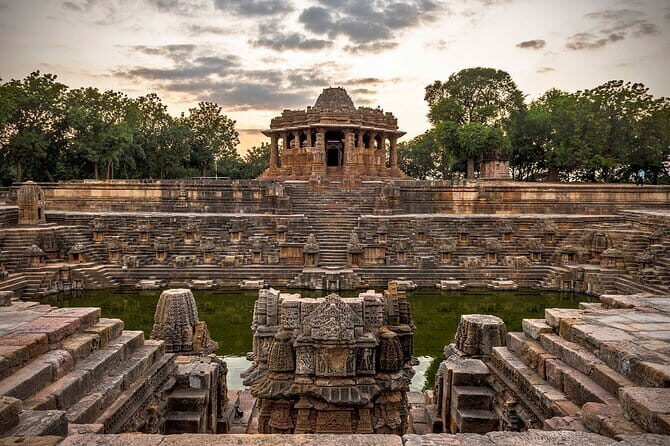
Rani Ki Vav is a stepwell, but it’s not a casual pit you pass by. It’s a carefully designed, underground water management system that evolved into something far more ceremonial and architectural. The site sits along the Saraswati River and began in the 11th century AD as a tribute to a monarch. Stepwells across the Indian subcontinent began much earlier, around the 3rd millennium BC, starting as simpler pits in sandy terrain and growing into large, multi-storey complexes. Rani Ki Vav represents that later, high-skill stage.
What I find most compelling is the way it’s designed like an inverted temple. Instead of worship happening on top of the ground, the spiritual and visual focus moves downward. The water is treated as sacred, and that idea shapes the structure you’ll walk into. The layout is built across seven levels of intricately carved stairs, and the sculpture program is enormous: the complex features over 500 principal sculptures, along with many more minor figures.
You’ll spend about 1 hour 30 minutes here, which is enough for a full “slow walk” through the main viewing areas if you’re curious. The site is also known for being well kept, with lush, manicured lawn areas around it, which makes the whole experience feel calmer before you head into the stair structure.
What to watch for during your 1.5 hours
Because Rani Ki Vav is so sculptural, you’ll get more out of it if you don’t treat it like a quick photo stop. Look for how the space changes as you go down: each level feels like a new composition rather than repeating the same view. If you take time, you can also appreciate the broad theme mix—religious, mythological, and secular storytelling—woven into the stonework.
One practical consideration: this is a stair-and-level place. Wear comfortable footwear and expect uneven steps. If your legs tire easily, move at a steady pace and pause when you need to.
Reading the Sculpture and Architecture Without Needing a Guide
Even without a dedicated tour guide included, you can still get a lot from Rani Ki Vav because the design itself gives you clues. The concept of an inverted temple means you’re meant to notice vertical structure: carvings and figures aren’t random decoration. They’re part of how the space communicates meaning as you descend.
Here’s what you can focus on during your visit:
- Levels as storytelling: each level offers a different angle on the carvings and the stairs’ rhythm.
- Religious and mythological themes: many sculptures relate to Hindu belief systems and the wider myth world.
- Secular details too: there are also smaller depictions beyond purely spiritual scenes, which helps the place feel human rather than just ceremonial.
- Scale: when a site has over 500 principal sculptures, the scale changes your mindset. Instead of one “main thing,” it’s a whole set of visual moments.
This is also where your private-car format pays off. Because you aren’t tied to a group’s pace, you can spend extra time where your attention goes. If you like architecture, you’ll enjoy how the stepwell developed from basic water pits into intricate multi-storey designs. If you’re more of a storytelling person, you’ll enjoy how the sculptures cover both religious and everyday-feeling themes.
And if you want deeper context, you can do that in your own way: read a bit before you go, or take the questions you have into your visit and use your own observations to answer them.
Modhera Sun Temple: Sun Worship, Local Legends, and Carved Stone
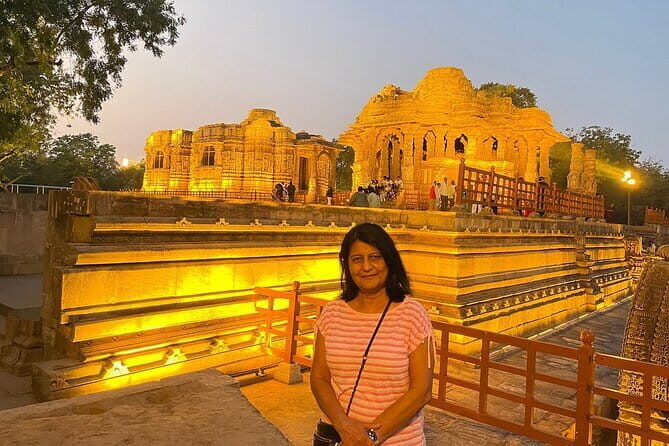
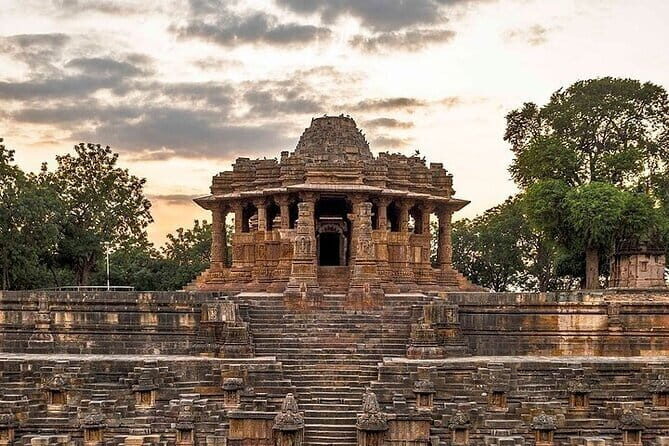
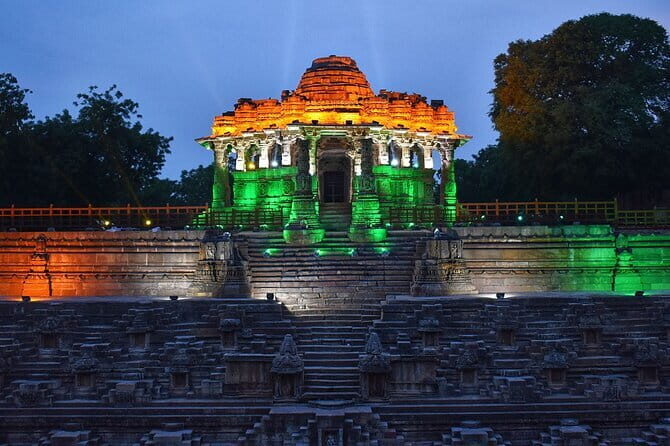
After Rani Ki Vav, you’ll head to the Modhera Sun Temple. This second stop feels like a shift in both space and mood. Rani Ki Vav pulls you down underground. Modhera puts you in an outdoor temple setting tied to the traditions of sun worship.
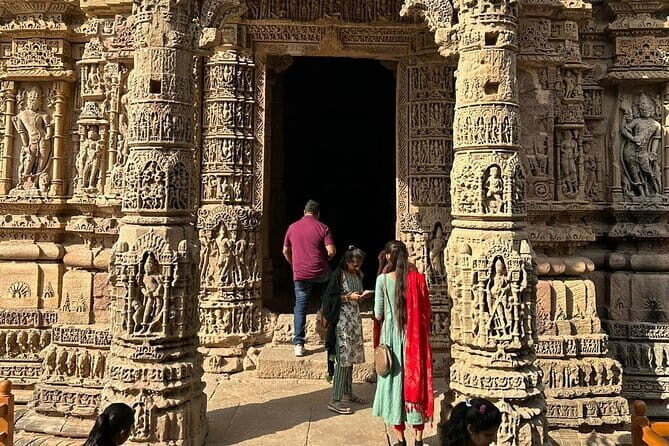
The Sun Temple at Modhera connects to Hindu practice and older religious ideas found in Vedic scriptures. The tradition of honoring the sun isn’t described as a recent invention; it’s presented as a millennia-old practice. That’s a big part of why this temple still draws attention: it’s not just a building, it’s a physical expression of belief.
Modhera also carries local identity through stories linked to the Modha Brahmans. The area is sometimes called Mundera, described as the original settlement of the Modha Brahmans. One tale says the Brahmans received the place as a Krishnarpana in connection with the marriage of Ram and Sita. The Modha Brahmans then served as gurus to the Modha Vaniyas, and the Jain acharya Hemchandra is said to have Modha parentage.
The temple sits on the left bank of the Pushpavati River, a tributary of the river Rupan, in Becharaji Taluka of Mehsana District. Those geographic details matter because they help you understand why the temple belongs to a broader regional landscape and river system rather than feeling like an isolated landmark.
You’ll have about 1 hour 30 minutes at the Sun Temple. That’s long enough to take in the main structures and notice the carvings and layout, but not so long that you feel stuck.


Practical advice for your Sun Temple visit
Go with a simple plan: look at the overall layout first, then circle back for carvings and details. Sun Temple stonework tends to reward repeat viewing angles. Also, since this is an open-air site, plan for sun and heat. Carry water and take shade breaks when you can.
Optional Lunch Break That Won’t Break Your Day
This experience includes an optional time for lunch, but lunch itself is not included. In practice, that gives you control. You can choose a quick, local meal without losing track of your monument schedule, or you can use the break to rest your legs before the second site.
Because the full day is around 7 hours, don’t treat lunch as a long sit-down. Treat it like a reset: eat something simple, drink water, and get back on track so you still have the energy to enjoy your second stop properly.
If you’re traveling with kids or older family members, this built-in lunch window can be a big deal. It reduces the chance that you’ll be stuck hungry and cranky right when the carvings and stone details start pulling your attention.
Price and Value: What You’re Really Paying For
The price is listed as about $102.12 per group (up to 4 people). For a private day trip, that can be solid value, especially if you split it among friends or family. The key is understanding what’s included vs. what adds cost.
Included:
- Air-conditioned vehicle (AC sedan such as Honda City / Hyundai Xcent / Suzuki Dzire or similar)
- Private transportation and all taxes
- Pickup offered and hotel transfers
- Optional time for lunch
- Mobile ticket
Not included:
- Entry fees: INR 300 for Modhera Sun Temple and INR 600 for Rani Ki Vav
- Lunch
- Tour guide
So the entrance fees are the main extra expense. If you’re going to both sites, you should budget at the gate for INR 900 per person total for temple entry. That’s not a dealbreaker, but it does change the math. The tour becomes best value when your group is small and you still want a private car. If you’d rather just pay transit costs and hire a guide, then the added comfort may not feel worth it.
To me, the biggest value is time and ease. You spend your effort looking at the monuments, not planning routes. And the private structure makes the day feel controlled, especially with a driver like Mr. Ravi who arrives on time and communicates about the next stop.
Who This Private Car Day Trip Suits Best
This tour fits best if you:
- Want private convenience rather than buses and transfers
- Like architecture and carved religious sites
- Prefer a calm pace with enough time at each stop (about 1 hour 30 minutes each)
- Are traveling as a group of up to 4 and can share the per-group cost
- Appreciate safe, careful driving and clear updates during the day
It may not be ideal if you:
- Expect a formal tour guide included in the price
- Don’t want to pay entry fees on top of the tour cost
- Have limited mobility and find stair-heavy sites difficult (Rani Ki Vav is stair-based)
Should You Book This Ahmedabad Private Car Day Trip?
I think you should book it if you want a clean, easy day that hits two important Gujarat landmarks without stress. The private AC car, hotel pickup, and driver communication make the experience feel straightforward, and the sites themselves are strong enough to justify the trip on their own.
Skip the idea if you’re looking for all-in guided storytelling or you don’t like paying separate monument entry fees. But if you’re the type who likes to pause, look closely, and get your bearings fast through well-paced stops, this is a smart way to see both Rani Ki Vav and Modhera Sun Temple in one go.
FAQ
How long is the private car tour?
The duration is about 7 hours.
What stops are included in the day trip?
You’ll visit Rani Ki Vav and the Modhera Sun Temple.
Are entrance tickets included in the price?
No. Entry fees are not included. Modhera Sun Temple costs INR 300 per person, and Rani Ki Vav costs INR 600 per person.
Is lunch included?
Lunch is not included, but there is optional time for lunch during the day.
Do you get pickup from your hotel?
Yes, pickup is offered, with hassle-free hotel transfers.
What kind of vehicle will you use?
You’ll travel in an AC sedan such as a Honda City, Hyundai Xcent, Suzuki Dzire, or a similar vehicle.
What is the cancellation policy?
You can cancel for free up to 24 hours in advance for a full refund.