REVIEW · AHMEDABAD
Private Tour of Step well, Modhera Sun Temple & Patola saree weaving by car
Book on Viator →Operated by 5 Senses Walks · Bookable on Viator
Stepwells and silk, all in one day. This private car tour strings together Rani ki Vav and the Sun Temple, then finishes in Patan for Patola weaving, with lunch and a guide. It’s a smart way to get out of Ahmedabad and see three major cultural stops without fighting taxis or public buses.
I especially like the pacing: you get enough time to actually wander, not just snap photos and sprint. I also like that the guide can personalize the day, and names that come up for standout care and storytelling include Sanket, Anand, and Bhupendra Oza. Even better, the car keeps you comfortable on the long road day.
One possible drawback: it’s a 10-hour outing, and the driving time can feel significant. If you hate long days in the car, plan snacks, water, and comfy shoes from the start.
In This Review
- Key highlights you’ll care about
- Planning your day from Ahmedabad: what the “private by car” part really buys you
- Rani ki Vav stepwell: a royal memorial you can walk through
- Modhera Sun Temple: Bhimadeva I’s 1026 temple on the Pushpavati
- Patan Patola weaving: watch why one saree takes 100 days
- Car time, lunch, and the 10-hour rhythm: how to stay fresh
- Price and value: is $150 per person actually fair?
- Who should book this tour, and who should skip it
- Should you book this private Stepwell, Sun Temple, and Patola weaving day?
- FAQ
- How long is the tour?
- What time does the tour start?
- Is pickup offered?
- Is lunch included?
- Which places are visited?
- Are admission tickets included?
- Is this a private tour?
- How much does the tour cost?
- Can the itinerary be customized?
- What is the cancellation policy?
Key highlights you’ll care about
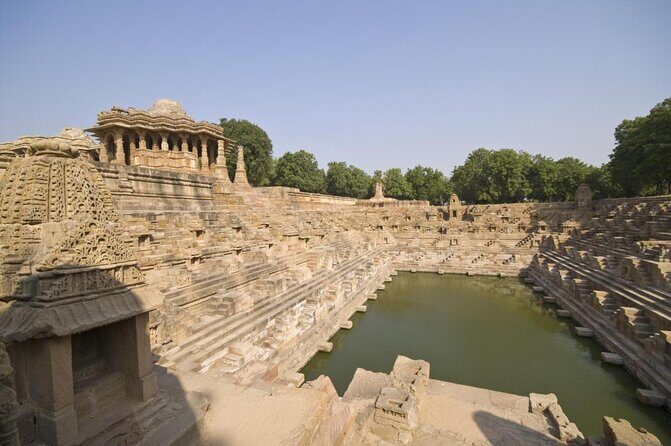
- A rare 7-level stepwell at Rani ki Vav, built as a royal memorial with a big engineering reputation
- Modhera Sun Temple details: built in 1026 by Bhimadeva I of the Solanki dynasty
- Patola weaving as real craft: one saree made by 4 weavers over 100 days
- Guides who explain and care (Sanket, Anand, Bhupendra Oza are specifically mentioned)
- Private car + guide + lunch, so you’re not piecing together transport all day
Planning your day from Ahmedabad: what the “private by car” part really buys you
This is the kind of day trip that works because you’re not doing it the hard way. The tour runs from an 8:00am start, uses a private car, and includes a guide and lunch, which matters more than it sounds. When you’re leaving Ahmedabad for the Modhera and Patan area, getting there efficiently is the difference between a fun day and a tiring one.
Here’s the practical benefit: you’re free to spend time inside each site instead of burning energy on logistics. That shows in how the day is built—there are three main stops, and each one gets a dedicated block so you can walk, look up at details, and take your time.
Your day is also structured to reduce decision fatigue. The route is clear: stepwell first, sun temple second, then Patola weaving. And because it’s private, you can request small adjustments to match your interests, instead of being stuck with a fixed group plan.
The one trade-off is time. Expect a long day overall, and there can be 2 to 3 hours of driving each way, depending on traffic and exact route. If you’re bringing a long list of must-sees, this is a good way to see them without stress, but it’s still a full-day commitment.
You can also read our reviews of more private tours in Ahmedabad
Rani ki Vav stepwell: a royal memorial you can walk through
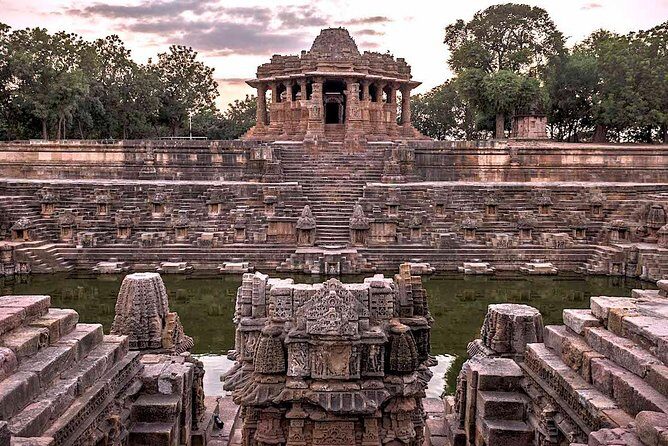
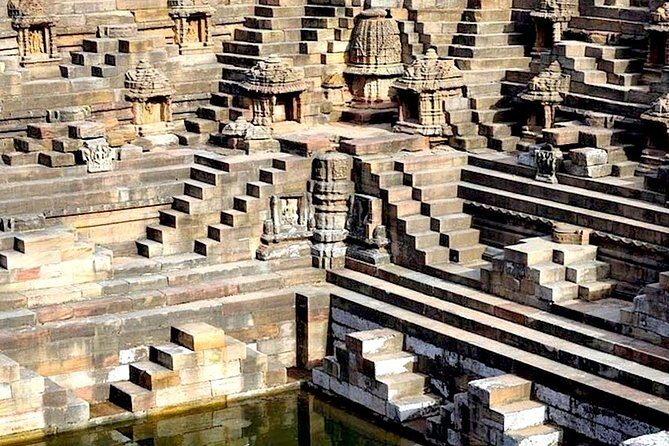
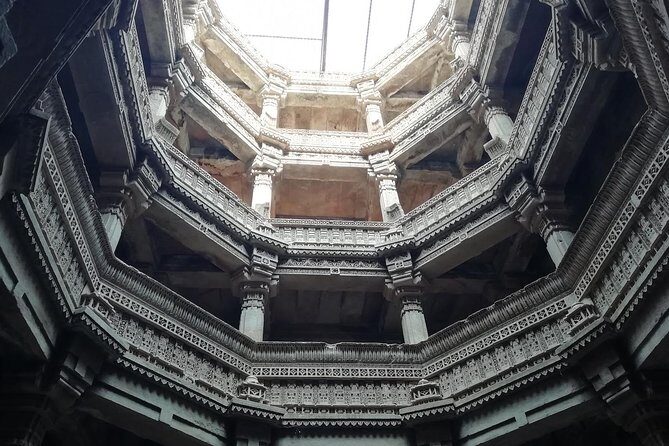
Rani ki Vav is the kind of site that makes you slow down fast, because it’s not just a monument you view from the edge. It’s a seven-storied stepwell, and the big hook is its story: it’s described as a rare memorial for a king built by his queen. That “royal memorial” angle changes how you feel walking down into the structure—you’re not just looking at architecture, you’re witnessing a purpose.
From a travel perspective, this is where your guide earns their keep. A good explanation helps you understand why stepwells like this matter in Gujarati culture: they weren’t only utilitarian. They also became places where power, devotion, and public life intersected.
What I like about starting here is flow. You begin with a site that rewards slow movement, then you move to a temple with a different kind of attention—symmetry, orientation, and 11th-century religious design. By the time you reach the next stop, your mind is already in the right mode: looking at how people built meaning into stone.
A simple consideration: stepwell spaces can involve lots of stairs and shaded-but-stony walking. You’ll enjoy it more if you wear shoes you trust and don’t rush. Take your time at the first views so you can understand the layout before you move deeper.
Modhera Sun Temple: Bhimadeva I’s 1026 temple on the Pushpavati
Next up is the Sun Temple at Modhera, an 11th-century structure built for the Sun God. The details you’ll hear (and should remember) are specific: it was built by Bhimadeva I of the Solanki dynasty in 1026, on the banks of the river Pushpavati. Those facts are useful because they anchor the architecture in real time—this wasn’t a random “pretty old temple.” It’s a temple tied to a dynasty and a particular century.
This stop tends to click for people who like architecture that’s built with intention. Even if you don’t go deep into technical religious history, the temple’s design communicates order and purpose. You’ll have about 2 hours here, which is enough time to notice patterns, walk around, and let the site sink in.
One practical point: temple visiting can be sensitive to sun, shade, and foot comfort. If you’re traveling in warmer months, plan for bright light and bring water. The guide can help you pace it so you’re not trapped in heat or constantly stopping to find shade.
I also like that this stop contrasts with Rani ki Vav. Stepwell architecture draws you downward into an engineered space. The Sun Temple encourages outward looking—toward the whole layout, not just what’s right in front of you. Together, they give you a more complete sense of how Gujarati religious and civic design borrowed from both utility and ceremony.
Patan Patola weaving: watch why one saree takes 100 days
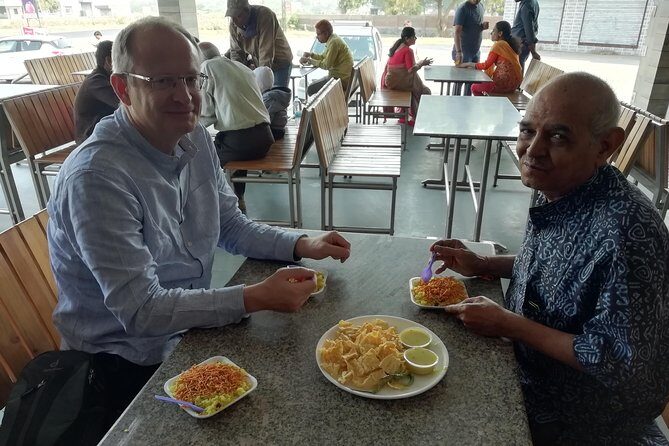
Then you head to Patan for Patola saree weaving at a heritage stop. This is the part of the day that turns architecture lessons into lived craft. The core detail I’d hang onto is the timeline: a single Patola saree is made by 4 weavers over 100 days. That’s not a throwaway fact. It explains the value instantly.
A Patola saree isn’t quick fashion. It’s slow, skilled work where many hands and many stages have to line up. During your visit, you’ll see a few weavers and learn how the process works, which gives you a real respect-for-the-method feeling rather than a “look and leave” experience.
What makes this stop particularly worthwhile is the human scale. Temples impress you with scale and age. Weaving impresses you with patience and repetition. You’ll likely find yourself watching more than you expected—how workers handle materials, how they move through steps, and how the craft is explained.
A consideration: this stop is shorter than the first two (about 1 hour). If you’re a textile person and want extra time for questions, it can be worth asking your guide whether you can stay a bit longer at the weaving stop, since this tour can be customized.
Car time, lunch, and the 10-hour rhythm: how to stay fresh
This day is designed to be easy, but the calendar is still the calendar. You’re starting at 8:00am and running for about 10 hours. The car removes the hassle of public transport and taxis, but it doesn’t remove the reality that you’ll be riding for a while.
I suggest you treat the car time as part of the experience, not time wasted. The better guides keep the ride informative. Names that come up for storytelling include Bhupendra Oza, who is specifically mentioned for keeping people entertained with stories and lectures on Indian culture and architecture. If you get a guide like that, the drive becomes a moving classroom.
Lunch is included, which is a big practical win on a day trip. When lunch is handled for you, you can stay on schedule and spend more time where it counts. If you have dietary needs, it’s smart to mention them ahead of time so the lunch choice works for you.
Bring basics: water, sun protection, and a light layer if the air-conditioning makes you cold. Also plan to keep your phone charged; admission tickets are part of the plan, and the tour uses mobile tickets, which is convenient once you’re set up.


Price and value: is $150 per person actually fair?
At $150.00 per person, you’re paying for a private setup: private transportation, a guide, and lunch, with admission tickets included for the main stops. That pricing can sound steep until you price out what it replaces.
For this kind of route, the costs add up quickly:
- You’d need multiple rides or taxis to link stepwell, Modhera Sun Temple, and Patan weaving
- You’d need a local guide (or you’d risk missing the best explanations)
- You’d still want entry tickets for each stop
- And you’d need lunch without turning the day into a scramble
This tour is built to prevent exactly that scramble. You pay once, you keep the day organized, and you get a guide who can connect the sites so they feel like a single story rather than three random stops.
Is it the cheapest way? No. But it’s a strong value for people who care about context, comfort, and not losing half the day to transit and figuring stuff out.
Also note the tour can be customized. If you’re focused on architecture, craft, or temple design, you can lean the day in that direction, which makes the spend feel more justified.
Who should book this tour, and who should skip it
This works best for you if:
- You want a structured day outside Ahmedabad with three major cultural stops
- You prefer a private car and a guide instead of hopping between transport options
- You enjoy seeing craftsmanship up close, especially with textile explanations (Patola takes 100 days for one saree)
It may not be ideal if:
- You strongly dislike long car days. Even with a good driver, this can still be a lot of hours
- You’re only interested in one type of site. You’ll get stepwell + temple + weaving, so it’s not a single-theme tour
If you’re traveling solo, this kind of private format can feel especially comfortable. You get attention without having to constantly manage a group.
Should you book this private Stepwell, Sun Temple, and Patola weaving day?
If you want one organized day that connects Rani ki Vav, Modhera Sun Temple, and Patola weaving into a coherent cultural route, I think this is a solid booking. The value is in the combination: private transportation, lunch, guide support, and dedicated time at each site.
Book it if you like learning by walking and looking—temples and stepwells, plus the real-world patience of textile craft. Skip it only if you’re determined to do your sightseeing at a slow pace without driving, or if you don’t want a full-day schedule.
FAQ
How long is the tour?
The tour runs for about 10 hours.
What time does the tour start?
The start time is 8:00am.
Is pickup offered?
Yes, pickup is offered.
Is lunch included?
Yes, lunch is included.
Which places are visited?
You visit Rani ki Vav, the Sun Temple at Modhera, and Patan Patola weaving.
Are admission tickets included?
Admission tickets are included for the listed stops.
Is this a private tour?
Yes. It’s private, and only your group participates.
How much does the tour cost?
The price is $150.00 per person.
Can the itinerary be customized?
Yes, the private tour can be customized to suit your needs.
What is the cancellation policy?
Free cancellation is available up to 24 hours before the experience start time for a full refund.