REVIEW · JAIPUR
Natural Dyeing and Shibori Half Day Workshop
Book on Viator →Operated by Dye it Yourself · Bookable on Viator
That first swirl of dye changes everything.
In this Jaipur workshop, I love how hands-on it is, and how much you actually learn about plant-based color instead of just making something pretty. You’ll get training that covers natural dye basics and practical techniques for shibori tie-dye, and it ends with a finished organic cotton piece you can take home. One thing to consider: it’s a hands-on, sometimes tiring session, so comfortable shoes matter.
What makes it especially worth your time is the structure. You move through clear segments—natural dyeing fundamentals, then shibori tie-dye and block printing—so you’re not just copying motions. The workshop runs about 3 hours 30 minutes, and it’s designed so your group stays focused (it’s listed as a private activity for your group only), not mixed into a huge crowd.
In This Review
- Key things to know before you start
- Natural Dyeing in Jaipur: more than craft, it’s color science in plain language
- Getting oriented: how the session is paced
- Natural Dyeing fundamentals: where colors like indigo and Jaipur pink come from
- Shibori tie-dye: the fold, the bind, the pattern math
- Block printing alongside tie-dye: pattern without overthinking
- DIY time: turning instructions into your own garment
- What you take home: garment plus dye packs, not just a photo
- Price and value: is $190 per person fair for 3.5 hours?
- Logistics that actually matter: timing, comfort, and meeting point
- Who should book this natural dye workshop (and who might skip it)
- Small tips to get better results (without needing to be an expert)
- Should you book it? My practical verdict
- FAQ
- How long is the natural dyeing and shibori workshop?
- Where does the workshop start and end?
- What is included in the price?
- Do I have to choose an item for the take-home garment?
- Can I bring extra fabric or garments to dye?
- What techniques will I learn during the session?
- Do I get dye materials to take home?
- Is transportation included?
- What happens if weather is poor?
- Is cancellation free?
- Is this activity private?
Key things to know before you start
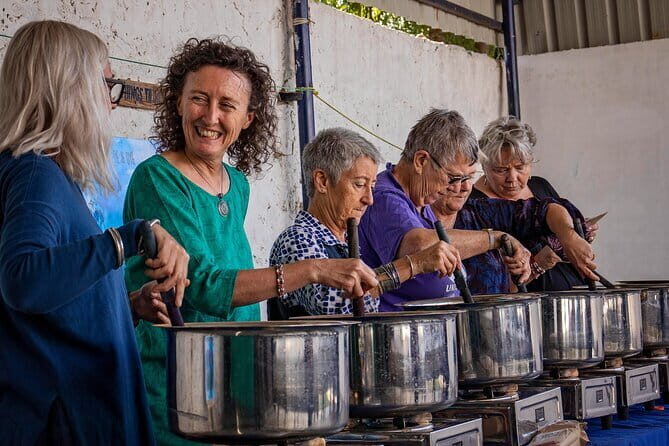
- You’ll work with real natural dye materials and learn how different colors come from plants
- Shibori tie-dye + block printing happen in one session, so you see multiple traditions side by side
- You get take-home supplies, including natural dye packs and an organic cotton garment
- You can bring extra fabric if you want more than the included garment
- Expect some hands-on effort, so plan for a bit of standing, tying, and timing
- Indigo and Jaipur pink are taught as standout natural-color moments
Natural Dyeing in Jaipur: more than craft, it’s color science in plain language
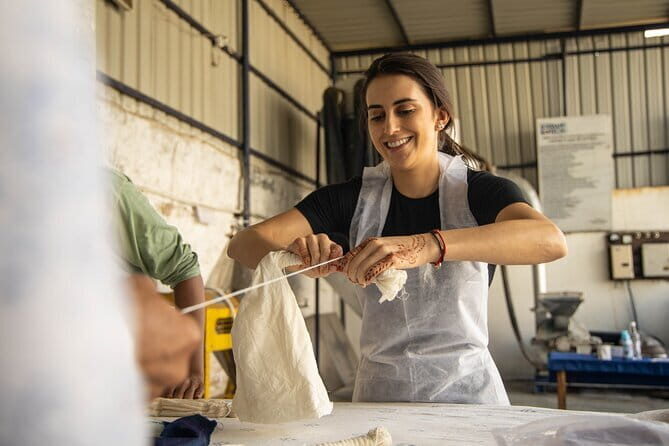
Jaipur is a great place for this kind of workshop because it’s where textiles and pattern-making feel everyday, not museum-only. Here, the focus stays practical: what dye comes from plants, how colors behave, and how technique affects the result.
The idea behind natural dyeing is simple: you’re not using a chemical color that never changes. You’re working with plant sources and learned steps to coax color out of them. That means you’ll start noticing that “color” is not just a tube of paint—it’s chemistry, timing, and preparation. And yes, it’s hands-on. You get your hands on the process, which is the fastest way to understand why the same plant can produce different outcomes depending on how you handle your fabric.
The workshop also leans into sustainability in a way you can see. You’re given plant-based dye packs as part of the experience, and you build toward a garment that’s explicitly described as organic cotton. That matters if you’re trying to make choices that feel less throwaway.
A few more Jaipur tours and experiences worth a look
Getting oriented: how the session is paced
The workshop is about 3 hours 30 minutes and is split into three segments: Natural Dyeing, Shibori Tie Dye & Block Printing, and then a DIY portion to help you finish and take your results with you.
That structure is helpful for two reasons. First, it keeps the learning from feeling random. Second, it gives you momentum: you start with fundamentals, then you apply them through technique, then you leave with something you made fully enough to be proud of it.
You’ll also be working at a class pace, not an open-ended studio. That’s good if you want guidance and outcomes you can trust, rather than experimenting endlessly and hoping for the best.
Natural Dyeing fundamentals: where colors like indigo and Jaipur pink come from
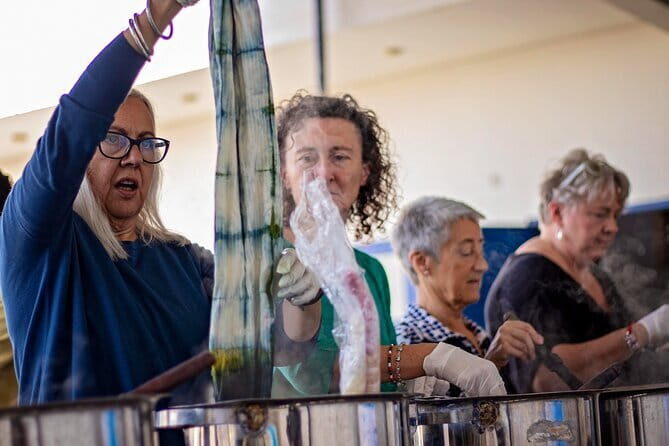
In the natural dyeing segment, you’re introduced to the history and the core principles of natural dyeing. The goal isn’t to overwhelm you with dates; it’s to help you understand what “natural color” actually means when you’re doing it.
You’ll explore the existence of natural colors and learn fundamentals of extracting shades—yellows, orange, brown, pink, blue, red, and greens—from plants. That list is important because it shows this isn’t a one-color workshop. It’s teaching you the range of what’s possible with plant sources.
One of the standout takeaways is indigo. The experience specifically calls out the magic of indigo dyeing, and that’s a big deal in natural-dye learning because indigo often behaves differently than many lighter plant colors. You also get references to “Jaipur pink,” which points to how local color traditions can influence what you produce.
What I like about this part is that the learning stays tied to the result you’ll end up with. You’re not just collecting trivia. You learn in order to make choices later—how you handle your fabric, what method you use, and how you approach your final piece.
Shibori tie-dye: the fold, the bind, the pattern math
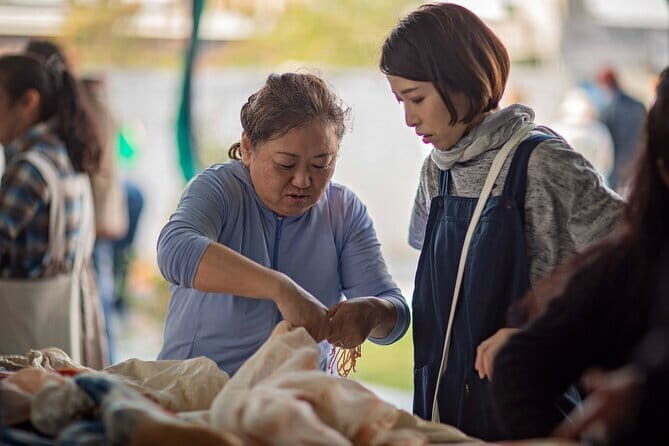
After the natural dye basics, you shift into shibori tie-dye, which is where the workshop feels most like a real technique class. Shibori is about controlling where dye reaches the fabric. That control comes from folding, tying, and binding (and then unbinding later to reveal the pattern).
This is the segment where you’ll see why natural dyes are so tied to method. Even if you use the same dye source, different folds and ties can change how the color spreads, where it concentrates, and what kind of lines or textures appear.
If you like crafts where there’s a “reason” behind the look, shibori delivers. You’re not just decorating. You’re designing with resistance: you place fabric in a way that either blocks dye or shapes how it flows.
Also, shibori is a great way to slow down and pay attention. It can feel a bit fiddly, but that’s part of why the results look intentional instead of random.
Block printing alongside tie-dye: pattern without overthinking
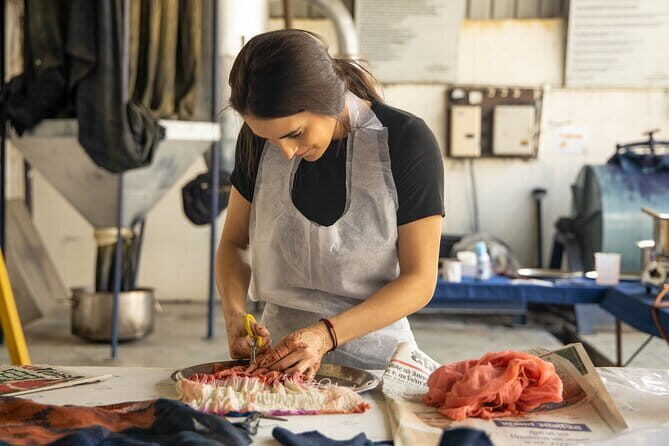
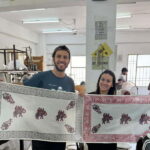
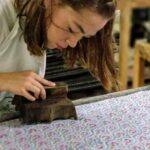
The workshop also includes block printing as part of the shibori/tie-dye segment. Block printing changes the vibe in a good way. Instead of controlling dye by folding and tying, you’re using pattern application—stamping design into place—so you get another kind of visual structure.
That combination matters because it helps you compare two different approaches:
- tie-dye patterns that emerge from your fabric handling
- print patterns that come from placement and design application
Even if you’re not a “craft person,” block printing is often easier to learn because the pattern element is concrete. It gives you a repeatable action with a clear visual payoff.




DIY time: turning instructions into your own garment

After you’ve learned the main methods, the workshop includes a DIY component. This is where your earlier learning becomes your decision-making.
You’re provided with all necessary materials to create and take home a dyed organic garment. The garment is described as either a scarf, dress, shorts, placemat, or cushion cover—something you select from. That choice alone is practical: you can pick what’s most useful to you after you return home.
You can also bring as much fabric or as many garments as you want to dye during the workshop. That’s a huge value add if you already own plain cotton items and you’d rather refresh them than buy something new.
The best DIY moments are when you stop thinking of this as a class and start treating it like your own mini dye studio. You don’t need to be artistic by nature. You just need to be willing to follow steps carefully and pay attention while tying, printing, or timing your dye.
What you take home: garment plus dye packs, not just a photo
This experience is built around take-home outcomes. Included in the session are:
- 4 natural dye packs (50 grams each)
- an organic cotton garment you choose from scarf, dress, shorts, placemat, or cushion cover
- an organic cotton bag
- bottled water
- snacks, including Indian tea and cookies
The practical impact is this: you don’t just leave with one item. You leave with dye packs you can use again, plus a bag and the knowledge to repeat at home (at least in principle). That makes the workshop feel less like a one-time souvenir and more like a skill you can carry forward.
And if you’re thinking about gifting: these take-home items can be far more meaningful than a standard trinket. People tend to notice when someone brings home something handmade that looks intentional.
Price and value: is $190 per person fair for 3.5 hours?
At $190 per person for about 3 hours 30 minutes, it isn’t a budget activity. But it also isn’t just you sitting and watching dye run.
Here’s what you’re paying for, based on what’s included:
- a guided workshop with structured segments
- materials and instruction for natural dyeing, shibori tie-dye, and block printing
- a dyed organic cotton garment you select
- four natural dye packs (50 grams each) as takeaway
- snacks (Indian tea and cookies) plus bottled water
When a class includes both instruction and multiple take-home items, the value improves fast. You’re not only buying the experience—you’re buying the ability to recreate part of it later.
If you’re the type who hates wasting time on activities where the only payoff is a photo, this one makes more sense. The practical outcome is tangible, and the craft is detailed enough that you’ll feel like you learned something real.
Logistics that actually matter: timing, comfort, and meeting point
The activity runs during the day, with opening hours listed as Monday through Sunday from 10:00 AM to 5:00 PM. The session itself is roughly 3 hours 30 minutes.
Start and end are tied to a meeting point in Kokawas, Rajasthan, and it ends back at the meeting point. You’re not provided private transportation, so you’ll want to plan how you’ll get there on your own.
One more important note: wear comfortable shoes. The workshop mentions it might get tiring at times, and dye work usually means lots of standing, handling supplies, and staying focused.
If you’re trying to fit this into a Jaipur day, I’d treat it like a real half-day block, not a quick add-on.
Who should book this natural dye workshop (and who might skip it)
This experience is a great fit if:
- you want hands-on textile work with plant-based dyes
- you like learning techniques, not only making items
- you want something useful to take home: an organic cotton garment or home accessory
- you’re curious about specific colors like indigo and Jaipur pink
You might consider skipping if:
- you only want something fast and low-effort
- you’re hoping for a purely sightseeing-focused activity
- you don’t want to deal with hands-on craft time (tying, folding, timing)
If you’re traveling with friends who love making things, this kind of class also works well socially. It’s group-based, but it’s described as private for your group only, so you’re not stuck sharing a cramped space with strangers.
Small tips to get better results (without needing to be an expert)
You’ll get instructions and materials, but a few choices can help your outcome:
- Bring extra plain cotton fabric if you want more than the included garment
- Pick the take-home garment that you’ll actually use (scarf vs cushion cover vs shorts is a personal decision)
- Wear clothes and shoes you don’t mind getting splashed with dye
- Expect to focus during the tying/folding work—this is where patterns come from
A workshop like this rewards patience. The best-looking pieces usually come from careful steps, not rushing.
Should you book it? My practical verdict
Book it if you want a meaningful Jaipur textile experience with real plant-based dye work and take-home results that go beyond a souvenir. The combination of natural dye fundamentals, shibori tie-dye, and block printing is a strong package for a single half-day, and the included organic garment plus dye packs makes the $190 feel more justified than many one-off craft classes.
Skip it if you’re looking for a super-light, purely observational activity. This is hands-on, and it can be tiring—so you’ll enjoy it most if you’re comfortable with that style of learning.
If you do book, go in with the right mindset: follow the steps closely, ask questions, and treat your finished piece like something you made—not something you were handed.
FAQ
How long is the natural dyeing and shibori workshop?
It lasts about 3 hours 30 minutes.
Where does the workshop start and end?
It starts at the meeting point in Kokawas, Rajasthan, and ends back at the same meeting point.
What is included in the price?
The price includes 4 natural dye packs (50 grams each), an organic cotton garment you select, an organic cotton bag, bottled water, and snacks such as Indian tea and cookies.
Do I have to choose an item for the take-home garment?
Yes. You can select from options like a scarf, dress, shorts, placemat, or cushion cover.
Can I bring extra fabric or garments to dye?
Yes. You can bring as much fabric or as many garments as you want to dye during the workshop.
What techniques will I learn during the session?
The workshop includes natural dyeing fundamentals, shibori tie-dye, and block printing, along with a DIY part.
Do I get dye materials to take home?
Yes. You receive 4 natural dye packs (50 grams each) as takeaway.
Is transportation included?
No. Private transportation is not included.
What happens if weather is poor?
The experience requires good weather. If it’s canceled due to poor weather, you’ll be offered a different date or a full refund.
Is cancellation free?
Yes. You can cancel up to 24 hours in advance for a full refund.
Is this activity private?
It’s listed as a private tour/activity, meaning only your group participates.