REVIEW · AHMEDABAD
Morning Heritage Walk – house of mg
Book on Viator →Operated by The House of MG · Bookable on Viator
Old Ahmedabad feels handmade at dawn.
This morning walk is a tight, 2-hour circuit through the city’s religious and civic landmarks, timed for that cooler early start when the lanes feel calmer. I especially like how the route connects major monuments without making you feel like you’re marching from sign to sign—more like you’re learning the city by walking it, with old-city streets as your guide.
I love the personal attention the guide brings to the group. You’ll get clear explanations at each stop, and the pacing feels designed for real people on real mornings (not a rush-job). I also like the practical bonus that most admissions are handled for you, so you spend your time looking at details like carved pillars and stone latticework instead of hunting for tickets.
One thing to consider: this is a street-walking tour, and the route can be tough if you’re not used to walking in uneven old-city areas or keeping a steady pace at 8:00am. If mornings aren’t your thing, plan to wear supportive shoes and give yourself a little buffer for meeting in traffic.
In This Review
- Key highlights you’ll feel on the walk
- Why a 8:00 a.m. Heritage Walk Works in Ahmedabad
- Meeting at House of MG near Lal Darwaja: Finding the Start
- Sidi Saiyyed Mosque: Ni Jali, Light, and Stone Geometry
- Bhadra Fort (1411): Where a City’s Founder and Maratha-Era Power Meet
- Jama Masjid: 260 Pillars, 15 Domes, and Three Entrances
- Ahmed Shah’s Tomb (Raja No Haziro): A Small Stop with Strong Meaning
- Manek Chowk: Silver Trade by Day and Food by Night
- How the Jain Temple Theme Fits This Walk
- Price and What $95.85 Gets You
- Timing, Walking Pace, and Weather Reality
- Reliability: What to Do If the Day Gets Messy
- Who Should Book This Walk (and Who Might Skip)
- Should you book Morning Heritage Walk (House of MG)?
- FAQ
- What time does the tour start, and how long is it?
- How much does it cost, and how many people can be in a group?
- What tickets are included?
- Where does the tour meet, and does it end there too?
- Is this tour private?
- Is the tour weather-dependent?
Key highlights you’ll feel on the walk
- Sidi Saiyyed Ni Jali screens: stone latticework that turns light into pattern
- Bhadra Fort grounds: palaces, mosque, and an open eastern Maidan-Shah area
- Jama Masjid scale: 260 pillars, 15 domes, and entrances on three sides
- Ahmed Shah’s tomb context: Raja No Haziro near the Manek Chowk square
- Manek Chowk’s shifting life: cow feeding in the morning, silver trade by day, food market at night
- A guided route that adapts: explanations and pace shaped around your group
Why a 8:00 a.m. Heritage Walk Works in Ahmedabad
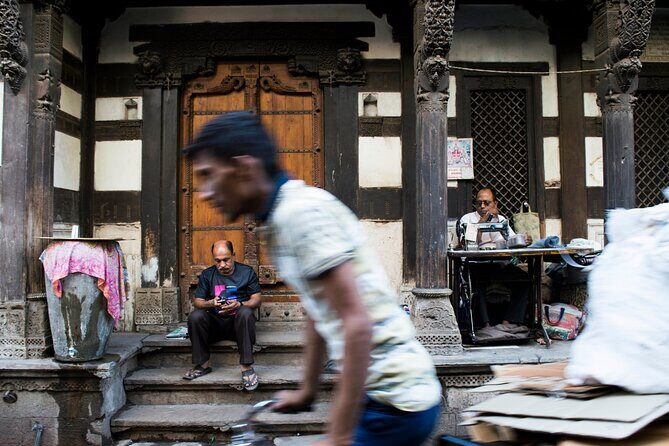
Ahmedabad in the morning is a different city. At 8:00am, you’re more likely to catch the old lanes before the heat locks everything into slow motion, and you can actually enjoy the walking instead of just surviving it.
This tour is built around that sweet spot. You’re out for about 2 hours, so it doesn’t balloon into your whole day, yet it’s long enough to hit several major sites in a logical order.
You also get a smooth rhythm: mosque details, fort views, then back into the market life at Manek Chowk. It’s a smart contrast—sacred spaces first, then everyday Ahmedabad—without the stop-start chaos.
You can also read our reviews of more walking tours in Ahmedabad
Meeting at House of MG near Lal Darwaja: Finding the Start
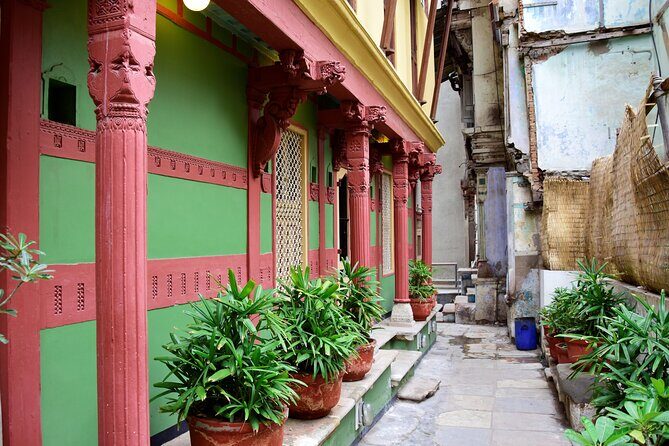
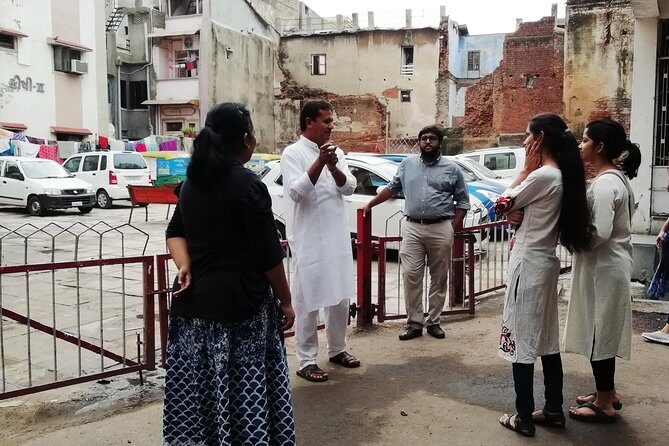
The meeting point is at House of MG, on Bhadra Rd near Sidi, Old City (Gheekanta, Lal Darwaja, Ahmedabad). That puts you right where you want to be: in the historic core, close enough that you’re not wasting time traveling across town.
It’s listed as near public transportation, which matters because morning traffic can be unpredictable. If you’re coming by taxi or ride-hail, give yourself a cushion. One hard truth of old cities: getting there is easy to misjudge when roads get busy.
The good part? The tour ends back at the meeting point. That keeps your morning simple—no end-of-tour scramble, no navigating transit while you’re tired.
Sidi Saiyyed Mosque: Ni Jali, Light, and Stone Geometry
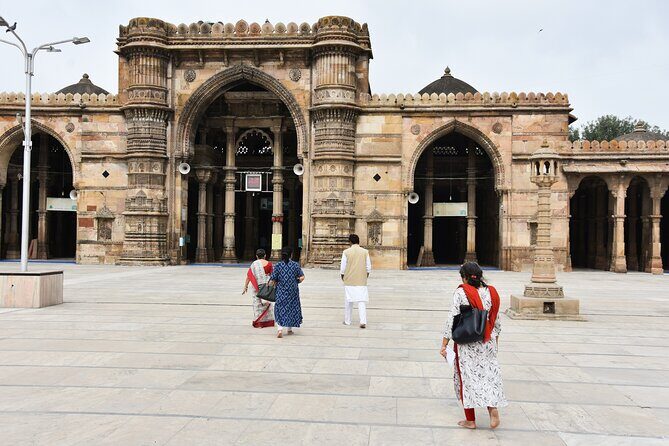
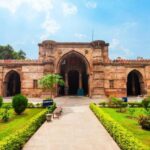
Your first stop is Sidi Saiyyed Mosque (also known for Sidi Saiyad Ni Jali), dating to 1572–73 A.D. You’ll typically spend around 15 minutes here, but it’s the kind of 15 minutes that sticks with you because of one thing: the stone latticework.
Look for the jali screens—those carved lattice windows along the side and back arches. They don’t just look decorative. They show how architecture in Ahmedabad handled shade, privacy, and light at the same time.
The back wall is packed with square stone cut panels in geometric designs. Even if you don’t know the vocabulary for it, your eyes get it: this is craft, not clutter. It’s a strong start because it trains you to notice detail before the tour moves to bigger spaces.
Practical tip: bring a mental focus. Rather than trying to see everything at once, pick one area—jalis on the side or square panels at the back—and give it your full attention. You’ll get more from the stop.
Bhadra Fort (1411): Where a City’s Founder and Maratha-Era Power Meet

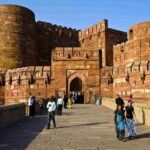
Next up is Bhadra Fort, with about 20 minutes on the clock. The fort was constructed in 1411 A.D. during the Marathas’ rule, yet it’s tied to Sultan Ahmad Shah, the founder of Ahmedabad—one of those layers that makes Ahmedabad interesting for people who like context.
Bhadra Fort’s naming also connects to a religious landmark: it’s named after the Bhadra Kali goddess temple built during the Marathas’ reign. So even though this is a fort, you’re not just looking at military walls. You’re seeing how power and worship shaped the same space.
What to expect on-site: the fort includes the palace, the Nagina Baugh, and Ahmed Shah’s Mosque on the west. On the east side you get a wide open area known as Maidan-Shah.
This stop is valuable because it teaches a city-scale viewpoint. After the intimate latticework of the mosque, the fort gives you the larger picture: how ruling families planned a city with both structures and open land for movement, gatherings, and ceremonies.
If you’re short on time elsewhere, don’t. This is one of the spots where the city’s layers actually show.
Jama Masjid: 260 Pillars, 15 Domes, and Three Entrances
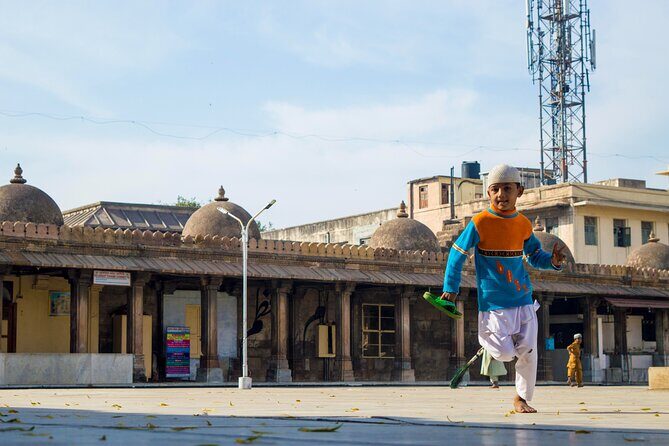
Your third stop is Jama Masjid, erected by Ahmed Shah I between 1411 and 1441. You’ll usually have around 20 minutes here—enough time to appreciate scale without feeling trapped.
This mosque is famous for its design:
- Three entrances on the east, northern, and southern sides
- 260 pillars
- 15 domes
- Carved motifs on entrance pillars influenced by different cultures in the city
That last point matters. Ahmedabad’s architecture isn’t one-style and done. The prayer hall entrances carry motifs that reflect cultural cross-currents you can spot even with quick looking.
The best way to experience this stop is to do a simple two-step: first, take in the overall layout and the number of elements (pillars and domes), then shift to the details on the entrance pillars. You’ll leave with a sense of both the structure and the artistry.
One consideration: busy mornings or photos can make it feel like a lot. If you’re not a big photographer, lean into the guide’s explanations and use the pillars-and-dome count as your anchor while you walk.
You can also read our reviews of more historical tours in Ahmedabad

Ahmed Shah’s Tomb (Raja No Haziro): A Small Stop with Strong Meaning
Then you’ll head to Ahmedshah Badshah’s Tomb, also called Raja No Haziro. Expect about 10 minutes here, positioned in the Manek Chowk area close to Jama Masjid and opposite Rani no Hajiro.
This stop is shorter, but it’s the kind of place where a short visit can be enough—because the purpose is focused: the tomb complex connects you to Ahmedabad’s founder story.
Inside the mosque structure, you’ll find the tomb of Ahmed Shah I. The grandson, Qut-ud-Din Shah, is buried to the right, and the tomb was completed in 1414 by his son Muhammad Shah.
Even if you’re not spending long, the location helps: you’re right in the old civic heart of the city, where sacred sites and public life sit close together. It makes the walking route feel intentional instead of random.
Manek Chowk: Silver Trade by Day and Food by Night
After monuments, the tour shifts gears to the everyday center of old Ahmedabad: Manek Chowk. You’ll spend about 15 minutes, and admission here is free.
Manek Chowk is named after Baba Manek Nath, a 15th-century saint who lived on the banks of the Sabarmati River. That’s a good detail to remember because it reminds you the square isn’t only about commerce—it has spiritual and communal roots too.
Here’s what makes the square feel alive: it changes throughout the day. In the morning, it’s used as a cow feeding area. By day, it becomes a silver market, and at night it turns into a food market.
The silver jewelers market is a standout. If you like looking at handicrafts, this is where you can slow down just a bit after the monuments. Even if you don’t shop, browsing teaches you the local rhythm—what people buy, how they sell, and how the square organizes daily life.
Practical move: if you’re tempted by silver, don’t buy on impulse. Manek Chowk can be so interesting that you may want to grab something right away. Take your time, check quality and design, and think about whether it’s a memory you’ll actually use.
How the Jain Temple Theme Fits This Walk
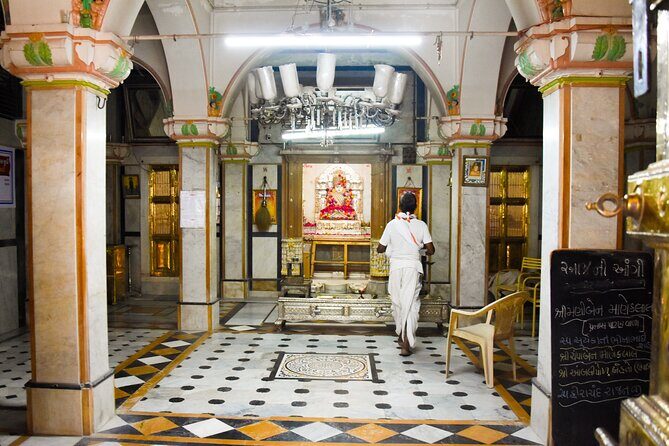
One of the tour’s aims is to help you find Jain temples in the old city. Even though the main listed stops focus on mosques, fort spaces, and the tomb, the overall route is designed to show Ahmedabad’s layered religious geography.
In practical terms, that means you’re not just learning one tradition. You’re walking through a city where sacred architecture appears across different communities, often in close proximity. That’s the key lesson: Ahmedabad is a place where the old streets themselves act like a map of religious and cultural coexistence.
If you’re a visitor who likes the idea of seeing multiple faiths in the same morning, you’ll appreciate this aspect. It also explains why the walk feels more grounded than a straight monument checklist.
Price and What $95.85 Gets You
At $95.85 per group (up to 5), this is priced for a small, flexible morning. The value isn’t just the number. It’s what’s included and how the time is structured.
You get:
- a guided route across the historic core
- admission tickets included for the major indoor or ticketed stops (Sidi Saiyyed Mosque, Bhadra Fort, Jama Masjid, and Ahmed Shah’s tomb)
- a mobile ticket
- a tour length that stays manageable at about 2 hours
For a group of up to five, the math can work well versus paying separate entrances and paying for a guide separately. Plus, you avoid the risk of losing time to ticket lines or guessing what’s worth your 8:00am attention.
One more factor: the experience style is designed to feel personal. The walk is described as small-group, and the activity is also set up for your group only, which usually means fewer crowds and less waiting around.
Timing, Walking Pace, and Weather Reality
This is a morning schedule with a start time of 8:00am. That’s great when things go right, but it also means you should plan smartly.
- Wear comfortable shoes. Old-city walking can be uneven.
- Bring water and something light for sun or breeze.
- Aim to arrive a few minutes early, especially if roads are busy.
Weather matters too. The experience is stated to require good weather, and if it’s canceled for poor weather, you’ll be offered a different date or a full refund.
In other words: you’re not gambling on a vague plan. The tour is weather-sensitive, so checking the day-of conditions makes sense.
Reliability: What to Do If the Day Gets Messy
I’ll be straight with you: one negative experience tied to this type of tour is simple—no one shows up, or confirmation and communication don’t happen in time. That can turn a great morning into a frustrating one.
So here’s my practical advice:
- Make sure your booking shows as confirmed before you set out.
- Save any messages or tour details so you can refer to them quickly.
- If you’re running late due to traffic, build a buffer rather than hoping it’ll work out.
In Ahmedabad, mornings can shift fast. The tour’s structure is solid, but your job is to reduce avoidable friction.
Who Should Book This Walk (and Who Might Skip)
This walk fits best if you want:
- a focused heritage circuit in about 2 hours
- a guided explanation that helps you understand what you’re seeing
- religious architecture and city planning in one morning
- a route that’s not only temples, but also fort and market life
It may be less ideal if:
- you can’t handle steady walking through old streets
- you prefer long stays at fewer sites
- you hate early starts and would rather sightsee later when streets are busier but easier to navigate
If you’re in Ahmedabad for a short time and want a “get your bearings fast” experience, this checks the boxes.
Should you book Morning Heritage Walk (House of MG)?
I think it’s worth booking if you’re aiming for a guided morning that links Sidi Saiyyed Mosque, Bhadra Fort, Jama Masjid, and Manek Chowk into one coherent story. The standout value is the way the route balances big monuments with close-up details—especially the jali screens, the pillar-heavy Jama Masjid, and the fort’s mix of palace and open space.
Before you go, do two things: pick shoes that can handle old-city walking, and give yourself extra time to reach the meeting point on time at 8:00am. If you do that, you’ll get a memorable slice of Ahmedabad where sacred architecture and everyday market life overlap in a very real way.
FAQ
What time does the tour start, and how long is it?
The tour starts at 8:00am and runs for about 2 hours.
How much does it cost, and how many people can be in a group?
It costs $95.85 per group, up to 5 people.
What tickets are included?
Admission tickets are included for the Sidi Saiyyed Mosque, Bhadra Fort, Jama Masjid, and Ahmedshah Badshah’s Tomb. Manek Chowk is free to visit.
Where does the tour meet, and does it end there too?
It meets at House of MG, Bhadra Rd, Opp. Sidi, Old City, Gheekanta, Lal Darwaja, Ahmedabad, Gujarat 380001, and it ends back at the same meeting point.
Is this tour private?
Yes. Only your group participates.
Is the tour weather-dependent?
Yes. It requires good weather. If it’s canceled due to poor weather, you’ll be offered a different date or a full refund.