REVIEW · AHMEDABAD
Ahmedabad Heritage Trail: A Journey Through Time
Book on Viator →Operated by Agora Voyages Pvt. Ltd. · Bookable on Viator
Ahmedabad has a way of stacking centuries on your plate. This Heritage Trail bundles major sights into one smooth day, mixing Jain, Hindu, and mosque architecture with a stop at Gandhi Ashram. I especially like the door-to-door AC transport and the fact that the route includes multiple landmark religions and monuments in a logical order.
One thing to watch: the experience can shift depending on what you select. If you choose a transport-only option, you may not get the same follow-the-plan guidance you expect, and timing can feel confusing.
In This Review
- Key points to know before you go
- One day, many Ahmedabad worlds (and why that’s good value)
- Sabarmati Riverfront and Gandhi Ashram: start calm, then go wow
- Hathee Singh Jain Temple: stonework with a very different vibe
- Bhadra Fort and Teen Darwaja: royal power in the center of town
- Shree Swaminarayan Mandir Kalupur: Hindu temple carvings you can actually see
- Adalaj Stepwell: the architecture stop that steals the day
- Jama Masjid: big mosque, big scale, short but meaningful time
- Teen Darwaza (again): make sense of the city’s entrances
- Sidi Saiyyed Mosque: the lattice work detail you’ll remember
- The Kite Museum: a fun color break from stone and religion
- Price, pickup, and the “what did I actually book?” question
- How the timing works (and how to not feel rushed)
- Who this tour fits best
- Should you book the Ahmedabad Heritage Trail?
- FAQ
- How long is the Ahmedabad Heritage Trail tour?
- Is pickup and drop-off included?
- How much does the tour cost?
- Do I need to pay for entrance tickets?
- Is lunch included?
- Do I get an English-speaking guide?
- What monuments or sites are visited?
- Is the tour private?
- Do you provide bottled water?
- Can I cancel for a full refund?
- Do I receive a mobile ticket?
Key points to know before you go
- Private, door-to-door transport keeps you from playing taxi roulette across old and new Ahmedabad.
- A religious architecture mix means Jain temple artistry, Hindu temple carving, and major mosques all in one itinerary.
- Gandhi Ashram at Sabarmati Riverfront gives the day a human, reflective opening.
- Adalaj Stepwell is the architecture stop that makes people pause for photos and questions.
- Sidi Saiyyed Mosque lattice stonework is the kind of detail you’ll want time to actually look at.
- Your add-ons matter: English guide and entrance fees are included only if you select those options.
One day, many Ahmedabad worlds (and why that’s good value)
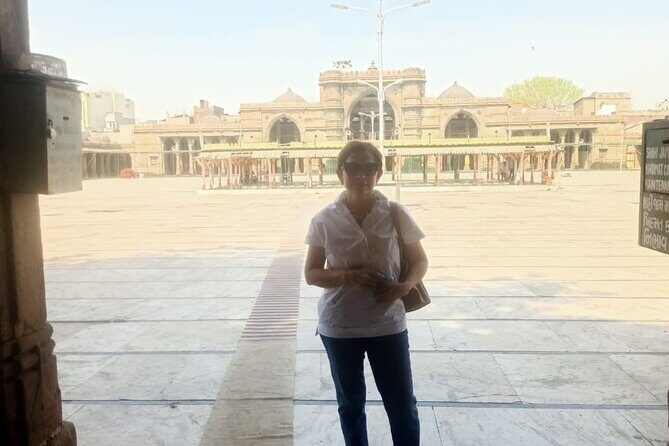
This tour is built for people who want to see real Ahmedabad without spending the whole day figuring out routes. You’ll cover a long list of places in roughly 6 to 9 hours, starting in the morning and finishing back at your hotel by the evening. The price is $57 per person, which can be a solid deal when you’re getting AC transport plus admissions and guide time (if those options are selected).
The best part is the balance of scale and variety. You don’t just hit one monument and call it a day. You move from the Sabarmati riverside to Jain and Hindu sites, then into the big mosque landmarks, finishing with fine stone detail at the Sidi Saiyyed Mosque. It’s also practical: bottled water is included, and the tour is private to your group, so you’re not wedged into someone else’s pace.
The only “gotcha” is expectations. The tour description offers either an English-speaking guide (if selected) and entrance fees (if selected). If you don’t choose those, you may end up with transportation rather than a guided day. In fact, one negative experience I saw highlighted the problem that can happen when the driver isn’t following the itinerary the way you expect. So treat your booking options like part of the tour, not fine print.
You can also read our reviews of more historical tours in Ahmedabad
Sabarmati Riverfront and Gandhi Ashram: start calm, then go wow
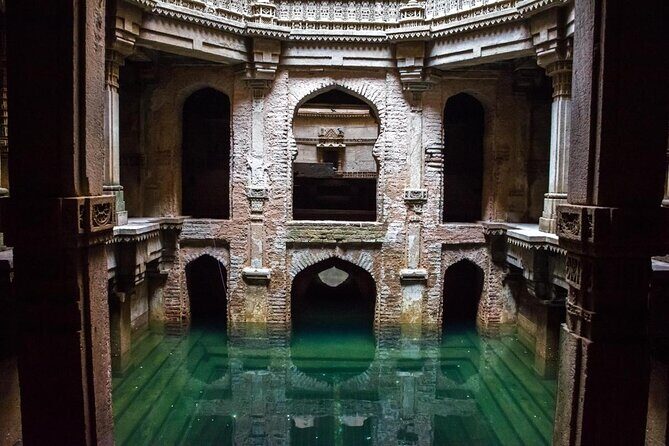
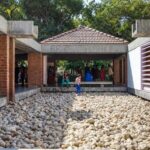
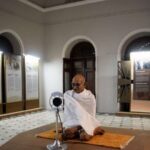
Your day begins with Sabarmati Riverfront, followed by Sabarmati Ashram, Gandhi’s former home. This is the kind of start that shifts the mood. The morning timing also helps because you’ll be fresh when you’re walking through a place tied to India’s freedom movement rather than just sightseeing for the sake of it.
This stop is about 1 hour, and admission is included. I like this opener because it gives context before you jump into the heavier architecture stops later. You’re not just collecting buildings. You’re meeting Ahmedabad through a real story tied to Mahatma Gandhi and the Sabarmati riverside setting.
Hathee Singh Jain Temple: stonework with a very different vibe
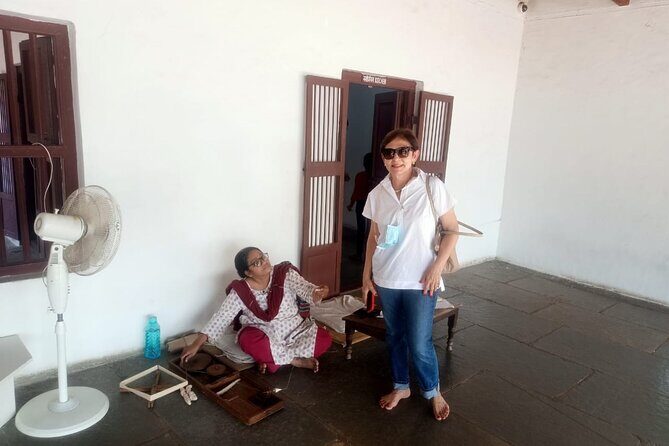
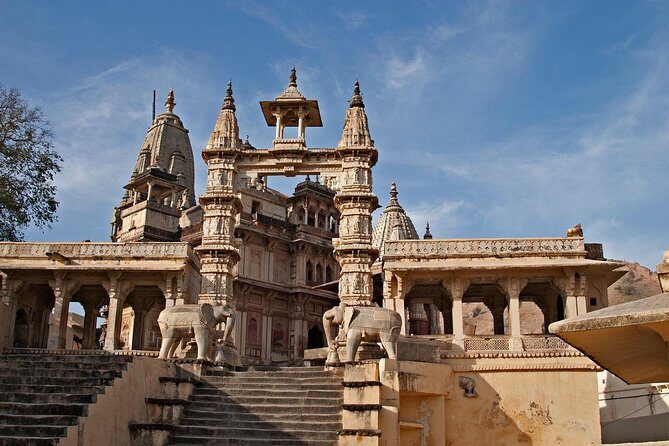
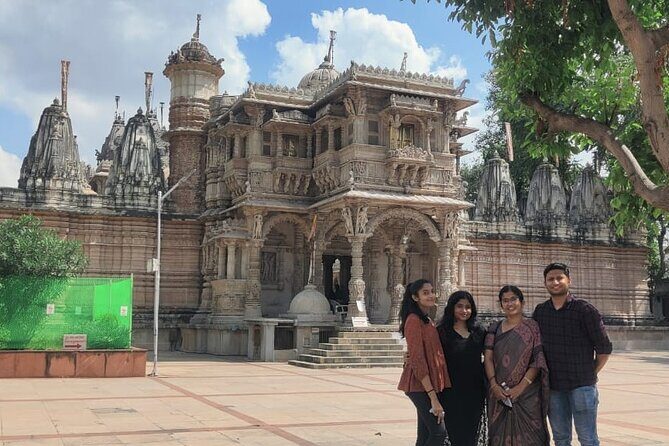
Next comes Hathee Singh Jain Temple (Hatheesing Jain Temple). It’s one of Ahmedabad’s best-known Jain temples, built in the 19th century by a wealthy Jain merchant. Even in a short visit, it’s the kind of place where you feel the intent behind the design—clean lines, strong symmetry, and that distinct Jain aesthetic.
Plan on about 30 minutes. Admission is included. This stop is a good reminder that Ahmedabad isn’t only known for mosques and forts. Jain architecture here is a major pillar of the city’s identity.
Practical tip: keep your camera ready, but also take a few minutes just to look without shooting. The details reward slow attention, not rapid clicking.
Bhadra Fort and Teen Darwaja: royal power in the center of town
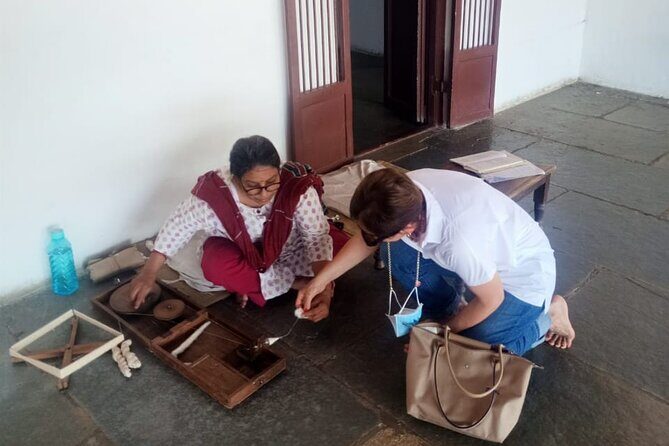
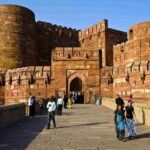
After lunch (lunch inclusion depends on what you selected), the itinerary moves to Bhadra Fort and Teen Darwaja. The fort has roots in the 15th century, built by Sultan Ahmed Shah. According to the tour description, it served as the royal residence and administrative hub. That matters, because you’re not just standing by a pretty structure—you’re in the historic core of decisions and governance.
You’ll get about 1 hour here, and admission is included.
Teen Darwaja is the historic gateway connected to this fort. The itinerary also lists Teen Darwaza again later as its own stop. So don’t be surprised if you learn about it from two angles—first as part of the fort context, then again as a standalone landmark. Either way, the point stays the same: this gateway is a physical reminder of how cities were designed around controlled entry.
Shree Swaminarayan Mandir Kalupur: Hindu temple carvings you can actually see
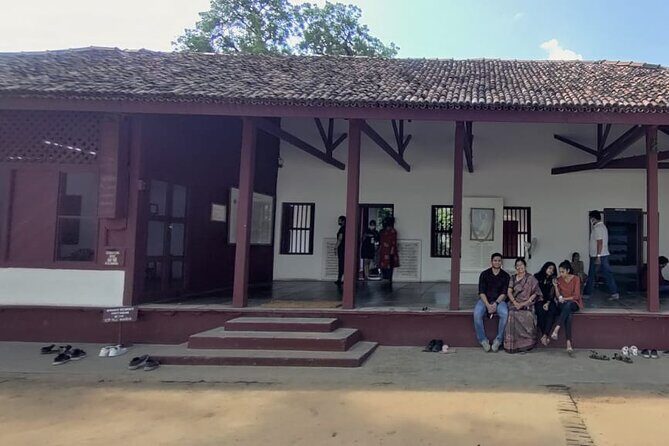
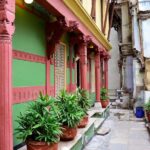
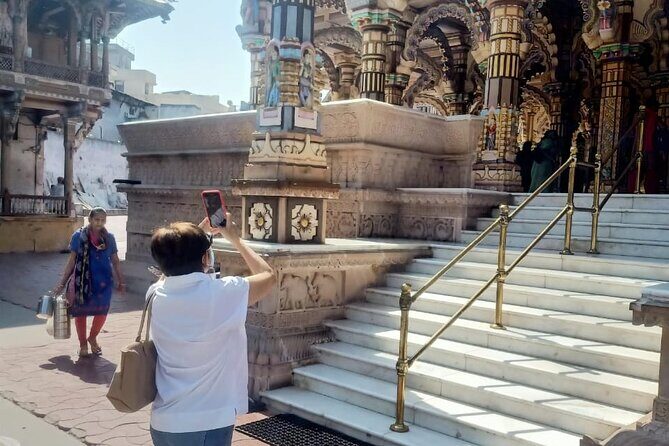
Then you’ll drive to Shree Swaminarayan Mandir Kalupur, a Hindu temple dedicated to Lord Swaminarayan. The tour description points out the intricate carvings and ornate design, and that’s exactly what you should focus on during this 1-hour visit.
Admission is included. This is one of those stops where a guided explanation (if you selected an English-speaking guide) can make a difference, because you’ll understand what you’re seeing instead of just admiring it.


Adalaj Stepwell: the architecture stop that steals the day
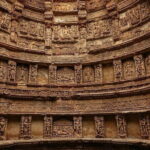
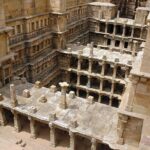
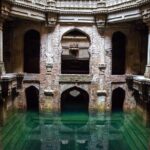
At 3:00 pm, you head to Adalaj Stepwell, one of Gujarat’s most impressive stepwells. Built in the 15th century by Queen Rudabai, it’s famous for the way architecture turns a practical water structure into something almost ceremonial.
You’ll have about 1 hour here, and admission is included. I love stepwells for a simple reason: they force you to look down and around. You’re not just glancing at the front façade—you’re seeing how people built for heat, water needs, and community gathering.
Also, stepwells are a great “break” from big religious buildings. After mosques and forts, Adalaj gives your eyes a different kind of detail to process.
Jama Masjid: big mosque, big scale, short but meaningful time
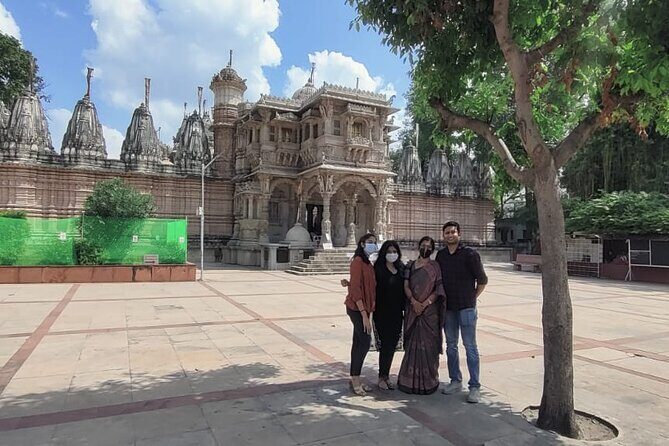
Next up is Jama Masjid (also described as Shahi Jam-e-Masjid in the tour highlights). The tour calls it one of the largest mosques in India, built in the 15th century by Sultan Ahmed Shah, who founded Ahmedabad. Admission is included for this stop.
You’ll spend about 30 minutes. That’s not long, but it’s enough if your goal is to take in scale and understand the basic layout and architecture style. With a guided tour, this is the part where questions like “who built it and why” often make the place click.
If you’re traveling on a tight schedule, this stop works well because it’s efficient. If you’re the type who could spend hours inside architecture spaces, you may want to slow down here on your own after the guided portion—assuming you have extra time.
Teen Darwaza (again): make sense of the city’s entrances
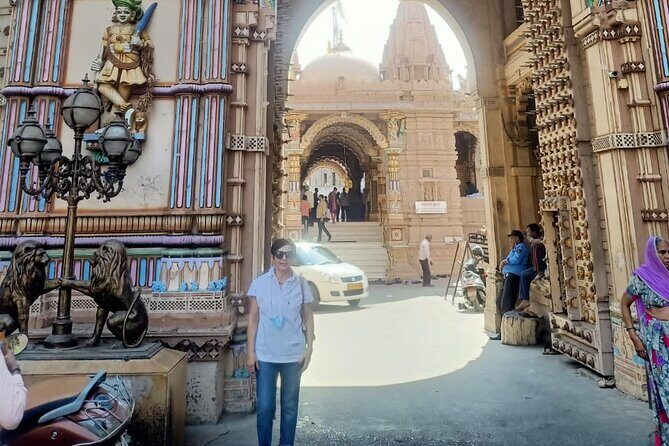
At 5:00 pm, you’ll revisit Teen Darwaza for another 30-minute stop. Since it was already paired with Bhadra Fort earlier, this second visit can feel repetitive if you’re expecting the exact same content.
But practically, it can also be useful. Gateways often make more sense when you see them as a separate landmark after you already understand what it connected to. Think of it like studying a character after learning their backstory.
Admission is included in this scheduled stop.
Sidi Saiyyed Mosque: the lattice work detail you’ll remember
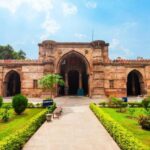
Your final landmark stop is Sidi Saiyyed Mosque, built in the 16th century. The tour highlights its carved stone lattice work, and it’s listed as free admission in the itinerary. You get about 30 minutes.
This is where I’d spend your best attention. Lattice stonework is visual math. The repeating patterns often feel like they’re made to be studied from multiple angles. If you only rush through one architecture detail today, make it this one.
The Kite Museum: a fun color break from stone and religion
The tour description includes a visit to the Kite Museum, described as showing the beautiful shades of different kites. That’s a smart addition because it breaks the day’s pattern of monuments and religious architecture with something lighter and local.
One note: the itinerary stops you’ve got here list many monuments in detail, while the kite museum is mentioned in the highlights. So keep an eye on your day’s flow. If the kite museum visit feels tight due to timing, ask your guide if it’s still on the plan before you commit mentally to museum time.
Price, pickup, and the “what did I actually book?” question
Let’s talk value. At $57 per person, this is often attractive because it combines:
- AC private car/van pickup and drop-off from your hotel
- admissions at multiple monuments (when you select the option)
- bottled water
- and an English-speaking local guide if you selected that option
If you select entrance fees and a guided option, you’re basically paying for a full day of transportation + guided pacing + the places you’d otherwise have to research and ticket yourself. That can be a big time saver in Ahmedabad.
If you did not select a guide or admissions, the tour can feel like “transport to some places,” not a narrative day with context. One bad experience I saw revolved around a driver who wasn’t aligned with the itinerary, asking where the group was headed next. That’s exactly why I recommend you double-check your add-ons before you go.
For people booking for a small group: there’s mention of group discounts. If you’re traveling with friends or family, ask about whether the discount reduces the per-person cost for your party size.
How the timing works (and how to not feel rushed)
Your day starts around 9:00 am and ends near 7:00 pm, with stops that range from 30 minutes to 1 hour each. That means you’ll move fairly regularly.
That’s good if you want a “see a lot” day. It can feel rushed if you’re the type who expects long, slow museum-style time. The best strategy is simple: treat this tour as an orientation to Ahmedabad. If anything really grabs you—whether that’s Adalaj Stepwell, a mosque, or a temple—then you’ll know what to return to later on your own time.
Also, it helps that the tour includes bottled water and an AC vehicle. The heat and sun in Gujarat can be no joke, and these built-in comforts matter when you’re outside walking between stops.
Who this tour fits best
This one fits best if you:
- want a private, door-to-door way to hit major landmarks
- like architecture and religious art across Jain, Hindu, and Islamic heritage
- prefer having someone coordinate the day rather than planning every route and ticket
- are okay with shorter stop times at each site in exchange for seeing more
It may be less ideal if you:
- only want one or two stops and would rather spend longer at each
- booked without a guide/admission option and still expect full guided context
Should you book the Ahmedabad Heritage Trail?
I think you should book it if you’re aiming for a structured introduction to Ahmedabad and you choose the right add-ons. With pickup/drop-off, AC transport, and admissions/guide selected, the day offers a lot of major sites without the hassle.
I’d skip or rethink it if you want a slow, reflective pace—or if you’re not selecting guidance and admissions and still expect a fully guided itinerary. The negative experience I saw wasn’t about the monuments. It was about mismatch on the day’s operation.
If you book, do one simple thing: confirm you selected an English-speaking local guide (if you want explanations) and entrance fees (if you don’t want to pay on top). That turns a “ride to monuments” into a real heritage trail.
FAQ
How long is the Ahmedabad Heritage Trail tour?
It runs for about 6 to 9 hours.
Is pickup and drop-off included?
Yes. The tour includes pickup and drop-off from/to your hotel, using a private AC car or van.
How much does the tour cost?
The price is $57.00 per person.
Do I need to pay for entrance tickets?
Entrance fees are included only if the option is selected. (Camera charges are not included.)
Is lunch included?
Lunch is included only if you selected the lunch option.
Do I get an English-speaking guide?
An English-speaking local guide is included if you select that option.
What monuments or sites are visited?
The itinerary includes Sabarmati Ashram, Hathee Singh Jain Temple, Bhadra Fort and Teen Darwaja, Shree Swaminarayan Mandir Kalupur, Adalaj Stepwell, Jama Masjid, Teen Darwaza, and Sidi Saiyyed Mosque. The tour highlights also mention a Kite museum.
Is the tour private?
Yes. It’s a private tour/activity, and only your group participates.
Do you provide bottled water?
Yes. Bottled water is included in the car.
Can I cancel for a full refund?
Yes, you can cancel for a full refund if you cancel at least 24 hours before the experience’s start time.
Do I receive a mobile ticket?
Yes, the tour uses a mobile ticket.