REVIEW · MUMBAI
Dhobi Ghat (Open Air Laundry) with Dharavi Slum Guided Tour
Book on Viator →Operated by Shreeji Tours n Travels · Bookable on Viator
Laundry runs like a working city here. In Mumbai, Dhobi Ghat pairs an open-air laundromat built in 1890 with a guided walk through Dharavi’s small industries and everyday life. It’s a hard-working, very real look at how goods get made, recycled, and kept moving.
What I loved most were the details you normally miss. First, Dhobi Ghat is still run the traditional way by dhobis who clean and dry linens in the open, and the whole place is easy to understand once your guide explains what you’re seeing. Second, the Dharavi portion comes with a human guide in the person of Rakesh, and his explanations make the alleys, workshops, and rooftop tin hutments feel connected instead of random.
One heads-up: this is very weather-dependent and you’ll be walking, so if conditions are hot or poor, plan for slower pace and more sweat than museum sightseeing.
In This Review
- Key highlights worth knowing
- Dhobi Ghat and Dharavi: Two sides of the same Mumbai workday
- Dhobi Ghat: Watching an 1890 laundromat work in the open
- Dharavi walking tour: Recycling, workshops, and a rooftop view you won’t forget
- Photo opportunities, but with real-world sensitivity
- Timing, walking pace, and getting there from Central Mumbai
- What the $30 price really buys you
- Who should book this tour, and who might want a different plan
- Should you book? My bottom line
- FAQ
- FAQ
- How much does the Dhobi Ghat with Dharavi Slum Guided Tour cost?
- Where is the meeting point and when does the tour start?
- How long is the tour?
- Is pickup and drop-off included?
- What kind of guide will I have?
- What’s included at Dhobi Ghat?
- What do you see during the Dharavi part of the tour?
- Are meals included?
- What happens if the weather is poor, and can I cancel?
Key highlights worth knowing
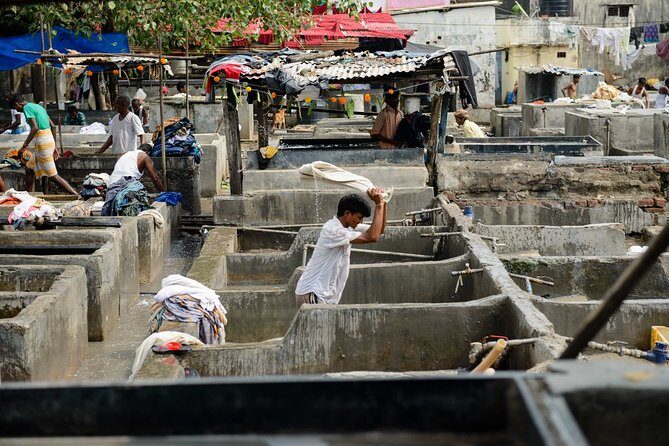
- Dhobis in action at Dhobi Ghat: see an 1890 open-air laundromat still serving hotels and hospitals.
- A guide with local context (Rakesh): explanations that help you read the neighborhood as you walk.
- Dharavi’s recycling workflow: watch plastic sorting through to finished plastic pellets.
- Rooftop tin hutments view: a rare look at how far the tin structures stretch.
- Real small-industry production: leather goods, pottery, soap making, baking, color dye, and more in tight spaces.
- Water and a break built in: you get refreshments so you don’t feel wiped out halfway through.
Dhobi Ghat and Dharavi: Two sides of the same Mumbai workday
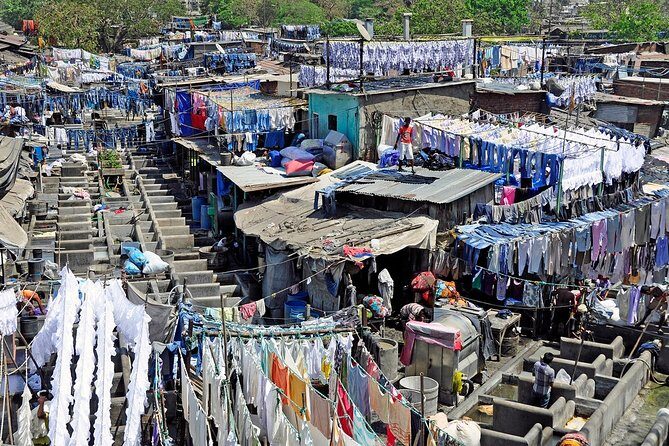
This tour works because it’s not trying to turn Mumbai into a theme park. Dhobi Ghat shows you one of the city’s basic services—washing and drying—done in the open, with workers who treat it like skilled daily trade. Then Dharavi shifts from cleaning clothes to processing materials and manufacturing items in cramped space, with recycling and small workshops threading through the whole day.
Even if you think you know Dharavi from movies, what you’re actually doing here is watching production and community life in a guided walking format. You’ll get commercial and residential areas, plus specific stops tied to recycling, workshops, and everyday infrastructure like schools and hospitals.
You can also read our reviews of more guided tours in Mumbai


Dhobi Ghat: Watching an 1890 laundromat work in the open
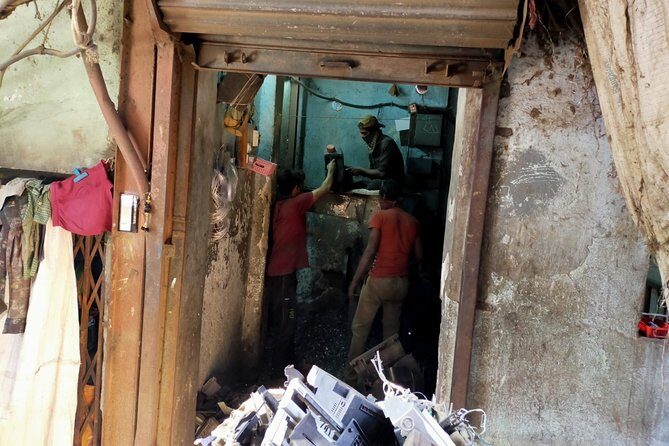
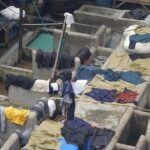
Dhobi Ghat is the star of the first half. The word dhobi ghat is used across India for places where many washers work, but this Mahalaxmi Dhobi Ghat is special for its age—constructed in 1890—and because it’s described as one of the few surviving traditional commercial laundromats.
Here’s what the experience feels like on the ground. You’re not just looking at a photo-worthy scene. You’re seeing how laundering becomes a system: clothes and linens come in from Mumbai’s hotels and hospitals, dhobis work in the open to clean them, and then the washing and drying flow continues with the rhythm of the day.
Why this stop is valuable: most “cultural” stops are about buildings. This one is about labor—real labor. It gives you a new respect for the jobs that keep big cities running, especially when the work isn’t hidden behind polished doors. And because it’s open air, you can understand the process just by observing the sequence and asking your guide what each part is for.
What to watch for: notice how the dhobis’ workflow is organized around drying and use of the open space. Also pay attention to how “laundromat” here means a full working environment, not a casual storefront. If you like hands-on explanations, you’ll get more out of it once your guide points out what to look for.
One practical tip: wear shoes that can handle uneven ground. You’ll want stable footing so you can keep your focus on details instead of balancing.
Dharavi walking tour: Recycling, workshops, and a rooftop view you won’t forget
The Dharavi portion is a guided walking tour in one of Asia’s largest slum areas, and the goal is to show you how entrepreneurship and small-scale industry function inside tight space. Instead of a single attraction, it’s a chain of stops that connect materials, tools, and people.
One of the most compelling highlights is the recycling area. Metal and plastic come to Dharavi from all over, and the guide walks you through the process—from sorting to finished plastic pellets. This is the kind of behind-the-scenes step-by-step workflow that’s hard to grasp unless someone points out the stages as you walk.
Then you get the rooftop visit. The tour includes a look at tin hutments that stretch out across the area. This isn’t about a scenic viewpoint; it’s about understanding the scale of how many lives share the same built space, and how that space extends upward where room on the ground is limited.
The tour also includes stops tied to production you can actually name and picture:
- leather industries and export-quality leather goods
- pottery
- making soap
- bakery work
- color dye
- small alley streets and community services like schools and hospitals
- plastic recycling and other material processing
You’ll also encounter religious and cultural mixing in everyday life, including a detail about Muslim people making a shrine for Hindus. That kind of lived overlap is one of the reasons Dharavi feels more like a neighborhood than a headline.
Why this stop is valuable: it changes how you think about “where things come from.” If you buy a leather product, use a soap, or handle plastic items, this tour gives you a line back to the small workshops that shape those end products—often in spaces where everything is tight and organized by necessity.
Photo opportunities, but with real-world sensitivity
Yes, you’ll likely want photos. Dhobi Ghat practically begs for them because the washing process is visible and ongoing. In Dharavi, the rooftop tin hutments and recycling area are also the kinds of scenes that make a great picture.
But the value here isn’t just having images. It’s learning how to look. Keep your camera down when a moment needs quiet attention. In places like these, the more you ask and listen (instead of just shooting), the more your guide can translate what’s happening right in front of you.
A nice touch: the guide’s role helps you figure out where to stand and what to focus on. The experience is designed with clear pacing so you’re not constantly guessing what’s next.
And about the guide: in my notes, Rakesh stood out for arriving on time and staying with the group throughout, with explanations that were easy to follow. That matters in Dharavi, where the details come fast and landmarks can feel similar block to block.
Timing, walking pace, and getting there from Central Mumbai
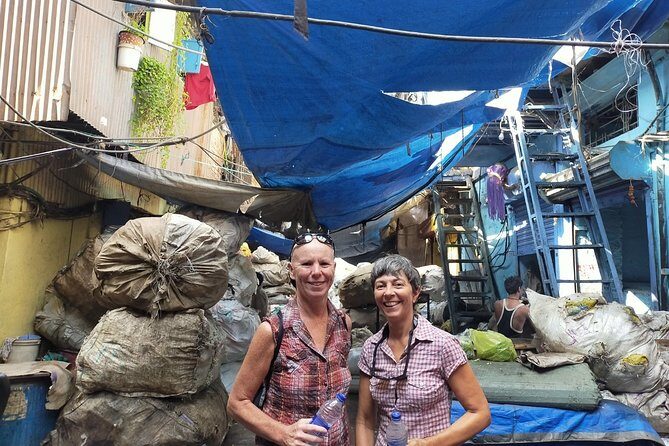
The tour runs about 5 to 6 hours. Dhobi Ghat takes about one hour, and the Dharavi guided walking portion runs about two hours, with time added for pickup, travel between areas, and a refreshment break.
Starting at 10:00 am helps. Mumbai can heat up hard as the day goes on, and this experience requires good weather. Plan for walking and standing, especially during Dharavi. Bring sun protection even on mild mornings—your comfort will directly affect how much you enjoy the stops.
Good news: you’re not doing this entirely by transit on your own. Pickup and drop-off are offered, and you ride in an air-conditioned vehicle for the transfers. There’s also mineral water included, plus refreshments along the way so you can keep moving.
Group dynamics are also handled. This is a private tour/activity, meaning only your group participates. That usually makes questions feel more natural and keeps the pace aligned with your comfort level.



What the $30 price really buys you
At $30 per person, this tour is priced like something you’d only want if it’s delivering more than a quick look. Here’s what you actually get for the money: a local English-speaking guide, pickup and drop-off, admission tickets included for both major parts, mineral water, and an air-conditioned vehicle with toll and parking fees covered.
The admission ticket inclusion matters. Without it, these kinds of experiences can become frustratingly “nickel and dime” at the gate. Instead, you’re set up to spend your time on the work itself: watching laundromat activity and walking the production and recycling route.
Also, the guide quality is central to the value. Rakesh’s explanations—clear enough to match different English levels—turn the experience from seeing scenes into understanding processes. That’s the difference between collecting photos and actually learning something you’ll remember.
If you’re budgeting for Mumbai, this is a solid “one-day, two-real-world-sites” option—especially if you want both a service job (laundry) and an industry job (recycling and manufacturing) in the same day.
Who should book this tour, and who might want a different plan
This works best if you:
- like guided explanations and want context, not just scenery
- enjoy watching real work in action—laundry, recycling, small manufacturing
- are comfortable walking and standing for a few hours
- want a more grounded side of Mumbai than you’d get from only viewpoints and monuments
It may not be ideal if you:
- want mostly indoor stops or minimal walking
- dislike weather-based plans
- have very limited tolerance for crowded streets and narrow alley walking
The good part is that the tour pacing is built around short, focused segments: Dhobi Ghat first, then the Dharavi walk with organized highlights, plus a refreshment stop so you’re not running on empty.
Should you book? My bottom line
I’d book this if you want a real Mumbai day that connects labor and materials. Dhobi Ghat gives you a traditional open-air service still done by skilled workers, and Dharavi gives you a guided look at recycling and small industry with enough detail to make it understandable.
If you’re the type who loves learning how things work—how clothes get cleaned, how plastic gets sorted into pellets, how tiny workshops produce real goods—this tour will click fast. Just come prepared for walking and stick to it with good weather in mind.
FAQ
FAQ
How much does the Dhobi Ghat with Dharavi Slum Guided Tour cost?
The price is $30.00 per person.
Where is the meeting point and when does the tour start?
The meeting point is Third Wave Coffee Tip Road, Unit no.58, Ground, Ram Mahal, Senapati Bapat Marg, Marinagar Colony, Station, Mahim, Mumbai, Maharashtra 400016, India. The start time is 10:00 am.
How long is the tour?
The duration is approximately 5 to 6 hours.
Is pickup and drop-off included?
Yes. Pickup & Drop are included, and you travel in an air-conditioned vehicle.
What kind of guide will I have?
You’ll have a local English-speaking guide.
What’s included at Dhobi Ghat?
You visit The Mahalaxmi Dhobi Ghat, described as an open-air laundromat. The laundromat was constructed in 1890, and the dhobis work in the open to clean and dry clothes and linens from Mumbai’s hotels and hospitals. An admission ticket is included.
What do you see during the Dharavi part of the tour?
You get a 2-hour guided walking tour focused on commercial and residence areas. Highlights include the recycling area (from sorting to finished plastic pellets), a rooftop visit of tin hutments, and a community centre, along with stops tied to small industries such as leather goods, pottery, soap making, bakery work, color dye, schools, and hospitals.
Are meals included?
No meals are included. Mineral water is included, and refreshment is provided between the tour so you don’t feel tired and dehydrated.
What happens if the weather is poor, and can I cancel?
This experience requires good weather. If it’s canceled due to poor weather, you’ll be offered a different date or a full refund. You can cancel up to 24 hours in advance for a full refund.