REVIEW · MUMBAI
Dharavi Slum & Dhobi Ghat Mumbai: Private Guided Tour
Book on Viator →Operated by Explore Mumbai Tours · Bookable on Viator
Mumbai runs on ingenuity and grit. This private tour links Dhobi Ghat laundry life with Dharavi’s enterprise of leather, pottery, and recycling—plus a local-led story that aims to be respectful, not sensational.
Two things I really like: you get a clear, explained look at Dhobi Ghat from a good photography vantage point, and you spend real time in Dharavi’s working economy, not just a quick drive-by. The added bonus is that your guide handles the details in plain English, and you don’t have to puzzle out train tickets on your own.
One consideration: it’s mostly a walking experience through narrow lanes (especially in Dharavi), and you won’t go inside Dhobi Ghat. If you need lots of indoor time or step-free routes, plan accordingly.
In This Review
- Key highlights
- Dharavi and Dhobi Ghat in 3 hours: how the timing works
- Dhobi Ghat first: what you’ll see and what it means
- The Dharavi part: seeing an industrial “enterprise,” not just alleys
- What “respectful and local-led” actually looks like on this tour
- Price and value: what $17.57 buys you in practice
- Transfers, meeting point, and getting to the start
- What to expect on the ground: comfort and limits
- Who this tour suits best (and who should think twice)
- Should you book this Dharavi Slum & Dhobi Ghat private tour?
- FAQ
- How long is the Dharavi Slum & Dhobi Ghat private guided tour?
- What is included in the tour price?
- Do I need an admission ticket for Dhobi Ghat or Dharavi?
- Will I enter Dhobi Ghat during the tour?
- Is this tour private?
- What if I need to cancel?
Key highlights
- Mahalaxmi Dhobi Ghat view without entering, with a guide to make sense of the scale and routines
- Dharavi as industry: leatherwork, pottery in Kumbharwada, and plastic recycling get center stage
- Private, group-only time with an English-speaking guide who can answer questions
- Good structure for photos using designated vantage points at Dhobi Ghat
- Easy practical value: bottled water and train tickets are included
Dharavi and Dhobi Ghat in 3 hours: how the timing works
This is a focused, 3-hour-style day—short enough to fit into a busy Mumbai itinerary, but long enough to feel like you saw two very different sides of daily life.
Stop 1 is Dhobi Ghat for about 15 minutes. Expect explanation first, then time for watching and photos from a designated viewpoint. Stop 2 is Dharavi, which takes roughly 2 hours on foot, where your guide connects what you’re seeing to how the place works—economically and socially—today.
That pacing matters. If you’re tempted to cram everything into Mumbai in one day, this tour does the opposite. It slows down just enough at each stop so the story has context, instead of ending in vague, headline-style impressions.
You can also read our reviews of more guided tours in Mumbai



Dhobi Ghat first: what you’ll see and what it means
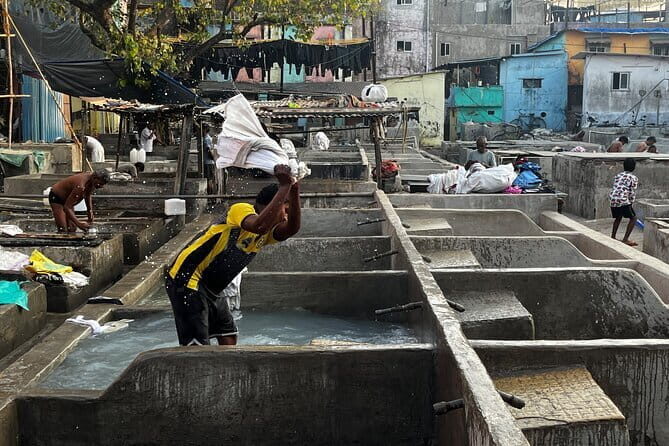
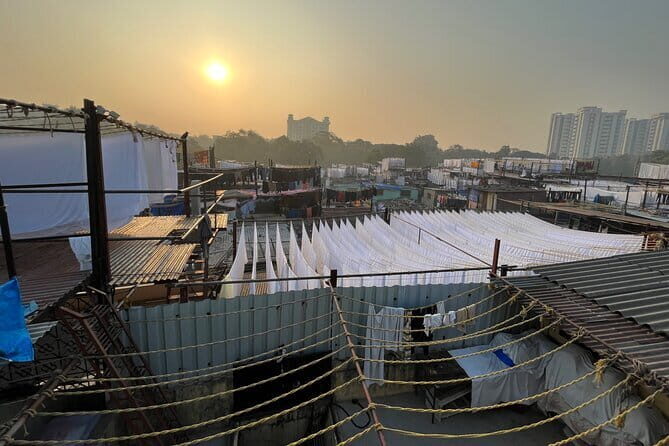
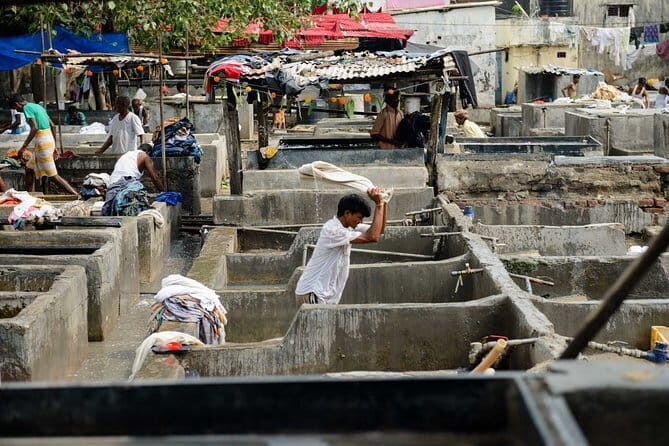
Starting at Dhobi Ghat gives you a fast way to get oriented. It’s not a museum stop; it’s an active workplace, famous for being an open-air laundry that has been manually processing clothes for more than a century.
From the viewpoint the guide provides, you’ll see the organized chaos of the process: washing, drying, and pressing happen in a daily rhythm that serves hotels, hospitals, and households across the city. Your guide should help you connect those steps to why the system works at this scale—especially in a place where space is tight and routine is everything.
A few practical points that shape the experience:
- You won’t enter inside the working area, so you’re visiting as an observer from a clear angle.
- The stop is short by design, so you’ll get just enough time to watch and understand without feeling trapped in a long sensory overload.
- The tour is built around storytelling, so you’re not just looking—you’re learning what the activity is, who it supports, and what challenges come with keeping it going.
If you’re a photographer, this stop is usually the payoff. The tour description promises exclusive vantage points for the best photography, and that’s exactly the difference between random photo attempts and getting shots you’ll actually like later.
The Dharavi part: seeing an industrial “enterprise,” not just alleys
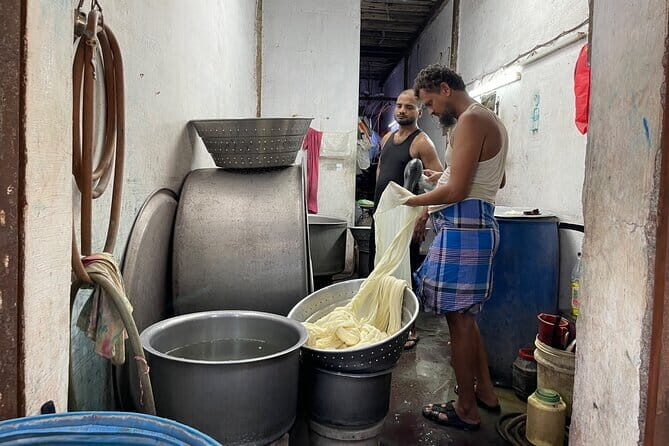
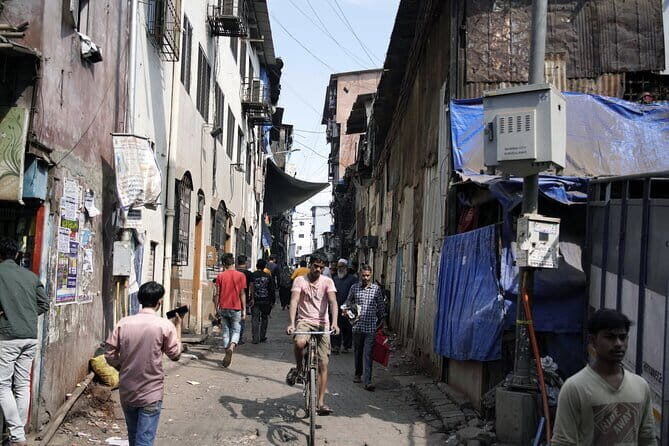
Dharavi is the bigger time block, and it’s where this tour tries hardest to correct common misunderstandings. The emphasis here is on Dharavi as an economic hub—small-scale industries that operate inside everyday life.
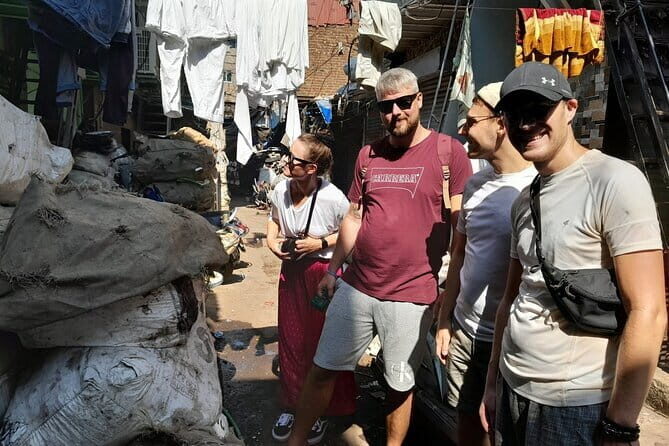
As you walk through the lanes, your guide should explain how the “slum” label often hides the real story: people are doing skilled work and running businesses, including:
- Leather industry (a major focus)
- Kumbharwada pottery workshops (a specific neighborhood craft)
- Plastic recycling units
- Textile-related production and other small industries
What makes this approach valuable is that it changes what you pay attention to. Instead of looking only at surface conditions, you’re encouraged to look at workflow: how items get made or processed, how workspaces are organized, and how community networks support livelihoods.
You also should be able to interact with locals as part of the experience. That’s important, because it turns your visit from “watching people” into “understanding people,” which is the only ethical way to do a tour like this.
One limitation to keep in mind: because you’re on foot for about 2 hours, you’ll see a slice of Dharavi, not everything. Think of it as an introduction to the place’s functioning economy and community spirit, not a complete map of all neighborhoods and trades.
What “respectful and local-led” actually looks like on this tour
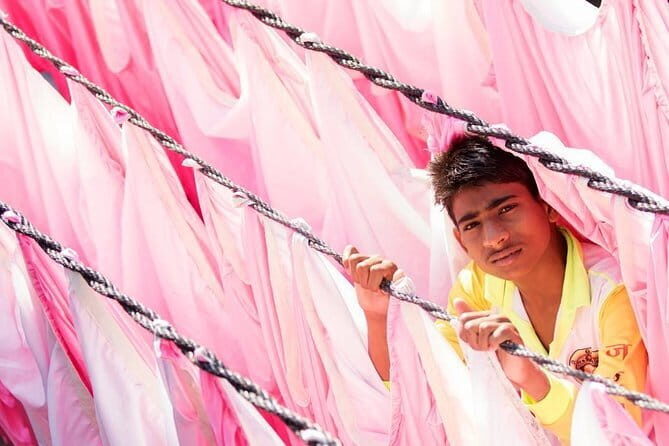
This tour’s whole pitch is dignity-first. That matters because Dharavi and Dhobi Ghat can easily become cliché stops—tourists chasing shock, guides chasing speed.
Here, the framing is different:
- Your guide is described as local-led and focused on dispelling myths.
- The story centers on community and innovation, with attention to how people keep systems running.
You’ll feel the difference in how questions get handled. In the guide feedback I’ve seen connected to this experience, people consistently highlight promptness and responsiveness. Names like Priti and Shruti come up for being friendly, informative, and helpful with questions. Other guides such as Max and Ruba are praised for attention to what the group wants to ask and for giving meaningful insight into daily life.
Even if you never get one of those specific guide names, that pattern tells you what to look for: a guide who can translate what you’re seeing into understandable context, in normal human language.
Price and value: what $17.57 buys you in practice
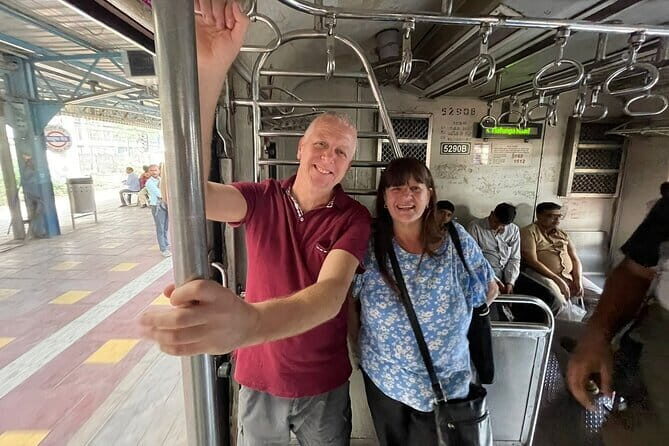
At about $17.57 per person for roughly 3 hours, this tour is priced for real-world convenience. For Mumbai, value usually comes down to two things: how well the guide saves your time, and how much logistics they handle.
Here, you get several practical inclusions:
- Bottled water
- Train tickets
- Professional English-speaking guide
Admission tickets are listed as free for both stops, so you’re not layering extra entry fees on top.
Is it “cheap”? It’s not the kind of bargain that makes you wonder what’s missing. Instead, it’s the kind of price that suggests you’re paying mainly for a guided, structured experience and for transportation support (train tickets) rather than a heavily packaged “resort-style” day.
The private aspect also changes the value math. You’re not squeezed into a giant group with a hurried script. It’s private, meaning your group drives the pace more than a crowd does.
You can also read our reviews of more private tours in Mumbai





Transfers, meeting point, and getting to the start
The start location is Third Wave Coffee, Tip Road, Unit no. 58, Ground, Ram Mahal, Senapati Bapat Marg, Marinagar Colony, Station, Mahim, Mumbai, Maharashtra 400016.
That’s not just trivia. A real-world tour goes wrong when people can’t find the meeting spot quickly in a city as busy as Mumbai. Starting at a known café can make it easier to link up with your guide.
You’ll also have a convenient ending: the tour concludes at Dhobi Ghat, Shanti Nagar, Lower Parel. From there, the plan is straightforward—catch an Uber or take a train back to your hotel.
Because train tickets are included and the meeting point is described as near public transportation, you’re set up to move efficiently without a complicated routing puzzle.
What to expect on the ground: comfort and limits
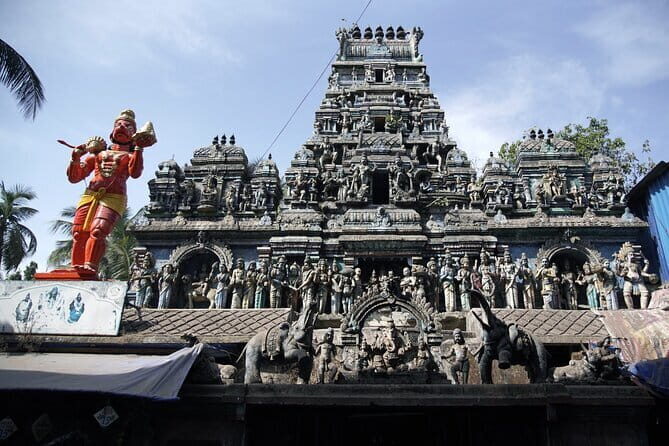
This is not a “sit and watch” day. Dharavi involves walking through narrow lanes, and Dhobi Ghat involves standing and looking from a viewpoint.
To make it easier on yourself:
- Wear comfortable shoes. You’ll want grip for uneven surfaces.
- Keep your expectations realistic for Dhobi Ghat: you won’t enter inside, so you’re there for the view and the explanations.
- Bring a light layer if you’re sensitive to sun or wind, since Dhobi Ghat is outdoors.
The good news is the tour notes that most travelers can participate. That usually signals the route is designed to be doable for a broad range of visitors, even if it’s still a walking experience.
Who this tour suits best (and who should think twice)
This tour is a great fit if you:
- Want real context for two Mumbai institutions often misunderstood from a distance
- Like guided storytelling more than generic sightseeing
- Want a respectful look at Dharavi’s working economy and Dhobi Ghat’s active laundry system
- Appreciate clear logistics: train tickets, bottled water, and a known start location
You might think twice if you:
- Don’t like walking or tight spaces, since Dharavi is on foot through narrow lanes
- Strongly prefer places where you can go fully inside buildings (Dhobi Ghat is viewed from the outside)
- Want a long, slow neighborhood exploration. This is structured and time-limited by design.
Should you book this Dharavi Slum & Dhobi Ghat private tour?
I’d book it if you want a short but meaningful Mumbai day that connects two working systems—laundry and industry—through a guide who’s there to explain the real mechanics, not just the headlines.
It’s also a smart choice for first-timers who worry about doing these areas “the wrong way.” The tour’s focus on dignity, community, and local-led context is exactly what helps you experience the place with the right attitude.
Just be honest with yourself about the trade-offs: it’s mostly walking, and Dhobi Ghat is a viewpoint visit. If those points fit your comfort level, this is one of the more practical ways to learn how Mumbai actually runs.
FAQ
How long is the Dharavi Slum & Dhobi Ghat private guided tour?
It’s approximately 3 hours total, with about 15 minutes at Dhobi Ghat and about 2 hours walking through Dharavi.
What is included in the tour price?
The tour includes bottled water, train tickets, and a professional English-speaking guide.
Do I need an admission ticket for Dhobi Ghat or Dharavi?
Admission tickets are listed as free for both stops.
Will I enter Dhobi Ghat during the tour?
No. You’ll get a clear view from a designated vantage point, but the tour doesn’t include entering inside.
Is this tour private?
Yes. It’s a private tour/activity, so only your group participates.
What if I need to cancel?
You can cancel for free up to 24 hours in advance for a full refund. Changes made less than 24 hours before the start time aren’t accepted, and cancellations within 24 hours don’t receive a refund.