REVIEW · AGRA
Overnight trip to Delhi and Agra
Book on Viator →Operated by India TajMahal Tour operators · Bookable on Viator
Two days can change how you see India. This overnight Delhi-to-Agra trip strings together top Mughal sights, Old Delhi street energy, and a smooth, chauffeured plan so you don’t waste time figuring anything out. I especially like the private setup (just your group) and the chance to do an included rickshaw ride through Old Delhi lanes with your guide steering the day.
I also like how the guides bring clarity to what you’re seeing, including names like Asif in Agra and Jimmy in Delhi that come up again and again for patient pacing and caring explanations. One thing to keep in mind: monument entry fees and meals are not included, and there can be some stop-and-shop time where sales pressure is real, so go in with a budget and an easy, polite no.
In This Review
- Key highlights at a glance
- Overnight logistics: how this Delhi–Agra loop really works
- Day 1 in Delhi: from Qutub Minar to Old Delhi lanes
- Qutub Minar: the 73-meter landmark with serious history
- Humayun’s Tomb: Mughal “garden tomb” thinking, explained
- Red Fort and Jama Masjid area: power and faith in the Old City center
- Gurudwara Sis Ganj Sahib and Old Delhi by rickshaw: the practical “feel” stop
- India Gate: memorial design plus the Amar Jawan Jyoti
- Day 2 in Agra: the Taj Mahal day that actually makes sense
- Taj Mahal: plan on more than photos
- Agra Fort: where Mughal power sat until Delhi took over
- Itimad-ud-Daulah: the baby Taj that teaches you how to look
- What you get included, and what you still need to plan
- Included in the price: more than just transport
- Not included: tickets and day-to-day basics
- Guides, pacing, and the “sales stops” reality
- Who this tour suits best
- Quick value check: is $167.03 per group a smart deal?
- Should you book this Delhi and Agra overnight tour?
- FAQ
- What does the tour price include?
- Are monument entrance tickets included?
- Do I need to pay for food during the trip?
- Is pickup offered?
- How much time is spent at the big sites?
- Is the rickshaw ride included?
- Is this a private tour?
- What if weather is bad?
Key highlights at a glance
- Safe, chauffeured car for a two-day route that’s tiring if you try to self-drive
- Rickshaw ride in Old Delhi (included) to get the feel of the lanes without guessing
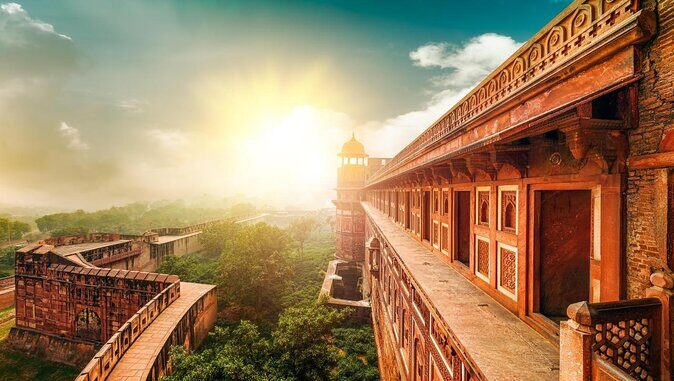
- Taj Mahal plus two supporting Agra hits (Agra Fort and Itimad-ud-Daulah), not just one photo stop
- Garden-tomb context at Humayun’s Tomb, a key step in Mughal architecture
- Hard timings and practical pacing: 1-hour monument blocks, plus a longer Taj Mahal visit
Overnight logistics: how this Delhi–Agra loop really works
This is an overnight tour that starts in New Delhi and finishes in Agra highlights over two days, with hotel accommodation for one night included. You get an air-conditioned vehicle, an English-speaking local guide, and a hired rickshaw ride during the Old Delhi part. The operator also uses a mobile ticket, which helps if you’re doing this around flights or a tight schedule.
Because it’s private (only your group), the day doesn’t feel like cattle sorting. You can adjust pace for your group and ask for practical help like where to stand for photos or how to time rest stops. Still, do plan for walking: you’ll be moving through large complexes and standing in lines for security and entry when tickets apply.
You can also read our reviews of more tours and experiences in Agra.


Day 1 in Delhi: from Qutub Minar to Old Delhi lanes
Qutub Minar: the 73-meter landmark with serious history
You start at Qutub Minar, the tall minaret built in 1193 by Qutub ud din Aibek. It’s about 73 meters high, and that size hits harder in person than in photos. The visit is set for around an hour, which is usually enough to see the main structures and read the basics without rushing.
Keep in mind the monument ticket is INR 500 per person and is not included. If you’re sensitive to heat, go prepared early in the day with water (not included) and comfortable shoes.
Humayun’s Tomb: Mughal “garden tomb” thinking, explained
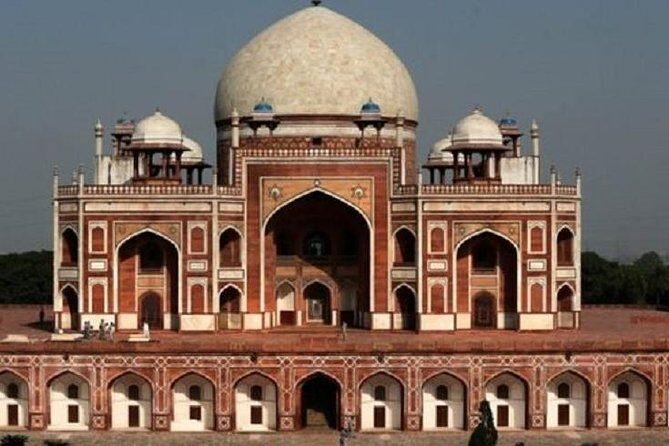
Next is Humayun’s Tomb, built in 1570 and described as the first garden tomb of the Indian subcontinent built by the Mughals. The “garden tomb” concept matters: it’s not just a grave you visit, it’s a whole layout designed to shape how you move and look.
You’ll have about an hour here as well. Ticket is INR 500 per person, not included. If you like architecture, don’t treat this as a quick stop. This is one of the best places on day one to understand how Mughal design ideas developed before the Taj Mahal.
Red Fort and Jama Masjid area: power and faith in the Old City center
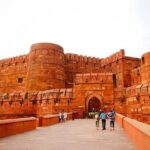
After that, the route goes through the central Old Delhi area with stops connected to Mughal power and local religious life. You’ll see Red Fort, built in the 17th century to display Mughal emperors’ pomp, made of red stone and marble. Even when you’re short on time, the outside views help you picture why the fort mattered as a statement of authority.
You also visit the area of one of India’s largest mosques in Old Delhi (the stop is listed as the largest mosque in India). Even if you’re not going deep into interior details, this is where the city’s layered identity becomes obvious: empire architecture right next to daily life.




Gurudwara Sis Ganj Sahib and Old Delhi by rickshaw: the practical “feel” stop
Then comes one of the best, most memorable parts of the day: Gurudwara Sis Ganj Sahib is a nearby drive-past stop, and you finish this segment with an included rickshaw ride in the Old Delhi alleys. Your time for this part is about 30 minutes, and the Gurudwara stop is marked as free for admission.
What I like about the rickshaw here is that you’re not just sightseeing from the sidewalk. You’re moving through the lanes where trade happens and food smells do their job. You’ll see how people shop, carry goods, and navigate tight streets. It’s a good reminder that Old Delhi isn’t a museum.
One practical note: this is where you’ll want to be ready for crowds and street-level movement. Wear something you can walk in for short distances and keep your phone secured.
India Gate: memorial design plus the Amar Jawan Jyoti
Day one ends with India Gate, about 42 meters high. It commemorates 70,000 Indian soldiers who lost their lives for the British army during World War I and the Afghan wars, and it also houses the Amar Jawan Jyoti, a flame tied to remembrance for the martyrs of the Indo-Pak war of 1971.
This stop is shorter (about 30 minutes), and that’s fine because the point here is orientation. It helps you connect the day’s sights to broader modern Indian memory: monumental stone in a public space, not hidden in a ticketed complex.
Day 2 in Agra: the Taj Mahal day that actually makes sense

Taj Mahal: plan on more than photos
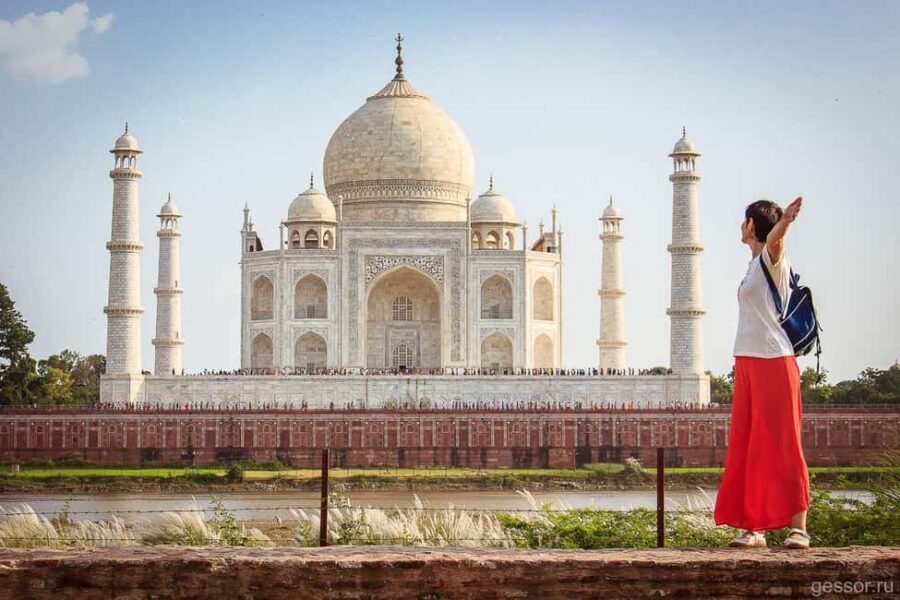
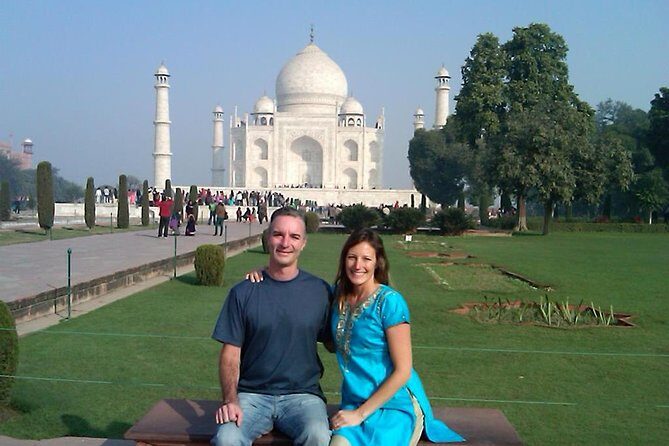
Day two starts with the Taj Mahal, a UNESCO World Heritage site built in 1653 in memory of Shah Jahan’s wife, Mumtaz Mahal. Your visit window is about three hours, which is the right length if you want to see it in different light and not feel like you’re only there for the postcard angle.
Ticket is INR 1100 per person and not included. That extra cost is one reason you should treat this as the core of your trip, not an optional add-on. If you care about details, three hours gives you time to notice the symmetry, the calligraphy work, and the way pathways frame your view as you move.
Agra Fort: where Mughal power sat until Delhi took over
Next is Agra Fort, a UNESCO site built in 1573 for Akbar the Great. The fort was the seat of the Mughal dynasty until 1638, when the capital shifted to Delhi. This background changes how you experience the fort: it’s not only a defensive structure, it’s a political stage.
You’ll have about an hour here. The ticket is INR 650 per person, not included. Fort layouts can feel repetitive if you speed through, so ask your guide what to prioritize for your group size and attention span.
Itimad-ud-Daulah: the baby Taj that teaches you how to look
Finally, you visit Tomb of Itimad-ud-Daulah, also known as the baby Taj. It was commissioned by Noor Jehan for her father. The time here is short (about 30 minutes), but the name isn’t just a marketing label. It helps you notice finer ornamentation and gives you a bridge between “big statement monuments” and more intimate Mughal craft.
Ticket is INR 310 per person, not included. If you’re tired after Taj Mahal, this stop can still feel satisfying because it rewards close attention rather than constant walking.
What you get included, and what you still need to plan
Included in the price: more than just transport
This tour price is listed at $167.03 per group (up to 3). What makes it feel like value is that it bundles several things that often cost extra when you DIY. You get:
- an air-conditioned vehicle
- an English-speaking local guide
- a hired rickshaw ride
- hotel accommodation for one night (one room)
- fuel and relevant taxes, plus driver overnight allowance and meals
For a Delhi-to-Agra overnight, that’s the hidden backbone. The driver and guide time add up, and the overnight hotel makes it simpler to handle the travel gap.
Not included: tickets and day-to-day basics
You’ll need to budget for monument entrance fees and meals (plus mineral water, which isn’t included). Known entry fees in the plan include:
- Qutub Minar: INR 500
- Humayun’s Tomb: INR 500
- Taj Mahal: INR 1100
- Agra Fort: INR 650
- Itimad-ud-Daulah: INR 310
Some other stops do not list ticket prices in the provided info, so don’t assume everything is free. Keep a cushion in INR and you’ll avoid the awkward scramble of paying at the last minute.
Guides, pacing, and the “sales stops” reality
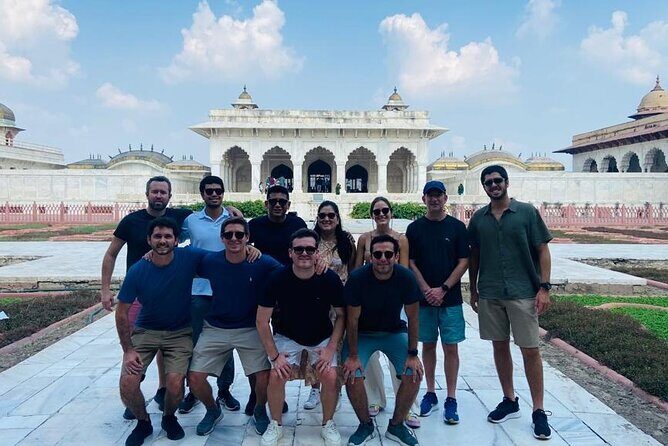
One theme from the experience is how much a guide can shape your trip. Guides such as Asif and Jimmy are highlighted for patience and careful handling of families and groups. That matters on a tight two-day schedule, because it keeps you from feeling lost or constantly asking staff for directions.
Pacing also looks deliberately timed: most monuments get about an hour, while Taj Mahal gets three hours and Itimad-ud-Daulah gets a short but focused 30 minutes. That’s a workable rhythm if you want major sights without getting stuck in one place too long.
The one caution is practical: some shop stops can feel like they’re trying very hard to sell. I recommend you set your personal rule before you get there. If you want to shop, shop on purpose. If not, say no early, keep moving, and ask your guide to focus you back on the next photo point.
Who this tour suits best
This is a great fit if you:
- want a private Delhi-and-Agra plan without the hassle of driving
- like major monuments, plus one immersive street moment in Old Delhi
- prefer an organized route with English guidance
It may feel less ideal if you:
- want total freedom to linger for hours at random spots
- dislike structured itineraries and shop interruptions
- have very limited walking tolerance (there’s still walking and stairs in the monuments)
Quick value check: is $167.03 per group a smart deal?
For up to three people, the headline price looks reasonable because it covers the vehicle, English guide, the rickshaw, and a night in a hotel. The part that can swing the real cost is the entrance tickets and meals, especially since the Taj Mahal ticket alone is INR 1100 per person.
If you price this out on your own, you’d typically pay separately for a private car/driver for two days, guide services, and an overnight hotel. This package bundles those moving parts. Just remember to budget for monument tickets and you’ll feel in control rather than surprised.
Should you book this Delhi and Agra overnight tour?
Book it if you want a tidy, efficient route that still includes the emotional big hitter: Taj Mahal, with enough time to actually see it. You’ll also get a strong day-one mix: Qutub Minar, Humayun’s Tomb, Old Delhi’s street texture via rickshaw, and India Gate’s memorial context.
Skip it or reconsider if you hate any kind of shop stop or you don’t want to deal with extra monument fees and meal planning. For most first-time visitors, though, this is a sensible way to do Delhi and Agra in two days without chaos.
FAQ
What does the tour price include?
It includes an air-conditioned vehicle, GST, an English-speaking local guide, a hired rickshaw ride, hotel accommodation for one night, and support costs like fuel, interstate taxes, and driver overnight allowance. Monument entrance tickets and meals are not included.
Are monument entrance tickets included?
No. Qutub Minar, Humayun’s Tomb, Taj Mahal, Agra Fort, and Itimad-ud-Daulah each have listed entry fees, and meals are also not included.
Do I need to pay for food during the trip?
Yes. Meals are not included, and mineral water is also not included, so plan to buy water and food as needed during the day.
Is pickup offered?
Yes. Pickup is offered, and the start point is New Delhi, Delhi, India.
How much time is spent at the big sites?
Taj Mahal gets about three hours. Qutub Minar and Humayun’s Tomb are about one hour each. Agra Fort is about one hour. Itimad-ud-Daulah is about 30 minutes.
Is the rickshaw ride included?
Yes. The Old Delhi rickshaw ride is included as part of the Gurudwara/Old Delhi segment.
Is this a private tour?
Yes. It’s a private tour/activity, and only your group participates.
What if weather is bad?
The experience requires good weather. If it’s canceled due to poor weather, you’ll be offered a different date or a full refund.