REVIEW · JAIPUR
Cyclin’Jaipur – Pink City Heritage walking Tour
Book on Viator →Operated by CyclinJaipur · Bookable on Viator
Jaipur can feel like a movie set, until you walk it. This half-day tour gives you a human-scale way to see the Pink City, starting at Hawa Mahal and rolling through the royal complex, a temple prayer moment, and the everyday market streets. I especially liked the way the guide turns big landmarks into clear city stories, and I loved the hands-on-feeling stop in the crafts and marble carver area where artisans explain their traditional work.
You get a compact route that fits real life: markets, temple ritual, and artisan streets, all with a calm group size. The only real drawback is the walking pace and temple steps, so you’ll want moderate fitness and comfortable shoes, plus you must dress modestly (no sleeveless tops or short pants).
In This Review
- Key reasons this tour works
- Starting at Hawa Mahal: your fast track to old Jaipur
- City Palace complex: royal rooms, practical context
- Temple visit and Hindu prayer ceremony: watch, then understand
- The vegetable wholesale market: real smells, real energy
- Flower market on the way: Jaipur’s colors in motion
- Marble carver’s district: Jaipur’s craft power, up close
- Food and tea breaks: small inclusions, big comfort
- Who your guide is matters here
- Price and value: what $18.50 gets you
- Group size, pace, and what to wear
- How to get the most from your 3-hour walk
- Who should book Cyclin’Jaipur’s Pink City Heritage walking tour
- Should you book this tour?
- FAQ
- How long is the Pink City Heritage walking tour?
- Where does the tour start?
- What does the tour cost?
- What’s included in the price?
- Are hotel pickup and drop-off included?
- What kind of fitness level do I need?
- What should I wear?
- What’s the group size limit?
Key reasons this tour works
- Small group energy (up to 8 travelers), so you can actually hear your guide and ask questions.
- Meet at Hawa Mahal and start with orientation, which makes the rest of old Jaipur easier to understand.
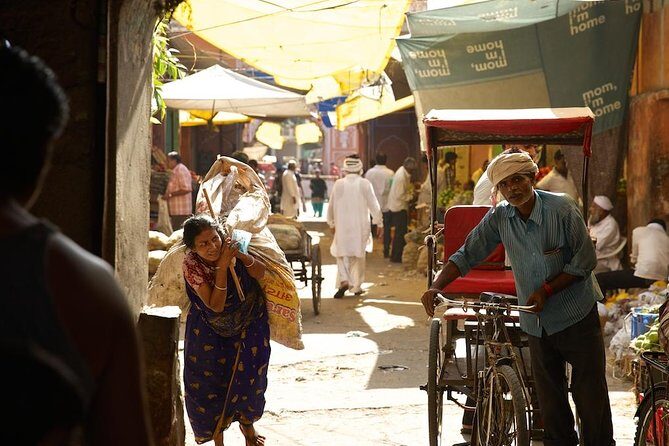
- Market time that feels like daily life, not just photo stops.
- A temple prayer ceremony moment, giving context to what you’re seeing beyond architecture.
- Crafts district stops, including artisans such as sculptors, silversmiths, bangle makers, and metal workers.
- Tea and snacks included, which matters on a warm morning or afternoon walk.
Starting at Hawa Mahal: your fast track to old Jaipur
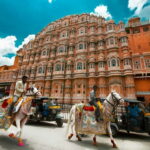
Most people first see Hawa Mahal from the outside, take a few photos, then wander with no plan. This tour starts right there, with you meeting your local guide at Hawa Mahal so you can get your bearings fast. The guide helps you connect what you’re seeing with how Jaipur actually runs day to day.
It also sets the rhythm. You can choose a morning or afternoon departure, and that choice changes the street feel. Mornings tend to feel fresher and more awake; afternoons can be more active with shoppers winding through the bazaars. Either way, you’re walking in a tight time window, so you won’t get bored.
You can also read our reviews of more walking tours in Jaipur

City Palace complex: royal rooms, practical context
From Hawa Mahal, the route takes you into the City Palace complex. Even if you’ve read about the royals before, seeing it as part of a guided circuit helps. Your guide frames the palace not like a museum label, but like a living symbol of Jaipur’s power and identity.
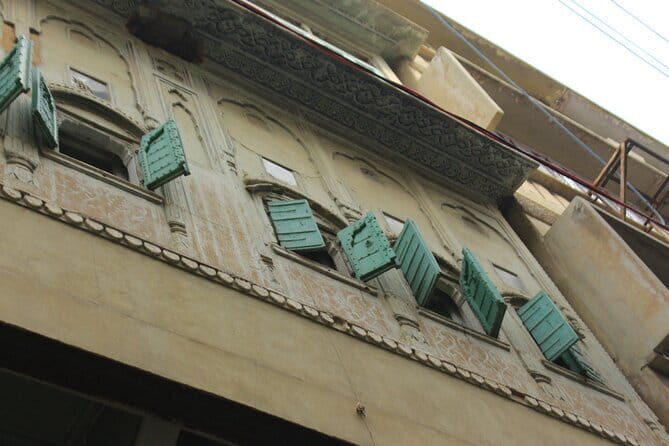
This stop is valuable because it bridges two worlds: the grand royal architecture and the everyday neighborhoods around it. You’ll walk in a way that connects the city’s status and its street life, so your brain starts mapping Jaipur as one whole place instead of separate attractions.
Temple visit and Hindu prayer ceremony: watch, then understand
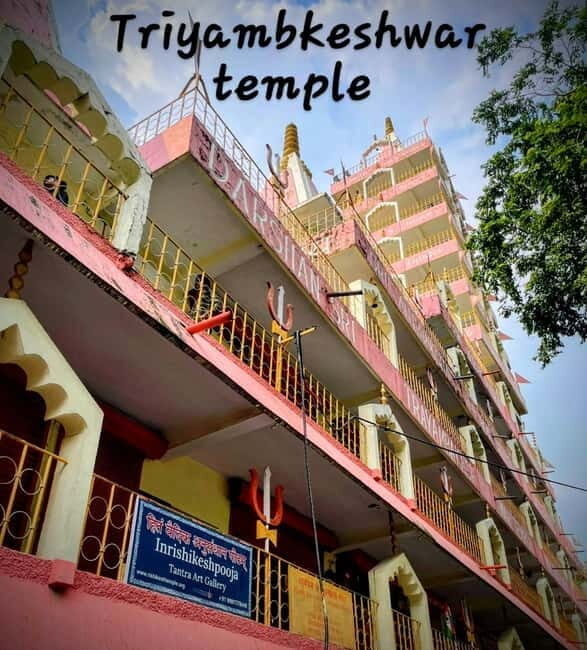
One of the best parts of this tour is the visit up to a major Jaipur temple and the chance to witness a Hindu prayer ceremony. This isn’t just about seeing a building. It’s about seeing people in their spiritual routine—what they do, how they behave, and how the ceremony shapes the mood of the space.
Because this is a religious moment, respect matters. Keep your voice down, move slowly, and follow your guide’s lead on where to stand and when to step back for others. If you’ve been to temples elsewhere, you already know the main rule: your job is to observe thoughtfully, not to rush.
This is also where the moderate walking requirement shows up. You’ll want shoes you can trust on uneven surfaces, and you should expect at least some uphill movement as you go toward the temple.
The vegetable wholesale market: real smells, real energy
Next comes a stop that makes Jaipur feel lived-in: the biggest vegetable wholesale market in the city. This is one of those places where the color isn’t staged for tourists. It’s about volume, sorting, bargaining, and the simple flow of food moving through the day.
Your guide steers you through the market in a way that’s actually useful. You’ll learn how the market fits into the bigger food system, and you’ll notice details you’d likely miss on your own—how people organize their goods, how they talk, and how quickly everything moves.
Also, markets teach you patience. Even when you’re only there for a short time, you’ll start to understand why Jaipur is more than monuments. It’s a working city.
Flower market on the way: Jaipur’s colors in motion
As you head through the area, you’ll also hit the flower market. This is a great pairing with the vegetable market because it shifts the sensory focus: bright petals, quick movement, and a different kind of shopping energy.
Flower markets in India often connect directly to daily ritual and celebrations, and that context makes the earlier temple moment click into place. By the time you reach the flowers, you’re already thinking about how religion, daily routine, and commerce overlap in Jaipur.
You can also read our reviews of more city tours in Jaipur





Marble carver’s district: Jaipur’s craft power, up close
If you care about how things are made, don’t skip the craft stops. The tour brings you to the marble carver’s district, where you meet local artisans and see traditional methods in action. Jaipur earns its reputation as a crafts-focused city, and this is where you feel that in your own walk.
You may meet artisans working on:
- sculpting and carving,
- silversmithing,
- bangle making,
- metalwork,
- and other detailed hand processes.
Even when you don’t fully understand the language, the work tells the story. Tools, hands, and repeated movements give you a sense of skill that’s hard to get from photos. I like this stop because it shifts you from spectator to student for a while. You’re learning what craftsmanship takes, not just what it produces.
Food and tea breaks: small inclusions, big comfort
This tour includes bottled water plus snacks, and you also get coffee and/or tea. It sounds simple, but in hot weather it changes the whole experience. You can keep walking without that mid-tour slump where you start rushing just to find shade.
I also like that the guide doesn’t treat refreshments like an afterthought. Your stop timing stays human. You’ll have enough fuel to watch the markets and still enjoy the craft district without feeling worn out.
Who your guide is matters here
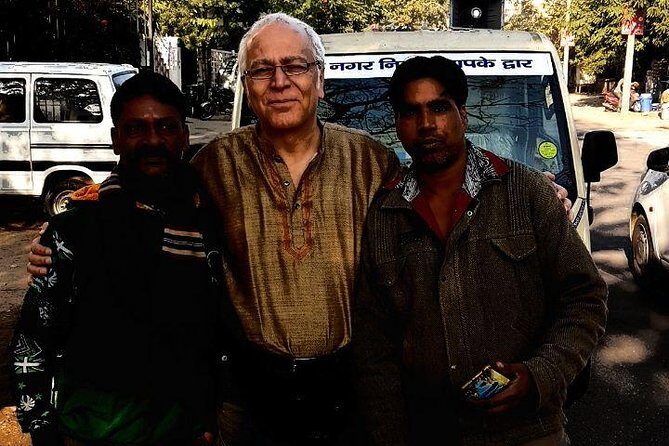
A walking tour rises or falls on the guide, and this one seems to deliver strong ones. I’ve seen names come up like Virendra (sometimes shortened to Viru), Raju, Sid, and Parveen. What links them is not just storytelling, but practical management—timing, attention to safety in busy streets, and clear explanations that make the route feel coherent.
One nice sign: some guides have offered tours in French as well, which can make a difference if you’re more comfortable in a second language. If that matters to you, it’s worth asking what language options are available when you book.
Price and value: what $18.50 gets you
At $18.50 per person for about 3 hours, this is priced as a value-friendly way to see a lot of Jaipur without shelling out for multiple stand-alone tickets. You’re getting:
- a guided walk through major anchors like Hawa Mahal and the City Palace complex,
- a temple prayer ceremony moment,
- market time (vegetables and flowers),
- craft district access and artisan interaction,
- and included water, snacks, and tea.
That’s a strong bundle for the money, especially with the max 8 traveler group size. Smaller groups usually mean less crowding at viewpoints and more time for questions, and that’s exactly what makes a guided walk worth it.
One note: hotel pickup and drop-off aren’t included unless you select that add-on. So plan to arrive at the meeting point area with your own transport.
Group size, pace, and what to wear
This tour caps at 8 travelers, and that changes the feel. You’re not getting swept along by the crowd. You can slow down when the guide stops to explain something, and you can step back for better views without feeling like you’re holding everyone up.
The pacing is right for people with moderate physical fitness. You’re walking through streets and up to a temple area, so you’ll want:
- comfortable walking shoes,
- water awareness (you do get bottled water),
- and respect for the dress code: no short pants or sleeveless attire.
If you’re visiting in very hot weather, wear breathable layers that still meet the rules. A light scarf can also help at temples and markets.
How to get the most from your 3-hour walk
If you want this to feel rewarding rather than rushed, do a few things before you go:
- Come with one or two questions ready, like what trade matters most in the markets you’ll see.
- Bring a small camera plan. This tour works better when you pause to watch people rather than just snapping non-stop.
- Give yourself permission to slow down in the crafts district. The value is in seeing the process, not just the products.
Also, don’t treat this as a replacement for bigger Jaipur sights. Think of it as the orientation walk that makes everything else easier to place.
Who should book Cyclin’Jaipur’s Pink City Heritage walking tour
This is a great fit if:
- you’re a first-timer in Jaipur and want an organized route that also shows daily life,
- you’ve been before but want to understand markets and crafts better,
- you like guides who explain rather than just point.
It’s also a good match for couples and small groups who want a calmer experience. If you prefer private tours or you’re unable to handle some uneven walking and temple steps, you might want to consider a gentler alternative.
Should you book this tour?
Yes, if you want an efficient, guided taste of Jaipur that mixes royal sights with real street scenes. The combination of Hawa Mahal + City Palace + a prayer ceremony moment + major markets + artisan crafts is a smart way to understand the Pink City in a short time.
I’d skip it only if you can’t manage moderate walking, you don’t want to dress modestly, or you’re looking for a tour that feels purely monument-focused. For most people, though, this is one of the clearest ways to turn Jaipur from a list of attractions into a place with daily rhythm.
FAQ
How long is the Pink City Heritage walking tour?
It lasts about 3 hours.
Where does the tour start?
You meet your local guide at Hawa Mahal.
What does the tour cost?
The price is $18.50 per person.
What’s included in the price?
You get bottled water, snacks, coffee and/or tea, and a red card guide.
Are hotel pickup and drop-off included?
No. Hotel pickup and drop-off are not included unless you select that option.
What kind of fitness level do I need?
The tour recommends a moderate physical fitness level.
What should I wear?
You should avoid short pants and sleeveless attire.
What’s the group size limit?
The tour has a maximum of 8 travelers.