REVIEW · NEW DELHI
New Delhi Private Tour with Transportation
Book on Viator →Operated by All India Travel Agency · Bookable on Viator
Delhi in one day, without the taxi hunt. This full-day New Delhi highlights tour stitches together Old Delhi and New Delhi in one go, with front-door pickup from the airport or railway station and a smooth plan that keeps you from bouncing around on your own. I like the front-door pickup most, and I also love that it’s a small group (max 4), so the day feels controlled instead of chaotic.
One thing to keep in mind: not every stop’s admission is treated the same way. The tour lists monuments fee as included, but several sites note admission tickets not included, so budget a little extra and confirm what you’ll pay on arrival at each gate.
In This Review
- Key things that make this tour worth your time
- The value pitch: $19, but with real structure
- How the AC car and guide change the whole day
- Old Delhi core: Red Fort and Jama Masjid
- Raj Ghat: a short stop with big emotional weight
- Humayun’s Tomb: Mughal style you can actually spot
- Birla Mandir and Jantar Mantar: two very different minds at work
- Government landmarks: Rashtrapati Bhawan and Parliament’s outward form
- India Gate: war memorial, picnic lawns, and the eternal flame
- Qutub Minar: Delhi’s older skyline marker
- Lotus Temple: a Bahai worship space for all religions
- Indira Gandhi Memorial Museum: a quieter ending
- Logistics and timing: what to expect from a 6 to 8 hour day
- So, who should book this tour?
- Should you book this New Delhi private highlights tour?
- FAQ
- How long is the New Delhi private tour?
- Does the tour include pickup?
- What group size is this tour?
- What’s included in the price?
- Are monument tickets included?
- Is lunch or coffee included?
- Is the tour suitable for most people?
- What if the weather is bad or I need to cancel?
Key things that make this tour worth your time

- Small group size (up to 4 travelers) keeps the pace realistic and the logistics easier
- AC car with an English-speaking driver means less waiting in traffic stress
- Old Delhi + New Delhi in one day lets you compare Mughal landmarks with modern government icons
- Professional guide helps you connect what you’re seeing to what it meant then and what it means now
- A mix of famous monuments and free stops keeps your cost predictable
- Comfort-focused routing means you can sightsee without relying on taxis all day
The value pitch: $19, but with real structure
For a New Delhi day that covers major landmarks from multiple eras, the price is the headline. At about $19 per person, you’re buying three things that usually cost extra on your own: reliable transportation, a guide to explain what you’re looking at, and a route that tries to cut down on wasted time.
This works best if you’re short on days or you want your Delhi sightseeing done in a single shot. You’ll also like the “no taxi needed” approach: the tour is built around private ground transportation in an AC car, so you’re not constantly negotiating rides, finding meet points, or worrying if your driver has the right route.
Still, do a quick sanity check before you arrive about admissions at each stop. The itinerary flags some admission tickets as not included, even while monuments fee is listed as included overall—so I’d treat ticketing as a “confirm on the day” item, not a guarantee.
You can also read our reviews of more private tours in New Delhi


How the AC car and guide change the whole day

Delhi is big, traffic can be slow, and distances add up fast. This tour tackles that head-on with private transportation and a car that stays with you as you move between neighborhoods. Even when you’re going to only a handful of monuments, the travel time between them can eat your day if you’re doing it solo.
The other big lever is the guide. You’ll get context for what you’re seeing, like why Humayun’s Tomb is often treated as a predecessor to the Taj Mahal style, or what Jantar Mantar was built to do besides look impressive. A guide also makes worship spaces and memorials easier to approach with the right mental frame—important when you’re visiting places like Jama Masjid or Raj Ghat.
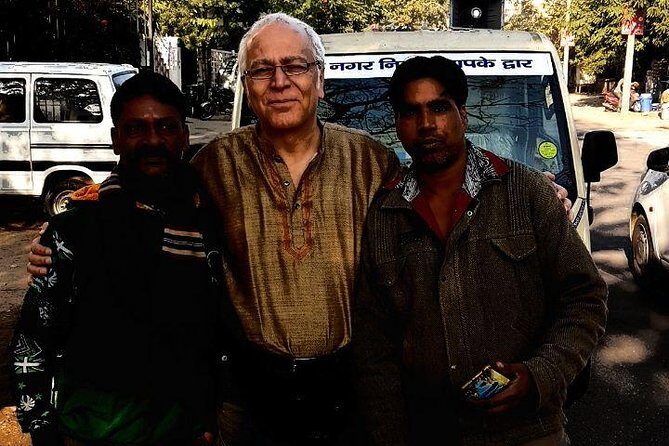
You might also get a driver or organizer who’s known for keeping things organized. In past groups, names like Mr. Sunil Dubey (organizer) and Mr. Manohar Lal (driver) have come up, which is a nice sign that communication and behavior are taken seriously.
Old Delhi core: Red Fort and Jama Masjid
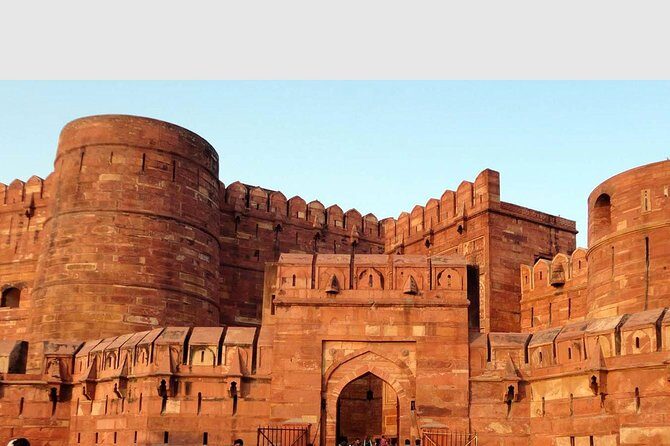
You start in Old Delhi at Red Fort, a Mughal-era landmark with scale you can feel even before you get inside. The fort is made of red sandstone and is described as about 3 kilometers in perimeter, with wall heights varying from roughly 18 to 30 meters in places. That’s not trivia—those dimensions explain why the fort dominates the whole area.
Here’s what I’d pay attention to: the sheer fortress geometry. It helps you understand why this site was a seat of administration for multiple emperors and why it became one of the defining symbols of the Mughal period. There’s also an evening angle: a light & sound show is held by the Department of Delhi Tourism, with timing and tickets available from the tourist office. If you’re in Delhi for more than a day, you could treat this as a follow-up option, not part of the daytime rush.
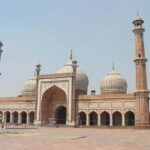
Next you move across the road to Jama Masjid, described as the largest mosque in India and built between 1644 and 1658. It’s positioned directly in the Old Delhi skyline view, facing the Red Fort area. Spend your time here with a “look and then listen” rhythm: let your eyes absorb the structure first, then use your guide’s explanation to connect the architecture to the period.
A practical consideration: Old Delhi sites can mean busier streets and tight walking areas. The value of the small group and private car shows up here. You’re less likely to lose time hunting for your next point.
Raj Ghat: a short stop with big emotional weight
Raj Ghat is where the tour slows down a little. It’s a memorial in a lush garden setting dedicated to Mahatma Gandhi. On the cenotaph, Gandhi’s last utterance, Hey Ram, is inscribed in golden letters.
There are also two Gandhi museums in the premises: the Gandhi Memorial Museum and Gandhi Smriti Museum. Even if you only have the standard time slot, your guide can help you decide what’s most worth skimming based on your interests—history, personal life, or the timeline of his legacy.
This stop is especially valuable because it shifts you from imperial architecture to modern India’s moral and political foundations. It’s brief, but it gives your day more meaning than just checking boxes.
Humayun’s Tomb: Mughal style you can actually spot
Then you head to Humayun’s Tomb, built in the mid-16th century by Haji Begum, wife of Humayun. It’s often considered a predecessor of the Taj Mahal, and it’s highlighted as one of the best examples of Mughal architecture.
Even if you don’t know Mughal design terms, you’ll be able to recognize the “this is intentional” structure: the red sandstone construction, the symmetry, and the way the complex reads as planned rather than improvised. Your guide can point out what to notice so you don’t leave thinking it was just another big tomb.
One practical note: since admission is flagged as not included for this stop, expect that you may need to purchase tickets at the gate depending on how your package is handled on the day. This is one of the moments where it helps to go in with a little flexibility in your budget.



Birla Mandir and Jantar Mantar: two very different minds at work
Next comes Birla Mandir (Lakshmi Narayan), a relatively modern temple built in 1938 by the industrialist B.D. Birla. It’s also noted as a favorite place of worship of Mahatma Gandhi. That Gandhi connection is what makes this stop more than a quick photo stop.
Expect a more contemporary feel compared to the Mughal sites. You’re seeing how sacred spaces evolved in Delhi, and how Gandhi-era reverence shaped how people visited and remembered places of worship.
Then you shift gears again at Jantar Mantar, an observatory site with 13 architectural astronomy instruments built by Maharaja Jai Singh II of Jaipur from 1724 onwards. It’s not just about shapes and angles. The main purpose was to compile astronomical tables and predict the time and movements of the sun, moon, and planets.
If you like science history, you’ll enjoy the chance to see old-world astronomy made physical. Even if you’re not a technical person, your guide can help you connect the instruments to real questions people wanted answered long before modern equipment.
Government landmarks: Rashtrapati Bhawan and Parliament’s outward form
At some point in the day, you’ll see views and context for two major symbols of governance: Rashtrapati Bhawan and the Parliament House of India.
Rashtrapati Bhawan was formerly called the Viceroy’s House, occupied by the Governor-General until independence, and later known as President’s House. It’s described as having 340 decorated rooms and about 200,000 square feet floor area. The building was designed by British architect Sir Edwin Lutyens, completed by 1929 and inaugurated in 1931.
The takeaway here is visual power. Even without going inside, this is the kind of architecture that tells you who wanted to be seen, and how authority was meant to feel.
Then there’s the Parliament House of India, located near Vijay Chowk. It’s described as having a central hall topped with a domed structure and three semi-circular chambers, originally meant to house the Council of State, legislative assembly, and the chamber of princes. It’s a useful stop for understanding how the building reflects the idea of “the world’s largest democracy,” at least in how the government wants to present itself.
If you prefer to keep your day efficient, these are the stops where you’ll benefit from a guide who keeps the explanation tight. You don’t need a long lecture; you just need the right mental model.
India Gate: war memorial, picnic lawns, and the eternal flame
India Gate sits on Rajpath at the center of Delhi. The arch is 42 meters high and designed by Sir Edwin Lutyens in memory of Indian soldiers who sacrificed their lives during the First World War. Names are inscribed on the arch, and beneath it sits the Amar Jawan Jyoti, an eternal flame.
The practical value of India Gate in this itinerary is timing and access. It’s a free stop and you get meaningful context in about a half hour. You also get a sense of how Delhi “uses” this space day-to-day: the area is described as an evergreen picnic zone with green lawns, fountains, and water bodies.
I’d treat your time there like this: take a minute for the wall of names, then circle your gaze out to the setting. The point isn’t only the monument; it’s where it lives in everyday life.
Qutub Minar: Delhi’s older skyline marker
Then you roll into one of Delhi’s oldest icons: Qutub Minar. It’s described as a 72.5 meter high pillar built during the reign of Sultan Qutub-ud-din Aibak in 1199 A.D., marking the Delhi Sultanate.
Nearby, you can also see ruins of Kila Ri Pithora, the fort of Prithviraj Chauhan, plus an iron pillar from Gupta times that has not yet rusted. That iron pillar detail is a classic Delhi “how is that still there?” moment, and it’s one reason this stop can feel more memorable than you expect.
The itinerary lists admission as not included here as well, so again, plan for potential ticket purchases depending on how your package is applied at each site.
Lotus Temple: a Bahai worship space for all religions
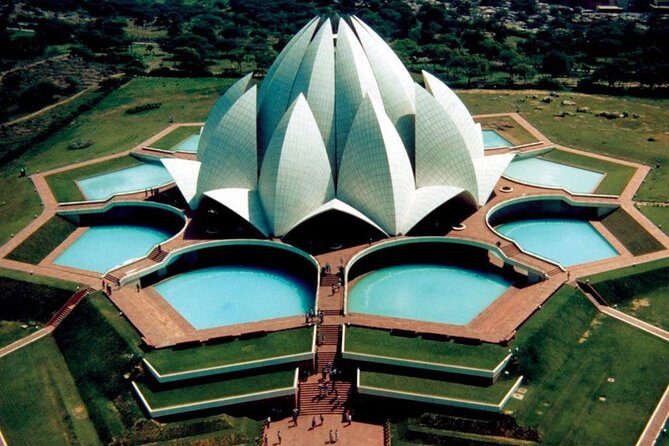
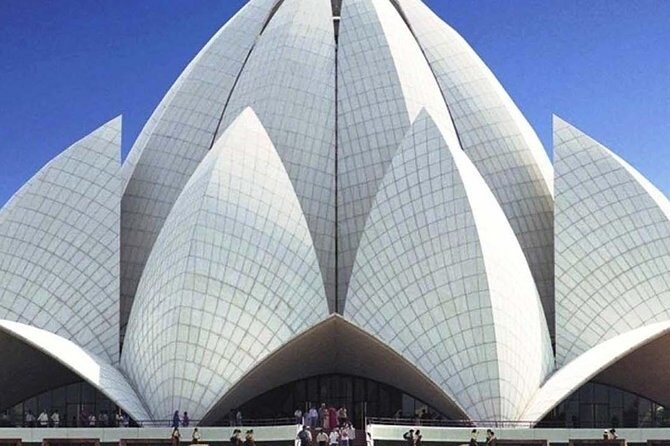
Finally, you visit Lotus Temple, one of the most distinctive architectural silhouettes in the city. The temple is associated with the Bahai faith and is designed to resemble a lotus flower. The materials listed include marble, dolomite, cement, and sand.
One reason this stop is worth putting near the end of your day: it’s a reset. You get a contrast from forts, tombs, and government buildings into something spiritual and calm. The site is described as having no restrictions on visitors and being open to people of all religions. That makes it an easy stop even if your group has mixed beliefs or different comfort levels with historic religious sites.
As a practical tip: plan to keep your voice low and your pace respectful. Even if you’re not there for a long visit, the tone of the place asks for it.
Indira Gandhi Memorial Museum: a quieter ending
If your schedule allows, the tour wraps with Indira Gandhi Memorial Museum, described as her residence converted into a museum after her assassination. It’s slotted as a shorter stop, so think of it as a way to add modern political context without turning your day into a museum marathon.
A good strategy for this stop is to focus on whatever your guide points out as most relevant—since you only get about 30 minutes, you want the “high signal” parts, not a slow read of everything.
Logistics and timing: what to expect from a 6 to 8 hour day
This is a 6 to 8 hour experience, which is plenty of time to see major Delhi highlights, but not enough to linger for long. Expect a day shaped by travel time and site entry pacing. The itinerary is packed, so you’ll want to stay practical: wear comfortable shoes, carry a light layer, and pace your photos so you don’t lose time you could use listening to your guide.
Food is also something to plan for. The tour doesn’t include lunch or coffee/tea, and parking fees aren’t included either. If you’re arriving hungry, either grab something before pickup or plan to find a quick option between stops.
Weather matters too. The tour notes it requires good weather; if it’s canceled due to poor weather, you’ll be offered another date or a full refund.
So, who should book this tour?
Book it if you want:
- A single-day route through Old Delhi and New Delhi
- Private, AC transportation with a guide
- A “hit the top landmarks” plan without turning the day into DIY navigation
Skip it or reconsider if:
- You hate structured itineraries and prefer total freedom over pace
- You’re expecting every monument to be included with no ticket purchases. Some stops specify tickets not included, so you’ll likely want to budget for a few entries.
Should you book this New Delhi private highlights tour?
I’d say yes, if you’re trying to see the classics—Red Fort, Jama Masjid, Humayun’s Tomb, India Gate, Qutub Minar, and Lotus Temple—without doing the planning math yourself. The small group size and AC car make the day feel manageable, and the professional guide turns famous monuments into something you can actually understand.
Just don’t treat the admission details as automatic. With several stops flagged as not included, a little extra cash and confirmation on the day will keep the experience smooth.
FAQ
How long is the New Delhi private tour?
The tour runs about 6 to 8 hours (approx.).
Does the tour include pickup?
Yes. Front-door pickup from the airport or railway station is provided.
What group size is this tour?
The maximum group size is 4 travelers.
What’s included in the price?
The price includes private transportation, monuments fee, transportation by AC car with an English-speaking driver, and a professional guide.
Are monument tickets included?
The tour lists monuments fee as included, but some stops specify admission tickets are not included. Plan to confirm what you’ll need to pay at each site.
Is lunch or coffee included?
No. Coffee and/or tea and lunch are not included.
Is the tour suitable for most people?
Most travelers can participate, and service animals are allowed.
What if the weather is bad or I need to cancel?
The experience requires good weather. If it’s canceled due to poor weather, you’ll be offered a different date or a full refund. Free cancellation is available up to 24 hours in advance for a full refund.