REVIEW · BANGALORE
Bangalore Heritage and Cultural Walking Tour
Book on Viator →Operated by Yo Tours · Bookable on Viator
A great walking loop beats a checklist. This Bangalore tour mixes storytelling with key sights, from museums and cathedrals to court buildings and parks, all in about two hours. I especially like the guide-led “infotainment” style and the chance to walk past places you might miss if you only rely on maps. One thing to keep in mind: a few past bookings report guide mix-ups, so it pays to arrive on time and confirm your start.
You also get practical pay-off fast. For around $12.46, you’re buying a guided route through the city center plus local tips for saving money and figuring out what to do next—without being stuck in one museum for hours. The main drawback is also the main trade-off of a walking tour: you’ll want comfortable shoes, and you won’t get long, sit-down time inside every building.
In This Review
- Quick hit highlights
- The real value: a short route with context, not just photos
- Where the tour starts: Golden Square Business Centre area
- Venkatappa Art Gallery & archaeology museum stop: culture with a lens
- Visvesvaraya Industrial and Technological Museum: a science-and-industry angle
- UB City and modern buildings: seeing the Bangalore “then vs now”
- St. Mark’s Cathedral and Mahatma Gandhi Park: landmarks with a story-maker
- Old market lanes, museums, heritage buildings, and temples
- Cubbon Park, M Chinnaswamy Stadium, and Minsk Square: open space landmarks
- High Court of Karnataka (Attara Kacheri): the institutional core
- Vidhana Soudha and the surrounding area: big civic architecture
- Price and group size: is $12.46 good value?
- What to expect on the ground (and how to avoid common problems)
- Who this tour is best for
- Should you book this Bangalore heritage and cultural walking tour?
- FAQ
- How long is the Bangalore Heritage and Cultural Walking Tour?
- What is the starting point of the tour?
- What does the tour cost?
- Is there a guide and what languages do they speak?
- How many people are in the group?
- Is hotel pickup or drop-off included?
- Is a water bottle included?
- Can I get a refund if I cancel?
Quick hit highlights
- English & Hindi storyteller guides who keep the pace fun and understandable
- Two museum stops (art/archaeology and a major tech/science museum) that add context quickly
- Old town lanes plus big-name landmarks like St. Mark’s Cathedral and High Court areas
- A modern contrast stretch through UB City and surrounding buildings
- Public-space breaks with Cubbon Park, plus Minsk Square and stadium views
- Small group size (up to 15) that makes Q&A easier
The real value: a short route with context, not just photos
This is the kind of tour that helps you get your bearings fast in Bangalore’s older core. Instead of treating famous buildings as random photo stops, the guide uses stories and fun facts to connect them—so you walk away with a clearer sense of how the city layers different eras in the same streets.
I like that the format is built for people who don’t come for “serious history only.” The guide’s approach is described as infotainment, which usually means you’ll get quick stories, direct explanations, and frequent prompts to look around. If you enjoy asking questions, a small group size (maximum 15) makes it more likely the guide can actually interact instead of just talking into a crowd.
The other value is practical. The tour includes local tips and recommendations aimed at saving money and figuring out how to explore after the walk. That matters because the best tour price is the one that helps you spend your next day better.
You can also read our reviews of more walking tours in Bangalore

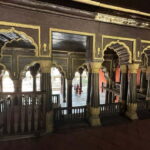

Where the tour starts: Golden Square Business Centre area
You’ll meet at Golden Square Business Centre on Vittal Mallya Road (Eden Park, near D’ Souza Layout). It’s in the city center zone, and the tour notes it’s near public transportation, which helps if you’re coming in from elsewhere in Bangalore.
Because there’s no hotel pickup and drop, your day needs a firm plan to reach the start point on your own. I’d also plan to arrive a few minutes early and have your phone ready for any last-minute coordination, since a walking tour depends on everyone starting together.
Venkatappa Art Gallery & archaeology museum stop: culture with a lens
One of the first stops is the Venkatappa Art Gallery and the Department of Archaeology and Museums. Even if you’re not an art expert, this is a strong early anchor because it signals what kind of stories you’ll be hearing: the guide ties places to identity, heritage, and the way institutions shape what a city remembers.
This stop also breaks up the walking, which you’ll appreciate since the full route is compact and paced for a total duration of about two hours. If you’re the type who likes to understand what you’re seeing before moving on, start your attention here. Look around and listen—this is where the guide’s tone and level of detail typically set the rhythm for the rest of the walk.
Visvesvaraya Industrial and Technological Museum: a science-and-industry angle
Next comes the Visvesvaraya Industrial and Technological Museum. The name alone tells you the theme: industry, technology, and the practical systems that drive modern life.
For this part, think of it as a context stop. Even if you only spend a short time here during the tour, the guide can help you connect science and engineering culture to wider Bangalore development. You also get a nice contrast from the first stop—art and archaeology in one direction, then technology and industry in the other.
A practical consideration: museum areas can have their own security and movement patterns. Keep your pace flexible, and don’t expect long, unbroken roaming time. This tour is designed for movement and storytelling over a quick circuit.
UB City and modern buildings: seeing the Bangalore “then vs now”
The route then passes UB City Mall and the surrounding modern buildings. This segment is important because Bangalore is not only old-town lanes and heritage facades. The tour intentionally folds in a modern slice so you can see how the city’s center developed and re-developed over time.
I like using this part as a mental reset. After older streets and institutional buildings, UB City-style modern architecture helps you frame the city in layers: heritage and modernization are not separate worlds here. Your guide’s job is to connect those layers with quick comparisons and stories—so pay attention to what they point out rather than treating it as just a photo break.
You can also read our reviews of more historical tours in Bangalore





St. Mark’s Cathedral and Mahatma Gandhi Park: landmarks with a story-maker
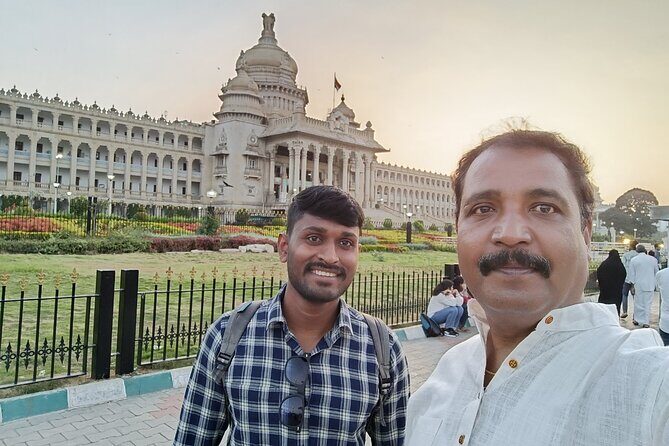
You’ll also cover St. Mark’s Cathedral and Mahatma Gandhi Park. These are the kind of spots where a walking guide can do real work: explain why a landmark matters, point out architectural or cultural cues you might overlook, and link the site to larger themes the tour is using across the walk.
St. Mark’s Cathedral is a clear focal point, and Gandhi Park adds a different vibe—more open, more “city pause” than museum corridor. That balance helps keep the tour from feeling like a checklist of buildings. It also gives your eyes a break before the route returns to older market lanes.
Old market lanes, museums, heritage buildings, and temples
After the cathedral and park, the tour shifts into the old market zone—passing museum spaces, heritage buildings, and centuries-old temples. This is the part many visitors remember because lanes feel different from major roads: tighter, more textured, and more “human-scale.”
The key benefit here is access to hidden lanes and places. The tour explicitly offers this, which is exactly what you want when you’re in a place where backstreets can be hard to find on your own. On a short tour, “I walked where I wouldn’t have known to walk” is a big part of the value.
One note: old markets and temple areas can be busy and require basic respect around photography and movement. The tour duration stays about two hours, so you won’t have time to wander off. Stay with the group, watch for instructions, and treat this segment as a guided orientation to local rhythms rather than a slow, solo exploration.
Cubbon Park, M Chinnaswamy Stadium, and Minsk Square: open space landmarks
Then you move into Cubbon Park, with a view or pass near M Chinnaswamy Stadium and Minsk Square. This is a smart transition because it mixes iconic civic spaces with recognizable names.
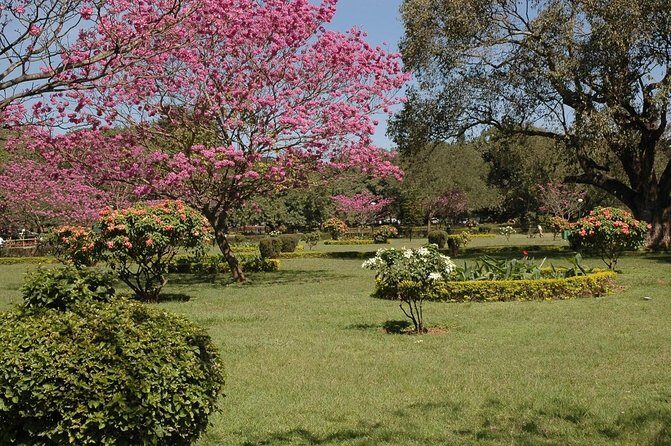
Parks and squares do more than look nice on a walk. They help you understand how Bangalore organizes public life around major institutions. You’ll also get a bit of breathing room in the middle of a route that includes courts and major buildings.
If you enjoy people-watching, this segment is where that can happen naturally, because parks and squares tend to generate casual activity. If you prefer quiet observation, it’s also easy to slow down with the guide’s storytelling pace.
High Court of Karnataka (Attara Kacheri): the institutional core
Next up is the High Court of Karnataka, also referred to as Attara Kacheri. Court buildings and legal institutions tend to anchor a city center physically and politically. On foot, they also teach you where power sits in the urban layout.
This stop can feel more “serious” than a park, but the tour keeps a conversational tone through guide stories. The value is less about memorizing details and more about learning how these buildings fit into the city’s identity and daily structure.
Since you’re walking, keep your attention on cues the guide highlights: entrances, surrounding roads, and how the area transitions back into other landmark zones. That’s the kind of urban geography you’ll actually use later when you plan your own explorations.
Vidhana Soudha and the surrounding area: big civic architecture
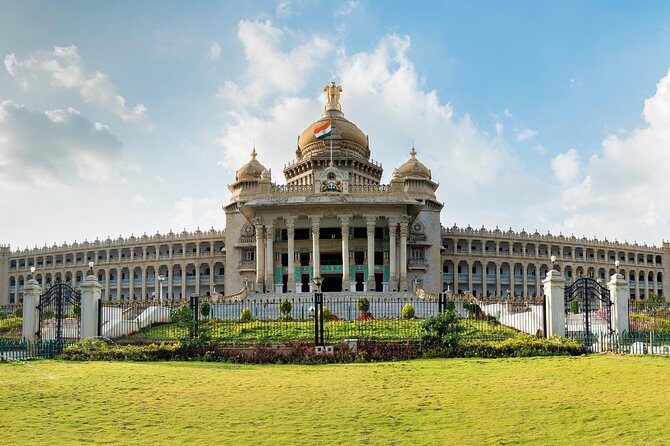
The tour finishes its landmark sweep around Vidhana Soudha, a Mahatma Gandhi statue, the Press Club, and nearby buildings. This is the kind of cluster that makes Bangalore feel like a capital city in miniature—major civic architecture, symbols, and institutions all close enough to see on one compact walk.
This segment is also a good “wrap-up” for first-timers. As you approach the end, you start noticing patterns: how the route connects culture, law, governance, and public space without needing separate days for each theme.
If you want the best experience here, don’t just look at buildings. Listen for how the guide ties the final area back to earlier stops. That’s where the tour’s overall storytelling approach becomes clearer.
Price and group size: is $12.46 good value?
At about $12.46 per person for roughly two hours, the price is low enough that you should think of it as a guided orientation. You’re not paying for a private car or long museum entry time. You’re paying for a route, a storyteller guide, and access to lanes you might not find easily on your own.
The included features matter for value:
- A guide who speaks English & Hindi
- Local tips to save money and plan what to do next
- Access to hidden lanes and places
- Group format with a maximum of 15 travelers
- Mobile ticket support
The “small group” part is a quiet but real benefit. When your tour group is small, questions tend to land better, and you’re less likely to feel like a nameless number.
The only price-related consideration is what you personally need. If you want deep museum time or lots of time for indoor exploring, this walking format may feel short. If you want bearings, context, and a well-connected circuit, the price-to-time ratio can be excellent.
What to expect on the ground (and how to avoid common problems)
This is a walking tour, so your comfort controls your experience. Wear shoes you can walk in for two hours. The tour notes water bottle is not included, so bring your own bottle to stay comfortable—especially if Bangalore weather is warm when you go.
Also, don’t over-plan your schedule right after the end. The tour returns to the start point, and you may want a little buffer to transition into your next activity.
Finally, since the tour has mixed feedback with reports of missed guides in some cases, treat timing seriously. Arrive early, keep your phone charged, and be ready to reach the provider if something seems off. If a guide is late, the fix is faster communication, not waiting in silence.
For those who love details: pay attention to the themes the guide repeats across stops. Stories about British legacy are mentioned as a standout highlight in feedback, and that kind of theme tends to show up naturally as you pass museums, cathedrals, and institutional buildings.
Who this tour is best for
This walking tour is a strong fit if you:
- are a first-time visitor who wants a map of the city in your head
- like context delivered through stories, not long lectures
- want a quick mix of museums, landmark architecture, and older street texture
- prefer a small group format for easier questions
It may feel less ideal if you:
- want hours inside museums
- hate walking in a city-center route
- need guaranteed one-on-one pacing
Should you book this Bangalore heritage and cultural walking tour?
I’d book it if your goal is orientation plus stories. At $12.46 and about two hours, it’s priced like an efficient city primer: you’ll get a connected route, local tips, and chances to see older lanes that are hard to locate alone.
I would also book with eyes open. Because there are reports of guide no-shows or serious planning issues in some past experiences, I suggest you confirm your start details before you leave and arrive a bit early. If you show up on time and stay flexible, the format can be a fun, low-cost way to understand the city center fast.
If you’re the kind of traveler who enjoys walking, asking questions, and learning through real streets, this is a good match.
FAQ
How long is the Bangalore Heritage and Cultural Walking Tour?
It runs for about 2 hours.
What is the starting point of the tour?
The meeting point is Golden Square Business Centre on Vittal Mallya Road (Eden Park, 102, Vittal Mallya Rd, D’S Souza Layout, Ashok Nagar, Bengaluru, Karnataka 560001, India).
What does the tour cost?
The price is $12.46 per person.
Is there a guide and what languages do they speak?
Yes. The guide/storyteller speaks English and Hindi.
How many people are in the group?
The tour has a maximum of 15 travelers.
Is hotel pickup or drop-off included?
No, hotel pickup and drop-off are not included.
Is a water bottle included?
No. A water bottle is not included.
Can I get a refund if I cancel?
Yes. You can cancel up to 24 hours in advance for a full refund.