Hoysala temples read like stone books. This private day tour from Bangalore to Belur and Halebidu gives you guided time at two UNESCO-listed temple sites, with enough detail to make the carvings feel personal. I like two things most: an English-speaking local guide who explains what you’re looking at, and the comfort of a pre-booked air-conditioned car with hotel/airport pickup and drop. The main thing to weigh is the long day (about 12 to 13 hours) plus no food included, so you’ll want to plan around meals.
You’ll spend focused time at each temple: around 2 hours in Belur and about 90 minutes in Halebidu, with entrance fees included. That works well if you want big visual impact without rushing through everything, but you will still do plenty of walking on temple grounds and stairs. Bring modest clothing and expect it to feel like a full cultural day, not a quick sightseeing loop.
In This Review
- Key highlights you’ll feel right away
- Private comfort from Bangalore: AC car, pickup, and a driver who keeps time
- Belur’s Sri Chennakeshava Swamy Temple: dancing maidens and story-carved pillars
- Halebidu’s Hoysaleswara Temple: 200 meters of carvings and myth in stone
- How the English-speaking guide changes the day (Mr Gupta’s technique notes)
- Timing that works: 12–13 hours, two focused stops, and where the day can feel long
- Price and value: what $130.34 covers and what you’ll pay for yourself
- What to pack and how to dress for temple time
- Who should book this private Belur and Halebidu tour
- Should you book? My quick decision guide
- FAQ
- How long is the Belur and Halebidu private day tour?
- Is pickup and drop-off included?
- Is there an air-conditioned vehicle?
- Are entrance fees included for the temples?
- Will I have a guide, and do they speak English?
- How many people are in the group?
- Is food included?
- Is water provided?
- What should I wear to the temples?
- What is the cancellation policy?
Key highlights you’ll feel right away
- Two UNESCO temple stops in one day: Belur’s Sri Chennakeshava Swamy Temple and Halebidu’s Hoysaleswara Temple
- Carvings you can actually interpret: an English local guide helps you connect motifs to stories
- Comfort-first transport: a private AC car with hotel/airport pickup and drop
- Entrance fees included: you won’t need to manage separate ticket payments at the sites
- Small groups only your party: 1–2 guests in a sedan, or 3–4 in a 5-seater vehicle
- Practical extras: parking fees, GST, and a bottle of mineral water per person in the vehicle
Private comfort from Bangalore: AC car, pickup, and a driver who keeps time
This tour is built around one simple idea: don’t make a long, traffic-heavy day exhausting. You get hotel/airport pickup and drop, and you’ll ride in an air-conditioned private vehicle the whole way. That matters on this route because you’re going to spend hours in transit, then switch gears to standing, walking, and looking closely at stone details.
Vehicle size is handled smartly for small groups. If it’s just you and one other person, you’ll travel in an air-conditioned sedan. For groups of 3–4, you’ll use an air-conditioned 5-seater. In the experience I reviewed, the driver named Madhusudan was noted for being polite and patient, even during heavy rains on the return trip, and that kind of calm driving is exactly what you want when the schedule depends on getting back smoothly.
The value here isn’t just convenience. It’s the way a private car keeps your day from turning into a wait-and-run routine. Instead of juggling multiple drop-offs, you follow a guided flow: temple time, then back on the road together.
One more practical note: parking fees and GST are included, so the price you pay covers the basics of “getting there and entering.” You’ll still need to handle your own meals and drinks.
You can also read our reviews of more guided tours in Bangalore
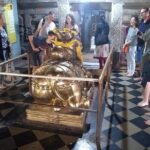

Belur’s Sri Chennakeshava Swamy Temple: dancing maidens and story-carved pillars
Belur is where you start seeing Hoysala art at full volume. Your guided stop is about 2 hours, and it’s a great pace: long enough to spot patterns, short enough that you’re not exhausted before Halebidu.
At Sri Chennakeshava Swamy Temple, the standout feature is the exterior carving program. Look for the dancing maidens on the temple exterior walls. They’re not random decoration. They’re part of the temple’s visual language—figures placed with intention, carved with a steady hand, meant to communicate ideas through form.
Inside, you’ll notice how the builders used stone as a canvas. The guide helps you connect what you see to Hindu symbolism and mythology, and that turns a “pretty building” into something you can actually read. The pillars and ceiling are full of stone imagery, and if you spend even part of your visit learning what each element is trying to say, your photos will make more sense later.
This stop is also ideal if you like sculpture work but don’t want to be left guessing. In one group experience, the guide Mr Gupta was praised for explaining the history, the techniques, and the hidden details. That kind of explanation is the difference between seeing carvings and understanding why they’re there.
What to watch for while you’re on-site:
- Spend a few minutes standing back to take in the whole façade before you start moving closer.
- Then focus on one section at a time—faces, figures, or column carvings—so your eyes can “lock on.”
- If you’re tired, take short pauses. Your feet will thank you, and your eyes will work better after.
Possible drawback: if you arrive without a plan for how to look, it’s easy to feel overwhelmed. The carvings are dense, and you may need the guide’s help to keep track of what matters most.
Halebidu’s Hoysaleswara Temple: 200 meters of carvings and myth in stone
Halebidu is the temple that feels like it goes on forever. You’ll have about 1 hour 30 minutes here, which is a good match for the site’s scale—especially because the outer walls are covered with carvings.
The Hoysaleswara Temple is often described in terms of age and volume, and the numbers matter. It’s about 800 years old, and the outer walls stretch for roughly 200 meters, packed with sculpted scenes and figures. The carvings cover Hindu gods and mythological stories, and the sheer length makes this feel less like a single building and more like a carved narrative wall.
Here’s how I’d use your time: don’t try to “see everything.” Instead, let the guide point out the main storytelling zones, then return to the sections that catch your eye. With only 90 minutes, that approach gives you depth without losing momentum.
You’ll also benefit from walking the route at a steady pace. Carvings can be up close, but you’ll see more meaning if you alternate between:
- medium distance (so you understand arrangement and flow), and
- close viewing (so you catch the fine carving work).
This is one of those sites where the guide’s role really pays off. If you’ve never looked closely at Hoysala-era temples before, it’s hard to know what you’re seeing. The point isn’t to memorize labels. It’s to notice how the stone scenes connect to what Hindu devotion was expressing at the time.
Possible consideration: the temple grounds can involve steps and uneven areas. If you’re sensitive to that, pace yourself and use the guide time wisely.
How the English-speaking guide changes the day (Mr Gupta’s technique notes)
A private guide is the difference between a decent temple visit and one that sticks with you. This tour includes an English-speaking private local guide, and their job is more than “pointing.” They explain the monuments and historical context, and they connect the stonework to what’s being shown.
In the feedback I saw, Mr Gupta stood out for explaining techniques and hidden details, not just giving broad facts. That style matters because Hoysala carving is highly patterned. If you know what to look for, your brain stops treating the carvings like background texture.
Expect the guide to help with:
- what the main figures likely represent,
- how the artistry supports the religious purpose of the temple,
- and how different parts of the temple work together as one design program.
You’ll also get a clearer sense of the dynasties and local ruling powers that shaped the temples. Even if you don’t leave with dates memorized, you’ll walk away with a map in your mind: why these temples look the way they do, and what the builders were trying to communicate through art.
If you care about details but hate lecture-style tours, this setup usually works well because it’s visual. You’re standing in front of the evidence, not imagining it from a book.
Timing that works: 12–13 hours, two focused stops, and where the day can feel long
This is a long outing, and you should plan your expectations. The total time is listed as about 12 to 13 hours. That includes transit, the two temple visits, and time for moving between stops.
The temple schedule is sensible:
- Belur first, for around 2 hours
- Halebidu second, for around 1 hour 30 minutes
That order tends to work because you start with a spectacular temple where the carvings are easy to “get into,” then shift to the longer, wraparound-carving experience of Halebidu. By the time you arrive in Halebidu, your eyes usually start recognizing repeated motifs and themes.
The downside of a full day like this is simple: you can get physically tired even if you’re mentally engaged. You’ll be walking, looking up, and pausing for photos. If you’re prone to leg fatigue or get cranky when schedules run late, build in patience from the start.
Meal timing is your big variable. Since food and drinks aren’t included, you’ll likely need to eat either before pickup, during a break arranged by your own planning, or on the return after the last stop. If you want a smooth day, bring snacks for the ride—or at least plan a meal strategy so you don’t end up hungry and irritated during temple time.
You can also read our reviews of more private tours in Bangalore

Price and value: what $130.34 covers and what you’ll pay for yourself
At about $130.34 per person, this is priced for a private, guide-led UNESCO temple day with transport. In practice, that price covers several costs that often add up fast on your own: entrance fees, parking fees, GST, and an air-conditioned vehicle with pickup and drop.
It also includes one small but useful comfort item: 1 bottle of mineral water per person while you’re in the car. That’s the kind of thing you don’t want to negotiate mid-journey.
Where you’ll spend extra:
- food and drinks
- anything not listed as included
So how do you judge value? I’d see it this way: if you want both temples on the same day and you want an English guide to interpret the carvings, you’re paying for time, context, and convenience—not just transportation. If you’re traveling in a larger group and can share the vehicle cost, the value improves, because it stays private.
This is also a good fit if you dislike bargaining, hate ticket lines, and want the day structured. If you already love self-guided temple visits and you know you’ll do fine with maps and guidebooks, you could go cheaper. But you’d lose the “why” behind the carvings, which is where the experience becomes memorable.
What to pack and how to dress for temple time
There’s no strict dress code, but modest clothing is recommended for both men and women. Think: clothing that covers shoulders and knees, or at least something that won’t feel awkward once you’re standing near entrances and walking through temple areas.
For comfort, pack like you’re doing a full walking day:
- comfortable shoes (temples often mean steps and uneven ground)
- a light layer (you’ll be in AC for transit, then moving outdoors)
- sun protection if it’s hot that day
Also, keep your phone charged. The carvings are the point, and you’ll want photos, but you’ll also want time to look without constantly switching between zoom and overexposure. Short pauses help.
Since food and drinks aren’t included, bring a snack option or plan your meal stop early. Otherwise, you might end up spending extra money at the last minute with tired decision-making.
Who should book this private Belur and Halebidu tour
This tour is a strong choice if you:
- want two major temple sites in one day without organizing transport and guide time yourself
- like architectural and sculptural details and want help understanding what you’re seeing
- prefer a private, small-group pace (only your party participates)
- care about comfort for a long day with AC and pickup/drop
It’s less ideal if you:
- hate long days and lots of walking
- need lots of food options built into the schedule (food isn’t included)
- prefer fully self-paced travel where you control every minute
That said, for most people who land in Bangalore and want a temple-focused day with interpretation, it’s a solid match.
Should you book? My quick decision guide
Book it if you want the best chance of understanding Hoysala temple art during limited time. The combination of English guide, included entrance fees, and a private AC car makes this feel like an efficient way to see Belur and Halebidu in one go, without turning the day into a logistics puzzle.
Skip it if you’re happy to go solo, you’re on a super tight budget, or you already know you won’t enjoy interpreting stone carvings. In that case, you might prefer a cheaper transport-only plan and use guidebooks.
If you’re somewhere in the middle, this is the kind of day trip that pays off because it gives context, not just sightseeing.
FAQ
How long is the Belur and Halebidu private day tour?
The tour runs about 12 to 13 hours.
Is pickup and drop-off included?
Yes. Hotel or airport pickup and drop are included.
Is there an air-conditioned vehicle?
Yes. You’ll travel in a private air-conditioned vehicle.
Are entrance fees included for the temples?
Yes. Entrance fees for the monuments are included.
Will I have a guide, and do they speak English?
Yes. The tour includes an English-speaking private local guide.
How many people are in the group?
This is private, so only your group participates. The vehicle holds 1–2 guests in a sedan or 3–4 guests in a 5-seater vehicle.
Is food included?
No. Food and drinks are not included.
Is water provided?
Yes. A bottle of mineral water per person is provided in the vehicle.
What should I wear to the temples?
There is no strict dress code, but modest clothing is recommended for both men and women.
What is the cancellation policy?
Free cancellation is available up to 24 hours in advance for a full refund. If you cancel less than 24 hours before the start time, the amount paid is not refunded.