REVIEW · BANGALORE
Guided Walk through Bengaluru’s Ejipura Slums
Book on Viator →Operated by Bengaluru Lights · Bookable on Viator
You see Bengaluru where the city gets real. This small-group walk through Ejipura focuses on day-to-day ingenuity, and you visit the Swabhimaan community work that supports students, health care, and learning in the neighborhood. I love the small-group format and the way the guide adapts to your questions. I also love the school stop, where you can talk with kids and see curiosity up close.
A heads-up: you are walking in an area shaped by poverty and crowded urban change, so it can feel raw and emotionally intense. If you prefer your city sightseeing to be all “easy views,” this one may not be your style.
In This Review
- Key things to know before you go
- Finding Ejipura: the 9:00 am start near Koramangala
- Small-group walk with guides like Ashif and Dia
- Swabhimaan Community Center: tuition and after-school programs
- Swabhimaan Clinic: health care consultations at Rs. 10
- The school drop-in: meeting kids and hearing their curiosity
- Why this feels respectful, not voyeuristic
- Price and value: what $30.34 buys for 90 minutes
- What to bring, how to prepare, and what to expect
- Should you book the Ejipura Slums walk with Swabhimaan?
- FAQ
- What is the group size for this Ejipura guided walk?
- Where does the tour start, and when?
- How long does the guided walk last?
- What will I visit during the tour?
- What should I bring?
- What’s the ticket format and price?
Key things to know before you go
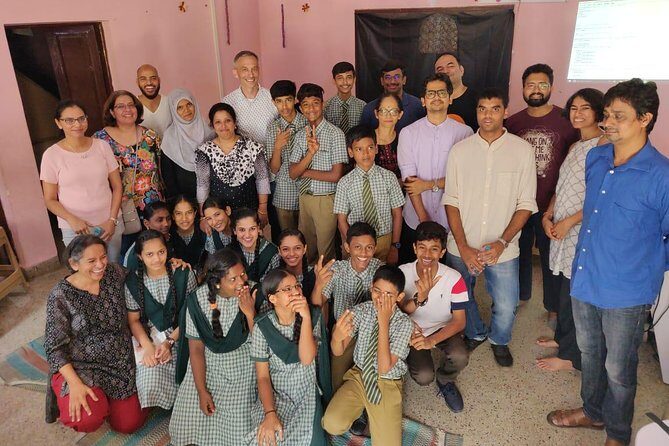
- Max group size of 6 means you’re not lost in a crowd, and questions actually get answered.
- Swabhimaan stops include a community center and a clinic tied to low-cost care and student support.
- Meet the people behind the work (teachers, volunteers, and the NGO founder) rather than just looking at buildings.
- Bring a water bottle you can refill along the way.
- Expect good weather needs since it’s a walking tour.
Finding Ejipura: the 9:00 am start near Koramangala
The tour meets at the Regional Passport Office near Koramangala (80 Feet Rd, Koramangala 8th Block). It starts at 9:00 am and ends back at the meeting point, so you’re not piecing together transport and timing for the rest of your day.
This is also a practical choice if you’re staying somewhere in that Koramangala zone, because the meeting point is listed as near public transportation. The whole experience runs about 1 hour 30 minutes to 2 hours, which is a nice length when you want something meaningful without wiping out your afternoon.
You can also read our reviews of more walking tours in Bangalore


Small-group walk with guides like Ashif and Dia
One of the strongest reasons this tour works is the guide setup: a group capped at 6 people. That size matters here, because you want room for real conversations and respectful pacing, not a quick photo-and-go circuit.
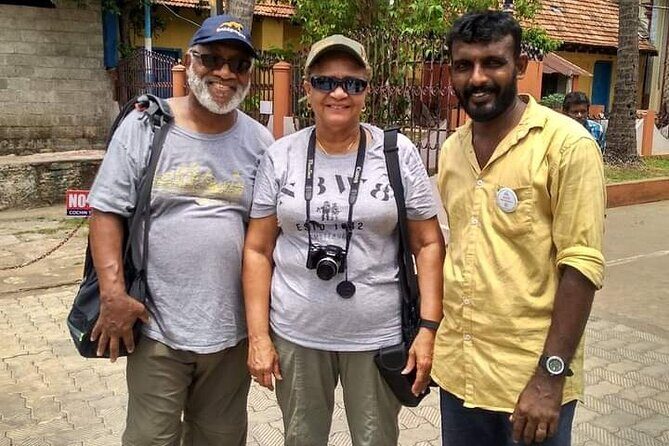
In the guides’ stories, I see a pattern: people like Ashif and Dia guide with context, then make space for your curiosity. You can ask questions about how the neighborhood functions, what the big challenges are, and how local support programs try to change outcomes. Several accounts also mention feeling safe even for solo visitors, which fits the tone of a guide who knows the streets and the communities well.
Swabhimaan Community Center: tuition and after-school programs
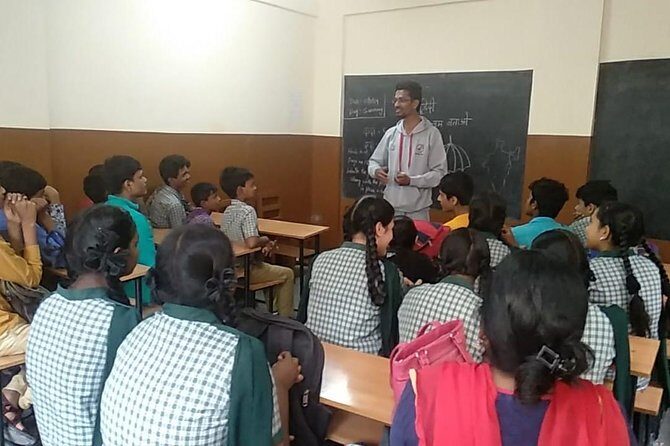
The first core stop centers on the Swabhimaan community center in Ejipura. The neighborhood itself is described as Bengaluru’s largest slum area, where rapid urban migration and weak infrastructure make daily life tougher. But the community center is where the story shifts from hardship to action.
At the center, you meet teachers and volunteers running curricular tuition and after-school programs. The detail I like most is that these aren’t only for one age group; the programs serve children of all ages from the neighborhood. For you, that means you’re not just hearing statistics. You’re seeing how learning support is structured in real life when families have limited resources.
Practical note: this stop can be energizing because you’re around people doing careful, patient work. Still, keep your expectations grounded—this isn’t a performance, and it’s not about entertainment. Come with humility, listen more than you talk, and follow the guide’s lead.
Swabhimaan Clinic: health care consultations at Rs. 10
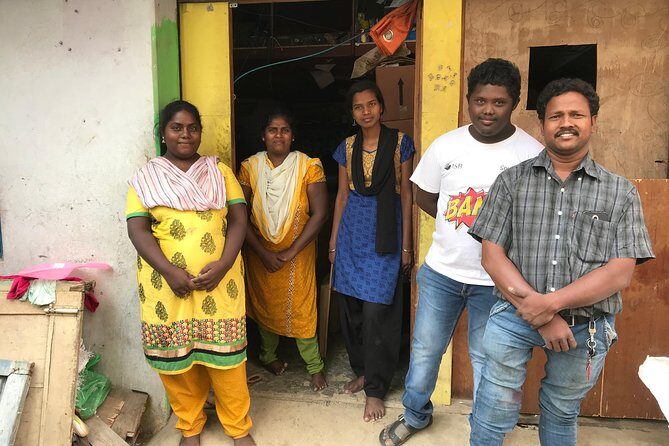
Next, you visit the Swabhimaan Clinic, where doctors consult and medicine is distributed at an all-inclusive price of Rs. 10 (about 12 cents) per visit. That number sounds small at first, but it carries weight because it signals the program’s intent: make care reachable, not gated by ability to pay.
What you’re really learning here is how health support gets organized when budgets are tight. In slum areas, people often face long waits, uneven access, and the fear that one illness can derail everything. A clinic model that combines consultation and medicines in one low-cost package is the kind of practical system that helps families manage health issues earlier rather than later.
This stop also shapes how you read the neighborhood. You stop treating “poverty” as a single idea and start noticing the working parts: education support for kids, and health support that tries to protect families now.
The school drop-in: meeting kids and hearing their curiosity
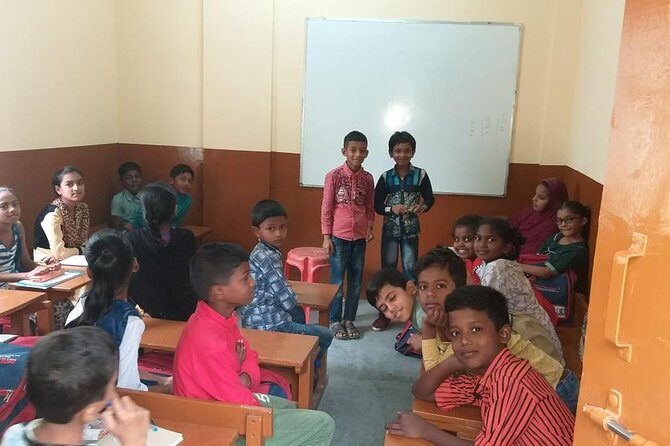
The tour includes a drop-in on a local school, and this is usually the most memorable part for many people. The accounts tied to this stop highlight conversations with children across different classes, plus that mix of shyness and curiosity kids naturally have when adults show genuine interest.
What I take from this: you’ll get more than a quick look at a classroom. You’ll likely be able to ask questions and share simple points about your own life and where you’re from. One standout theme from the experience is warmth without sentimentality, which is exactly what you want on a community-based visit.
If you’re thinking about what to do with that moment, keep it simple. Let the guide manage introductions and boundaries. Use respectful language, keep questions age-appropriate, and don’t treat children like a spectacle. When you do that, the interaction feels human instead of transactional.
You can also read our reviews of more guided tours in Bangalore




Why this feels respectful, not voyeuristic
Slum tours can go wrong fast. The good ones handle power and visibility with care, and this tour’s structure pushes in that direction.
The big built-in reason is that it’s organized around Swabhimaan and explicitly tied to community benefit. The tour description states that proceeds are returned to the community, and the overall approach is framed as help to help themselves. That matters for you because you’re not just observing hardship—you’re seeing a support system working toward self-reliance.
The guide presence also helps. The accounts mention guides who ask about personal interests, answer questions about construction and social structures, and keep the tone grounded. In other words, you’re treated like a person with curiosity, not like a consumer looking for shock value.
Price and value: what $30.34 buys for 90 minutes
At $30.34 per person, this isn’t the cheapest way to spend 1.5–2 hours in Bengaluru. But it’s also not priced like a “sanitized cultural show.” You’re paying for three things that are hard to replicate on your own: a small-group experience (up to 6), guided interpretation, and access to community programs like the center, the clinic, and the school drop-in.
You’re also getting practical support built into the format: a mobile ticket, a fixed start time at a known meeting point, and a guide who can translate what you’re seeing into real context. When you’re trying to understand how support programs function in a place most visitors never see, those elements add real value.
And if you care about how money flows, the emphasis that proceeds return to the community helps you feel more confident about where the tour fits in the bigger picture.
What to bring, how to prepare, and what to expect
The tour asks you to bring a water bottle for refills along the way, so don’t forget that. Beyond that, you should plan for the basic reality of a walk: you’ll be outside, and you’ll cover enough ground that comfortable shoes make a difference.
Because it requires good weather, check the forecast before you go. If conditions are poor, the operator will offer a different date or a full refund, which keeps you from feeling stuck with a plan that can’t safely proceed.
Behavior-wise, aim for respectful curiosity. You’re walking through places connected to daily life, learning, and health support. That means slow down, let the guide set the tone, and treat each stop like a conversation, not a sightseeing checklist.
Should you book the Ejipura Slums walk with Swabhimaan?
I think you should book this tour if you want a Bengaluru experience that’s practical, human, and tied to real local work. It’s ideal for people who enjoy asking questions, learning how community programs operate, and spending time with teachers, volunteers, and kids instead of just looking from the outside.
Skip it if you’re not prepared for the emotional weight that comes from seeing poverty up close, even when the tone is hopeful. Also consider another plan if you want only light, casual sightseeing with minimal seriousness.
If you do book, go in with the right mindset: humility, patience, and a willingness to understand complexity. When you bring that, the walk through Ejipura can feel like one of the most grounded and meaningful experiences you fit into Bengaluru.
FAQ
What is the group size for this Ejipura guided walk?
The tour is limited to a maximum of 6 travelers. That small group size is meant to give you more personalized attention from the guide.
Where does the tour start, and when?
The tour starts at the Regional Passport Office near Koramangala (80 Feet Rd, Koramangala 8th Block). The listed start time is 9:00 am, and the activity ends back at the same meeting point.
How long does the guided walk last?
The duration is about 1 hour 30 minutes to 2 hours.
What will I visit during the tour?
You’ll spend time in Ejipura and visit the Swabhimaan projects, including the community center and the clinic, plus a drop-in on a local school.
What should I bring?
You should bring a water bottle so you can refill along the way.
What’s the ticket format and price?
The price is $30.34 per person, and the tour uses a mobile ticket. Confirmation is listed as received within 48 hours of booking, subject to availability, and the tour requires good weather.