REVIEW · RISHIKESH
9 Days Bali Pass Trek
Book on Viator →Operated by Himalaya Shelter · Bookable on Viator
High passes sound scary until you feel the rhythm.
This Bali Pass trek is a strong mix of big views and serious altitude work: you climb from Taluka (about 2,080m) to a top at 4,900m, with a net gain around 2,820m over roughly 5 walking days. I like that the route is set up for sustained effort (about 10 km of walking most days over 6 to 7 days on foot), so you’re not just doing short, forgettable hikes. I also like how the team supports you with camping comfort—tents, mats, sleeping bags, and practical gear like microspikes and gaiters—so your energy stays for the trail. One drawback to plan for: this is classed as difficult, and you’ll want real fitness and training ahead, because the pass crossing plus the altitude gain is not a casual outing.
If you’re choosing a trek in the Himalaya, you’re really choosing your risk level and your recovery level. Bali Pass is the kind of challenge where you’ll earn every view, but you also have to respect pacing, hydration, and weather. You’ll also want to budget the items that aren’t included, since insurance and (for some travelers) forest entry charges add cost on top of the base price.
In This Review
- Key Things I’d Put on Your Radar
- Bali Pass: A peak-like pass at 4,900m
- Route snapshot from Taluka to Janki Chatti
- Ruinsara Lake, Devsu Thatch, and Thanga meadows
- Crossing the Bali Pass: timing, traction, and the summit-like feeling
- Yamunotri and the surrounding peaks: Dhumdhar Kandi, Harsil, and glacier views
- Camping comfort and included meals that actually help
- Price and value: $374 plus the costs you should plan for
- Who should book (and who should skip) Bali Pass
- Should you book Bali Pass with Himalaya Shelter?
- FAQ
- What is the maximum altitude on the Bali Pass trek?
- How long is the trek, and how many days do you walk?
- What is the total distance covered?
- Where does the trek start, and what time does it begin?
- What walking distance should I expect each day?
- What’s included in the price?
- Is insurance included?
- Are forest entry charges included?
- What group size should I expect?
Key Things I’d Put on Your Radar
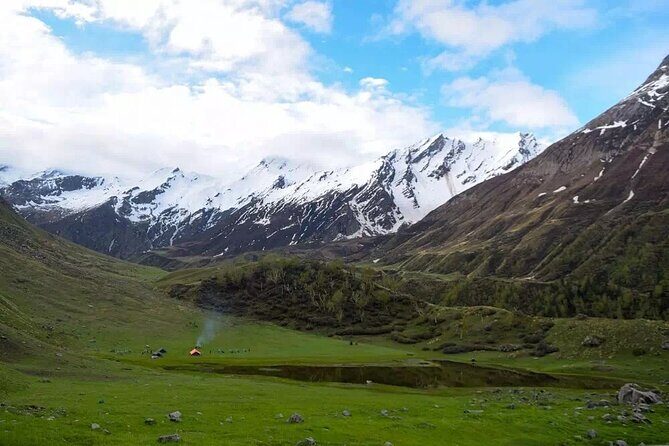
- A true altitude climb: maximum pass height about 4,900m (16,080 feet), with big net gain over a few days.
- Difficult rating for a reason: 66 km total, 6 to 7 days hiking, plus a technical-style pass crossing.
- Camping made practical: clean mats, sleeping bags, tents, kitchen and dining tents, and real kitchen support.
- Gear included for cold traction: micro Spikes and gaiters help on icy or slushy sections you might face.
- Named guides in the mix: the operator’s staff and leaders you may be guided by include Rana, Suresh Chauhan, Subodh, Surendra, and Sumit.
- Holy Yamunotri at the finish stretch: a spiritual stop that breaks up the hardest walking days.
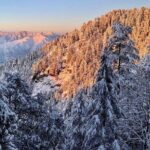
Bali Pass: A peak-like pass at 4,900m
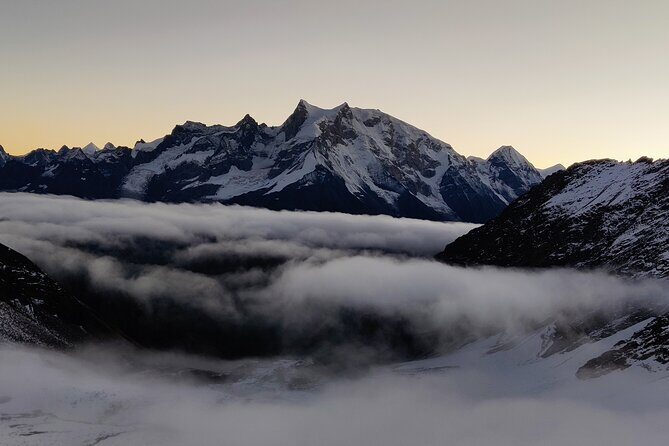
Let’s talk altitude plainly, because it’s the whole story here. Bali Pass reaches about 4,900m, and the trek starts around Taluka at roughly 2,080m. That’s a net altitude gain close to 2,820m over about five days of climbing. The average works out around 550m a day—enough that you’ll feel it, even if your legs are strong.
What makes Bali Pass interesting (and a little different from a “flat saddle” pass) is how it behaves near the top. Instead of only dropping into a gentle notch between ridges, it rises like a peak, so the final stretch can feel more like a summit day than a simple pass hop. That’s great for the payoff, but it also means your pacing and breath control matter more. If you go out too fast, the pass will remind you.
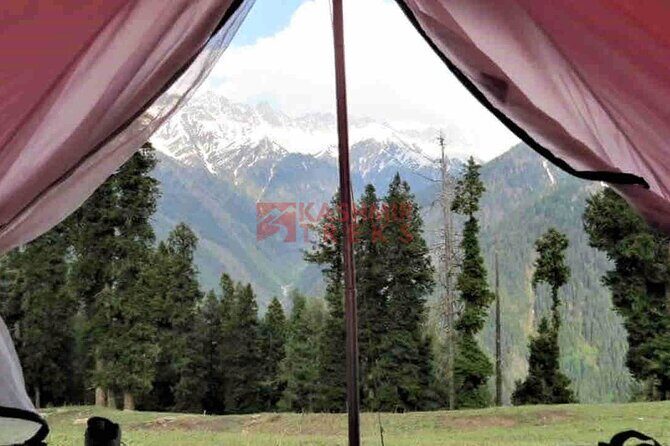
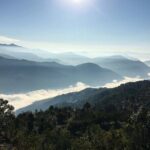
And since you’re surrounded by the Swargarohini and Bandarpunch ranges much of the time, you get constant mountains in your sightline. That’s not just decoration. It helps your navigation and gives you that steady feeling of progressing toward something big. Still, you’re at high elevation, so weather can change how tough each day feels. Cold, wind, and slippery patches are part of the deal on serious treks like this.
Bottom line: if you train and pace, the altitude becomes a challenge you can manage. If you show up expecting a casual hike, Bali Pass will feel harsher than the distance on paper.
You can also read our reviews of more hiking tours in Rishikesh
Route snapshot from Taluka to Janki Chatti
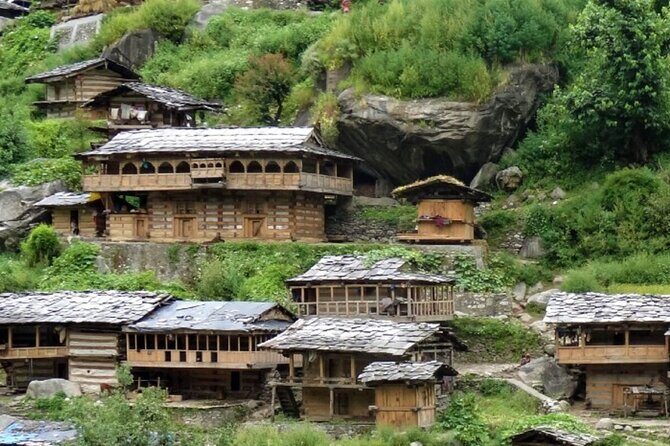
This trek is mapped as about 66 km total, starting from Taluka and finishing at Janki Chatti. The trek is designed so that you’ll spend 6 to 7 days on foot, averaging around 10 km walking per day. That number is helpful because it sets expectations: you’re not looking at 25 km “test days,” but you are walking steadily while gaining height.
You also get a clear rhythm: climb, walk through high meadows, spend time by Ruinsara Lake, cross Bali Pass, then move through the Yamunotri region toward the finish. The route isn’t just point-to-point. It’s built around altitude transitions and scenery changes, which helps psychologically when you’re tired.
Start timing matters too. The experience begins at 7:00am from the Dehradun Train Station area (Lakkhi Bagh, Dehradun, Uttarakhand). That early start is useful on Himalayan treks because it gives you more daylight for easier sections and helps you avoid being caught late if conditions tighten.
Group size stays small. The maximum group size is 11 travelers, which usually means less crowding at campsite setups and a better chance for the guide to manage pacing for different body types.
One more practical note: porters and mule support are included, but they’re meant for camping equipment, not your personal luggage. So you’ll still need to travel with smart weight in your own load plan, even if the big bulky camping stuff is handled for you.
Ruinsara Lake, Devsu Thatch, and Thanga meadows
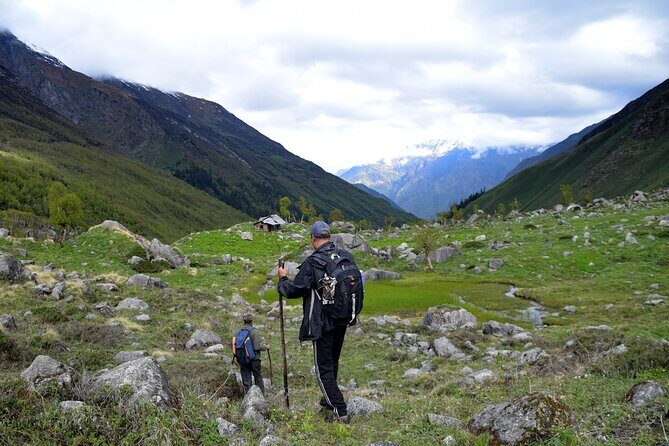
This is the “breather chapter,” but not in a boring way. A day by Ruinsara Lake is a highlight because it gives your brain a rest from constant climbing. When you’re in high country, that matters. Lakes at altitude tend to mean calmer footing for a bit, and they often bring a different kind of quiet that’s hard to get on steeper days.
From there, the trek moves through two meadows—Devsu Thatch and Thanga—and this is where you get some of the most memorable “wide open” walking. Meadows do two useful things on a hard trek:
1) they make the terrain feel less punishing than scree or steep switchbacks, and
2) they give you space to breathe—literally and mentally.
You also get a sense of branching routes. After Ruinsara Lake, the trail turns southward toward Yamunotri, while an eastward route continues into the challenging Dhumdhar Kandi area. Even without getting technical here, it signals that this region is about more than just one straight line; it’s a network of valleys and ridges where different variations exist.
If you’re the type who likes to “read” the mountains, these meadow days help you do that. You can see ridges and understand how your eventual pass crossing fits into the bigger picture. And if you’re traveling with someone who’s nervous about Bali Pass, these calmer scenic sections are often where confidence returns.
Small consideration: meadow walking can still be tiring at altitude. Open areas can be windy and cold, and the ground may not be as easy as it looks. Dress for weather, not just sunshine.
Crossing the Bali Pass: timing, traction, and the summit-like feeling
Now the main event: the Bali Pass crossing. The trek description emphasizes that it’s not just a saddle-style crossing. It “rises like a peak,” giving you that summit-style sensation near the top. That matters because it changes how you manage your final push.
You’ll want to treat this like a longer-than-it-looks climb at altitude. Even though the daily hiking distance averages about 10 km, the pass itself is where time and energy can disappear fast—mostly due to breathing rate and fatigue, not only leg strength.
This is also where the included gear becomes a big deal. The trek provides gaiters and microspikes. On a high pass, traction is the difference between steady steps and slide-practice. If you’re new to using microspikes, don’t guess—ask your guide how they want them fitted and when to put them on.
Weather is the other variable. The experience notes that it requires good weather. That’s not a generic warning. In the Himalaya, “good weather” often means you’ll still face cold and wind, but it won’t be unsafe to climb or descend. If conditions aren’t right, timing and footing become risky quickly.
What you’re aiming for, reward-wise, is big. You’re also looking at major peaks in the region, including Kalanag (Black Peak) and the Swargarohini range. Kalanag is noted at about 6,387 meters, so even if you’re not climbing it, seeing it from high passes and ridges is the kind of perspective shift you remember for years.
How to make it feel easier: go slow early on the pass approach. Save some breath for the top stretch. This is one of those days where you win by finishing strong, not by proving speed.
Yamunotri and the surrounding peaks: Dhumdhar Kandi, Harsil, and glacier views
After Bali Pass, the trek doesn’t just drop you back into low-elevation life. You keep moving through high-country variations and viewpoints.
One of the described highlights is the Dhumdhar Kandi area, a challenging route that goes to Harsil and shares the base camp area connected to Black Peak. Even if you don’t spend every minute chasing technical lines, you’ll feel like you’re walking inside the same world as major Himalayan routes—steep walls, big ridges, and that “how did humans agree to do this?” feeling.
Near the end, you get a chance to see Bandarpunch Glacier and Saptrishi Kund. Glacier views in the Himalaya have a special effect: they make the whole altitude thing feel real. You’re no longer just hiking to a number on a chart. You’re seeing the “source” of the valley’s water and the raw scale of the range.
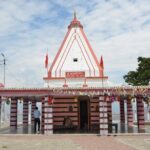
And then there’s the holy temple of Yamunotri, which the trek includes as an opportunity later in the itinerary stretch. This is more than sightseeing. It gives you a cultural and spiritual reset after hard days of cold air and focused footsteps. If you’ve been watching your breathing all week, walking into a temple space where people move with different kinds of attention can feel like a deep exhale.
Practical takeaway: expect that some days after the pass may feel mentally different, even if the walking continues. You may find motivation comes from these landmarks. Keep your pace steady; don’t let the excitement of the finish make you rush down tricky terrain.


Camping comfort and included meals that actually help
A difficult trek can be tough in two ways: the physical effort, and the “system” that supports you. This trek supports you in the practical way that matters—sleep, food, and basic warmth.
Meals are included for most of the trekking days:
- 8 breakfasts
- 7 lunches
- 8 dinners
- 8 tea and snacks
That’s useful because it reduces decision fatigue. You’re not trying to hunt food while dehydrated and tired. Tea and snacks also act like small checkpoints, which helps when you’re managing energy on altitude days.
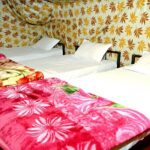
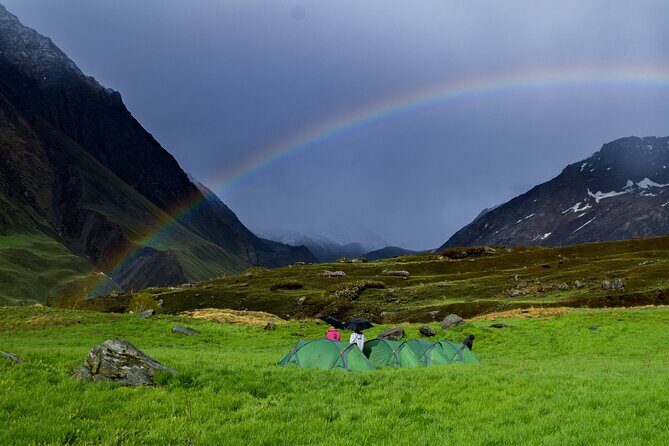
Sleep setup is included too: clean sleeping bags and mats, plus good quality A-shaped or dome tents. Having a tent that keeps wind off you is a bigger deal than it sounds. On high treks, you don’t just want a roof—you want sleep that doesn’t feel like survival.
There’s also a kitchen tent and dining tent, plus stools and staff. The presence of a cook and support staff matters because it keeps the schedule workable. When the meal timing is consistent, you can plan hydration and recovery better.
What about equipment? Besides microspikes and gaiters, you’re also getting porter and mule support for camping equipment (not personal luggage). So you should pack like your own back is still responsible for your essentials.
One more thing: the operator’s service has a strong reputation in the names that show up in feedback—leaders and guides like Rana, Suresh Chauhan, Subodh, Surendra, Sumit, and chef Ustad Vijay. That’s not just brand talk. It’s a hint that staffing is part of the value here.
Price and value: $374 plus the costs you should plan for
At $374 per person, this trek is priced like a serious supported Himalayan trek rather than a budget “rough it” adventure. The value is best understood by what you’re not paying separately.
You’re getting:
- most meals and tea/snacks
- tents, mats, sleeping bags
- a professional guide, cook, and support staff
- porter/mule support for camp equipment
- microspikes and gaiters
- accommodation from the first day to the second last day on double/triple sharing
- forest entry charges for Indian nationals
But you should plan for the add-ons, because they can change the true total:
- Insurance is listed as compulsory at INR 1,050 per person
- If you use a buffer day, it’s an extra INR 2,000 per person
- Personal baggage offload charges are INR 450 per bag per day (up to 12 kg)
- Forest entry charges for non-Indian nationals are INR 1,000
That’s the honest part: your base price isn’t the whole bill. Still, the trek includes a lot of the “big ticket” logistics: food, shelter, guide time, and the specialized traction gear. For a high pass at near 5,000m, that kind of support often makes the difference between managing the climb and thinking about it nonstop.
If you want good value, match your expectations. This isn’t the deal for someone who wants luxury. It is a good deal for someone who wants smart support—and is willing to train.
Who should book (and who should skip) Bali Pass
This trek is labeled difficult for a reason: distance plus altitude plus pass crossing. The trek states you should start physical preparation at least 1 month prior. That means you’ll do best if you can commit to workouts now—not just a few weekend hikes.
You’ll likely enjoy this if:
- you want a challenging Himalayan pass with a real summit-like moment
- you like long views and high-country walking more than short photo stops
- you prefer a guided setup with small group size (max 11)
- you can pace yourself through altitude
You should think twice if:
- you haven’t done serious cardio and leg strength training
- you hate cold, because high passes and weather swings are real
- you’re expecting easy walking every day just because the average distance is about 10 km
A final practical tip: altitude makes your body slow down. That’s normal. If you can accept a slower pace and focus on steady breath, Bali Pass becomes an achievement you can feel, not a battle you dread.
Should you book Bali Pass with Himalaya Shelter?
If you’re choosing between a gentle trek and a real challenge, Bali Pass is the one you book when you’re ready to train and respect altitude. I’d especially recommend it if you value included traction gear, structured meals, and a small group with a professional guide. The presence of experienced leaders in the team names—like Rana and Suresh Chauhan—also points to a crew that understands how to keep people comfortable and moving.
Skip it if you’re still building fitness or you want a low-stress itinerary. This trek can’t be “winged.” But if you prepare for the climb and plan for added costs like compulsory insurance, you’re buying a proper Himalayan high pass adventure—one with meadows, lakes, glacier views, and the Yamunotri temple to close the loop.
FAQ
What is the maximum altitude on the Bali Pass trek?
The pass has a maximum height of about 16,080 feet (4,900 meters).
How long is the trek, and how many days do you walk?
The total duration is about 9 days. On foot, it takes about 6 to 7 days to complete the trek.
What is the total distance covered?
The trek covers about 66 km in total, starting from Taluka and ending at Janki Chatti.
Where does the trek start, and what time does it begin?
The meeting point is Dehradun Train Station area (Lakkhi Bagh, Dehradun). Start time is 7:00 am.
What walking distance should I expect each day?
You’ll average around 10 km of walking per day.
What’s included in the price?
Included are meals (breakfast, lunch, dinner, plus tea and snacks), clean sleeping bags and mats, A-shaped or dome tents, dining and kitchen tents, camping stools, gaiters and microspikes, porter and mule support for camping equipment, a professional guide, cook and support staff, and accommodations on a double/triple sharing basis for the first day through the second last day.
Is insurance included?
No. Insurance is listed as compulsory at INR 1,050 per person.
Are forest entry charges included?
Forest entry charges are included for Indian nationals. For non-Indian nationals, forest entry charges are INR 1,000.
What group size should I expect?
The maximum group size is 11 travelers.