REVIEW · NEW DELHI
4 Days Private Golden Triange Tour to Agra and Jaipur from Delhi
Book on Viator →Operated by Indo Routes · Bookable on Viator
Delhi to Jaipur in four days can feel like a sprint. This private Golden Triangle tour keeps it fun with sunrise Taj Mahal, a licensed guide who explains what you’re seeing, and a comfortable private ride between stops. You also get a smart mix of major monuments and photo-friendly moments across Delhi, Agra, and Jaipur, built around eight UNESCO World Heritage sites.
I especially like the way the day is structured around the big hitters: a 5:00 am Taj Mahal visit with your guide and an early-start itinerary that helps you beat the worst crowds. I also like the practical comfort perks—an air-conditioned private car, a professional driver, and a promise of clean and sanitized vehicles after travel. One consideration: entrance fees are not included, and the estimate is about USD 45 per person across the monuments.
Because it’s private, you’ll move with only your group (not a mixed crowd), and the plan includes pickup and drop-off plus 3 breakfasts. For first-time visitors to India’s north, it’s a strong way to see the big monuments without feeling lost on logistics.
In This Review
- Key things that make this tour worth your attention
- A four-day Golden Triangle pace you can actually handle
- Delhi day: India Gate, Qutub Minar, Lotus Temple, Akshardham, Raj Ghat
- Sunrise at the Taj Mahal: why a guide makes it click
- Agra fort, Baby Taj, and Fatehpur Sikri in one strong history arc
- Jaipur highlights: City Palace, Hawa Mahal, Jantar Mantar, Jal Mahal, Albert Hall
- Price and what you get for $226.66 per person
- Practical tips that match this exact schedule
- Who this tour fits best
- Should you book this private Golden Triangle tour?
- FAQ
- What is the duration of this private Golden Triangle tour?
- Is hotel or airport pickup and drop-off included?
- Are entrance fees included in the price?
- What time is the Taj Mahal visit scheduled?
- What type of car will we use on the tour?
- Can I get a full refund if I cancel?
Key things that make this tour worth your attention

- Sunrise Taj Mahal timing at about 5:00 am with guided explanations
- Licensed guide insights so the monuments make sense beyond photos
- Private, air-conditioned transportation with professional driver and parking handled
- Clean and sanitized car routine after each travel stretch
- Eight UNESCO World Heritage sites worked into the Delhi–Agra–Jaipur loop
- Included comforts like mineral water in the car and seasonal snacks during travel
A four-day Golden Triangle pace you can actually handle
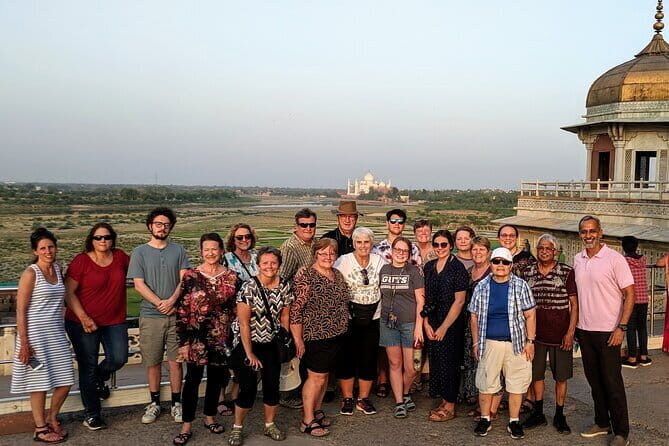
This itinerary is built for people who want the highlights without turning the trip into a series of rushed photo stops. You’re traveling the distance between Delhi, Agra, and Jaipur by private air-conditioned car, so you’re not waiting around for shuttles or guessing transit times. The driver is also part of the value here: you’re not just buying a ride, you’re getting someone used to moving between these cities smoothly.
The timing matters. The tour’s biggest moment is locked in early—your Taj Mahal experience starts at around 5:00 am, when the day is still fresh and the monument experience feels more intentional. Then the rest of the days keep a realistic rhythm: walk-and-look periods at key sites, plus enough structure that you’re not stuck figuring out what comes next.
If you like to read a little on your own before a trip, this style still works. But if you prefer to show up and have the story explained as you go, the licensed guide format is the backbone of the whole experience.
You can also read our reviews of more private tours in New Delhi


Delhi day: India Gate, Qutub Minar, Lotus Temple, Akshardham, Raj Ghat
Your first day in Delhi blends classic landmarks with a couple of standout modern-spiritual stops, which is a smart way to avoid getting monument-fatigue too early.
Start with India Gate, the war memorial near Rajpath. It’s quick, around 30 minutes, and it sets a tone for modern Indian history and remembrance—useful context before you shift into older architecture later.
Then comes Qutub Minar, a UNESCO site and a major early landmark of the Delhi Sultanate. The tour calls out its height—about 73 meters—and the fact it was constructed by Qutub-ud-din Aibak in 1193. If you’re the type who wonders why a site matters, this is the day’s first clear “why” moment.
Lotus Temple follows, about an hour. It’s famous for its flower-like design and its modern date (built in 1986), which gives your sightseeing mix a nice contrast. It’s not the oldest thing you’ll see on the trip, but it’s striking and helps break up the heavier fort-and-palace vibe.
Next, you get Sansad Bhawan (Parliament House), designed by British architects Sir Edwin Lutyens and Sir Herbert Baker and built in 1927. Even if you’re not spending time reading plaques, it’s one of those stops that helps you understand how Delhi’s civic architecture layers eras.
You also visit Swaminarayan Akshardham, a spiritual and cultural campus with Hindu temple architecture and exhibitions focused on traditional and modern Hindu culture. Admission is listed as free in this tour. This stop is a good fit if you like architecture plus atmosphere, not just monuments.
Finally, you end at Raj Ghat, the marble platform memorial for Mohandas Karamchand Gandhi. It’s only about 30 minutes, but it’s a calm landing after the busier sights of the day.
Practical consideration for Delhi day: not every Delhi stop is UNESCO. That’s not a problem—the tour is still valuable—but if your main goal is strictly UNESCO sites, plan to treat the non-UNESCO stops as context and pacing tools rather than “extra.”
Sunrise at the Taj Mahal: why a guide makes it click
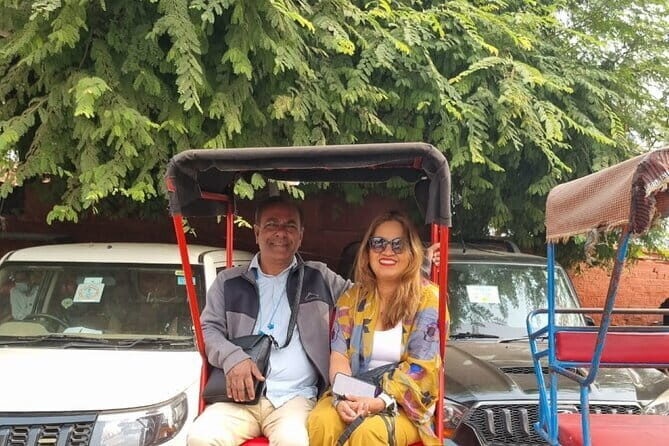
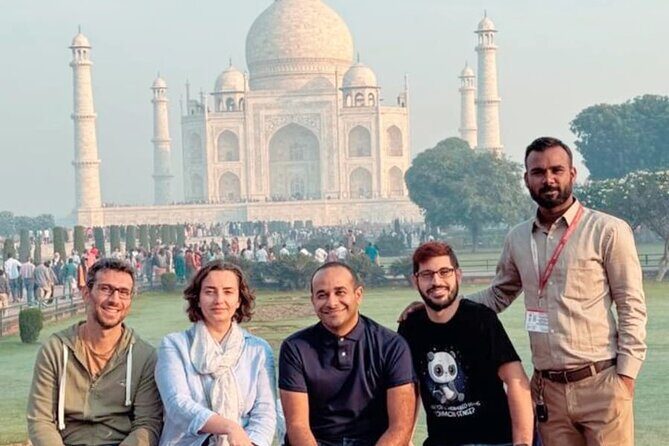
The Taj Mahal visit is scheduled so your day begins early: your driver takes you to the Taj Mahal at about 5:00 am, and that’s when your guide meets you. The tour doesn’t just say you’ll see it—it builds in guided time (about 2 hours) so you understand what you’re looking at.
Here’s the real value of the guide-led format. Even if you’ve seen Taj Mahal photos for years, it’s hard to notice the details that create the illusion and the symmetry unless someone points them out. This tour specifically promises your guide will explain each and everything about the monument, with history and meaning tied to what’s in front of you.
For many people, this is the emotional payoff of the entire Golden Triangle. Starting early helps the experience feel less like a checklist and more like a morning ritual—arrive, focus, and let the monument land before the day gets busy.
One thing to think about: this is a morning start. If you’re someone who hates early wake-ups, you’ll want to mentally accept that Day 2 is built around the early start, while the rest of the schedule is more “normal” by comparison.
Agra fort, Baby Taj, and Fatehpur Sikri in one strong history arc
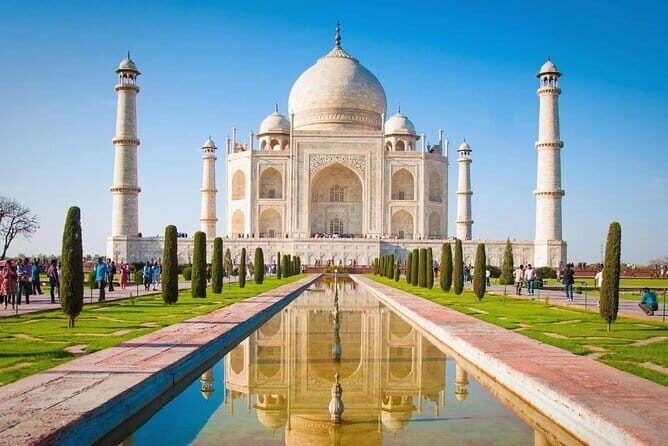
After the Taj Mahal, the tour keeps you in Agra for a deeper historical arc instead of cutting you loose right away.
First is Agra Fort (UNESCO), where you’ll spend about 2 hours. The fort is also known as Agra’s Red Fort, and the tour notes that Mughal emperor Humayun was crowned there. That detail matters because it turns the fort from a pretty mass of walls into a political power stage. Later, the fort was renovated by Mughal emperors, and you’re positioned to see it as a living structure tied to rule, not just stone.
Then comes Itmad-ud-Daula, often called the Baby Taj. You get about an hour at this Mughal mausoleum. The tour describes it as a “jewel box” and notes it’s often regarded as a draft of the Taj Mahal. That framing is useful. Instead of treating it as an extra stop, you’ll likely find it helps you compare how Mughal aesthetics evolve—especially since this tour keeps your time tight enough that the comparisons are fresh.
Next is Fatehpur Sikri, about 1 hour 30 minutes, listed as free on this itinerary. The tour explains the core story: Akbar founded it as the Mughal capital in 1571, and it served as capital until 1585 before being abandoned later. This is exactly the kind of stop where a guided explanation helps, because the site’s grandeur is easier to appreciate when you know it was once an active imperial center rather than a “ruins museum.”
How to get the most from Agra + Fatehpur Sikri: treat this block like a single lesson in Mughal ambition and aftermath. Taj Mahal gives you the peak of aesthetic power; Agra Fort shows political dominance; Itmad-ud-Daula adds an intermediate artistic milestone; Fatehpur Sikri offers the story of why great cities don’t always last.
Jaipur highlights: City Palace, Hawa Mahal, Jantar Mantar, Jal Mahal, Albert Hall

Jaipur day is where the tour shifts from Mughal stone to Rajput-era flair, plus a science-minded stop that many people miss on first trips.
You start with City Palace inside the walled city. The tour frames it as a blend of Mughal and Rajput architecture conceived and built by Maharaja Sawai Jai Singh II. You’ll get about 2 hours, and it’s a strong choice because a palace complex helps you understand how royalty lived, not just how they built.
Then you head to Hawa Mahal, the Palace of Breeze, for about 30 minutes. The tour includes a couple of specific points: it’s a five-storey building, and it’s considered the tallest building built without a foundation (as stated in the tour details). It also mentions an angled design leaning at about 87 degrees and a pyramidal shape. Even in a short time, these facts help you “read” the building rather than just admire it.
Next comes Jantar Mantar, Jaipur’s observatory, about 1 hour. This stop is quietly excellent because it’s not only architecture—it’s scientific design. The tour notes there are 13 architectural astronomy instruments, and it connects the site to Maharaja Jai Singh II and his instruments for measuring the harmony of the heavens. If you like clever design and practical engineering, this is one of the most rewarding stops on the whole trip.
For a lighter pause, you visit Jal Mahal, the water palace. It’s about 30 minutes and specifically called out as a popular photography spot. Admission is listed as free, which is always a nice bonus on a tour with many paid sights.
Finally, you end at Albert Hall Museum for about 1 hour. The tour calls out a wide range of artifacts, including paintings, jewelry, carpets, and works in crystal, plus coins from multiple historical periods. Even if you’re not a museum person, this stop helps you understand Jaipur beyond monuments—how material culture shows the city’s long timeline.
A few more New Delhi tours and experiences worth a look




Price and what you get for $226.66 per person
The published price is $226.66 per person for roughly four days. On paper, that can look like a small number for a multi-city private itinerary—and the key is what’s included.
You’re getting a private air-conditioned car, a professional driver, parking fees, fuel surcharge, and GST. You also get hotel or airport pick-up and drop-off, plus 3 breakfasts. There are comfort add-ons too: mineral water in the car, and seasonal fruits/biscuits/cookies during intercity travel. Add in the “personal care and attention” from an office representative across Delhi, Agra, and Jaipur, and you’re paying for more than sightseeing—you’re paying for reduced stress.
What’s not included is entrance fees, estimated at about USD 45 per person. Since many of your major stops are major-ticket UNESCO sites and palaces, this is the one cost you should budget for before you go. If you’d rather not think about that math during the trip, you can plan to carry extra cash/card for tickets.
Is it good value? For me, the value hinges on two things: the Taj Mahal sunrise with a guide and the private car handling the movement between cities. If you’d otherwise book separate guides or taxis, the bundled structure becomes much more appealing.
Practical tips that match this exact schedule
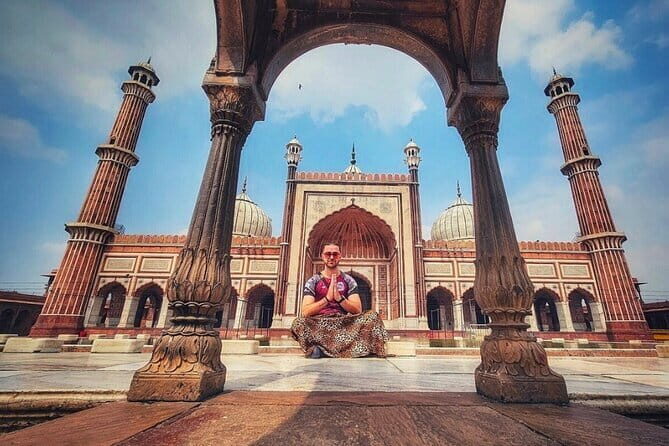
Here are the “make it work” notes that come straight from how this tour runs:
- Start time matters. Your Taj Mahal day begins with a drive to the monument at about 5:00 am. That’s not a guess—you’ll need to be ready for an early morning.
- Ticket budget: entrance fees are not included, estimated around USD 45 per person. If you like to avoid surprises, plan that amount early.
- Private car size changes. For 1–2 people, you get a four-seater sedan. 3–4 people use a six-seater Innova. 5–10 travelers go in an 11-seater Tempo Traveller/van. This matters for comfort and luggage room.
- You get 3 breakfasts. Make sure you time your mornings around that included meal so you don’t fight your schedule.
- Cars are cleaned between travel stretches. The tour states vehicles are cleaned and sanitized after each travel, which is a big deal on a route that includes long drives.
If you want the trip to feel personal, use the private format. Even when the itinerary is structured, you’ll get more flexibility than you would on a bus group day—because your group is the only one in the car.
Who this tour fits best
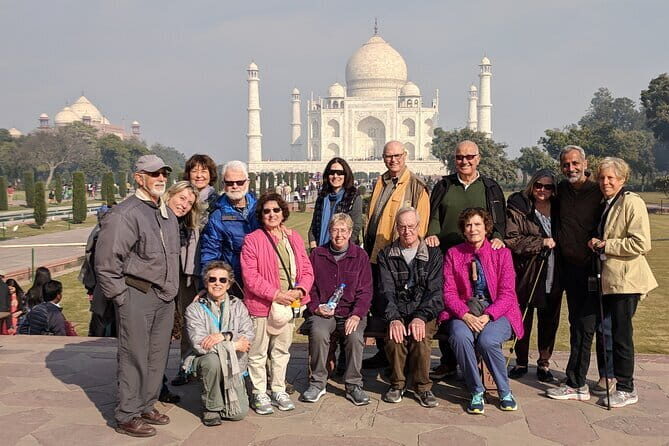
This Golden Triangle style is a good match if you:
- Want a first-time-friendly route with famous stops you can’t easily piece together yourself
- Like having someone explain context, not just point at buildings
- Travel with a partner or small group and want a private car through Delhi, Agra, and Jaipur
It’s also a solid choice if you care about getting the Taj Mahal experience right, because sunrise timing and guide interpretation are built into the plan.
If you’re the kind of traveler who wants to wander without structure for hours, you might find the fixed schedule limits your freedom. Still, the stops are long enough to feel real, not rushed.
Should you book this private Golden Triangle tour?
I’d book it if your priorities are sunrise Taj Mahal, a guide who helps you understand what you’re seeing, and low-stress transportation between Delhi, Agra, and Jaipur. The private structure, included driver and car costs, and the fact that you’re also visiting major architecture like Qutub Minar, Agra Fort, Fatehpur Sikri, and Jantar Mantar make it efficient.
But I would hesitate if you hate early mornings or if you’re sensitive to additional on-the-spot spending for entrance fees (estimated around USD 45 per person). If those two points are fine for you, this tour’s value is strong: you’re buying an organized, private way to hit the north’s most famous sights with context—not just selfies on the run.
FAQ
What is the duration of this private Golden Triangle tour?
It runs for about 4 days.
Is hotel or airport pickup and drop-off included?
Yes. Hotel or airport pick-up and drop-off is included.
Are entrance fees included in the price?
No. Entrance fees are not included and are estimated at about USD 45 per person.
What time is the Taj Mahal visit scheduled?
You’re taken to the Taj Mahal at about 5:00 am for the sunrise experience.
What type of car will we use on the tour?
Car type depends on group size: a four-seater sedan for 1–2 people, a six-seater Innova for 3–4 people, and an 11-seater Tempo Traveller/van for 5–10 people.
Can I get a full refund if I cancel?
Yes. You can cancel up to 6 days in advance for a full refund, as long as you cancel at least 6 full days before the experience starts.