REVIEW · INDORE
Mandu Full Day Tour From Indore
Book on Viator →Operated by TOP TRAVEL AND TOURS PVT LTD. · Bookable on Viator
Mandu feels like a movie set in stone. This private full-day plan helps you cover the core Indo-Islamic sights with a guide, plus private transport so you are not wrestling cabs and bus schedules. I especially like the ship-like Jahaz Mahal setting between Munj Talao and Kapur, and I like how the route strings together palace, mosque, waterworks, and hill viewpoints without wasting time. One thing to plan for: monument entry fees are not included, so your total cost depends on what tickets you buy on-site.
Mandu is about 75 km from Indore (roughly a 2-hour drive), and the trip works best when you go in with realistic expectations. If you want to linger for hours per complex, this day tour can feel a bit like a highlight reel. Still, it is a strong way to get the geography, architecture, and names down fast.
In This Review
- Key things to know before you go
- Mandu in a day: what this full-day plan is really good at
- Price and logistics: what you pay for, and what you still need to cover
- Getting to Mandu from Indore: drive time you can plan around
- Stop 1: Jahaz Mahal, the ship-palace between Munj Talao and Kapur
- Stop 2: Hindola Mahal, the swing-style audience hall
- Stop 3: Jami Masjid and the Damascus-style influence
- Stop 4: Rewa Kund, the reservoir with a purpose
- Stop 5: Baz Bahadur’s Palace, courtyard life and terrace views
- Stop 6: Rani Roopmati Pavilion, an observation post with two pavilions
- How much time do you really need at Mandu?
- What kind of traveler should book this?
- Extra tips that make the day smoother
- Should you book this Mandu full-day tour from Indore?
- FAQ
- How long is the Mandu full-day tour from Indore?
- What is included in the tour price?
- Are monument entrance fees included?
- Do I get pickup and drop-off?
- Is this tour private?
- What is the cancellation policy?
Key things to know before you go
- Private car all day: You get an AC vehicle for the full route, plus hotel pickup and drop in Indore.
- A guide changes everything: You are not just looking at ruins; you are getting the story behind places like Jahaz Mahal and Hindola Mahal.
- Most stops are short: After Jahaz Mahal, most sights are around 30 minutes, so wear shoes you can walk in.
- Entry fees are extra: Expect to pay on-site (listed as about $6.02 per person, approximate).
- Weather matters: Plan for Nov–Feb if you can; Mandu can be less pleasant outside that window.
- Good for first-timers: If you have never been to Mandu, this is a fast and organized on-ramp.
Mandu in a day: what this full-day plan is really good at
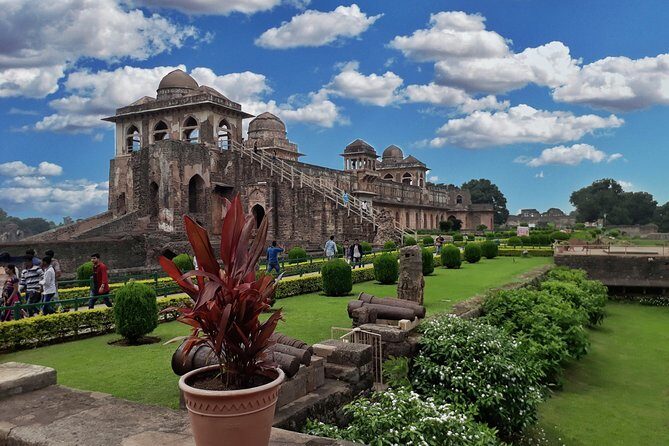
Mandu (also called Mandav in some contexts) sits in central India with thick stone walls and gateways, and it carries an Afghan-influenced architectural streak you can actually see in the details. The big challenge is time. Going on your own means you spend more effort on navigation and deciding what matters.
This tour is designed to solve that. You get a guide at Mandu who helps you connect the dots between the main forts and monuments, and you move in a private vehicle so the day stays efficient. It runs about 10 hours, which is a sensible length for a day trip from Indore without turning your outing into a marathon.
You can also read our reviews of more tours and experiences in Indore.

Price and logistics: what you pay for, and what you still need to cover
The price is $109 per person for a private full-day outing from Indore. That is not cheap, but you are paying for three things that matter in Mandu: a driver-led schedule, an English-speaking guide, and dedicated time at key sites.
Here is what your money covers (from the tour inclusions):
- Private AC vehicle for the day
- Pickup and drop at Indore city hotels
- English-speaking guide at Mandu
- 1 liter mineral water bottle per person
- Taxes included
- Mobile ticket
What is not included:
- Monument entry fees at the sites, listed as about $6.02 per person (approximate and subject to change)
- Tips and gratuities (optional, based on service)
For value, I think the math works best if you are traveling as a couple or small group. A private guide and car on a day trip like this saves you from the time drain of figuring out where to go next.
Getting to Mandu from Indore: drive time you can plan around
Mandu is around 75 km from Indore and typically takes about 2 hours by road. That timing is a real part of the experience, because your schedule depends on the drive both ways.
Road conditions are generally reported as good, and there are said to be two routes people commonly use. That is comforting: you are not crossing into a trip that feels like it could get derailed by a rough road. Still, build in patience and keep your first stop flexible in your mind—on a one-day plan, the day lives and dies by timing.
Stop 1: Jahaz Mahal, the ship-palace between Munj Talao and Kapur
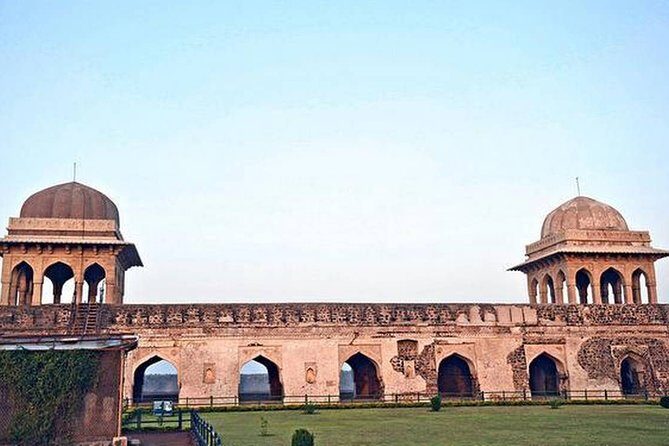
Jahaz Mahal is the big reason most people come to Mandu. It is called the ship palace because of its ship-like architecture, and it sits long and dramatic—around 120 meters—between two artificial lakes: Munj Talao and Kapur.
The guide focus here is worth it. Without context, Jahaz Mahal can look like one more impressive ruin. With context, you notice how it was built as an elegant, two-storeyed palace, and you understand why it is tied to the court culture of the period. The site is associated with Sultan Ghiyas-ud-din Khilji, and the palace is linked to his large harem. You also get the sense of how the water and the architecture worked together to create a controlled, formal world—something you feel when you walk around the complex.
You get about 2 hours at this first stop. That is the right amount of time if you want more than a photo sprint. If you are the kind of person who can spend time reading carvings, scanning layouts, and comparing viewpoints, you will appreciate that this is not just a 20-minute stop.
A practical note: take your time on the outer areas and approach angles. Jahaz Mahal is visually satisfying from multiple perspectives, and the lakes help create the illusion that the building is floating or traveling.
Stop 2: Hindola Mahal, the swing-style audience hall
Next up is Hindola Mahal—the Swing Palace. The name comes from the way parts of the structure slope, creating the impression of swinging architecture.
It is described as an audience hall connected to Ghiyas-ud-din’s reign. What I find useful here is that Hindola Mahal teaches you how creative builders were with geometry and façade design. Even if you are not a specialist in architecture, you start noticing that Mandu is not just about big domes and grand arches. It is also about clever design choices that look intentional from the right angles.
Time on this stop is about 30 minutes. That is enough to see the front and understand the naming logic, but not enough to wander for hours. Treat it like a quick lesson stop. If you want more time at Hindola Mahal, you would need a longer Mandu stay.

Stop 3: Jami Masjid and the Damascus-style influence
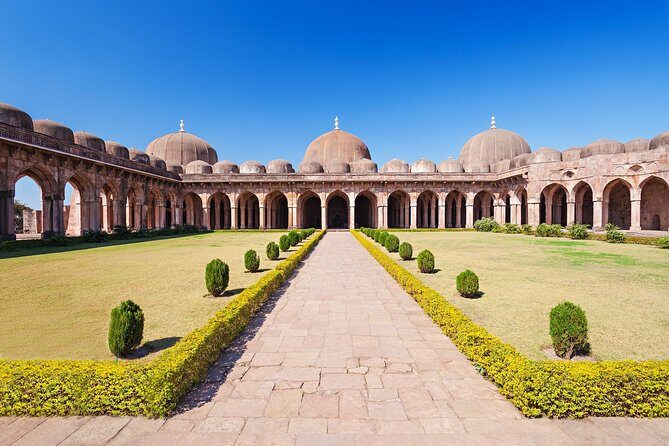
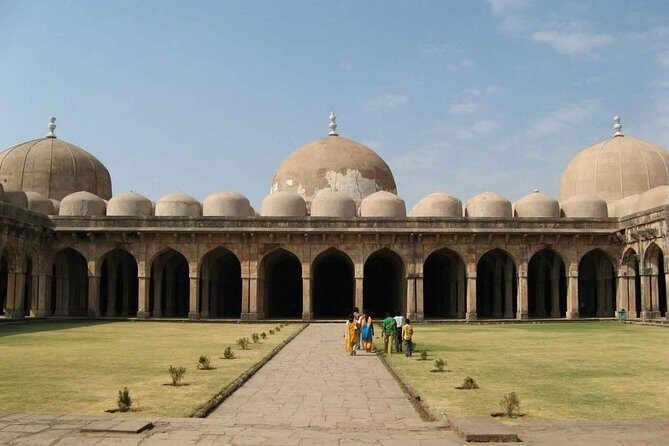
Then you hit Jami Masjid. This mosque is inspired by the great mosque of Damascus, and you can feel the scale emphasis. It is set on a high plinth with a huge domed porch projecting in the center.
Mosques can blend together when you are rushing. With only one day, the guide’s role matters because you want to know what you are looking at: what makes this mosque feel like it belongs to a broader Indo-Islamic design language, and how the structure uses platform and porch to create an imposing front.
The visit window is about 30 minutes. That means your best strategy is to pause early, orient yourself, then look up and around. Focus on the porch shape and overall proportions before you start searching for smaller details.
Stop 4: Rewa Kund, the reservoir with a purpose
Rewa Kund is a reservoir built by Baz Bahadur, and it came with an aqueduct meant to supply water to Roopmati’s palace. Today the water reservoir is revered as a sacred spot.
This stop is short—about 30 minutes—but it is one of those places that makes Mandu feel practical, not just ceremonial. The point is infrastructure. People needed water for palaces and daily life, and builders engineered it into the layout. The aqueduct idea also helps you connect the landscape design: Mandu’s monuments were not placed randomly. They were planned systems.
If you like to understand how old places worked day to day, Rewa Kund is a nice breather. It shifts your attention from domes and courtyards to water management and sacred use.
Stop 5: Baz Bahadur’s Palace, courtyard life and terrace views
Baz Bahadur’s palace is an early 16th-century complex built around a spacious courtyard, with halls and high terraces.
What makes this palace feel different is how it is framed for views. Terraces are positioned so you can see the countryside around Mandu, so you are not stuck staring at walls. This is one of the stops where a guide helps you move efficiently—because you want to hit the viewpoints in the time you have.
Time here is again about 30 minutes. That is enough to walk the courtyard edges and catch the main terrace angles, but not enough to take in every nook. If you are the type who wants to linger, you will want a plan B: either a two-day Mandu trip or a slower day with fewer stops.
Stop 6: Rani Roopmati Pavilion, an observation post with two pavilions
The final highlight is Rani Roopmati Pavilion. This structure originally served as an army observation post. Today it is perched on a hilltop, and it is described as graceful, with two pavilions.
It also functions in the story as Roopmati’s retreat. The key detail is the sightline: from here, she could see Baz Bahadur’s Palace. That connection matters because it ties the hilltop to the palace below—not just as a view, but as a designed relationship between locations.
You get about 30 minutes at this stop. It is a great place to slow down and look around. Your eyes will naturally find the palace relationship, and even if the monuments are not all in one perfect frame, you still understand the strategy behind the placement.
How much time do you really need at Mandu?
A day trip can work well if you want to hit the main monuments and understand what they mean. But Mandu is big enough that it can reward a slower pace.
One thing I would take seriously: people often say ruins at Mandu are worth more than one day, especially if you care about architecture details. Jahaz Mahal, in particular, can take longer than you expect because it contains so many buildings and angles worth noticing. In other words, the longer your attention spans run, the more you might feel rushed during a 10-hour plan.
My practical advice: treat this itinerary as a first taste plus an education. If you fall for the place, plan a second visit on another trip and allocate time to the complexes rather than the clock.
What kind of traveler should book this?
This private full-day tour is best for:
- You want to see the key Mandu monuments without navigating on your own.
- You like having a guide to explain naming, function, and layout.
- You care about comfort on the road: pickup, private AC vehicle, and scheduled stops.
- You are visiting Mandu for the first time and want a structured route.
It may not be the best fit if:
- You want hours and hours at a single complex. The itinerary after Jahaz Mahal moves quickly.
- You prefer totally unstructured exploring where you can roam and extend without worrying about the next stop.
Extra tips that make the day smoother
These are the small things that help you enjoy the ruins instead of thinking about logistics:
- Bring comfortable walking shoes. The day includes multiple monument complexes and uneven surfaces at historic sites.
- Wear sun protection if you visit outside the cool-season window. Even with a guide schedule, you will be outdoors.
- Plan to budget for entry fees on-site, since that is the only major extra cost besides optional tips.
- If you are traveling as a group, ask about the group discount. The tour description mentions group discounts, and that can improve value fast.
Also, remember that Mandu is about atmosphere as much as monuments. The walls, gateways, and architectural influences shape the mood. You feel that more when you pause instead of sprinting between stops.
Should you book this Mandu full-day tour from Indore?
Book it if you want Mandu to feel organized, readable, and not stressful. The combination of private transport, an English-speaking guide, and a stop list focused on recognizable, major sites is exactly what you want on a one-day visit from Indore. The price makes more sense when you compare it to the cost of entry time plus the value of having someone handle the route and explanations.
Skip or consider changing your plan if you know you will want to linger for hours at Jahaz Mahal and similar complexes. In that case, Mandu may be better over two days so you can slow down and let the details land.
If your goal is a first visit that gives you the names, the logic, and the standout architecture, this full-day private tour is a strong pick.
FAQ
How long is the Mandu full-day tour from Indore?
The tour is listed at about 10 hours.
What is included in the tour price?
It includes private AC vehicle transport, pickup and drop from Indore city hotels, an English-speaking guide at Mandu, 1 liter mineral water per person, and all applicable taxes. Monument entry fees are not included.
Are monument entrance fees included?
No. Entrance fees are charged directly at the site (listed as about $6.02 per person, approximate).
Do I get pickup and drop-off?
Yes. Pickup and drop-off are included for Indore city hotels. The overview also mentions airport or station pickup and drop-off.
Is this tour private?
Yes. It is a private tour/activity, and only your group participates.
What is the cancellation policy?
You can cancel for a full refund up to 24 hours in advance of the experience start time. If you cancel less than 24 hours before, the amount paid is not refunded.