REVIEW · NEW DELHI
4 Days Golden Triangle Tour from Delhi
Book on Viator →Operated by Taj Tours India · Bookable on Viator
A tight route. Big moments. This Golden Triangle-style 4-day trip from Delhi is a practical way to hit the major sights of Delhi, Agra, and Jaipur without getting lost in logistics. You’ll start with an airport arrival that includes flower garlands, then you’ll move into Old Delhi, Agra, and finally Jaipur’s famous forts and palaces.
What I like most is how it keeps the days moving with clear guiding and included experiences like a Chandni Chowk rickshaw ride and a sunrise Taj Mahal visit (about 6 a.m.). I also appreciate the small comforts that matter in India—like unlimited bottled water—when you’re doing long drives and walking.
The main drawback to plan for is cost creep: the trip lists “monument entrance fee” as not included, even while many individual stops show tickets as included. So before you go, I’d budget for possible extra site fees and read what’s covered when you book. Also, your hotel category is 3-star, so don’t expect luxury-room polish every day.
In This Review
- Key highlights you’ll actually feel on the ground
- Is $209 for 4 days fair value in India?
- The logistics that matter: timing, travel days, and private-group comfort
- Day 1 in Delhi: the calm landing before the big sightseeing
- Day 2 in Delhi: Old Delhi energy to New Delhi monuments
- Jama Masjid: India’s largest mosque stop
- Chandni Chowk by rickshaw: the shortcut through the crowds
- Raj Ghat: a quiet shift in mood
- Qutub Minar: 12th-century height with skyline views
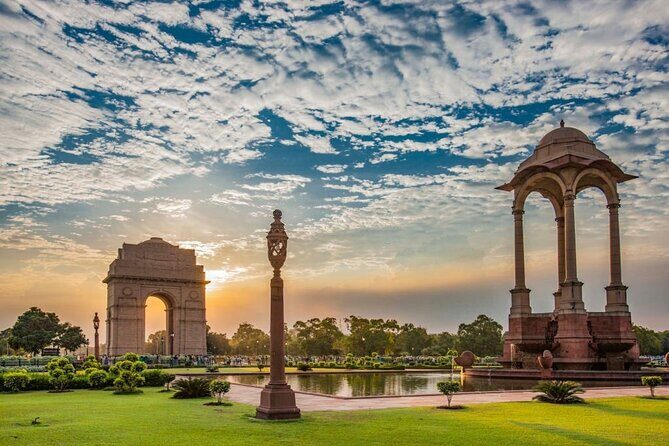
- India Gate and the ceremonial New Delhi core
- Rashtrapati Bhavan and Humayun’s Tomb to end the day
- The Agra overnight: arriving after sightseeing, not before
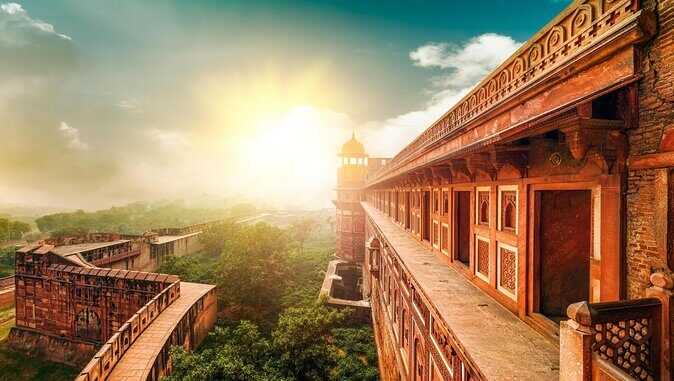
- Day 3 Agra at sunrise: Taj Mahal photos, Agra Fort, and Fatehpur Sikri
- Agra Fort: a rickshaw ride and Mughal power
- Fatehpur Sikri: the red sandstone detour before Jaipur
- Day 4 Jaipur: Amber Fort to Jal Mahal to Hawa Mahal
- Amber Fort: elephant ride option plus palace views
- City Palace: still partly a living royal space
- Jantar Mantar: astronomy made visible
- Jal Mahal photo stop and the lake palace look
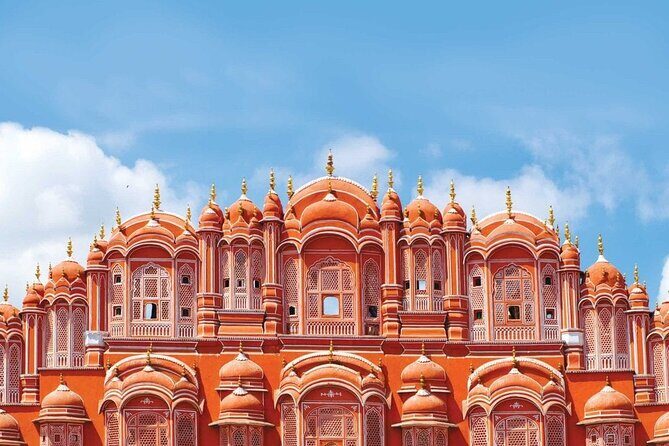
- Hawa Mahal: the wind-catcher facade
- Birla Mandir and Galtaji Temple: religious spots beyond the postcard
- What’s genuinely well done here: service, guides, and getting things right
- Two things to double-check: site fees and elephant-riding expectations
- Who this 4-day Golden Triangle suits best
- Should you book this Golden Triangle tour from Delhi?
- FAQ
- What does the tour include for 4 days?
- Do I get picked up from the airport and where do I get dropped off?
- Are entrance fees included for all monuments?
- What time is the Taj Mahal visit?
- Are meals included besides breakfast?
- Is this tour private or shared with other groups?
Key highlights you’ll actually feel on the ground
- Airport flower-garland welcome and air-conditioned transfer sets a calm start
- Sunrise Taj Mahal timing around 6 a.m. for the best light and a more relaxed feel
- Old Delhi rickshaw through Chandni Chowk after Jama Masjid
- Agra Fort + Fatehpur Sikri as a strong historical one-two punch
- Jaipur’s UNESCO Jantar Mantar plus major palace/fort viewpoints
- Unlimited bottled mineral water to keep you going between stops
Is $209 for 4 days fair value in India?
For four days across three major cities, $209 is a value number if you want the “big hits” covered with transportation and guides handled. What you’re paying for here is the private transportation, the 3 nights in 3-star hotels, and an organized flow between sites so you’re not piecing together rides and tickets yourself.
Two included items quietly save you time and stress. First is breakfast (3 breakfasts total). Second is unlimited bottled mineral water, which sounds small until you’re walking Qutub Minar area heat or sitting in a long car between cities.
The catch is entrances. The package notes that “monuments entrance fee” isn’t included, but the itinerary also marks admission ticket included for many stops. That means the real-world budget can vary depending on which sites your operator includes in your final price. If you want predictability, ask what’s covered for each attraction when you confirm.
A few more New Delhi tours and experiences worth a look

The logistics that matter: timing, travel days, and private-group comfort
This tour is set up as a private tour/activity—meaning you’re not stuck waiting on strangers or getting split into random subgroups. Your ground experience is built around private transport (air-conditioned) plus a government-approved guide at destinations.
You should also expect the classic Golden Triangle rhythm: one big sightseeing day in Delhi, then travel to Agra, then an early Taj day, then all-day Jaipur with multiple photo and fort stops. That works great if you like history and sightseeing, but it’s not the kind of trip where you wander slowly for hours with no schedule.
A practical detail: after the big Delhi sightseeing day, you’ll drive to Agra on the Yamuna Expressway (around 3 hours), then check in for the night. On the final day, you’ll return to Delhi after your Jaipur sights and get dropped at the airport or hotel at your convenience.
Day 1 in Delhi: the calm landing before the big sightseeing
Day 1 is essentially a reset day. You arrive at Indira Gandhi International Airport, get met by a representative with fresh Indian flower garlands, and are taken to your hotel by air-conditioned car. After check-in, you’re done for the day—just the kind of start that helps if you arrive jet-lagged.
This matters because Delhi can feel intense on day one. A low-pressure landing gives you a chance to shower, eat something familiar-ish, and get your bearings before the Old Delhi and New Delhi sightseeing starts the next morning.
Day 2 in Delhi: Old Delhi energy to New Delhi monuments
You’ll start after breakfast with a mix of Old Delhi landmarks and New Delhi government-era sights. The flow is smart: you get the intense crowd-and-market vibe first, then you move toward more monumental, open-space landmarks.
Jama Masjid: India’s largest mosque stop
You’ll visit Jama Masjid, described as India’s largest mosque. It’s an anchor for Old Delhi’s religious and architectural story. Plan for walking around the area and for the fact that this is an active place of worship, so you’ll want to behave respectfully.





Chandni Chowk by rickshaw: the shortcut through the crowds
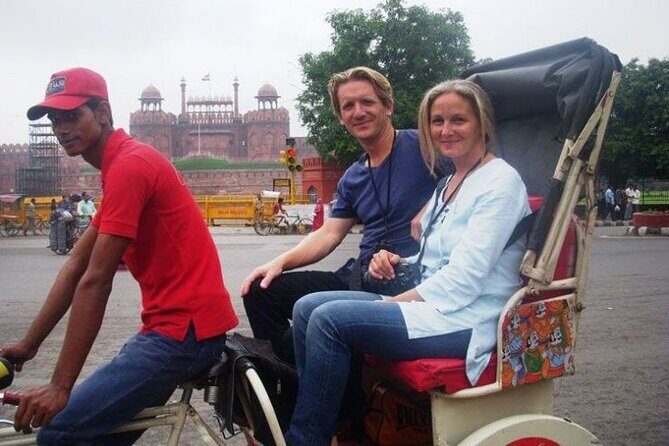
Next comes a rickshaw ride through Chandni Chowk (Silver Street). This is one of those experiences that saves time because your transport slides you through busy streets while still letting you take in the sights. It’s also a good way to understand what makes Old Delhi feel different from New Delhi.
Raj Ghat: a quiet shift in mood
Then you’ll go to Raj Ghat, the cremation site of Mahatma Gandhi on the west bank of the Yamuna. This is a natural emotional pause after the market intensity. Even if you’re not a history-nerd, the place tends to make you slow down.
Qutub Minar: 12th-century height with skyline views
After that, you’ll visit Qutub Minar, a tall minaret at about 72.5 meters, thought to date back to the 1190s and built in connection with the arrival of Muslim rulers. It’s one of Delhi’s most recognizable vertical landmarks, and it works well as a “landmark break” when your legs get tired.
India Gate and the ceremonial New Delhi core
You’ll also see India Gate, a 42-meter-high arch-like monument honoring Indian soldiers who died serving in World War I under the British Army. It’s simple but powerful, and it gives you a sense of how New Delhi organizes space around major axes.
Rashtrapati Bhavan and Humayun’s Tomb to end the day
You’ll pass by Rashtrapati Bhavan, the official residence of the President of India, and then visit Humayun’s Tomb, completed in 1565 by Bega Begam. The garden layout (the chahar bagh style with paths and water channels) gives you a different kind of Mughal architecture: more planned and symmetrical than the quick skyline shots you get elsewhere.
One consideration: This is a packed day. Even if each stop is “only” about an hour here and there, the car time plus walking adds up.
The Agra overnight: arriving after sightseeing, not before
After Delhi’s day of sights, you’ll drive to Agra and check in for an overnight stay. The point of this layout is that you don’t waste time on travel day naps or slow arrivals.
By the time you reach Agra, you’re ready for an early start the next morning, which brings us to the biggest reason many people pick a Golden Triangle route: the Taj Mahal.
Day 3 Agra at sunrise: Taj Mahal photos, Agra Fort, and Fatehpur Sikri
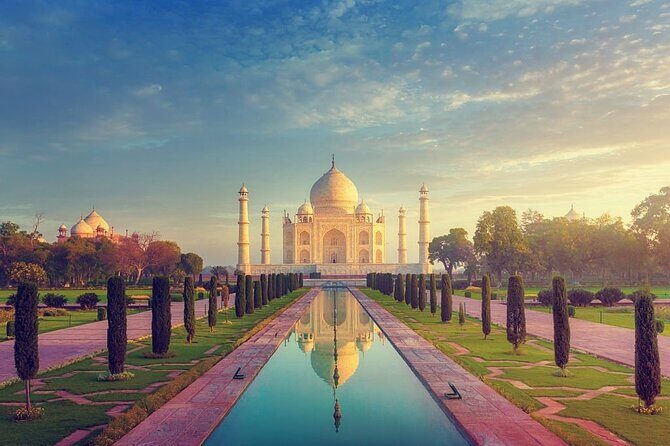
You’ll head out very early—your driver and guide arrive around 6 a.m.—for a sunrise Taj Mahal visit. Sunrise matters here because it changes the whole feel: softer light, cooler air, and a sense that you’re seeing the monument as it awakens rather than as a midday object.
The Taj stop is timed to be efficient (about 1.5 hours). That’s plenty for the core views and photos, but it also means you shouldn’t treat it like a museum marathon. Be ready to move, then enjoy the moments that really land.
Agra Fort: a rickshaw ride and Mughal power
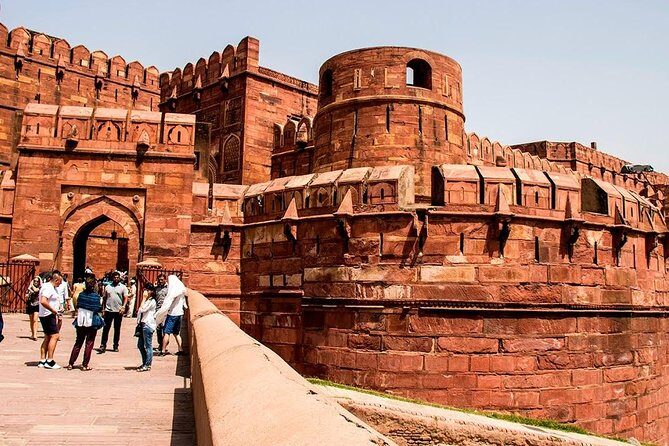
After Taj Mahal, you’ll return for breakfast and check out. Then you’ll head to Agra Fort via a rickshaw ride. The fort story connects directly to the period when Agra mattered as a Mughal center.
Fatehpur Sikri: the red sandstone detour before Jaipur
Next you’ll travel toward Jaipur and stop at Fatehpur Sikri, about 37 kilometers from Agra. It’s a red sandstone city created in honor of the Sufi mystic Sheikh Salim Chishti. This stop is a nice change of pace from the “single monument” feel of the Taj—more of a whole complex to walk through and picture.
One practical note: This day starts early and keeps moving. It’s great for people who love seeing lots in a short time, but if you hate morning plans, you may feel it.
Day 4 Jaipur: Amber Fort to Jal Mahal to Hawa Mahal
Jaipur is where the Golden Triangle shifts into forts, palaces, and picture-perfect facades. Your day is packed, but the stops are varied enough that you don’t feel stuck in one repeating theme.
Amber Fort: elephant ride option plus palace views
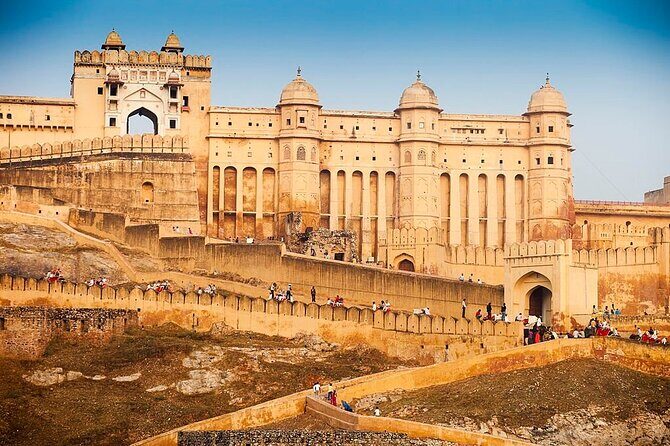
You’ll start at Amber Fort (Amer Palace Fort). The tour includes an elephant ride experience. If you’re comfortable with that kind of activity, it’s a classic way to reach the fort area. If you’re not, consider adjusting your expectations before the trip so the moment doesn’t feel awkward.
Amber is also the kind of place where you want a slow look once you’re inside. The architecture is the point, but the setting on the hill is part of why people remember it.
City Palace: still partly a living royal space
Next is the City Palace of Jaipur, built under Maharaja Sawai Jai Singh II. The palace complex is located inside the walled city, and it’s described as still home to residents of the royal family, with portions used in present-day ways. Even if you’re not into royal details, it gives you a sense of continuity—Jaipur isn’t only museum-grade.
Jantar Mantar: astronomy made visible
Then you’ll visit Jantar Mantar, a UNESCO World Heritage Site and the grandest of five astronomical observatories established by Sawai Jai Singh II. Here, the visual point is that these are instruments in stone and steps in geometry. It’s one of those stops where a guide helps a lot, because it’s easier to “get” with context.
Jal Mahal photo stop and the lake palace look
You’ll stop at Jal Mahal (the water palace) for photos. The described appeal is that it appears to float in Man Sagar Lake. Even if you’re not taking pictures, it’s a good reset moment in your day.
Hawa Mahal: the wind-catcher facade
Next you’ll see Hawa Mahal (Palace of Wind), built in 1799 as a summer resort and designed as a safe haven for royal women. The facade is what hits first. It’s also an easy stop to appreciate from outside before you move on.
Birla Mandir and Galtaji Temple: religious spots beyond the postcard
In the afternoon, you’ll visit Birla Mandir (Lakshmi-Narayan Temple) made of white marble, and then Galtaji Temple, also called the Monkey Temple. Galtaji is set among low hills, with temples, pavilions, and holy kunds (water tanks/springs).
The great thing about ending with these is that you get a more everyday religious landscape, not just the “palace crowd.”
After lunch, you’ll head back to Delhi and be dropped at the airport or hotel.
What’s genuinely well done here: service, guides, and getting things right
The tour is built around coordination—pickup, guiding, and sensible ordering of stops. In feedback, the planning communication is often praised, including fast replies via chat and clear coordination once the team meets you on the ground.
You may also see the benefit of a consistent team approach. One example name that comes up is Aditya as the planner you interact with. Another is a driver named Gurdeep. Those personal names aren’t a guarantee of your exact team, but they do signal the operator’s style: hands-on, responsive, and focused on keeping the trip moving.
For the on-the-ground experience, what matters most is that the guide knows how to explain what you’re seeing and keep you from wasting time. That’s especially true in places like Jantar Mantar, where you’ll understand much more if someone explains what the stone structures were meant to do.
A balanced warning: hotel rooms can vary. In some comments tied to similar trips, people have noted that rooms needed improvements even when overall comfort was decent. So it’s worth being realistic about 3-star hotels and checking what’s included (like breakfast quality) when you book.
Two things to double-check: site fees and elephant-riding expectations
Before you hand over your money, I’d confirm two practical items.
First, entrance fees. The overall package says monument entrance fee isn’t included, but many specific sights list admission ticket included. That contradiction usually means coverage is selective. Ask for the exact list of included admissions for your travel dates.
Second, the elephant ride at Amber Fort is listed as part of the experience. If that’s a hard no for you, decide early so the day doesn’t become a stress moment. If you’re unsure, it’s better to ask questions at booking rather than waiting for the moment on-site.
Who this 4-day Golden Triangle suits best
This is a good match if you:
- Are a first-time visitor to India and want the classic route with guided structure
- Want “major sights, done efficiently” rather than slow travel
- Prefer private transportation and a guide-led schedule
- Like early starts for key monuments, especially the Taj Mahal sunrise
It’s less ideal if you:
- Want lots of free time to explore without a timetable
- Hate morning plans (sunrise Taj means an early morning)
- Have strong preferences about animal-related activities, since Amber includes an elephant ride option
Should you book this Golden Triangle tour from Delhi?
I’d book it if you want a solid, organized route with the big monuments at the right moments and you’re okay with a tight pace. The value improves when you treat it as a logistics-saver: you’re buying time, transport, and knowledgeable guidance—not just sightseeing.
I would not book it blindly if you want perfect hotel-room quality or a fully predictable total cost. Ask what entrance fees are included, confirm the hotel expectations for your room category, and be ready for long travel days between Delhi, Agra, and Jaipur.
If that works for you, you’ll likely come away feeling like you covered the essentials—and did it with less hassle than doing it solo.
FAQ
What does the tour include for 4 days?
The tour includes private transportation, 3 nights in 3-star hotels, rickshaw ride in Delhi, unlimited bottled mineral water, a government-approved guide at destinations, and 3 breakfasts.
Do I get picked up from the airport and where do I get dropped off?
Yes. You are picked up from Indira Gandhi International Airport on arrival and transferred to your hotel. On the last day, you’ll be dropped at the airport or hotel at your convenience after lunch in Jaipur/Delhi travel.
Are entrance fees included for all monuments?
The package notes that monument entrance fee is not included, but many specific sightseeing stops list admission ticket included. When you book, confirm which sites are covered for your exact dates.
What time is the Taj Mahal visit?
The Taj Mahal is scheduled as a sunrise tour with the driver and guide arriving at your hotel early in the morning, about 6 a.m.
Are meals included besides breakfast?
Breakfast is included (3 breakfasts total). Lunch and dinner are not included, and you’ll choose restaurants or hotels on your own.
Is this tour private or shared with other groups?
It’s private. Only your group participates in the activity.