REVIEW · NEW DELHI
4-Day Private Golden Triangle Tour: Delhi, Agra and Jaipur
Book on Viator →Operated by Hire Taxi India · Bookable on Viator
First time you see Taj Mahal at sunrise. I love that this tour is private, so the schedule follows your pace, not a bus timetable, and you’re in air-conditioned comfort for the long city-to-city hops. Two big wins for me: the early-morning Taj Mahal timing for great photos, and the fact that you get a guide who ties sites like Qutub Minar, Agra Fort, and Amber Fort into a clear story. One thing to consider: the sunrise visit is weather-dependent, and Taj Mahal is closed on Fridays.
You also get three nights of accommodation with breakfast (when you pick the hotel option), plus three lunches, entrance fees, and a full set of monument stops across all three cities. At $280 per person for a private car, private guide, and key admissions, it can be good value if you want less hassle and more guided context.
One more practical note: Fatehpur Sikri is an en-route stop but is listed as own expense, so budget a little extra if you want to go in. With smart planning, this itinerary still feels tightly packed in a good way.
In This Review
- Key highlights I’d plan around
- Golden Triangle, private pace, and the 6am Taj Mahal decision
- Day 1 in Delhi: Qutub Minar first, India Gate on the easy side
- The drive to Agra: three hours that can make or break your day
- Taj Mahal at sunrise: timing, admissions, and how to enjoy the marble
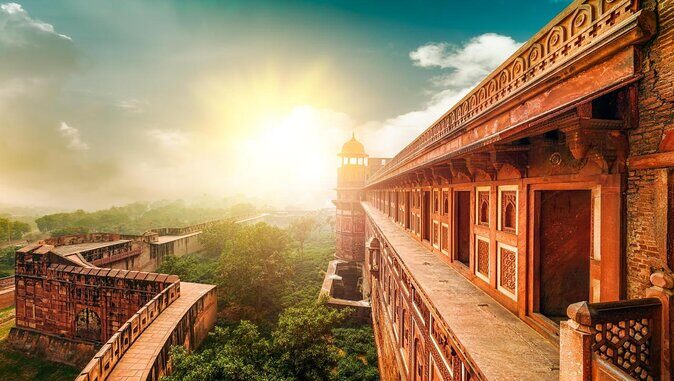
- After breakfast: Agra Fort and the Mughal power inside red sandstone walls
- Fatehpur Sikri en route: worth adding, but don’t forget it’s your extra cost
- Jaipur’s first impressions: Pink City planning and royal-scale landmarks
- Amber Fort: mirror hall drama and the view over Jaipur
- Hawa Mahal: quick photo stop, big visual payoff
- City Palace: museum rooms, palace architecture, and the Jantar Mantar tie-in
- Craft stops in Jaipur: marble work, Zardozi embroidery, carpets, and gemstones
- Day 4: transfer back to Delhi and how to protect your last day
- Price and value: what $280 buys you in real terms
- Who this tour fits best (and who should rethink it)
- Final verdict: should you book this private Golden Triangle tour?
- FAQ
- What cities does this tour cover?
- How long is the tour?
- What time does the tour start in Delhi?
- Is pickup included?
- Is Taj Mahal included, and is it always open?
- Are entrance fees included?
- What meals are included?
- What about Fatehpur Sikri?
- Is the transportation private and air-conditioned?
Key highlights I’d plan around
- Sunrise Taj Mahal photo time with a 6am start, plus a reminder it’s weather- and schedule-dependent
- Private Delhi-to-Jaipur transportation in an air-conditioned vehicle with a driver
- UNESCO World Heritage sites across Delhi (Qutub Minar), Agra (Taj Mahal, Agra Fort) and more
- Jaipur’s core trio: Amber Fort, City Palace, and Hawa Mahal
- Live craft demonstrations: marble work, Zardozi embroidery, hand knotted carpets, and gemstone cutting/polishing
- Communication and guidance support you can count on, including help from Raj before and during the tour (from personal experience shared in feedback)
Golden Triangle, private pace, and the 6am Taj Mahal decision
The Golden Triangle is a classic for a reason: in a few days, you hit the big names of North India—Delhi’s monumental mix, Agra’s Mughal masterpieces, and Jaipur’s royal architecture. What makes this specific 4-day private version feel worth it is the pacing. You’re not crammed into a rigid group flow, and you have a dedicated vehicle for transfers so you spend less time negotiating details.
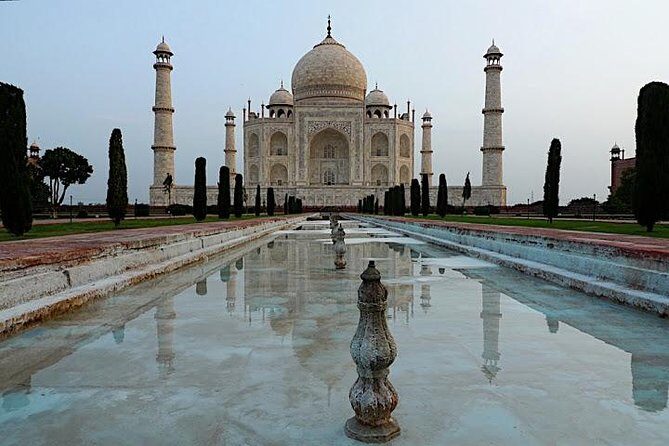
The centerpiece is the sunrise Taj Mahal. Leaving around 6am means you’re there while the light is still soft and before daytime crowds can fully set in. You’ll have time on-site, and with the right angle and a calm guide, you can also catch the shifting marble glow as the day warms up.
The trade-off is obvious: early start energy. Also, Taj Mahal is closed on Fridays, and the sunrise visit depends on the weather. If you’re booking for a Friday, or you’re traveling during heavy fog or monsoon conditions, plan to stay flexible.
You can also read our reviews of more private tours in New Delhi


Day 1 in Delhi: Qutub Minar first, India Gate on the easy side
You start in New Delhi with pickup at around 9am from your hotel, airport, or railway station. Then the itinerary hits two iconic sights in a half-day style: Qutub Minar and India Gate.
Qutub Minar (about an hour) is where you’ll feel the depth of Delhi’s layers. It’s an 11th-century tower connected to Qutub-ud-din Aibek of the Slave Dynasty, and the monument’s age shows in every detail. What I like about visiting it early in the trip is simple: it sets the historical tone before the route turns more Mughal and royal.
India Gate is a different mood—more open space, a memorial context, and a chance to take in government buildings from the British Raj era as you drive past. It’s listed as 30 minutes and free admission, so it works as a breather rather than a marathon stop.
Practical tip: Delhi traffic can change your timing fast. This tour uses a private driver and AC vehicle, which helps you keep the day moving without that constant stop-start stress.
The drive to Agra: three hours that can make or break your day
Once Delhi wraps up, you head to Agra via expressway, with the transfer taking about three hours. Even when you’re excited, this is the part of the tour that can test your stamina. The upside is comfort: you’re in an air-conditioned private vehicle, and you don’t need to figure out local transport while juggling luggage.
If you want to make this transfer feel less long, treat it like a reset. Water, light snacks (drinks aren’t included), and a short break from photos—then you’ll land in Agra ready for the next morning’s main event.
Also, note the rhythm of the trip: Day 2 is packed around sunrise, breakfast, and then Agra Fort. Your Day 1 transfer helps you arrive early enough to be ready for the 6am start.
Taj Mahal at sunrise: timing, admissions, and how to enjoy the marble
The early departure—around 6am—is the heart of the tour. You go to the Taj Mahal at sunrise, and the visit time is listed as about two hours with admission included. The Taj Mahal is a UNESCO World Heritage Site and is described as the great Mughal monument built over many years for Shah Jahan’s beloved wife. You’ll spend that time absorbing the white marble and semi-precious stone details that make the Taj Mahal look different across the sky.
The way to enjoy it is to slow down in small chunks. Don’t treat it like a checklist. Use the guide’s context to understand the monument rather than just taking photos. When the guide points out design details, you’ll see why people keep returning.
Caveat: it’s explicitly closed on Fridays, and sunrise is subject to weather conditions. If you’re the type who hates uncertainty, plan your backup day in your own schedule, so a weather shift doesn’t feel like a disaster.
After breakfast: Agra Fort and the Mughal power inside red sandstone walls
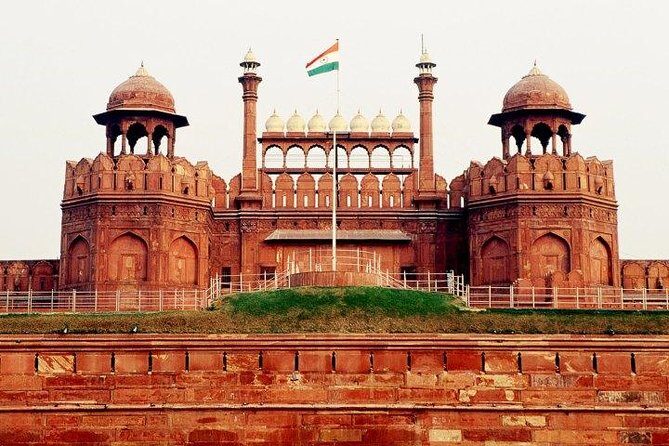
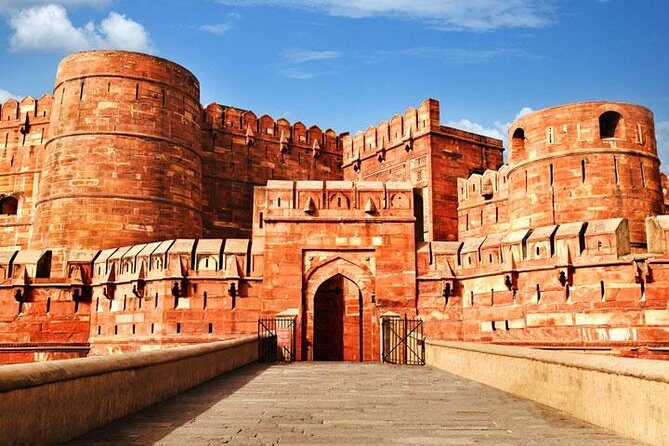
Once sunrise time is done, the tour adds Agra Fort after breakfast. This stop is about an hour with admission included. Agra Fort is another UNESCO site, and it sits in a red sandstone enclosure with a lot going on inside—palaces, audience halls, and mosques.
The guide will likely frame it as more than scenery. The fort is described as the imperial city of the Mughal rulers, with areas tied to Shah Jahan and spaces like the Diwan-i-Khas. Even in an hour, you’ll get the sense of how power worked here—who met whom, where ceremonies happened, and how the architecture supported the empire.
If Taj Mahal is your romantic stop, Agra Fort is your “how it worked” stop. I like having both on the same day because they balance each other.
A few more New Delhi tours and experiences worth a look




Fatehpur Sikri en route: worth adding, but don’t forget it’s your extra cost
After Agra, you transfer toward Jaipur. The route includes an optional en-route stop at Fatehpur Sikri, described as a well-preserved ghost town-like walled city built by Akbar in the late 16th century and abandoned after about 14 years.
Here’s the key detail for planning: Fatehpur Sikri is listed as own expense with a stop duration of about an hour. That means this isn’t included in the core price like the main UNESCO monuments are. If you’re curious, it’s a memorable change of pace from the big-city icons.
Also, remember that this portion of the itinerary stacks driving + sightseeing. If you’re sensitive to long days, keep your energy up with good rest on Day 2 and a simple lunch.
Jaipur’s first impressions: Pink City planning and royal-scale landmarks
When Jaipur comes into view, the trip shifts from Mughal grandeur to Rajput royal architecture. Jaipur is known as the Pink City, and the itinerary is built around three major sights: Amber Fort, Hawa Mahal, and City Palace.
The tour includes a full morning and afternoon structure in Jaipur, with Amber Fort first and City Palace later. That sequencing makes sense: Amber is a big, scenic stop with enough walking and viewpoints to justify doing it when the day is cooler.
If you’re traveling in hot months, you’ll be grateful for the early start and your private transport. A public transit scramble would be far more painful here.
Amber Fort: mirror hall drama and the view over Jaipur
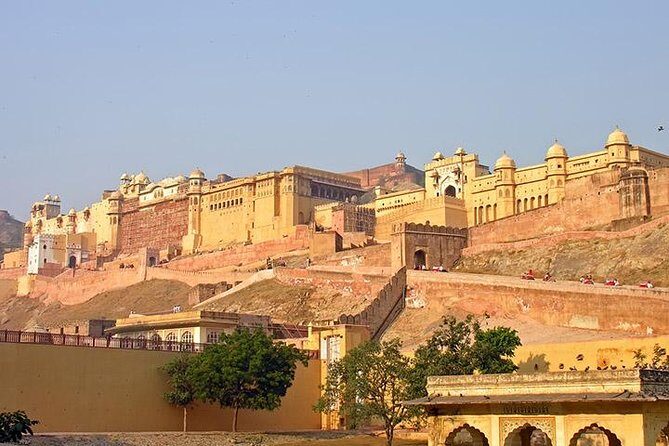
Amber Fort is the highlight of Jaipur for most people, and the itinerary matches that logic. You’ll spend about two hours here with admission included. The fort sits on a ridge, and it’s described as beautifully reflected in the lake below. Inside, you’ll encounter the Jai Mandir temple and the famous Sheesh Mahal hall of mirrors.
The mirror hall is where the experience gets very visual. The walls and ceiling are covered in mirrors, and the reflections can light up the room when light hits at the right angle. With a guide, it’s easier to appreciate what you’re looking at instead of just seeing a shiny interior.
Practical note: Amber Fort involves uneven surfaces and plenty of walking. Wear shoes you trust.
Hawa Mahal: quick photo stop, big visual payoff
Next is Hawa Mahal (Palace of Winds), listed as 30 minutes with free admission. This is one of those stops where time is short, but the visuals are strong. Built in 1799 by Maharaja Sawai Pratap Singh, it’s famous for its facade design and the way it gives the building a delicate, decorative look.
Even if you feel you’ve only scratched the surface, Hawa Mahal works well as a midday break between bigger sites. Use it as a photo and orientation stop—then you’re ready for City Palace.
City Palace: museum rooms, palace architecture, and the Jantar Mantar tie-in
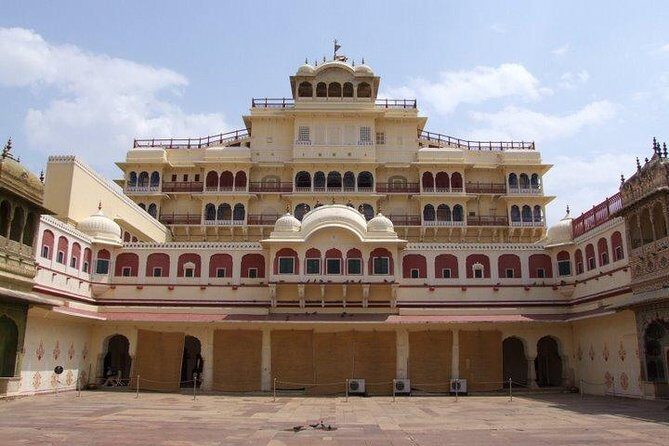
After lunch, you visit City Palace, the principal residence of the ruling family, with admission included for about two hours. Part of it is now a museum, so you get a mix of architecture and curated context.
The tour also mentions Jantar Mantar, a stone observatory raised in the 18th century. Since it’s connected to the City Palace area in the provided schedule, you’ll likely get some sense of the observatory during this block. If you like science-meets-architecture, this is the kind of stop that makes Jaipur feel more layered than just forts and facades.
Craft stops in Jaipur: marble work, Zardozi embroidery, carpets, and gemstones
One of the most useful surprises in this tour package is that it includes live demonstrations. These aren’t random store stops added to fill time. They’re listed as part of what you get, so you can treat them as cultural context—how the region makes what you see in markets and palaces.
The included demos are:
- Marble craftsmanship
- Handmade embroidery (Zardozi)
- Hand knotted carpet weaving
- Cutting and polishing gemstones
In the itinerary, there’s also a time block at a craft-focused location called Jewels ‘N’ Arts. Time permitting, you’ll visit a cottage industry specializing in hand-woven carpets and textiles, and you’ll see how silk carpets are handmade (listed as about an hour, free admission).
Here’s how I’d manage this part of the day: go in with curiosity and don’t feel pressured to buy anything. If you see how work is done, you’ll spot quality differences later when you shop on your own. It also gives you a break from forts and stone monuments, which helps the whole trip feel balanced.
Day 4: transfer back to Delhi and how to protect your last day
Your last day is a straightforward transfer: after breakfast, you check out in Jaipur and head back to Delhi. The drive time is listed as about four hours, and you’ll be dropped off at your Delhi hotel or the airport.
This is the right move for a 4-day itinerary because you’re not adding another major sightseeing block on your final day. If you have an evening flight, you’ll want to plan based on traffic and your drop-off point, since transfer time is approximate and depends on conditions.
Smart casual is noted as the dress code, so you can keep this day practical and comfortable.
Price and value: what $280 buys you in real terms
At $280 per person, the big value story here is the combination: private guide + private vehicle + key monument entrances + a multi-city routing that would take real effort to organize yourself. You’re paying for convenience and for time. In a place like this, time is what you’re really buying.
What you’re getting for the money includes:
- Three nights accommodation with breakfast (when you choose the hotel option)
- Air-conditioned private vehicle and pickup/drop-off
- Professional private live guide
- Monument entrance fees
- Breakfasts and lunches (three each)
- Live craft demonstrations and the related stops
What you don’t get: drinks and gratuities (recommended). Also, Fatehpur Sikri is an own-expense stop, so factor in that add-on if you want it.
If you’re traveling as a couple or a small group and you dislike logistics, the private car and guide can make this price feel reasonable. If you’re comfortable planning everything yourself and you’re cost-maximizing, you could cut expenses by building your own route. But then you give up the sunrise timing and the guided connections.
Who this tour fits best (and who should rethink it)
This tour fits best if you want:
- A private Golden Triangle with a guide who explains more than the obvious
- Sunrise Taj Mahal as a top priority
- Entrance fees and key sightseeing handled for you
- Comfort during transfers with an air-conditioned vehicle
It may be less ideal if:
- You can’t handle early mornings, given the ~6am Taj Mahal departure
- You’re traveling on a Friday (Taj Mahal closure is stated)
- You prefer to keep all costs fully included, since Fatehpur Sikri is own expense
Final verdict: should you book this private Golden Triangle tour?
I’d book it if sunrise Taj Mahal is a must and you like a clear plan with a guide doing the heavy lifting. The mix of Delhi monuments, Agra’s Mughal centerpiece, and Jaipur’s major royal stops makes the trip feel efficient without feeling random. Add the craft demonstrations and you get more than just famous buildings.
I’d be cautious if you’re booking for a Friday, or if weather at your travel dates makes you nervous about sunrise. And if Fatehpur Sikri interests you, check your budget for that extra cost since it’s not included.
If you want an organized private route that trades stress for insight, this one is an easy yes.
FAQ
What cities does this tour cover?
It’s a Golden Triangle route covering New Delhi, Agra, and Jaipur, starting and ending in Delhi.
How long is the tour?
The tour is listed as approximately 4 days.
What time does the tour start in Delhi?
The start time is 9:00 am in New Delhi.
Is pickup included?
Yes. Pickup is offered from your desired location in Delhi, Noida, or Gurugram, including airport, railway station, or your hotel.
Is Taj Mahal included, and is it always open?
Taj Mahal is included as a sunrise visit, but the tour notes it is closed on Fridays. The sunrise visit is also subject to weather conditions.
Are entrance fees included?
Yes. Monument entrance fees are included.
What meals are included?
Breakfast is included for 3 days, and lunch is included for 3 days. Drinks are not included.
What about Fatehpur Sikri?
Fatehpur Sikri is an en-route stop and is listed as own expense (not included in the price).
Is the transportation private and air-conditioned?
Yes. All transfers and sightseeing are done by an air-conditioned private vehicle with a private driver.