REVIEW · NEW DELHI
4 Day Golden Triangle Tour – Delhi Agra Jaipur Tour
Book on Viator →Operated by Joyful Holidays · Bookable on Viator
Four days, three icons, zero guesswork. This is a straightforward Golden Triangle sprint from New Delhi to Agra to Jaipur, built around the big-name sights plus smart context so you understand what you’re seeing. I especially liked the early-start payoff at the Taj Mahal and the way each city gets its own guide so the storytelling stays focused. The trade-off is that it’s a fast pace, so you’ll want to be okay with a “see it, then move” rhythm and budgeting time for monument lines and fees.
One of the best parts is the logistics: pickup from your Delhi-area location, an air-conditioned car with bottled water and Wi‑Fi, plus a driver handling the long road stretches. I also like that the itinerary hits major stops in Delhi (Jama Masjid, Raj Ghat, India Gate, Parliament-area photo stops, and Qutub Minar) before you even reach Agra—so you get your bearings fast. The main consideration: monument admissions aren’t included in the tour price, so you should expect to pay for certain sites even though some stops are marked as free or ticket-free in the plan.
I went into this type of tour expecting a checklist. Instead, it feels more like a guided route through India’s key eras—Mughal grandeur in Agra, Rajput power and court life in Jaipur, and the layered mix of colonial and Mughal Delhi. Guides you might meet include Amar in Delhi and Dilip in Jaipur, and the drivers named in real feedback (like Pooran Singh, Shiv, Ram Kumar, Sonu, and Gulab) come up again and again for being on time and safe—exactly what you want when the day starts early and the roads run long.
In This Review
- Key highlights worth your attention
- Delhi first: old Mughal walls and Qutub Minar’s big silhouette
- Agra’s 5:45 AM rhythm: sunrise Taj Mahal then Agra Fort
- Jaipur day: Fort, City Palace, and the “photo stops” that actually work
- The road-trip reality: long drives, early starts, and what to pack mentally
- Price and value: $369 includes a lot of the hard work
- What you can expect from guides and the handoff between cities
- Who should book this Golden Triangle route (and who should skip it)
- Should you book this 4-day Golden Triangle?
- FAQ
- Does the tour include pickup in New Delhi?
- Where does the 4-day tour start and end?
- What are the key sights on the Delhi day?
- Is the Taj Mahal visit included, and when is it?
- Are monument fees included in the price?
- What’s included for meals?
- Is this a private tour?
Key highlights worth your attention
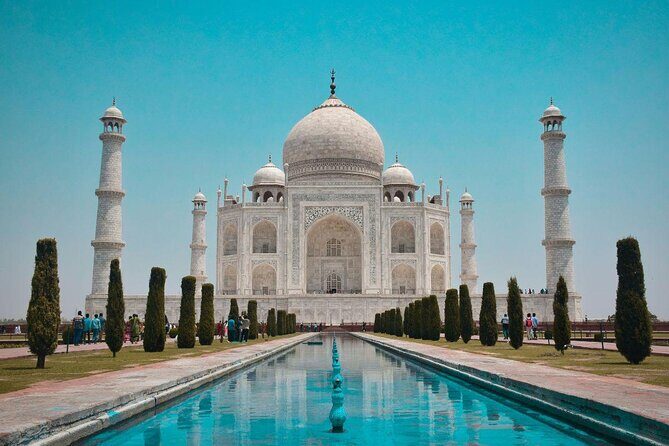
- Taj Mahal at sunrise with a hotel-lobby meet time around 5:45 AM for the light change
- City-by-city guiding, so Delhi, Agra, and Jaipur each get their own local explanations
- Convenient transfers in an air-conditioned car with bottled water and Wi‑Fi in the vehicle
- Prime photo strategy (outside Red Fort, Jal Mahal, Hawa Mahal) without wasting time
- A tour company that stays responsive, with examples of flexible scheduling and communication
Delhi first: old Mughal walls and Qutub Minar’s big silhouette
Day 1 is your Delhi orientation, and it’s designed for efficiency. You get pickup in the New Delhi/Delhi–Noida–Gurgaon area and then a guided pass through Old and New Delhi highlights, starting with Jama Masjid, the Friday Mosque commissioned by Shah Jahan.
Here’s the practical value: this isn’t just “walk and take photos.” With a guide, you’ll understand why Jama Masjid is central to Old Delhi’s story, and why Qutub Minar later matters as an early landmark of Indo-Islamic architecture. You’ll also see how Delhi layers different time periods right on top of each other.
What I like about this day is the mix of emotional and historical stops:
- Raj Ghat is included in the plan and it’s a simple black-marble marker by the Yamuna showing where Mahatma Gandhi was cremated. It hits different from the more ornamental monuments—quieter, more reflective.
- India Gate is treated as a war memorial moment, built to remember 70,000 soldiers of the British Indian Army who died in World War I. It’s a classic skyline stop and a good place to reset.
- Parliament House and Rashtrapati Bhavan are mostly photo stops, which makes sense in a short visit. You see the architecture without pretending you’ll tour every interior.
A quick note on pacing: Red Fort is viewed from outside because most of the complex is used by the Indian Army. You can still photograph it, but don’t expect a full fort visit here.
By the end of Day 1 you’ll drive onward to Agra and overnight there, so the schedule sets you up for the next day’s very early Taj Mahal visit.
A few more New Delhi tours and experiences worth a look


Agra’s 5:45 AM rhythm: sunrise Taj Mahal then Agra Fort
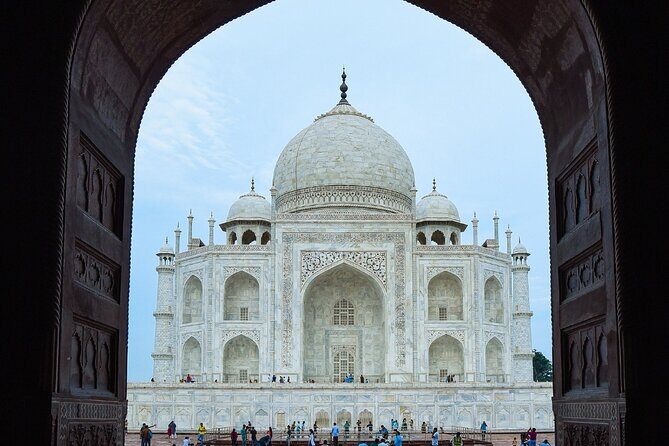
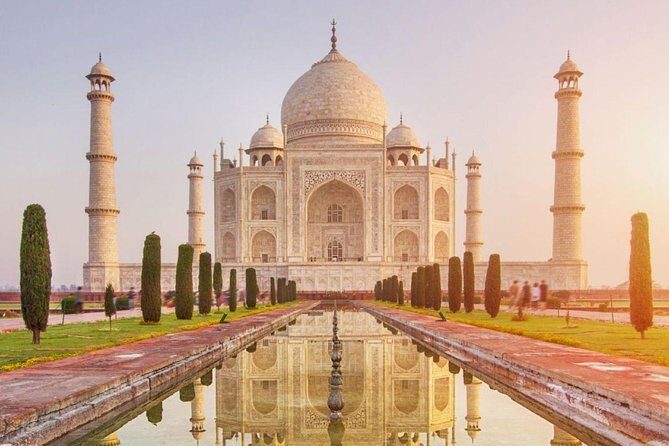
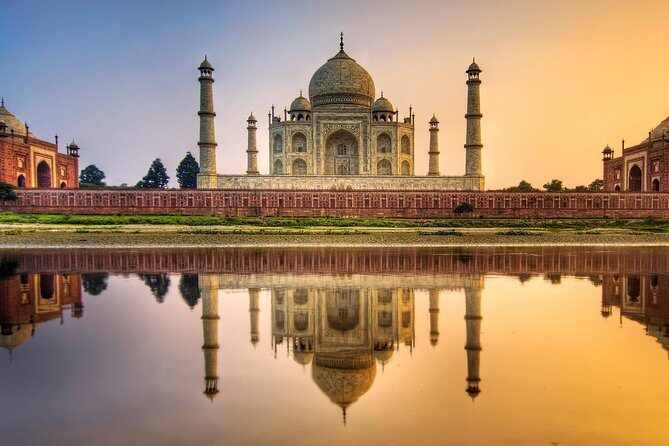
Day 2 is built around the best light. You meet your guide in the hotel lobby at about 5:45 AM to head out for the Taj Mahal sunrise. The plan calls out the Taj’s color shift—pink tones at sunrise—so you’re not just rolling the dice. And once you’re inside, you’ll have around 2 hours at the Taj Mahal itself.
What this timing really does for you: it avoids the worst part of the day for your energy. Even if you’re not a morning person, the sunrise slot makes the experience feel special instead of crowded-and-rushed. You also get the benefit of cooler weather for the walkways and viewpoints.
After the Taj visit, you return to the hotel to refresh and eat breakfast, then check out and head to Agra Fort, another UNESCO-listed anchor. The Agra Fort stop gives you a change of mood from white marble perfection to fortress-scale Mughal power. Plan for about 1 hour there.
Practical consideration: Taj Mahal visits often involve lines and security. Since this itinerary includes sunrise, you’ll want to wear something easy to move in and be ready to go quickly when it’s time.
Then you transfer to Jaipur on Day 2 as well, which keeps the tour efficient. The drive is long, but the air-conditioned car and onboard comfort (bottled water and Wi‑Fi) matter when you’re hopping cities back-to-back.
Jaipur day: Fort, City Palace, and the “photo stops” that actually work
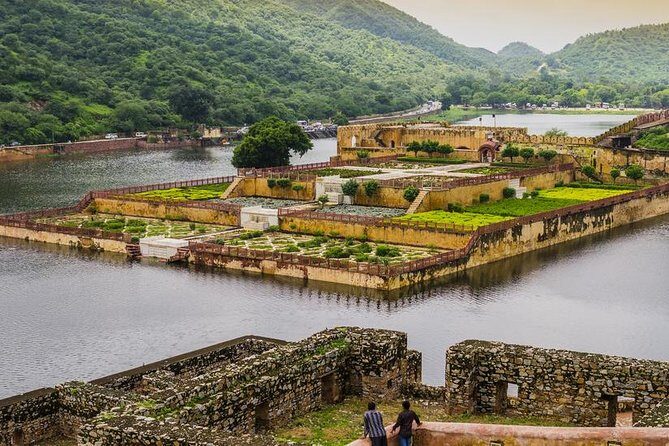
Jaipur on Day 3 is where the tour shifts into Rajput and royal-life visuals. After breakfast, you meet your guide and begin with Jaipur Fort, with about 2 hours allocated. This is one of the key sights of the Pink City: a fort rising from a rocky mountainside with a palace complex built from sandstone and white marble.
You’re not only seeing architecture—you’re also learning how the city’s power was staged. A good guide helps you connect the geography (the fort’s position) to the function (control, defense, and status).
Then you get two types of stops:
1) Real time inside major sites
- City Palace of Jaipur (about 1 hour) is described as the royal family residence with courtyards and a blend of Rajasthani and Mughal architecture.
- Jantar Mantar Observatory (about 40 minutes) uses geometric instruments to track stars and planets. It’s UNESCO-listed, and with a guide, it’s way more than rocks arranged in shapes.
2) Strategic photo stops that save time
- Jal Mahal (Water Palace): you’ll have a brief stop for photos. The point isn’t a long visit—it’s the instant wow-factor view.
- Hawa Mahal: you’ll do a photo stop at the Palace of Wind, described as a pink honeycombed façade rising five stories. Again, it’s short, but that’s smart in a packed day.
This structure is part of why the tour works for first-timers. You spend real time where you’ll benefit from it (fort, palace, observatory), then you catch the skyline icons with quick stops so you don’t waste hours waiting for “one good picture.”
You’ll return to your hotel overnight, and Day 4 is then set up for your departure options.
The road-trip reality: long drives, early starts, and what to pack mentally
This tour does what a Golden Triangle tour should do: it strings the big three together in a tight 3 nights / 4 days window. That means the travel days matter. You’ll be in the car on multiple legs, moving from Delhi to Agra and Agra to Jaipur, then back to Delhi on the final day.
What helps is exactly what the tour includes:
- Air-conditioned transfers
- Bottled water and Wi‑Fi in the car
- A professional driver handling fuel, parking, and logistics
In real feedback tied to this kind of routing, drivers like Pooran Singh and Gulab are praised for being on time, making the drive comfortable, and staying safe. That matters because it reduces the mental load on you—your job is to show up and enjoy.
Still, be honest about the pacing. In a short itinerary, you won’t “linger” for hours. The experience is built around seeing the essentials and keeping things moving.
My practical advice for you:
- Sleep on the plane if you can, because Day 2 starts early.
- Keep day packs light: water, sunscreen, and a layer for morning air.
- Decide ahead of time which sites you’ll take your slow photos in. In a tour like this, time disappears fast if you treat every stop the same.
Price and value: $369 includes a lot of the hard work
At $369 per person for roughly four days, the value is mostly in what you don’t have to plan. This price includes:
- Hotel accommodation (with an option for 3/4/5-star levels)
- Professional guides
- Air-conditioned car transfers with bottled water and Wi‑Fi
- Driver and fuel plus parking charges
- Breakfast for three mornings
What’s not included is monument admissions and gratuities. Even though some itinerary lines are marked as free or included (like Raj Ghat), you should still budget for additional fees where required. Think of monument tickets as the variable cost, not an unpleasant surprise.
Where this becomes good value: you’re paying to compress time and reduce hassle—especially if it’s your first trip to North India. The tour also helps you avoid the common beginner headache of coordinating transport between cities plus hiring guides at multiple stops.
If you’re a strict budget traveler, you might prefer independent ticket planning. But if you want your first Golden Triangle to run smoothly with minimal stress, this price is in the “pay for peace of mind” category.






What you can expect from guides and the handoff between cities
One reason these tours work is the guide handoff. You’ll have a guide in each city for the sightseeing portion, which helps you connect places that otherwise feel like disconnected photos.
From real examples connected to this route, you might encounter guides such as:
- Amar in Delhi, noted for patiently answering history and culture questions
- Dilip in Jaipur, praised for answering questions with care
- Mention of Vivek Handa supporting strong overall coordination and guiding quality
You’ll also see patterns in how the guides are described: English communication is called out, and the tone is practical rather than lecture-only.
There’s also a big service theme in the feedback: the company is responsive and flexible. That shows up in examples where people made changes to schedules and were kept in contact before and during the trip. Even if you don’t plan to customize, that responsiveness helps you trust the trip right up to departure.
Who should book this Golden Triangle route (and who should skip it)
This tour is a great fit if:
- You want the classic Delhi–Agra–Jaipur highlights without building your own transportation plan
- You prefer guided context over trying to figure everything out alone
- You like having a driver handle the long stretches while you focus on sights
It might not be the best fit if:
- You hate early mornings (Day 2 sunrise at the Taj is a core feature)
- You want slow travel and lots of downtime between major sights
- You’re strongly budget-first and don’t want to pay for guide services and bundled transfers
If you’re traveling as a family, this type of routing can also be efficient. One example mentioned a larger van setup for a group with elderly and children, which can help with luggage and comfort.
Should you book this 4-day Golden Triangle?
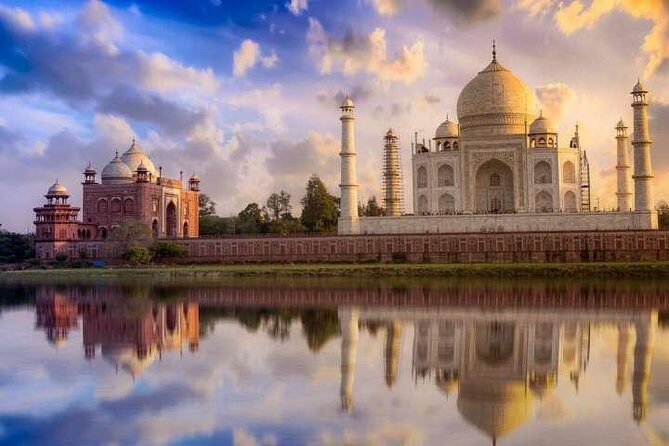
If your goal is to see Delhi, Agra, and Jaipur in one clean package—with sunrise Taj Mahal, guided stops in each city, and air-conditioned transfers—then yes, this is worth considering. The price looks fair when you factor in the hotels, guides, and the “someone else drives” convenience.
My only pushback is simple: treat it like a smart sprint, not a lazy wandering trip. If that sounds like your style, you’ll feel like you checked off the big sights while also understanding what they mean.
FAQ
Does the tour include pickup in New Delhi?
Yes. The tour offers pickup from the Delhi Airport, hotel, railway station, or your desired location in the Delhi/Noida/Gurgaon area.
Where does the 4-day tour start and end?
It starts and ends in New Delhi. On Day 4 you’ll be dropped at Jaipur airport or driven to Delhi airport, depending on your onward plans.
What are the key sights on the Delhi day?
In Delhi you’ll visit Jama Masjid, Raj Ghat, India Gate, Qutub Minar, and you’ll also stop for photos at Parliament House and Rashtrapati Bhavan. Red Fort is viewed from outside.
Is the Taj Mahal visit included, and when is it?
Yes, Taj Mahal is a core part of Day 2. You meet your guide around 5:45 AM for a sunrise visit.
Are monument fees included in the price?
Monument fees are not included. The tour notes monument fees are separate from what’s included.
What’s included for meals?
Breakfast is included for three mornings.
Is this a private tour?
Yes. It’s a private tour/activity, so only your group participates.