REVIEW · NEW DELHI
4-Day Golden Triangle, Haridwar, Rishikesh, Spiritual Ganges Tour
Book on Viator →Operated by Taj Mirror Tours · Bookable on Viator
Taj sunrise sets the tone fast. This 4-day Delhi-Agra-Haridwar-Rishikesh route mixes UNESCO sights in the Golden Triangle style with real-on-the-ground Ganga devotion, all handled with a private AC car and an English-speaking guide. I especially like the early Taj Mahal timing (it’s quieter, softer, and way more memorable than daytime crowds), and I like that the Ganga Aarti moments come with enough time to actually watch the rituals and lamps. One thing to plan for: monument entry fees aren’t included, and the Taj Mahal is closed on Fridays.
The logistics feel built for you: pickup from your Delhi hotel or airport, hotel stays planned for you, and drop-off at the end of the trip. You’ll also get a live guide in different foreign languages (you choose the option before booking), plus a uniformed chauffeur who keeps the driving side calm. If you have special interests, the tour can be customized to your requirements.
Pack for cool mornings. One helpful tip I’d take from past guests: bring a sweater for chillier temple/river hours. Also remember the practical stuff: you’ll need a valid photo ID for monument entry, and you’ll be asked to remove shoes in temple and sacred places.
In This Review
- Key highlights worth factoring in
- Why this Delhi–Agra–Ganges route fits in four days
- Price and logistics: what $299 covers, and the real extras
- Day 1 in Delhi: Qutub Minar, Lotus Temple, India Gate, Humayun’s Tomb, then Agra
- Qutub Minar: Delhi’s tall UNESCO statement
- Lotus Temple: calm, modern spirituality
- India Gate and Parliament area: monuments for a modern nation
- Chandni Chowk: lunch break with local flavor
- Humayun’s Tomb: the Mughal ancestor to the Taj
- Drive to Agra via Yamuna Expressway
- Day 2 at the Taj Mahal: sunrise, Agra Fort, and Itimad-ud-Daulah
- Sunrise at the Taj Mahal: why timing matters
- Breakfast in Agra: local start, relaxed pace
- Agra Fort: power base behind the poetry
- Itimad-ud-Daulah: the Baby Taj effect
- Return to Delhi for overnight
- Day 3 in Haridwar: Har Ki Pauri, quieter ghats, and two goddess temples
- Har Ki Pauri: the main stage for Ganga Aarti
- Kusha Ghat: a quieter alternative
- Mansa Devi Temple and Chandi Devi Temple: wish fulfillment and views
- Ganga Aarti at Har Ki Pauri (evening)
- Day 4 in Rishikesh: Jhulas, Parmarth Niketan, Neer Garh, and optional yoga
- Ram Jhula and Laxman Jhula: iconic Ganga crossing bridges
- Janki Jhula: a calmer bridge option
- Parmarth Niketan Ashram: structured spirituality
- Neer Garh Waterfall: swap temple time for nature time
- Optional yoga class at a renowned ashram
- Optional Ganga Aarti at Triveni Ghat, then back to Delhi
- Hotels, timing, and how to keep the days from feeling rushed
- Who should book this, and who should skip it
- Should you book this 4-day spiritual Ganges tour?
- FAQ
- Is pickup and drop-off included in Delhi?
- What’s included in the tour price?
- Are monument entry fees included?
- Is the Taj Mahal open every day?
- Do I need to remove shoes at places on the itinerary?
- What is the cancellation policy?
Key highlights worth factoring in
- Private chauffeur + guide so you’re not hunting tickets, gates, or directions
- Taj Mahal at sunrise for that soft first light and a more peaceful visit
- Ganga Aarti in Haridwar at Har Ki Pauri, plus an optional calmer Aarti at Triveni Ghat
- UNESCO stops in Delhi and Agra including Qutub Minar and Humayun’s Tomb
- Rishikesh ghats and bridges (Ram Jhula, Laxman Jhula, Janki Jhula) plus ashram time at Parmarth Niketan
- Optional yoga at a well-known ashram/wellness center if you want to add structure to your spiritual day
Why this Delhi–Agra–Ganges route fits in four days
This tour works because it doesn’t treat the north like a checklist. You get the big architectural hits in Delhi and Agra, then you shift gears into the spiritual core of the Ganges belt with Haridwar and Rishikesh.
You’ll move fast, yes. But it’s the “right kind” of fast: you’re getting the key moments at the key times. Sunrise at the Taj Mahal is planned, and the evening Aarti in Haridwar isn’t squeezed into some random gap. If you want one trip that connects Mughal beauty to river devotion without organizing a dozen bookings yourself, this format is sensible.
The value is in the setup: a private AC car, pickup/drop in Delhi, and a guide who’s there to keep the day understandable and on schedule. It’s also private in practice—your group only—so you’re not stuck waiting on strangers to finish a photo session.
A few more New Delhi tours and experiences worth a look
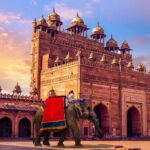
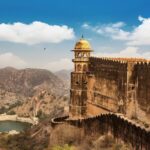
Price and logistics: what $299 covers, and the real extras
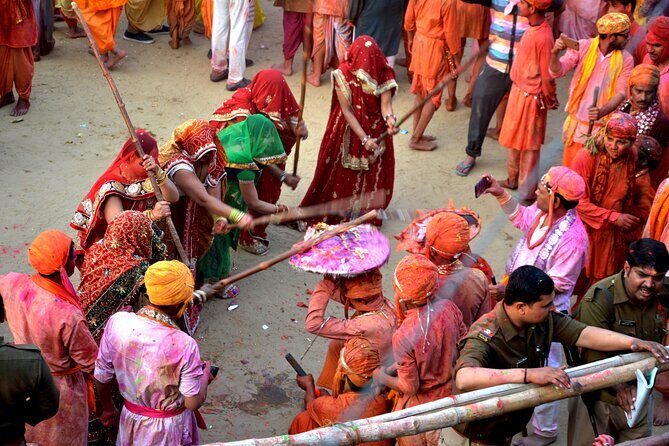
At $299 per person, you’re paying for the “moving parts” that usually eat time and energy: pickup/drop, a uniformed chauffeur, a private AC vehicle, and a live guide. The tour also includes parking, tolls, fuel, taxes, and interstate taxes—small line items that can add up when you DIY.
Hotel nights can be included depending on the option you choose, and breakfast is included with the 5-star hotel accommodation if that option is selected. That matters, because it reduces the number of decisions you need to make once you arrive.
The main extra cost you should expect is monument entry fees. The tour lists monument admissions as not included, with an approximate total of about USD 50 per person. You’ll also want to plan around the Taj Mahal being closed on Fridays. If your dates land on a Friday, you’ll need a plan B for that day’s highlight—ask the operator about adjustments when you book.
Day 1 in Delhi: Qutub Minar, Lotus Temple, India Gate, Humayun’s Tomb, then Agra
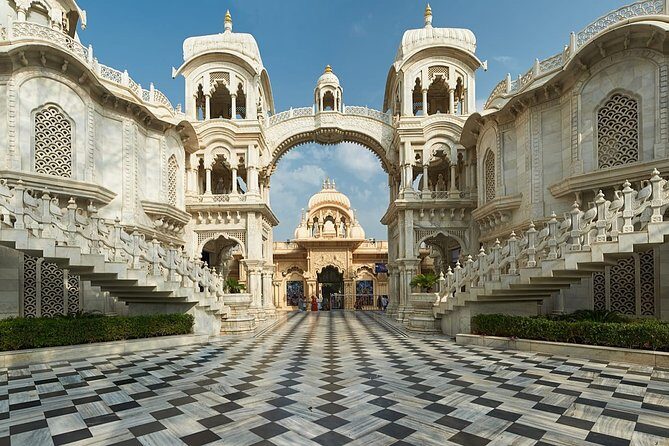
Your day starts with a pickup in New Delhi—hotel, airport, or another selected location in the NCR region—then you roll out with your English-speaking guide and a private AC car. The schedule is packed, but it’s paced with short stops so you don’t burn out before lunch.
Qutub Minar: Delhi’s tall UNESCO statement
Qutub Minar is the centerpiece: a 73-meter-tall minaret and a UNESCO World Heritage Site. You’ll also see the complex around it, including the Quwwat-ul-Islam Mosque and Alai Darwaza, plus the unfinished Alai Minar area. This stop is especially worth it if you enjoy carved stone and early Indo-Islamic Afghan-style architecture.
Drawback to know: entry tickets here are not included. So budget for monument fees even though many other Delhi stops are free.
Lotus Temple: calm, modern spirituality
The Lotus Temple is shaped like a blooming white lotus, and it’s a Bahá’í House of Worship open to all faiths. You’ll get about an hour here, plus the benefit of nine pools and gardens that make the whole place feel like a break from the traffic outside.
This is one of the stops where “free” feels like a real win. Admission is listed as free, and it’s a good contrast to the older Mughal-era and Afghan-style structures you’ll see later.




India Gate and Parliament area: monuments for a modern nation
India Gate is a war memorial honoring 70,000 Indian soldiers lost in World War I, set along Rajpath. Even if you’re not a history buff, it’s an easy place to stand back and get your bearings—lush green lawns, big government-city scale, and simple photo angles.
Nearby, the Parliament House area adds context for modern India’s governance. Admission is free, so you don’t feel like you’re burning money just to get perspective.
Chandni Chowk: lunch break with local flavor
You’ll take a lunch break in Chandni Chowk at a reputed local restaurant. The menu you can expect is classic North Indian comfort food—think Mughlai biryani, chicken korma, and vegetarian staples like aloo ka paratha.
Important practical note: lunch time is included as a scheduled break, but food cost isn’t clearly listed as included. Keep that in mind so you’re not surprised when you open the bill.
Humayun’s Tomb: the Mughal ancestor to the Taj
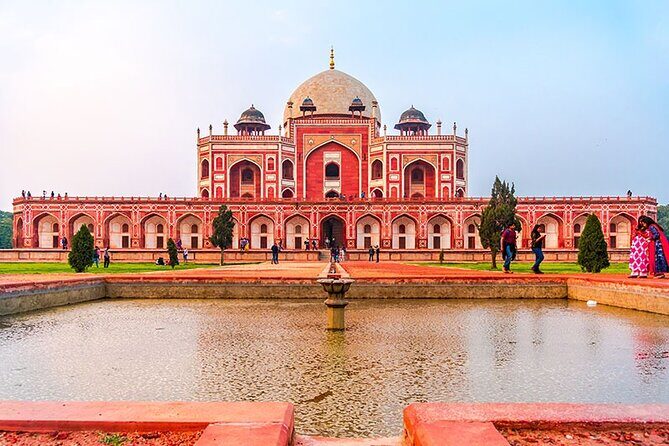
You end the Delhi sightseeing day with Humayun’s Tomb, a UNESCO World Heritage Site built for Emperor Humayun around 1570. It sits in Persian-style charbagh gardens with water channels, and the design strongly influenced later Mughal architecture—Taj Mahal lovers often find this stop makes the Taj feel less random and more like a chapter in a family story.
Entry tickets are not included here either, so again: budget for monument admissions.
Drive to Agra via Yamuna Expressway
In late afternoon, you depart for Agra using the Yamuna Expressway—an easier, smoother route than older city roads. You arrive in the early evening, check into your pre-booked hotel, and have your evening at leisure.
There’s even an optional idea mentioned in the schedule: a rooftop dinner that could offer views of the Taj Mahal at night. Whether you do it or not, this is a helpful decompression block before sunrise tomorrow.
Day 2 at the Taj Mahal: sunrise, Agra Fort, and Itimad-ud-Daulah
Day 2 is the emotional center of the whole tour. You start with sunrise at the Taj Mahal, then move into Agra’s other Mughal landmarks.
Sunrise at the Taj Mahal: why timing matters
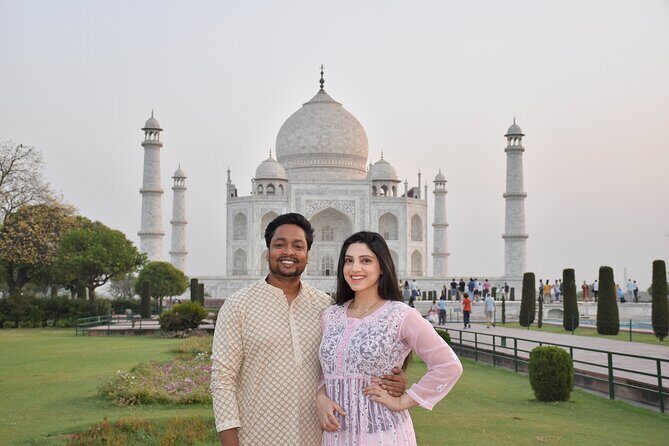
As dawn breaks, the white marble shifts color, and the whole monument feels more intimate. The schedule gives you about three hours here. In practical terms, sunrise is when the light is gentle, the air often feels calmer, and you’re less likely to feel rushed by crowds.
One key constraint: Taj Mahal tickets are not included, and you’ll need a valid photo ID. Also remember the Friday closure rule—if your trip lands on Friday, that planned moment won’t happen the same way.
Breakfast in Agra: local start, relaxed pace
After the Taj visit, you’ll have breakfast at a local eatery. The tour mentions options like poori bhaji and parathas, along with tea or coffee. This is a good time to refuel because the rest of the day involves walking, climbing, and lingering in courtyards and fort structures.
Agra Fort: power base behind the poetry
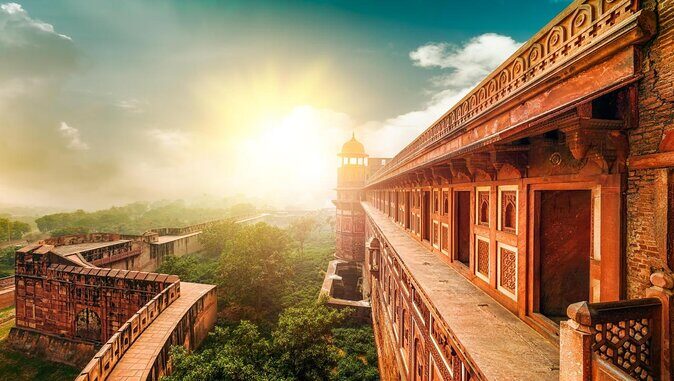
Next is Agra Fort, a red sandstone fortress built by Emperor Akbar. It was a royal residence for generations, and you’ll explore major sections like Diwan-i-Khas, Diwan-i-Am, Jahangiri Mahal, and Sheesh Mahal.
This is where many people start to understand the Taj not as an isolated miracle, but as part of a wider Mughal world—politics, power, and everyday life around the court. Tickets here are also not included.
Itimad-ud-Daulah: the Baby Taj effect
You finish with Itimad-ud-Daulah, often called the Baby Taj. The schedule gives you about an hour. Expect delicate inlay work, lattice screens, and floral motifs—smaller in scale than the Taj, but very elegant and easy to appreciate without feeling overwhelmed.
This stop is a great “breather” after forts and big monumental architecture. It also helps if you like details: you’ll have time to look closely at the design rather than just glance.
Return to Delhi for overnight
After Agra, you head back to Delhi by private car. You’ll arrive in the evening and check into your hotel for the night, so you can rest before the longer road push to Haridwar.
Day 3 in Haridwar: Har Ki Pauri, quieter ghats, and two goddess temples
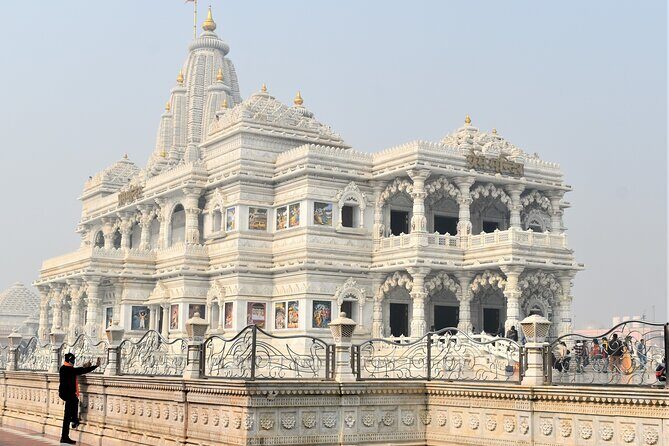
Haridwar is where the trip changes tone. You’re no longer chasing UNESCO stamps. You’re watching people connect with the Ganges in a way that feels immediate and human.
You’ll drive from Delhi to Haridwar early in the morning. The road time is listed around 4 to 5 hours. Once you arrive, you check in, freshen up, and begin.
Har Ki Pauri: the main stage for Ganga Aarti
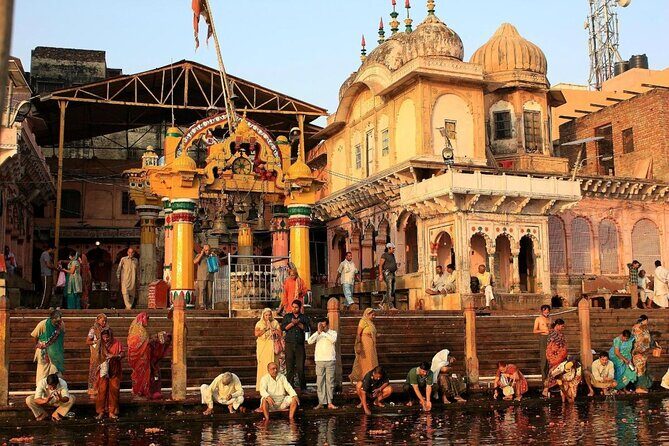
Har Ki Pauri is the heart of the Haridwar ghats scene. The tour highlights its spiritual meaning and its connection to Ganga Aarti. You’ll also visit the ghat during the daytime, which helps you understand the setting before you see it transformed at dusk.
Kusha Ghat: a quieter alternative
Kusha Ghat is positioned as calmer and less crowded. It’s named after sacred grass used in rituals. If you want a moment where you don’t feel like you’re in a crowd, this stop makes the spiritual day feel more layered than just one big event.
Mansa Devi Temple and Chandi Devi Temple: wish fulfillment and views
You’ll visit two hilltop temples: Mansa Devi Temple and Chandi Devi Temple.
- Mansa Devi Temple is dedicated to Goddess Mansa and is reachable by cable car or trek. There’s also mention of devotees tying threads on the temple railings for wish fulfillment.
- Chandi Devi Temple is dedicated to Goddess Chandi (Durga) and is reached via cable car or a trek as well. It’s described as dating back to the 8th century and offers panoramic city-and-river views.
Practical note: these can involve steps and uphill walking, and you may want comfortable shoes. Also, the tour mentions you’ll remove shoes in temples and sacred places.
Ganga Aarti at Har Ki Pauri (evening)
The evening ceremony is a key highlight. As dusk falls, priests perform synchronized rituals with flaming lamps, incense, and chanting. Thousands of floating diyas drift in the river, and it turns the ghat into a kind of nighttime ritual theater.
This is one of the moments that makes the whole trip feel worth it. You’re not just seeing monuments; you’re experiencing a living tradition with sound, light, and movement.
Day 4 in Rishikesh: Jhulas, Parmarth Niketan, Neer Garh, and optional yoga
Rishikesh is the gentler, more nature-and-mindfulness side of the Ganges story. After breakfast, you check out of Haridwar and drive to Rishikesh, about an hour away.
Ram Jhula and Laxman Jhula: iconic Ganga crossing bridges
Ram Jhula is a long iron suspension bridge spanning the Ganges and linking Swarg Ashram to Sivananda Ashram. It’s tied to faith and named after Lord Rama. You’ll get views of the river and surrounding hills, with temples and eateries nearby.
Laxman Jhula is another suspension bridge, associated with Lord Laxman’s crossing on jute ropes. The tour frames it as more than just a crossing: a spiritual experience surrounded by temples, cafés, and ashrams.
Janki Jhula: a calmer bridge option
Janki Jhula is newer and offered as a quieter alternative to Ram and Laxman Jhula, with cleaner surroundings and panoramic views. It’s a good stop if you want a little reflection time and less crowd pressure.
Parmarth Niketan Ashram: structured spirituality
Parmarth Niketan is described as one of the more organized ghats/ashram areas in Rishikesh, with spiritual talks, yoga sessions, and evening Ganga Aarti. You’ll spend about an hour here, and the emphasis is on chants, river flow, and the feel of an intentional spiritual space.
Neer Garh Waterfall: swap temple time for nature time
Neer Garh Waterfall is just a few kilometers from the center. You’ll do a short trek to reach it, with an opportunity for a refreshing dip and forest surroundings.
This is a smart change of pace. After bridges and temple stops, the waterfall gives your eyes a different kind of reset.
Optional yoga class at a renowned ashram
If you want to take the spiritual thread one step further, there’s an optional 60-minute yoga class. It’s listed as suitable for all levels, focusing on breathing techniques, gentle postures, and mindfulness, run by certified instructors at a respected ashram or wellness center (examples named include Parmarth Niketan or Himalayan Yog Ashram).
One practical tip: it’s optional, and the schedule suggests booking ahead. If you’re the type who likes structure, it’s a nice way to end the trip on purpose instead of just hopping from sight to sight.
Optional Ganga Aarti at Triveni Ghat, then back to Delhi
If time allows, you can watch Ganga Aarti at Triveni Ghat as a calmer alternative to Haridwar’s big ceremony. After that, you head back to Delhi late afternoon and get dropped at your location—hotel, home area, or airport.
Hotels, timing, and how to keep the days from feeling rushed
This itinerary is built around early starts and long road days. You’ll have:
- Delhi sightseeing day with multiple stops plus the drive to Agra
- Sunrise Taj day with Agra Fort and Baby Taj plus the return drive to Delhi
- A full Haridwar day including evening Aarti
- A Rishikesh day with bridges, ashrams, a waterfall, and optional yoga/Aarti, plus the drive back to Delhi
To keep it enjoyable, I’d treat it like two themes:
1) Big monuments in the morning blocks (Delhi/Agra)
2) River and temple rhythms in the afternoon/evening blocks (Haridwar/Rishikesh)
Bring layers. The tour explicitly suggests a sweater because it can be cold, and sunrise and river evenings are where that cold really shows up.
Also pack patience for foot travel. Even with a car, you’ll walk at tombs, temples, and ghats, and you’ll remove shoes in sacred places. Comfortable shoes are not optional if you want a good day.
Finally, tell the team what you care about. The tour is described as customizable, and past guests liked that the planners listened and shaped the itinerary around their plans rather than forcing a rigid script. If you have a question like which ghat feels most meaningful to you, or you want more time at one bridge/temple than another, it’s worth asking early.
Who should book this, and who should skip it
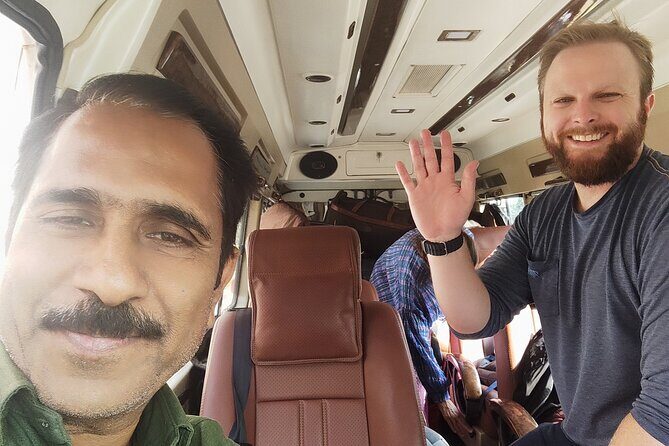
This tour is a great fit if you:
- Want private transport plus a live guide, without the stress of arranging tickets and routes every step
- Love the mix of Mughal architecture and real-time Ganga devotion
- Are happy with a packed schedule as long as the key moments are timed well (sunrise Taj, evening Aarti)
- Prefer comfort on long drives thanks to a private AC vehicle
You might consider a different style of trip if you:
- Want lots of free time in each city without a set schedule
- Don’t want to deal with extra monument entry costs and photo ID rules
- Are traveling on a Friday if Taj Mahal is a must-see for you
Should you book this 4-day spiritual Ganges tour?
If your goal is to see Delhi and Agra’s top UNESCO landmarks, then connect it to Haridwar and Rishikesh through the Ganga rituals, this tour has strong value. The private car and guide make the hardest part—coordination—feel straightforward. And the planned highlights are the right ones: sunrise at the Taj Mahal and Ganga Aarti at Har Ki Pauri.
I’d book it if you’re okay paying monument entry fees on top of the package price, and if you pack smart for mornings and temple rules (photo ID, shoes, layers). If you’re flexible on Fridays, it’s still a solid spiritual circuit—but you’ll want to confirm how the Taj closure gets handled before you commit.
FAQ
Is pickup and drop-off included in Delhi?
Yes. Pickup and drop-off in Delhi are included, including from the airport/railway station or other desired locations in the NCR area.
What’s included in the tour price?
The price includes a private uniformed chauffeur, a live tour guide (with multiple foreign language options), sightseeing by private air-conditioned car/tempo traveler, parking, tolls, taxes, fuel, and interstate taxes. Hotel accommodation with breakfast is included if you choose that option.
Are monument entry fees included?
No. Entry fees for monuments are listed as not included, with an approximate total of USD 50 per person. You’ll also need a valid photo ID to check at monument entry.
Is the Taj Mahal open every day?
No. The Taj Mahal remains closed on Friday.
Do I need to remove shoes at places on the itinerary?
Yes. The tour notes that you must remove shoes before entering temple and sacred places, so wear shoes that are easy to take off.
What is the cancellation policy?
Cancellation is free. You can cancel up to 24 hours in advance for a full refund, and changes within 24 hours of the start time aren’t accepted.