REVIEW · NEW DELHI
Private Tour, The Portraits of Old and New Delhi with Pickup Included
Book on Viator →Operated by Journey Dastaan · Bookable on Viator
Delhi smells like history and spices. This private, full-day route mixes big-name monuments with real market stops, including Khari Baoli spice market and Churi Wali Gali bangles, plus a ride through Chandni Chowk. You’ll travel in an air-conditioned car with onboard Wi‑Fi, which matters when you’re moving across two very different parts of the city.
I love the way the schedule pairs major Mughal-era sights like Qutub Minar and Humayun’s Tomb with stops that explain modern Delhi life in plain terms. You’ll also get hands-on variety in the markets, especially Khari Baoli and Kinari Bazaar, not just the usual photo list.
One possible drawback: it’s an efficient day with short visits at many places, so if you want slow pacing and lingering inside every monument, this pace might feel tight. Also, the tour notes that entrance tickets aren’t included, even though several stops are marked as free—worth double-checking what you actually need to pay on the day.
In This Review
- Key highlights before you go
- A private Delhi day that blends Mughal icons with market street life
- Pickup, AC, Wi‑Fi, and why a private car really changes the day
- Qutub Minar and Humayun’s Tomb: two stops that set the Mughal tone
- Jama Masjid and Gurudwara Bangla Sahib: two places to see faith in action
- Chandni Chowk and the side markets: spices, wedding stalls, and bangles
- Raj Ghat and the Lotus Temple: a calmer mid-to-late day reset
- Rashtrapati Bhavan, India Gate, and Red Fort: big Delhi built for power and memory
- Price and Logistics: what $90.77 per person really buys
- Who this tour suits best
- Should you book this Old and New Delhi private tour?
- FAQ
- How long is the private tour?
- What does the tour cost?
- Is pickup included?
- Is this a private tour or shared with others?
- Is Wi‑Fi and air-conditioning provided?
- Which major monuments are included?
- Are entrance tickets included in the price?
- What markets and street areas are part of the itinerary?
- Is there a ride through Chandni Chowk?
- What if the tour is canceled due to weather?
- Can I get a full refund if I cancel?
Key highlights before you go
- Old Delhi markets built into the route (Khari Baoli, Kinari Bazaar, Churi Wali Gali)
- A practical comfort package: air-conditioning, bottled water, and Wi‑Fi on board
- Two heavy hitters early: Qutub Minar and Humayun’s Tomb, timed together
- Jama Masjid + Bangla Sahib in one day for contrast in architecture and daily life
- A ride through Chandni Chowk that gets you closer to the neighborhood feel
- Big monuments later: Rashtrapati Bhavan, India Gate, and Red Fort
A private Delhi day that blends Mughal icons with market street life
This is the kind of Delhi tour that tries to do two things at once: show you the landmarks you came for, and also show you what daily life looks like when the crowds and commerce kick in. The private setup helps because you’re not stuck waiting on other groups or shuffled around for random timing.
If you’re the type who wants context, the market portion is doing real work here. You’re not just walking past shops. You’ll move through shopping streets and themed lanes tied to spices, wedding supplies, and bangles, then contrast that with major sites like Jama Masjid and Humayun’s Tomb.
You can also read our reviews of more private tours in New Delhi


Pickup, AC, Wi‑Fi, and why a private car really changes the day
At $90.77 per person for about 8 hours, the biggest value isn’t one single monument—it’s the logistics. You get a private vehicle with air-conditioning, bottled water, and onboard Wi‑Fi, so you’re not spending the hottest parts of the day squeezed into uncomfortable public transport.
That matters even more in Delhi because you’re going from older neighborhoods and markets to government landmarks and back. A driver-and-guide format also keeps the flow tighter, especially when you’re hopping between places where walking distances can add up quickly.
Also, because it’s private, it’s simpler for you to ask questions and adjust your rhythm slightly inside the time windows. (You won’t be fighting for attention in a large group.)
Qutub Minar and Humayun’s Tomb: two stops that set the Mughal tone
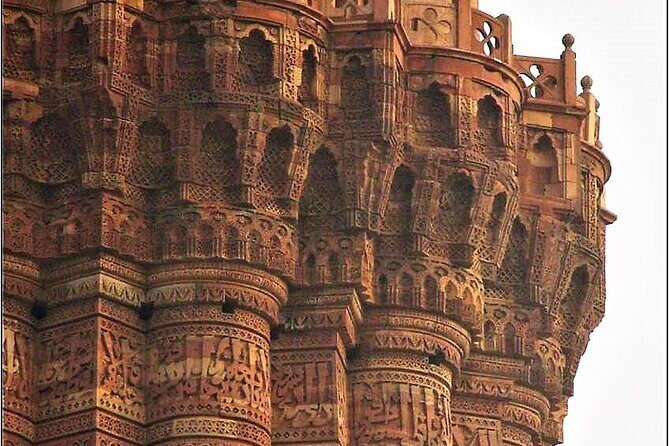
You start in the Mehrauli/Qutub Minar area with Qutub Minar, a 237-foot sandstone tower and minaret built in 1193. The description calls it an Afghan-style victory tower, erected by Sultan Qutb-ud-din to proclaim supremacy—so even at this early stage, you’re not just looking at a landmark. You’re getting a “why this exists” frame.
You get about 50 minutes here, which is enough time to appreciate the scale and take in details without feeling rushed through the entrance area.
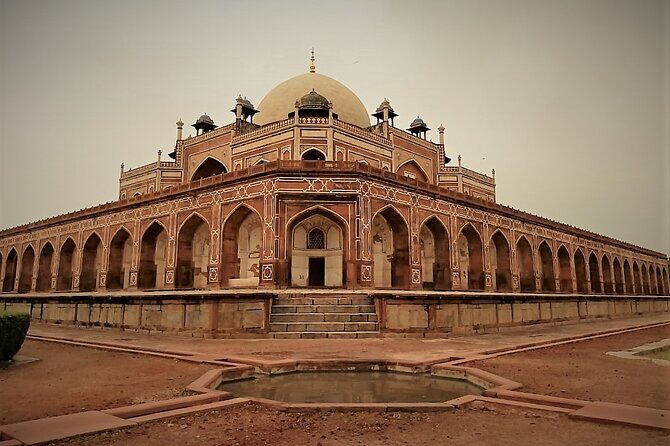
Next comes Humayun’s Tomb, about 50 minutes. This one matters because it’s described as a predecessor to the Taj Mahal. It was constructed for the Mughal emperor in the mid-16th century by Haji Begum, Persian-born wife of Humayun, and it’s known for blending Persian and Mughal elements. That mix of cultures is a big theme across Delhi, so I like pairing this with Qutub Minar early—it helps you notice how styles shift over time.
Possible pacing note: both stops are scheduled as shorter blocks. If you love architecture, bring your curiosity and focus on a few key features rather than trying to see everything.
Jama Masjid and Gurudwara Bangla Sahib: two places to see faith in action
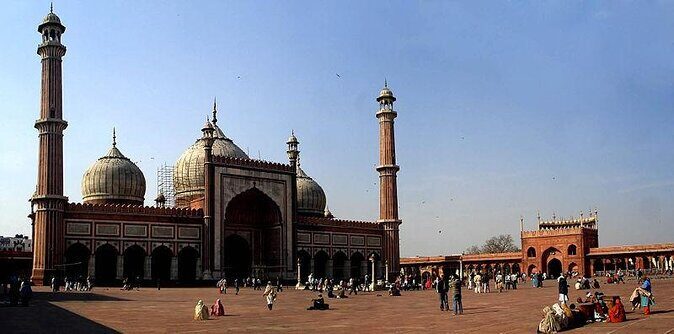
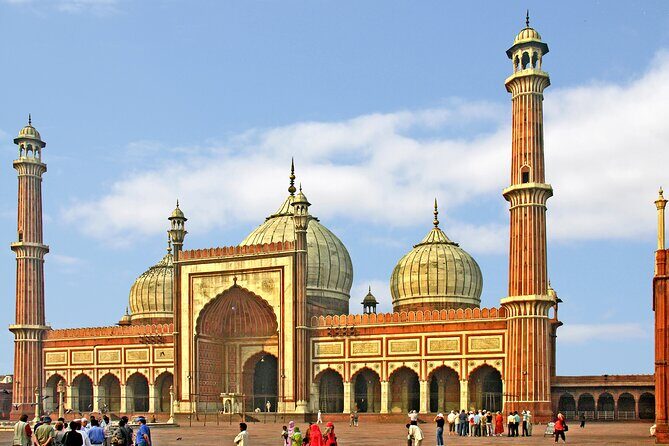
After the Mughal landmarks, you head to Jama Masjid, the Friday Mosque. The tour describes it as a marble and red-sandstone structure and notes it was Shah Jahan’s final architectural triumph, built between 1644 and 1658. There are two minarets standing 40m high, one of which you can get to during a visit.
You’re given about 50 minutes, which is a comfortable amount to absorb the exterior and interior feel, plus watch how people move through the space.
Then the day pivots to Gurudwara Bangla Sahib, about 30 minutes. This Sikh temple experience is more interactive. You can watch (and join if you like) the langar—voluntary group cooking and feeding program at the gurdwara. That’s the kind of stop that adds a human layer to your monument day. You’re not only sightseeing; you’re seeing community in motion.
A practical thought: when you visit active worship spaces, keep your attention on respectful behavior and your own timing. The tour’s shorter duration here makes it easier to experience the atmosphere without turning it into a checklist.
Chandni Chowk and the side markets: spices, wedding stalls, and bangles
This is one of the strongest parts of the day because it’s the most “Delhi” in feel. You’ll spend around 30 minutes at Chandni Chowk and the surrounding stops, including the Digamber Jain Temple and Sisganj Gurudwara.
The tour also includes a pedicab ride around Chandni Chowk. In a place like this, the ride helps you get bearings fast while still seeing the density up close.
The market section is where the itinerary earns its keep:
- Khari Baoli, described as Asia’s biggest spice market
- Kinari Bazaar, known as a wedding market area
- Churi Wali Gali, where merchants sell bangles
You also pass Gali Paranthewali, which signals how focused some streets are on one type of food and trade.
Time reality: 30 minutes is not long, so treat it as a “taste and orient” block. You’ll likely enjoy it most if you’re okay with moving through quickly and letting a few key sights land—spice piles, wedding-related goods, and the bangles street—rather than trying to shop for everything.





Raj Ghat and the Lotus Temple: a calmer mid-to-late day reset
After market intensity, the route gives you a breather.
At Raj Ghat (about 45 minutes), you’ll find a memorial dedicated to Mahatma Gandhi on the banks of the Yamuna River. The tour describes it as a peaceful, very well maintained park with a simple black-marble platform marking the spot connected to Gandhi. This is a reflective pause that helps your day feel less like a nonstop run of entrances and exits.
Then you go to Lotus Temple, about 20 minutes. The tour highlights the lotus design: a flower look with 27 delicate-looking white-marble petals. The temple’s purpose, as described, is to bring faiths together. Visitors are invited to pray or meditate silently according to their own beliefs.
I like this late-day timing because Lotus Temple gives you a visual reset. Even if you only have 20 minutes, the shape is distinctive and the mood tends to slow you down.
Rashtrapati Bhavan, India Gate, and Red Fort: big Delhi built for power and memory
Later in the day you’ll cover some of the city’s most iconic government and imperial landmarks.
First is Rashtrapati Bhavan, also known as the President’s Palace. It’s described as formerly home to the British Viceroy and notes it has 340 rooms. That scale is the point here: you’re looking at built power—space designed to project authority.
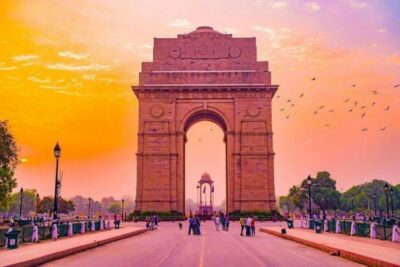
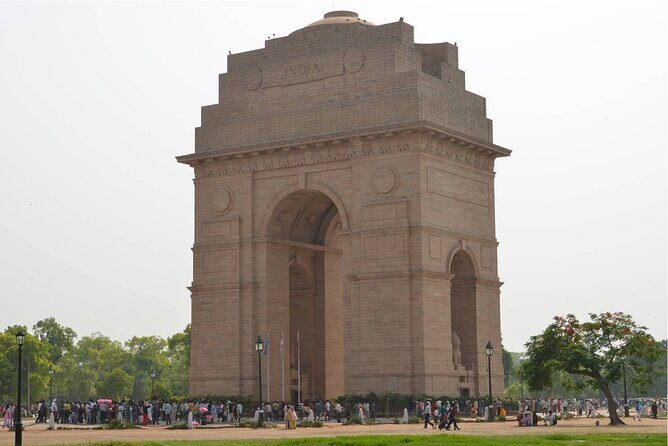
Next comes India Gate, the 42m-high stone memorial arch designed by Lutyens in 1921. It honors around 90,000 Indian Army soldiers who died in WWI, plus losses from the Northwest Frontier operations and the 1919 Anglo-Afghan War.
Finally, the itinerary includes Red Fort, described as a symbol of Mughal power. It was founded by Emperor Shah Jahan, surrounded by an 18m-high wall, and took 10 years to construct (1638–48). The tour also notes a rumor connected to decapitated bodies, but that line is presented as rumor, so I’d treat it as a story you may hear on-site rather than something you need to verify yourself.
Time pacing note: these late stops often depend on daylight, traffic, and the day’s flow. The advantage of a private tour is that your guide can keep the plan moving while still letting you stop for key photos and context.
Price and Logistics: what $90.77 per person really buys
For $90.77 per person on an 8-hour private format, you’re paying mostly for:
- a private vehicle (air-conditioning included)
- pickup included
- onboard Wi‑Fi
- bottled water
- a route that stacks Old Delhi markets with major landmarks
Entrance fees are listed as not included. At the same time, the itinerary marks multiple major monuments as admission ticket free. That’s the one place I’d be cautious. Before your day starts, ask your guide which sites require tickets and how that will be handled for your exact visit.
From a value standpoint, the markets add real weight. Many Delhi tours focus on monuments and only give you one short market moment. Here, you get multiple named market streets (spices, weddings, bangles) plus the pedicab ride. If that’s the kind of Delhi you want, the price feels more justified than a monument-only loop.
Who this tour suits best
This private tour fits you well if:
- you want Old Delhi and New Delhi highlights in one day
- you like seeing daily market life, not only big buildings
- you prefer comfort and clear timing over public transport stress
- you’re okay with shorter visits at each stop so you can cover more ground
It might feel less ideal if you:
- want long, slow museum-style exploring at each major site
- hate walking through crowds in markets and would prefer quieter neighborhoods only
Should you book this Old and New Delhi private tour?
I think it’s a strong pick if your goal is a full-day mix: Qutub Minar and Humayun’s Tomb for the Mughal timeline, Jama Masjid and Bangla Sahib for faith and community, Chandni Chowk and the named markets for real street commerce, then Rashtrapati Bhavan, India Gate, and Red Fort to close the loop.
The feedback for the experience is consistently high, with special praise for the tour guide and driver being informative and well-run. That’s exactly what you want on a day like this—someone who keeps the schedule smooth and explains what you’re looking at.
If you’re flexible about pacing and willing to treat the markets as a fast, sensory overview, you’ll likely come away feeling like you saw both the landmark Delhi and the working Delhi.
FAQ
How long is the private tour?
It runs about 8 hours.
What does the tour cost?
The price is $90.77 per person.
Is pickup included?
Yes, pickup is included.
Is this a private tour or shared with others?
It’s private, so only your group participates.
Is Wi‑Fi and air-conditioning provided?
Yes. You’ll have onboard Wi‑Fi and an air-conditioned vehicle, plus bottled water.
Which major monuments are included?
The tour includes Qutub Minar, Humayun’s Tomb, Jama Masjid, Red Fort, Lotus Temple, Rashtrapati Bhavan (President’s Palace), India Gate, and Raj Ghat. It also includes Gurudwara Bangla Sahib.
Are entrance tickets included in the price?
Entrance tickets to included monuments and features are listed as not included. Some stops are marked admission ticket free, so it’s best to confirm what applies on your day.
What markets and street areas are part of the itinerary?
Chandni Chowk and nearby stops include Digamber Jain Temple, Sisganj Gurudwara, Gali Paranthewali, Khari Baoli spice market, Kinari Bazaar wedding market, and Churi Wali Gali bangles area.
Is there a ride through Chandni Chowk?
Yes. The tour includes a pedicab ride around Chandni Chowk.
What if the tour is canceled due to weather?
It requires good weather. If it’s canceled due to poor weather, you’ll be offered a different date or a full refund.
Can I get a full refund if I cancel?
Yes. You can cancel up to 24 hours in advance for a full refund.