REVIEW · NEW DELHI
5-Day Private Luxury Golden Triangle Tour to Agra and Jaipur From New Delhi
Book on Viator →Operated by Crystal India Holidays · Bookable on Viator
You can skip the Golden Triangle stress. This 5-day private luxury route links sunrise Taj Mahal moments with a guided rickshaw tour through Old Delhi, then keeps moving with an air-conditioned car and an easy daily breakfast. You get a full highlight run across the big three cities without building a timetable, hunting tickets, or juggling transfers.
One catch to plan for: monument admission tickets are not included, and key sites close on set weekdays (Taj Mahal on Friday; Lotus Temple and Red Fort in Delhi on Monday), so your exact mix can shift depending on your arrival day.
In This Review
- Key highlights at a glance
- Private luxury Golden Triangle: what you’re really paying for
- Day 1 in Delhi: Old Delhi lanes, stepwells, and the city’s monument circuit
- A practical timing note for Delhi
- Day 2 to Agra: arrive, see the Taj from a different angle, then go to Baby Taj
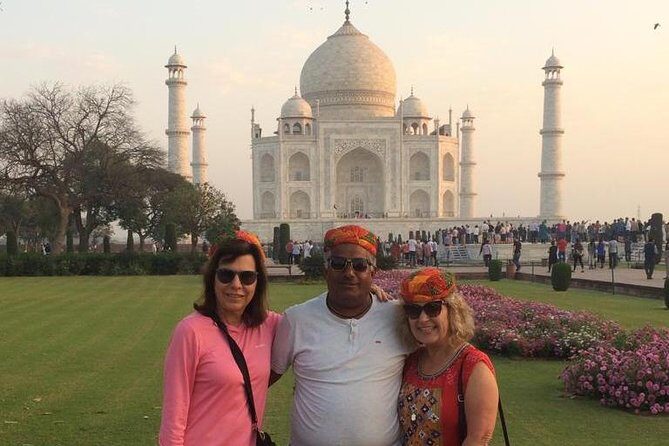
- Day 3 sunrise at the Taj Mahal and Agra Fort: the moment you’ll remember
- Day 4 in Jaipur: Hawa Mahal, Amer, Jal Mahal, and the city’s signature viewpoints
- Day 5: the return drive to Delhi (or an end in Jaipur)
- Hotels and comfort: “luxury” here means location, cleanliness, and a calm base
- Price and admissions: the real cost picture (and why it still can be good value)
- The drivers and guides: where the tour either feels smooth or turns stressful
- Best for: who will enjoy this tour the most
- Should you book this Golden Triangle tour?
- FAQ
- Is this tour private or shared?
- Does the price include hotels and breakfast?
- Are lunch and dinner included?
- Are monument entrance fees included?
- Which days have closures that affect the itinerary?
- When do you visit the Taj Mahal?
- What vehicle do I ride in?
- Can I cancel for a full refund?
Key highlights at a glance
- Private pick-up and door-to-door drop-offs across Delhi, Agra, and Jaipur
- Sunrise Taj Mahal + battery bus for the last stretch from parking to the monument area
- Old Delhi by rickshaw plus spice-market stops like Khari Baoli
- Agra and Jaipur guided touring with local guides in each city
- Hotel options up to 5-star level (examples mentioned include The Suryaa and Vasant Conti)
- Guides help with entrance-ticket purchase, aimed at reducing time in queues
Private luxury Golden Triangle: what you’re really paying for
At $212.63 per person, this tour isn’t just a taxi-and-crowds bundle. The core value is that you buy back time and energy. Instead of planning routes between Delhi, Agra, and Jaipur, you get a single system: pick-up, a private air-conditioned vehicle with driver, local guides for sightseeing, and included daily breakfast when you choose the hotel option.
In practice, that means your day looks less like logistics and more like looking up. You’re moving through monumental sites with a guide who helps you understand what you’re seeing and where to stand for photos. You’re also not stuck waiting for transportation after each stop. Even small comfort details matter on this route: mineral water in the car, and a plan built around the long driving stretches between cities.
Now, a reality check: you’ll still budget separately for entrance tickets. The tour includes help with ticket purchasing, but it does not include the monument admission fees. The listing states admission fees of about $75 per person for monuments, plus optional gratuities, and you’ll cover lunch and dinner.
You can also read our reviews of more private tours in New Delhi



Day 1 in Delhi: Old Delhi lanes, stepwells, and the city’s monument circuit
Delhi day can feel like a lot, but the route is designed to get you grounded fast. You start with a pick-up from your hotel or airport and then head straight into Old Delhi’s Mughal-era core.
You’ll visit Jama Masjid, one of the most impressive Mughal mosques in the city. After that, you switch gears from big-stone grandeur to human-scale chaos: a rickshaw tour through Old Delhi and Chandni Chowk. This is where Delhi stops being a name on a map and becomes smell-and-sound history: markets, narrow lanes, and constant street activity.
Next comes the spice world with Khari Baoli, described as one of Asia’s largest wholesale spice markets. It’s not a museum stop; it’s the real supply chain. If you like food and ingredients, this is the part that makes you say, I get it now.
Then the itinerary adds a calmer pause at Agrasen Ki Baoli, a centuries-old stepwell. Stepwells often get overlooked, but this one works well on day one because it gives your legs and senses a reset after the market time.
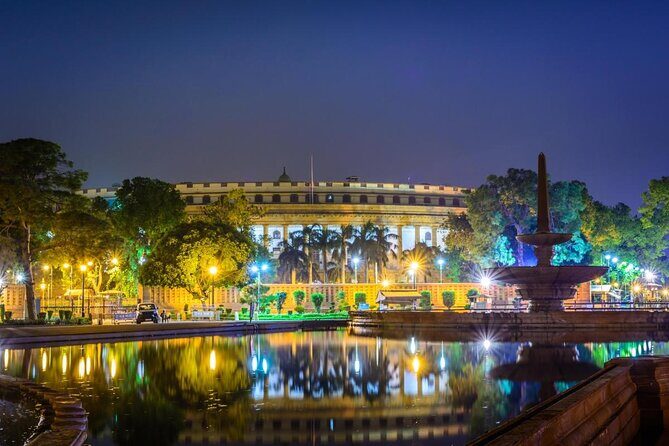
You also get a spiritual break at Gurudwara Bangla Sahib, known for its golden dome and sacred pool area. After that, the plan moves into monumental Delhi: a quick look at India Gate, plus drive-past views of major government buildings like Parliament House and Rashtrapati Bhavan.
In the afternoon/evening flow, you can expect several major sites: Gandhi Smriti, the Lotus Temple, and later Qutub Minar (an UNESCO World Heritage site). The tour notes that some admissions are not included (like Qutub Minar), and a few sites close on specific weekdays, which matters if you start on Monday.
A practical timing note for Delhi
This is an all-systems day. You’ll be walking on varied surfaces and doing repeated entry/exit routines for monuments. One small tip shared from real trips: wear easy on/off shoes in Delhi. Several sites require removing footwear, and it adds up when you’re bouncing between stops.
Day 2 to Agra: arrive, see the Taj from a different angle, then go to Baby Taj
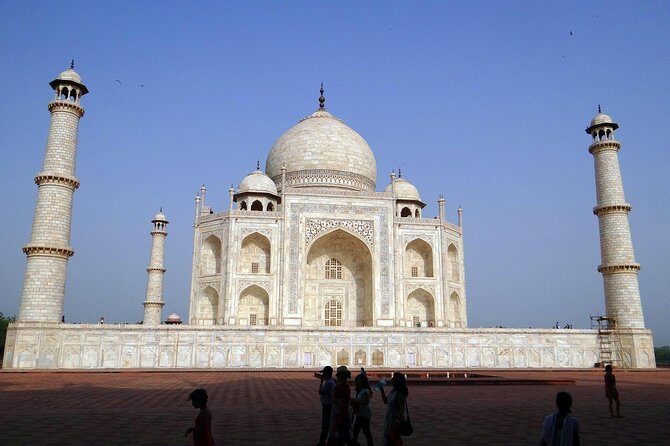
After breakfast, you leave Delhi and drive to Agra. The tour keeps the day focused but not too compressed: check in to your hotel in Agra, then start with a Taj Mahal view point experience that gives you panoramic sightlines before you’re officially inside the main complex.
This is a smart approach because it reduces the pressure of the first Taj visit. You’re not arriving and instantly trying to absorb everything in one rush. You get the outline first: symmetry, scale, and the way the Taj sits in its basin of water and gardens.
Next comes Itmad-ud-Daula, often called the Baby Taj. It’s smaller than the Taj, but it’s still major Mughal architecture. If you like detail work, you’ll appreciate it more here than you might expect, because the scale is easier to slow down for.
A typical day like this is a good trade-off on the Golden Triangle route. You get meaningful Agra without pretending you can do a two-day deep exploration in one afternoon.
Day 3 sunrise at the Taj Mahal and Agra Fort: the moment you’ll remember
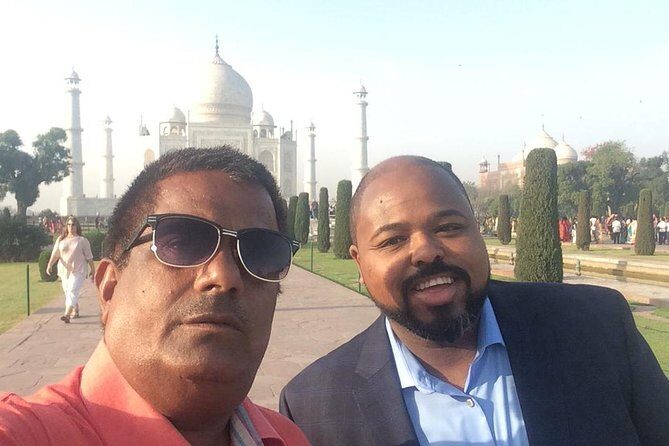
This is the centerpiece day. You start early for a sunrise Taj Mahal tour. Sunrise matters here because light softens the monument and reduces the harsh midday glare that makes stone look flat. The tour also includes access support so you’re not stuck in lines at the worst possible time.
You’ll also visit Agra Fort in the soft morning light. The fort’s importance isn’t just aesthetic; it’s part of the Mughal power story behind the Taj. With sunrise pacing, the day stays energetic without turning into a long slog.
After those two major hits, you transfer toward Jaipur and make one stop on the way: Chand Baori (a stepwell in Abhaneri). This is a great example of why the Golden Triangle works as a package. You’re not just driving from A to B. You’re breaking the journey with something that feels local and specific to Rajasthan’s architecture and water history.
A few more New Delhi tours and experiences worth a look





Day 4 in Jaipur: Hawa Mahal, Amer, Jal Mahal, and the city’s signature viewpoints
Jaipur day is built around visual highlights that cover different moods: palace exteriors, fort interiors, lakeside views, and open-air history.
You begin with Hawa Mahal, the Palace of Breeze. It’s famous for its façade and window patterns, and the stop is short but effective. Even if you don’t spend ages inside, you get the iconic look that defines Jaipur’s skyline.
Then you head to Amer (Amer Palace), a fortress-palace complex outside the city core. The tour lists the Amer stop as admission free, which is a nice cost-saver on a day packed with sights.
Next, you visit Panna Meena ka Kund, another stepwell. Jaipur repeats the water-and-stone theme, and it’s worth seeing these side by side over the trip: Delhi’s stepwell and Agrasen Ki Baoli, Agra’s mausoleum detail work, then Jaipur’s planned water architecture.
The itinerary also includes Jal Mahal, a palace sitting above the water surface near Man Sagar Lake. It’s a viewpoint stop as much as a photo stop, and it gives the day a visual contrast after fort walls and palace corridors.
You’ll continue with Gaitore Ki Chhatriyan, cenotaphs on the hillside. These are quieter stops than the headline monuments, which is exactly why they work well in a high-speed itinerary: they add texture without adding huge crowds.
For museum time, you get City Palace (admission not included). Then you finish with Jantar Mantar, the UNESCO World Heritage astronomical observatory. This is one of the rare places where ancient design feels practical, not decorative. You’ll see how math and sky-gazing shaped real architecture.
Day 5: the return drive to Delhi (or an end in Jaipur)
On the final day, you eat breakfast and then travel back toward Delhi, with the return described as about five hours. The tour notes a typical return time around 2 pm, though it says you can request timing changes with the provider.
There’s also an option to be dropped off in Jaipur rather than returning to Delhi. One traveler highlight flagged that the tour can end in Jaipur, which is useful if you want to tack on extra days in the Pink City instead of rushing onward.
If you like a clean ending, this works well: you get your Golden Triangle highlights and then you decide how long you want to linger.
Hotels and comfort: “luxury” here means location, cleanliness, and a calm base
This tour calls itself luxury, and the hotel option supports that. If you select the hotel-inclusive package, you get four nights accommodation and daily breakfast. The listing gives examples like Deventure Sarovar Portico for 4-star, and The Suryaa or Vasant Conti style hotels for 5-star.
What matters to you isn’t just the star rating. Reviews highlight the basics: rooms that feel clean, good amenities, and hotel locations that still allow local movement (like using taxis or other short rides to explore further).
One practical tip shared from a real trip: if your room placement matters to you, don’t automatically accept a room next to the elevator. That can make an otherwise great hotel feel noisy or inconvenient.
Also, the room setup is usually twin-sharing. If you book for three people, the default is triple-sharing unless you request two rooms and pay an additional charge.
Price and admissions: the real cost picture (and why it still can be good value)
The headline price is $212.63 per person, and it can look like a bargain if you’re comparing it to what you’d pay for private guides, a private driver, and hotel nights separately.
Here’s the math you should keep in mind:
- Admission fees for monuments are listed at about $75 per person and are not included in the tour price.
- Lunch and dinner are also your expense.
- Gratuities are optional.
So your all-in experience often lands closer to the tour price plus that admission figure. Still, you’re buying private transportation between three cities, local guides, hotel nights (if you choose that option), breakfast daily, and support with ticket purchasing at major monuments.
The reason this can remain good value is that the Golden Triangle is logistically messy on your own. Delhi-to-Agra and Agra-to-Jaipur drives eat time, and the time you lose usually turns into either wasted afternoons or expensive fixes. Paying for organization often means you get more actual sightseeing than you would if you were improvising daily.
The drivers and guides: where the tour either feels smooth or turns stressful
On this route, your driver is more than a driver. Delhi traffic and city driving are intense. The reviews emphasize calm, punctual driving and the ability to manage heavy traffic without turning your trip into a white-knuckle ride.
Names that came up include drivers like Inder, Jarnail, Sunil, Shyam, Rajesh, and others. Even when different people were involved, the recurring theme was the same: steady driving, safe handling, and reliable meeting points.
Guides are separate local experts who meet you before each city’s sightseeing. Reviews call out guides such as Mahi in Delhi, Atul in Agra, and Naveen in Jaipur, plus many others. What you’ll likely care about most is practical guidance: where to stand, what to look for, and how to move through sites efficiently without feeling rushed.
One notable positive mentioned is that guides tend to avoid heavy sales pressure. If you want to shop, they’ll often help. If you don’t, the day keeps moving.
Best for: who will enjoy this tour the most
This tour fits best if you want:
- A private experience with local guides in each city
- A highlight plan for first-timers who don’t want to plan logistics
- Comfortable, air-conditioned transport for long driving days
- Hotel options that actually let you rest between cities
You might want a different approach if:
- You want lots of museum time in one city (this is a highlights-first schedule)
- You’re traveling during a day when major monuments close and you want those exact sites no matter what
- You’re hoping to do serious shopping stops every evening (the plan is built around sightseeing, not long retail detours)
Should you book this Golden Triangle tour?
If you want the Golden Triangle done with minimal stress, I’d book it. The combination of private transport, local guides, hotel options, and a sunrise plan for the Taj Mahal is exactly what makes this route work for most people.
I’d hesitate only if monument admission costs would be a deal-breaker for your budget, or if you’re locked into visiting specific closed-day attractions based purely on the calendar. If that’s you, message the provider before paying and confirm what the schedule looks like for your exact start day.
If you do book, plan around one simple strategy: bring energy for early mornings, but don’t expect “everything in-depth.” This tour is built for you to see the big moments, get your bearings quickly, and then decide what to explore later.
FAQ
Is this tour private or shared?
It’s a private tour/activity. Only your group participates.
Does the price include hotels and breakfast?
If you choose the option that includes hotels, it provides four nights accommodation and daily hotel breakfast. Lunch and dinner are not included.
Are lunch and dinner included?
No. Lunch and dinner are your own expense.
Are monument entrance fees included?
No. Admission fees are not included, and the listing states about $75 per person for monument entry.
Which days have closures that affect the itinerary?
The Taj Mahal is closed every Friday. In Delhi, the Lotus Temple and Red Fort are closed every Monday.
When do you visit the Taj Mahal?
The plan includes a sunrise Taj Mahal tour in Agra. There’s also a note that if your tour begins on Wednesday, the Taj Mahal visit shifts to a Thursday sunset timing due to Friday closure.
What vehicle do I ride in?
The car size depends on group size: a four-seater sedan for 1–2 people, a six-seater SUV for 3–4 people, and a ten-seater van for 5–10 people.
Can I cancel for a full refund?
Yes. Free cancellation is offered if you cancel at least 24 hours before the experience start time. If you cancel less than 24 hours before, the amount paid is not refunded.