REVIEW · NEW DELHI
5-Day Golden Triangle Tour from Delhi
Book on Viator →Operated by Akbran Tour · Bookable on Viator
A Golden Triangle trip can feel like a race. This one is designed to slow down just enough: private guide, A/C driver, and 5-star hotels with most key monument time built in. I like that all monument entry fees can be prepaid (when you choose the all-inclusive option) and that you travel in your own chauffeured vehicle instead of hopping between strangers. One caution: the exact entrance-fee situation depends on the option you select, so confirm what you’re covered for before you go.
You start at 8:00am, and you’re not left to figure out logistics on your own. The itinerary strings together Delhi’s big Mughal-era sights, Agra’s most famous icons (plus a couple of quieter ones), and Jaipur’s fort-and-palace combo. If you’re hoping for a super flexible, stop-anywhere style trip, a fixed 5-day flow can feel a bit tight.
If you want a straightforward way to see the highlights of North India with a driver doing the hard work, this is a strong contender.
In This Review
- Key Things To Know Before You Go
- The Golden Triangle Layout: Delhi to Agra to Jaipur Without the Headaches
- Delhi Morning: Humayun’s Tomb, Qutub Minar, Jama Masjid, and Gandhi at Raj Ghat
- Humayun’s Tomb: a grand garden-tomb that sets the tone
- Qutub Minar: history you can measure in height
- Jama Masjid: the scale of a major mosque
- War Memorial Arch: quick pause, different mood
- Raj Ghat: a calm final stop with a big emotional pull
- Agra Focus Day: Taj Mahal Plus Agra Fort, Itmad-ud-Daula, and Mehtab Bagh
- Taj Mahal: you’re seeing more than the postcard
- Agra Fort: Mughal power in stone
- Itmad-ud-Daula: the “small” mausoleum that rewards patience
- Mehtab Bagh: a moonlight garden, even if you’re there by day
- Fatehpur Sikri: Akbar’s Capital and the Water Problem
- Jaipur Day: Amber Fort Views, Water Palace Details, City Palace Museums, and Jantar Mantar
- Amber Palace (Amber Fort): fortress living with big sightlines
- Water Palace: five storeys and latticed screens
- City Palace of Jaipur: costumes, armour, and the museum side of royal life
- Jantar Mantar: a stone astrological and astronomical observatory
- Your Private Vehicle and Guide: Why This Style Feels Better Than DIY
- The car setup: A/C and group size matching
- The guide: more useful than a translation app
- Optional prepaid entrance fees: read this carefully
- Price and Value: Is $165.34 a Good Deal for Delhi, Agra, and Jaipur?
- Pacing, Comfort, and the Kind of Trip This Is
- What Can Go Wrong (and How to Prevent It)
- Should You Book This Golden Triangle Tour?
- FAQ
- How long is the Golden Triangle tour from Delhi?
- Which cities are included in the tour?
- What time does the tour start?
- Do I get hotel pickup and drop-off?
- Is there a private guide?
- What vehicle will I travel in?
- Are monument entrance fees included?
- What meals are included?
- Are water bottles included?
- Is cancellation free?
Key Things To Know Before You Go
- Private guide throughout: you get English-speaking interpretation instead of guessing your way around.
- Prepaid monument entries are option-based: the tour says entries are prepaid if you choose the all-inclusive version.
- A/C vehicle, sized to your group: sedan for 1–2 people, Toyota Innova for 3–4, mini van for 5–15.
- 5-star hotels for four nights: lodging is the trade-off you make for a smoother pace.
- Lunch included on four days: helps keep daily plans from getting derailed by food searches.
- Hotel pickup and drop-off: the trip meets you where you’re staying, then handles airport transfer at the end.
The Golden Triangle Layout: Delhi to Agra to Jaipur Without the Headaches
The Golden Triangle is famous for a reason. Delhi gives you layers of empire, Agra centers on the most iconic symbol of Mughal architecture, and Jaipur shows you how royal planning shaped an entire city. Doing it in one tight run makes sense when you only have a few days and don’t want to repeat long transfers.
What’s practical here is the way the trip is packaged. You have a private guide and your own A/C vehicle, which cuts down on the most annoying parts of sightseeing in India: confusion about ticket lines, figuring out routes, and the constant question of where to meet back up. In real life, that’s the difference between a trip that feels controlled and one that feels chaotic.
You also get a clear structure. The route is built around the major stops most people come to see: Delhi’s iconic monuments, Agra’s Taj Mahal area and Mughal architecture, then Jaipur’s fort, palace, and observatory. It’s not “only photos.” It’s also the kind of route where a good guide can connect what you’re seeing to the big picture.
A few more New Delhi tours and experiences worth a look


Delhi Morning: Humayun’s Tomb, Qutub Minar, Jama Masjid, and Gandhi at Raj Ghat
Delhi on this tour is a classic starter pack, but you’re not just ticking boxes. The stops are chosen so you get a feeling for how different rulers and religions left their mark in the same city.
Humayun’s Tomb: a grand garden-tomb that sets the tone
Humayun’s Tomb is your first major monument stop. The way this visit is framed matters: the description notes it as reflecting the legacy British presence left behind. Even if you don’t focus on that angle specifically, it’s a strong start because the tomb is designed like an organized vision—symmetry, garden layout, and the sense that the architecture is meant to be read.
Timing helps too. Starting early is a big advantage for Delhi. You get to see the complex before the day turns hot and crowded, and you’ll likely walk more comfortably.
Qutub Minar: history you can measure in height
Next comes Qutub Minar, described as the tallest stone tower in India, tied to the early Islamic rule in the region. This is the kind of site where explanations work better than quick staring. Your guide can point out what makes the tower such a landmark, and how later construction connects to earlier power shifts.
Give yourself a little buffer here. Even with an hour, you’ll want time to look up, then around. If you rush, you miss the details your guide is likely to highlight.
Jama Masjid: the scale of a major mosque
Jama Masjid is listed as the largest mosque in Asia and built by Shahjahan. That alone tells you what to expect: scale. Your visit is shorter—around 45 minutes—so focus on orientation and atmosphere, then catch a few key angles for photos.
Also note that Jama Masjid is marked as free admission in the tour details. That’s nice because it makes the day feel a bit lighter financially if you’re comparing add-on costs.





War Memorial Arch: quick pause, different mood
You’ll also pass by the War Memorial Arch. This is not the same kind of monument as the Mughal sites, so it works like a reset. A short stop is enough here unless you’re especially focused on military memorials.
Raj Ghat: a calm final stop with a big emotional pull
Finally, you end at Raj Ghat, Gandhi’s cremation site. It’s marked as admission free, and it typically works best when you slow down mentally. After grand architecture, this stop brings the trip back to personal meaning.
Agra Focus Day: Taj Mahal Plus Agra Fort, Itmad-ud-Daula, and Mehtab Bagh
Agra is where the trip’s big-name magnet pulls hardest: Taj Mahal. But the smart move is that the day doesn’t stop at one icon.
Taj Mahal: you’re seeing more than the postcard
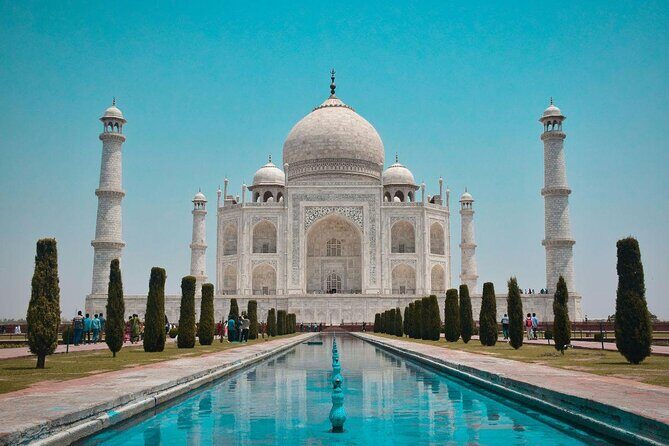
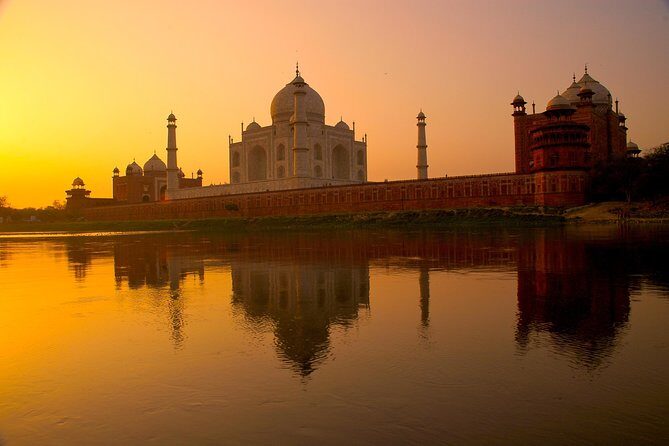
Taj Mahal is described as Shah Jahan’s white marble mausoleum for Mumtaz Mahal. The time you get—about 1 hour 30 minutes—is enough to do two things: take in the main view, and then step back long enough for your guide to explain the architecture and design choices.
One important practical note: Taj Mahal admission is shown as not included on the tour stops list. At the same time, the tour’s included section says monument entry fees are prepaid only if you choose the all-inclusive option. Translation: confirm your package before you arrive so you’re not stuck paying at the gate.
Agra Fort: Mughal power in stone
Agra Fort follows, described as an outstanding example of Mughal architecture and a stronghold of the empire. This is a different kind of experience than the Taj. Instead of a single monumental facade, you’re looking at layers of fortification and the logic of defense.
You get about an hour here. That’s fair if your guide keeps you moving between key points.
Itmad-ud-Daula: the “small” mausoleum that rewards patience
Itmad-ud-Daula is listed as a marble mausoleum built by Nur Jahan in memory of her father, Ghiyas Beg. This stop is only around 30 minutes, but it’s often the one that feels the most intimate. If you enjoy carvings and the feel of Mughal craftsmanship, you can get a lot out of even a short visit.
Again, admission is marked not included. So this is another moment where the prepaid-fee option matters.
Mehtab Bagh: a moonlight garden, even if you’re there by day
Mehtab Bagh is called a moonlight garden in the tour details. Even if you visit during daylight, this stop works because it changes your angle. You’re not only viewing from the standard position; you’re getting a sense of how the Taj fits into a wider planned setting.
Fatehpur Sikri: Akbar’s Capital and the Water Problem
Fatehpur Sikri is scheduled on the third day, about 37 km from Agra. It’s described as built by Mughal emperor Akbar in 1571 in honor of the Sufi saint Sheikh Salim Chishti. The tour also notes it was Mughal capital for 14 years, then abandoned due to lack of water.
That water detail is more than trivia. It’s the kind of fact that makes the whole place click. When you understand why a city could thrive, then fail, you view the architecture differently. It’s not just stone; it’s a system that depended on resources.
The visit time is around 1 hour 30 minutes. That’s long enough to understand the layout and absorb the story without feeling like you’re on a constant sprint.
Fatehpur Sikri also tends to be a relief from the biggest-ticket crowds of the most famous landmarks. If you want a break from the Taj-level focus, this stop offers a different kind of satisfaction.
Jaipur Day: Amber Fort Views, Water Palace Details, City Palace Museums, and Jantar Mantar
Jaipur is where the trip turns visual. You get fort-and-palace architecture plus a stone observatory built for astronomy and astrology.
Amber Palace (Amber Fort): fortress living with big sightlines
Amber Palace is described as sitting on a ridge outside Jaipur, surrounded by fortified battlements and overlooking Moata Lake. That ridge setting matters. It’s one of those places where the views and the defenses are part of the design.
You get about 1 hour 30 minutes. That’s enough to see the main focus areas and get a feel for why this was built to impress and to protect.
Water Palace: five storeys and latticed screens
The Water Palace stop is described in vivid architectural terms: a five-storey wonder with a pyramidal facade and overhanging windows with latticed screens, plus domes and spires. This is an interesting pairing after Amber because it changes the mood from defensive to refined.
The tour gives this stop only as a listed segment without a clear ticket note or long time block. In practice, treat it like a “look close” moment. If your guide is good at pointing out design elements, you’ll appreciate it more than if you rush through.
City Palace of Jaipur: costumes, armour, and the museum side of royal life
City Palace Museum is described as having a superb collection of Rajasthani costumes and an armoury of Mughals and Rajputs, including swords with different shapes and chiseled handles. That’s a great detail because it tells you this isn’t only about rooms and courtyards—it’s also about objects.
You have about an hour here. If you like museum-style learning, this time slot works well.
Admission is marked not included on the tour stops list, so again: check your package choice if you don’t want surprise gate payments.
Jantar Mantar: a stone astrological and astronomical observatory
Jantar Mantar is listed as a stone observatory built by Maharaja Jai Singh in the 18th century. The best way to enjoy this is to treat it like a working instrument, not a decorative park. Your guide can help explain how the measurements connect to timekeeping and sky observation.
The stop is about 30 minutes. For most people, that’s the right amount unless you’re already obsessed with archaeoastronomy.
Your Private Vehicle and Guide: Why This Style Feels Better Than DIY
The tour is built around one idea: you don’t want to manage the hard parts alone. That’s why it includes a private air-conditioned vehicle the whole way, plus an English-speaking private guide.
The car setup: A/C and group size matching
The vehicle is assigned based on party size: sedan cars up to 2 people, Toyota Innova for 3–4, and mini van for 5–15. This matters because it controls comfort. In the Golden Triangle, distances between stops add up. An A/C car is not luxury; it’s sanity.
You also get hotel pickup and drop-off, and bottled water during travel. Add tolls and parking being handled, and the driving day stops feeling like a scavenger hunt.
The guide: more useful than a translation app
A private guide changes what you notice. Even when monuments look visually similar, the meaning can be totally different. A good guide can connect Qutub Minar to the shift in power it represents, or connect Fatehpur Sikri to why a capital could be abandoned quickly after its founding.
I also like that the tour is described as private—only your group participates. That keeps the day from turning into a waiting game.
Optional prepaid entrance fees: read this carefully
Here’s the one part that needs your attention. The included section says monument entry fees are prepaid only if you select the all-inclusive option. The stop-by-stop notes also mark many sites as admission not included.
So before you go, verify what you’ve purchased:
- If you selected all-inclusive, plan on prepaid entry for monuments.
- If not, expect that some sites may require payment on arrival.
This is the difference between a smooth day and an awkward scramble at the ticket gate.
Price and Value: Is $165.34 a Good Deal for Delhi, Agra, and Jaipur?

At about $165.34 per person for roughly 5 days and 4 nights, the price looks low for what’s included—assuming you’ve selected the all-inclusive entry option and you’re comparing apples to apples.
You’re getting:
- Four nights of lodging in 5-star hotels
- Breakfast and lunch included (lunch listed as 4 meals)
- A private A/C vehicle with hotel pickup/drop-off
- An English-speaking private guide
- Water bottle during travel
- Tolls and parking covered
- A mobile ticket, plus group discounts
Even without the prepaid entry option, the hotel category plus private guiding already make the structure look like better-than-budget value for a first-time Golden Triangle run. And you’re not dealing with multiple ticket vendors, unclear meeting points, or transport gaps between cities.
The one caution on value is the “optional” piece: if you don’t choose the all-inclusive version, you may end up paying separate entrance fees at several monuments. That can shift the math quickly.
Pacing, Comfort, and the Kind of Trip This Is
This tour is designed for people who want a guided highlight circuit with minimal planning stress. It’s also designed for people who can handle long sightseeing days, because you’ll be moving across major landmarks in each city.
It’s not built for slow museum wanders all day long. For most stops, time blocks are short enough that you’ll need to let the guide steer and keep your pace.
There’s also a human factor. The tour details list proper Covid-19 SOP during the whole trip, and that’s worth taking seriously. For a smoother day, you’ll want to carry whatever you need to stay comfortable in any health checks.
What Can Go Wrong (and How to Prevent It)
No tour is perfect. Based on the overall pattern of feedback around this provider, the common strengths are organization and good on-the-ground help, including punctual driving and guides who customize explanations to your schedule. Some people have also highlighted a chauffeur named Sumit as punctual and polite, and a guide named Anas as someone who adds historical detail and tailors the day.
The caution is customer service handling. One lower-rating account described frustration with how concerns were handled by the owner, Sumit U. You can’t control every interaction, but you can reduce risk.
My practical advice:
- If anything feels off, address it immediately, not at the end of the day.
- Use the WhatsApp contact listed by the local supplier after booking.
- Ask early what’s prepaid and what you may need to pay at monuments.
You’re far more likely to have a calm trip when expectations are crystal clear on the first morning.
Should You Book This Golden Triangle Tour?
Book it if you want a tight, guided Delhi–Agra–Jaipur route with a private car, 5-star lodging, and lunch handled. It’s a good fit for first-timers who want the big monuments—especially Taj Mahal, Amber Fort, and the Jaipur observatory—without doing the logistics math yourself.
Skip or rethink it if entrance fees are a dealbreaker for you and you’re not selecting the all-inclusive option. Also reconsider if you dislike structured time blocks and want to spend most days drifting at your own speed.
If you’re trying to get value from a short North India trip, this style hits the sweet spot: you get the highlights, you travel comfortably, and you spend your mental energy on the sights instead of planning the next move.
FAQ
How long is the Golden Triangle tour from Delhi?
It’s approximately 5 days. The trip includes four nights of lodging.
Which cities are included in the tour?
The route covers New Delhi, Agra, and Jaipur.
What time does the tour start?
The start time is 8:00 am.
Do I get hotel pickup and drop-off?
Yes. Hotel pickup and drop-off are included, and on the last day you’ll be driven from Jaipur to Delhi and dropped at Delhi airport.
Is there a private guide?
Yes. A private, English-speaking guide stays with you throughout the tour.
What vehicle will I travel in?
You’ll travel in a private air-conditioned vehicle chosen by group size: sedan (1–2), Toyota Innova (3–4), or a mini van (5–15).
Are monument entrance fees included?
Monument entry fees are prepaid only if you choose the all-inclusive tour option. The tour notes some sites as admission not included otherwise.
What meals are included?
You’ll have four lunches included, and breakfast is included with the four nights of lodging.
Are water bottles included?
Yes. Water bottles are included while traveling.
Is cancellation free?
Free cancellation is offered up to 24 hours before the experience’s start time for a full refund. If you cancel less than 24 hours before start time, the amount paid is not refunded.