REVIEW · RISHIKESH
Rishikesh: Full-Day Sightseeing Tour with Ganga Aarti
Book on GetYourGuide →Operated by Tourify Uttarakhand · Bookable on GetYourGuide
Rishikesh does spiritual drama at sunset. In one full day you walk Rishikesh’s big landmarks—Ram Jhula and Lakshman Jhula—and you end with the Ganga Aarti ritual at sunset. I especially liked the calm, human scale of the ashrams and riverside stops, and the way the ceremony made the Ganges feel central, not just scenic. One thing to consider: transportation and food are not included, and some entrance fees (like the Beatles Ashram ticket, plus the morning yoga/meditation entrance fees) are extra.
A lot of the value here comes from having a guide who can translate what you’re seeing. In the real-world experience, the English-speaking guide Pradeep stood out for answering questions patiently and keeping a steady, unhurried pace so you could actually look, not just move.
You’ll spend about 7 hours covering bridges, spiritual sites, and river time. It’s a lot for one day, but it’s also a smart way to get your bearings fast, especially if you’re visiting Rishikesh for the first time.
In This Review
- Key highlights worth clocking before you go
- A 7-hour Rishikesh route that connects bridges to ceremony
- From Janki Setu to Ram Jhula: views first, questions second
- Lakshman Jhula: the bridge with a story tied to Lord Lakshman
- Gita Bhawan: devotional calm, bookshops, and riverside atmosphere
- Parmarth Niketan Ashram: where yoga and meditation feel real
- The Beatles Ashram (optional): music history meets a maintenance reality
- Goa Beach Rishikesh: river-side downtime between the bigger moments
- Ganga Aarti Sthal at sunset: the ritual that makes the river feel alive
- Price and logistics: getting good value for $35
- Who this tour fits best (and who should adjust expectations)
- Should you book this Rishikesh full-day sightseeing + Ganga Aarti tour?
- FAQ
- How long is the Rishikesh full-day sightseeing tour with Ganga Aarti?
- Where does the tour start?
- Is transportation included in the price?
- Is food included?
- What’s included in the tour price?
- Are entrance fees included?
- Is the Beatles Ashram stop included or optional?
- Will I be able to avoid long lines?
- What language is the guide?
- What should I bring?
Key highlights worth clocking before you go
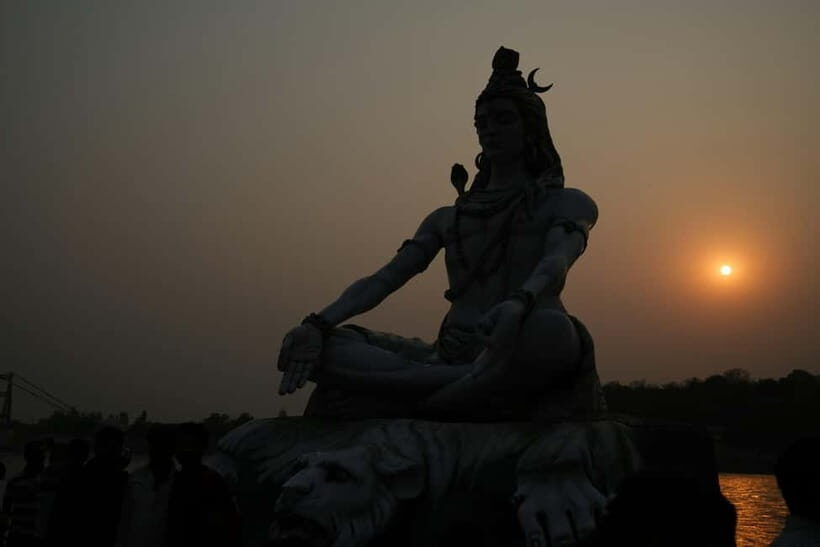
- Ganga Aarti Sthal at sunset: lamps, chants, and floating diyas on the glowing river
- Parmarth Niketan Ashram: one of the region’s largest ashrams, known for yoga and meditation
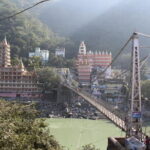
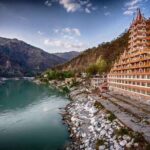
- Ram Jhula + Lakshman Jhula: iconic suspension bridges with wide Ganges views
- Optional Beatles Ashram: 1960s Beatles connection with graffiti-covered meditation halls
- Goa Beach free time: sit by the river and slow down between stops
- English guide + skip the ticket line: less friction during a packed day
A 7-hour Rishikesh route that connects bridges to ceremony
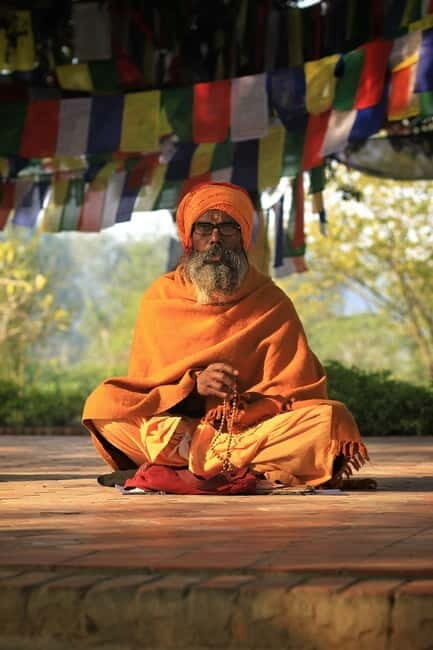
This tour is built like a day arc. Morning energy starts on the bridges—Ram Jhula and Lakshman Jhula—where you get famous views of the Ganges and the temple world along the banks. Midday shifts into spirituality: Gita Bhawan, then Parmarth Niketan Ashram. Later you get an optional detour into the Beatles story, and you finish with the moment Rishikesh is known for: Ganga Aarti at sunset.
That structure matters. If you only visit one bridge or one ashram, you miss how the whole city breathes together. Here, the river is the link—first as scenery, then as sacred space, and finally as the main stage.
You’ll also notice how the tour balances guidance with breathing room. Several stops include guided sightseeing, but the day isn’t just a checklist. You get free time at Goa Beach to sit, and you end with an evening stroll along the riverbanks after the ceremony.
A few more Rishikesh tours and experiences worth a look


From Janki Setu to Ram Jhula: views first, questions second
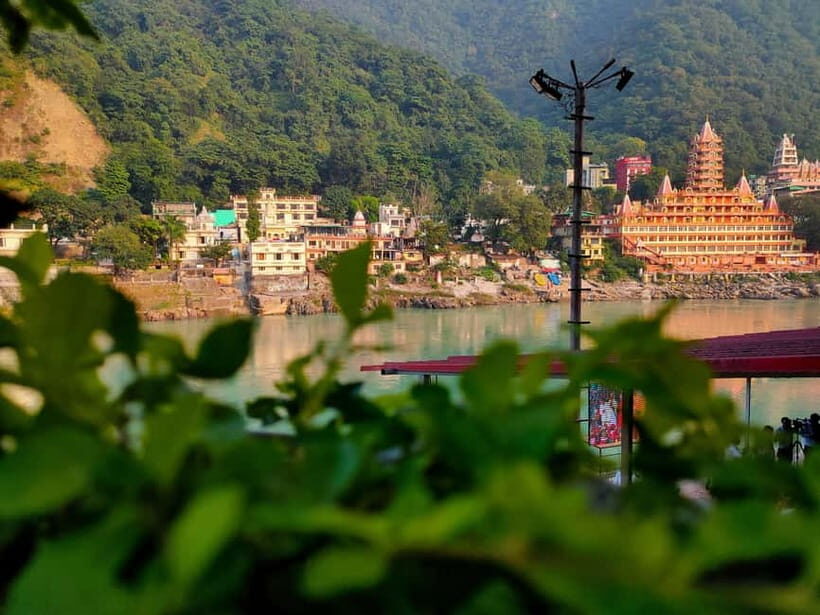
Your day starts at Janki Setu, with pickup at your hotel if it’s possible. From there, the schedule takes you to Ram Jhula for about an hour.
Ram Jhula isn’t just a photo spot. You’ll cross and look at the surrounding temples and the sweep of the Ganges. The bridge setting also makes it easier to understand what you’ll see later: pilgrims and sadhus crossing in the same physical space as tourists, all moving to their own rhythm.
Practical note: because this is a full-day walk-and-cross day, timing and pacing matter. A steady guide helps you stop long enough to take in the river views without falling behind the group.
Lakshman Jhula: the bridge with a story tied to Lord Lakshman
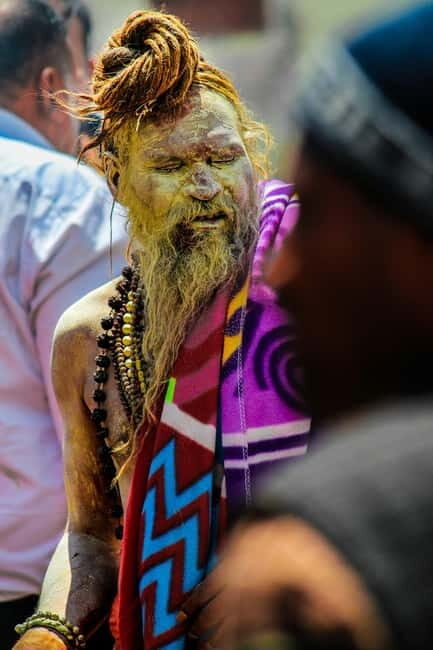
Next is Lakshman Jhula, another major suspension bridge and one of the most recognizable landmarks in Rishikesh. You’ll get guided time plus a walk here, for about an hour.
What makes Lakshman Jhula click is the belief behind it. The bridge is believed to stand at the spot where Lord Lakshman crossed the river. That detail turns the bridge into a living link between local faith and everyday movement.
This area also gives you street-level texture. Instead of only temple silhouettes, you see the everyday flow near the bridge—shops, people, and a constant hum of activity around the riverside.
Gita Bhawan: devotional calm, bookshops, and riverside atmosphere
From the bridges, you move to Gita Bhawan for about 30 minutes. This spiritual complex is known for a devotional atmosphere, along with bookshops and a peaceful riverside setting.
Why I like this stop: it’s a breather. After the height and motion of the bridges, Gita Bhawan feels more like a pause—somewhere you can look around and get a sense of how spirituality expresses itself in daily objects (like the bookshops) and daily routines, not only in ceremonies.
Even with limited time, it helps you shift mentally from sightseeing into observing how people practice devotion here.
Parmarth Niketan Ashram: where yoga and meditation feel real
The tour then heads to Parmarth Niketan Ashram for about an hour of guided sightseeing and walking.
Parmarth is one of the largest ashrams in the region and is famous for yoga and meditation and spiritual teachings. The best part is the atmosphere: it’s not presented as a museum. It feels like a working spiritual space where the day’s rhythm is built around practice.
Also, the tour includes a morning meditation and yoga session. The details here are simple: it’s part of the experience, but entrance fees are not included. So you’ll want to be ready for that extra cost if you plan to join fully.
If you’re hoping to understand why Rishikesh draws people from across the world, Parmarth helps. It’s a place where international seekers and local routine overlap, which is hard to replicate if you only visit one temple or one viewpoint.



The Beatles Ashram (optional): music history meets a maintenance reality
The Beatles Ashram is an optional stop, and the tour gives it around two hours with guided sightseeing and walking.
Here’s the core hook: The Beatles stayed there in 1968, and the site carries a 1960s music-era connection. You’ll see graffiti-covered meditation halls and the surrounding forest setting, which creates a curious blend of spiritual space and pop-culture history.
One consideration, though: the place can feel a bit neglected. In the experience firsthand, the Beatles Ashram wasn’t in the best condition, with limited upkeep. If you’re going mainly for the story, it still works. If you’re expecting a polished, maintained heritage site, you might find it uneven.
Also remember: the Beatles Ashram entrance ticket is not included, so it may add to your total.
Goa Beach Rishikesh: river-side downtime between the bigger moments
After ashrams and bridges, you get Goa Beach Rishikesh for about an hour of free time.
This part of the day is intentionally unstructured. You can sit by the holy river, dip your feet in the cool waters, and absorb the quieter energy. It’s also a good spot to reset your attention before the main event.
I like this stop because it prevents fatigue. When your day is packed with guided sites, you stop thinking and start reacting. A free hour by the Ganges pulls you back into feeling the place instead of collecting it.
Ganga Aarti Sthal at sunset: the ritual that makes the river feel alive
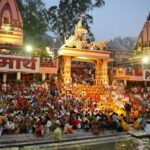
The final big moment is Ganga Aarti Sthal in Rishikesh, scheduled around sunset. Plan on about two hours here, with guided sightseeing.
This is the centerpiece: priests perform sacred rituals with lamps, chants, and devotional music as the river glows with floating diyas. The experience is designed for your senses—light, sound, motion on the water—and it makes the Ganges feel like the heart of the city.
If you’ve ever wondered why this area attracts spiritual seekers, the Aarti answers it quickly. It’s not abstract. It’s coordinated, repeated, and communal. Even if you don’t know every chant, the act of watching—close enough to see the lamps and understand what’s happening—makes it real.
There’s also time to participate at the beginning for some visitors, and the day ends with a peaceful evening stroll along the riverbank. That final walk helps you come down from the intensity of the ceremony.
Price and logistics: getting good value for $35
At $35 per person and roughly 7 hours, the tour is priced like a focused guided day rather than a transport-and-cab package.
Included:
- Professional guide (English)
- Water bottle
- Skip the ticket line
Not included:
- Transportation
- Food
- Personal expenses
- The extra entrance fees you may choose to pay (the morning yoga/meditation entrance fees are not included, and the Beatles Ashram ticket is not included)
So is it good value? For many first-time visitors, yes—because the guide helps connect the dots between bridges, ashrams, and the Aarti. You’re not just paying for walking time. You’re paying for interpretation at the exact places where meaning is dense.
One more practical point: since transportation and food are not included, you’ll want to plan those separately so you’re not scrambling mid-day. A full day with a strong end ritual means you’ll want energy for the sunset timing.
Who this tour fits best (and who should adjust expectations)
I think this works especially well if:
- You’re in Rishikesh for the first time and want a guided route that covers the main spiritual and landmark areas.
- You prefer an unhurried pace where you get time to look and ask questions.
- You want the big finale—Ganga Aarti at sunset—without trying to coordinate it all alone.
It may feel like too much if:
- You hate walking and crossing bridges, even at a comfortable pace.
- You want a day with zero optional stops. The Beatles Ashram is optional, but the time is still structured around those key anchors.
- You dislike the idea of any extra entrance fees, since the tour explicitly flags some as not included.
Should you book this Rishikesh full-day sightseeing + Ganga Aarti tour?
If you want a smart first-day plan in Rishikesh—bridges, ashrams, river breathing time, and that sunset ritual—I’d book it. The strongest reason is the pairing: the tour doesn’t treat Ganga Aarti as a standalone show. It places you in the right context earlier in the day, so the ceremony lands harder.
If you’re sensitive to maintenance or condition at older cultural sites, keep your expectations grounded for the optional Beatles Ashram. And if you’re counting every rupee, budget for meals and any entrance fees you choose during the day.
FAQ
How long is the Rishikesh full-day sightseeing tour with Ganga Aarti?
It’s listed as 7 hours total.
Where does the tour start?
The meeting point is Janki Setu. Pickup at your hotel is mentioned as possible.
Is transportation included in the price?
No. Transportation is not included.
Is food included?
No. Food is not included.
What’s included in the tour price?
You get a professional guide and a water bottle.
Are entrance fees included?
Not all of them. The morning meditation and yoga session has entrance fees not included, and the Beatles Ashram entrance ticket is also not included.
Is the Beatles Ashram stop included or optional?
It’s optional. The visit can be included, and it notes that the entrance ticket is not included.
Will I be able to avoid long lines?
The tour notes that you can skip the ticket line.
What language is the guide?
The host or greeter and the experience are listed as English.
What should I bring?
A camera is specifically listed as something to bring.