REVIEW · NEW DELHI
Private Train Tour: 3-Day Golden Triangle Delhi, Agra, Jaipur from Delhi
Book on Viator →Operated by Pacific Classic Tours India · Bookable on Viator
Golden Triangle by train feels like winning time. In three days, you’ll cover Delhi’s big Mughal-era and British-era icons, ride to Agra on an early express, then land in Jaipur for forts, palaces, and a serious geometry lesson under the open sky.
I especially love two things: the private, local guided touring at every major stop, and the door-to-door train transfers that keep you from wasting energy on logistics. One note: even with a private group feel, you should expect a full pace and a few extras you may pay on top, like camera fees and meals beyond what’s specified.
In This Review
- Key Things I’d Focus On Before You Go
- Why This 3-Day Golden Triangle Works So Well (and for Whom)
- Day 1 in Delhi: Mughal Tomb Geometry, a 73m Tower, and Quick Calm at Lotus Temple
- Humayun’s Tomb: The “Floats Above Gardens” Mughal Masterclass
- Qutub Minar: The Big Tower Plus the Old Ruins Surrounding It
- Lotus Temple: A Religious Building That Doubles as a Mental Reset
- India Gate and the British-Era Power Scene
- Gurudwara Bangla Sahib: Color, Calm, and Free Community Meals
- Day 2: An Early Express Train to Agra, Then Taj Mahal and Agra Fort
- The Train Ride (6am–8am Window): Breakfast While the Countryside Slides By
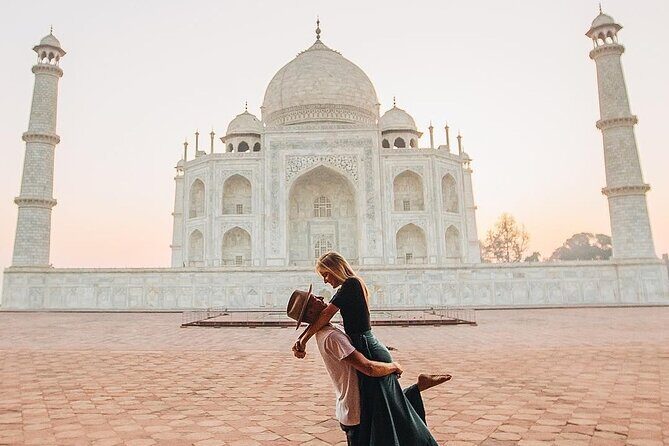
- Taj Mahal: The Main Event, With Less Mystery Because You’ll Have a Guide
- Agra Fort: The Mughal Power Base Along the Yamuna
- Jaipur Check-In: A Late-Day Arrive-and-Reset
- Jaipur Day 3: Amber Fort Views, Hawa Mahal Photos, and a Real Observatory
- Amber Fort (amer): Four Sections of Palace-Architecture Theater
- Jal Mahal: The Water Palace Photo Stop
- Hawa Mahal: Palace of Winds for a Fast, Famous Photo
- City Palace: Where Rajasthani and Mughal Styles Touch
- Jantar Mantar: Geometry That Tracks the Sky
- Trains, Drivers, and the Real Meaning of Private Touring
- Price and Value: Is $400 Fair for This Much Included?
- Small Scheduling Notes That Matter (Especially for Mondays)
- Should You Book This Private Golden Triangle Tour?
- FAQ
- What time does the tour start?
- Where can you be picked up on the Delhi side?
- Are meals included during the train rides?
- Is there a vegetarian meal option?
- What are the train times for the Golden Triangle legs?
- Is Lotus Temple open every day?
- What is not included in the tour price?
- Is cancellation refundable, and how far in advance?
Key Things I’d Focus On Before You Go
- Private guide time where it matters: you get context at Humayun’s Tomb, the Taj Mahal, Amber Fort, and more
- Early super-fast train to Agra (6am–8am window) so you spend more daylight sightseeing
- Taj Mahal parking return option via included battery bus or e-rickshaw
- Couples-friendly, romance-heavy stops like the Taj Mahal and Amber Fort views
- Flexibility during the day to adjust or skip stops, based on how the tour is run
- Delhi starts with calm first: Lotus Temple gives you a breather from the city rush
Why This 3-Day Golden Triangle Works So Well (and for Whom)
This is a smart way to do the Golden Triangle if you want the big names—Taj Mahal, Amber Fort, Delhi landmarks—without the usual headache of figuring out trains, stations, and transfers on your own. The private vehicle support and guided stops are doing real work here. You’ll spend your mental energy on seeing, not on coordinating.
It also fits couples really well. The mix of architecture, palace courtyards, and that iconic “first look” moment at the Taj Mahal makes the pacing feel romantic rather than frantic. If you like history but also want breathing room, the guided explanations help you connect the dots fast.
Who should book this? You’ll likely enjoy it if you:
- want private touring instead of a group scramble
- prefer comfortable, organized rail travel
- like getting context for what you’re seeing, not just ticking boxes
You can also read our reviews of more private tours in New Delhi


Day 1 in Delhi: Mughal Tomb Geometry, a 73m Tower, and Quick Calm at Lotus Temple
Your day starts with pickup from your chosen area in Delhi, Gurugram, or Noida, then it’s straight into landmark mode.
Humayun’s Tomb: The “Floats Above Gardens” Mughal Masterclass
Humayun’s Tomb is Mughal architecture at its most elegant. The key thing I like here is how proportion does the heavy lifting. The tomb’s arched facade uses white marble and red sandstone, and the design follows strict Islamic geometry—with an emphasis on the number eight. Even if you’re not a design nerd, you’ll feel the symmetry and balance fast.
Tip: plan to slow down. This is a place where the design rewards a few extra minutes of looking rather than rushing for photos.
Qutub Minar: The Big Tower Plus the Old Ruins Surrounding It
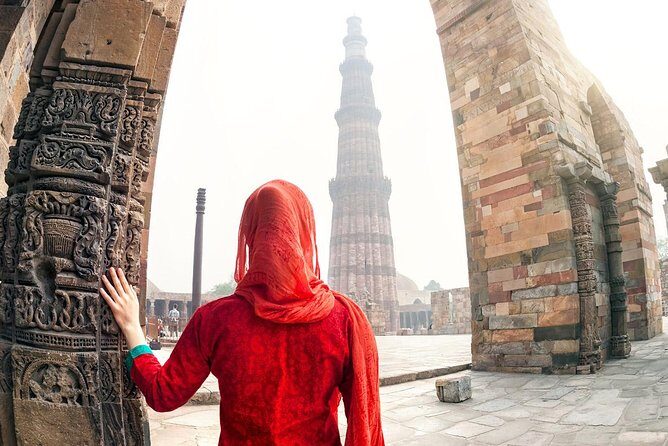
Next is Qutub Minar, part of a UNESCO World Heritage complex. The star is the Qutab Minar tower—73 meters tall—built in the 12th century. What makes it more than a single-sight stop is the surrounding field of ruined tombs and monuments. You get a sense of how layered Delhi’s history is.
Practical note: wear comfortable shoes. You’ll likely do more walking than you expect once you add the grounds and viewpoints.
Lotus Temple: A Religious Building That Doubles as a Mental Reset
Lotus Temple is shaped like a lotus flower with 27 white-marble petals. It’s a peaceful break from the city’s noise. Visitors are invited to pray or meditate silently according to their own beliefs, and the design is meant for quiet worship and reflection.
One key consideration: Lotus Temple remains closed every Monday. If your dates land on a Monday, you’ll want the day adjusted so you don’t lose time.
A few more New Delhi tours and experiences worth a look





India Gate and the British-Era Power Scene
India Gate is the impressive 42-meter-high memorial arch designed by Edwin Lutyens in 1921. It honors roughly 90,000 Indian soldiers connected to World War I, Northwest Frontier operations, and the 1919 Anglo-Afghan War. The stop is short, but it adds emotional weight, not just sightseeing.
Then you’ll see the circular, colonnaded parliament building associated with the 1947 transfer of power, and you can spot Rashtrapati Bhavan (President House), formerly the British viceroy residence. The scale is wild: 340 rooms and about 2.5 km of corridors. Even a peek outside helps you understand how much planning and power went into the British-era seat of administration.
Gurudwara Bangla Sahib: Color, Calm, and Free Community Meals
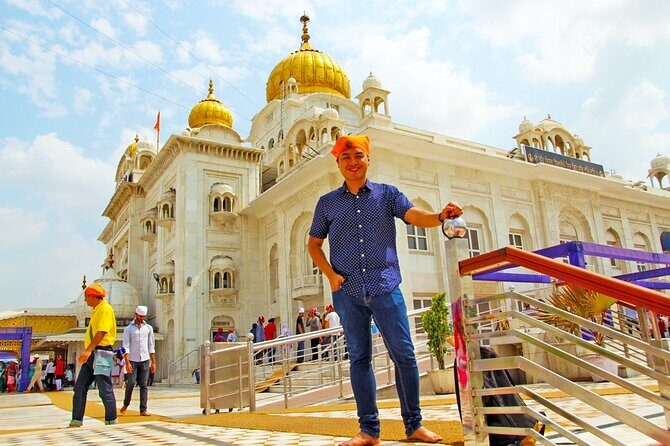
Gurudwara Bangla Sahib is where the day turns warm and human. The white-marble gurdwara with golden-domed tops feels both bright and serene. You also get the sense of devotion in the form of live devotional songs drifting over the compound.
And yes, free meals are served daily at gurdwaras. Even if you don’t plan on eating there, it’s part of what makes this stop feel grounded.
Day 2: An Early Express Train to Agra, Then Taj Mahal and Agra Fort
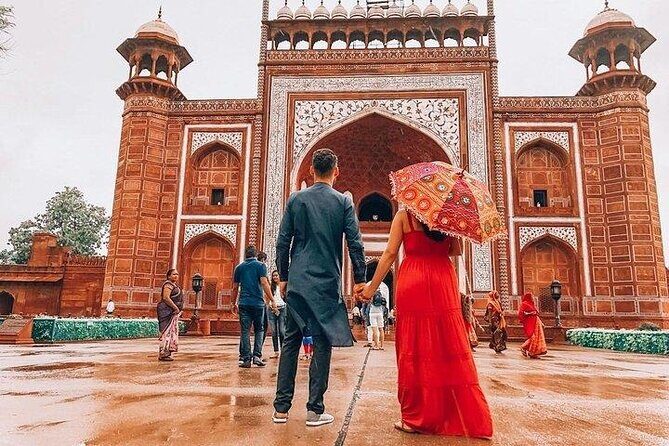
Day 2 is where the tour earns its “efficient” reputation.
The Train Ride (6am–8am Window): Breakfast While the Countryside Slides By
You board a super-fast express train from Delhi to Agra in the 6am–8am stretch. Breakfast is served on board as you watch the countryside roll past. The big win is timing: you’re not burning half the day on travel.
When you arrive, a local guide meets you at the main exit gate. That matters. You avoid the awkward “where do we go now” moment that can happen after train arrivals.
Taj Mahal: The Main Event, With Less Mystery Because You’ll Have a Guide
You’ll visit the Taj Mahal first, with admission included. It’s often called the most beautiful building in the world, and it earns the attention. But what makes it more meaningful is the story your guide gives you.
This marble monument was built by Shah Jahan as a memorial for Mumtaz Mahal, who died in 1631 giving birth to their 14th child. That personal tragedy is part of why the Taj feels like grief turned into art. Poet Rabindranath Tagore described it as a teardrop on the cheek of eternity.
Practical tip: plan your viewing order. If you’re taking photos, start wide, then move in. The details matter more the longer you stay.
Also helpful: the tour includes a battery bus or e-rickshaw return ride from the Taj Mahal parking, so you’re not stuck hauling yourself back in heat or crowds.
Agra Fort: The Mughal Power Base Along the Yamuna
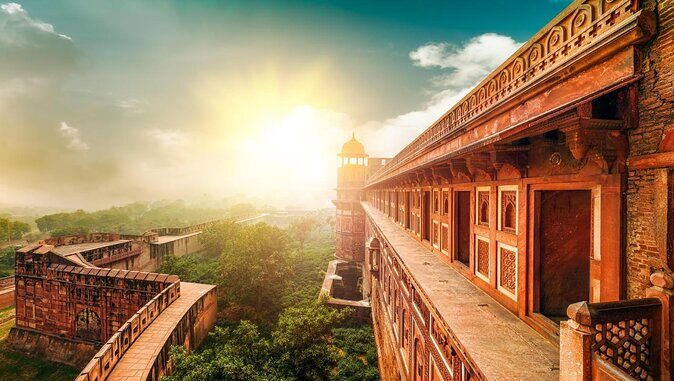
In the afternoon, you head to Agra Fort, another UNESCO site. The fort sits along the Yamuna River and was the main residence of Mughal emperors until 1638. That timeline helps you understand the shift from royal life to later history.
You’ll spend about an hour here, so you’re not expected to memorize every wall. Instead, your guide helps you see the layout and what the fort meant as a living seat of power.
Jaipur Check-In: A Late-Day Arrive-and-Reset
After Agra, you drive to Jaipur, called the Pink City. Then you check into your pre-booked hotel for the night. Your schedule includes time in transit—about 5 hours listed for the Jaipur arrival/check-in—so you’ll likely want to keep evening plans simple.
Jaipur Day 3: Amber Fort Views, Hawa Mahal Photos, and a Real Observatory
Jaipur is where the Golden Triangle becomes visually playful: honey-colored forts, pink palace facades, and geometric instruments you can actually look at.
Amber Fort (amer): Four Sections of Palace-Architecture Theater
Amber Fort is the big must-see in Jaipur. It rises from a rocky mountainside about 11 km northeast of the city. The fort is honey-hued and made from pale yellow and pink sandstone with white marble. It’s also divided into four main sections, each with its own courtyards, so you’re not just walking one long hallway—you’re moving through different “worlds.”
Admission is included, and your guide will help you read the architecture rather than just admire it.
Worth knowing: elephant or jeep ride at Amber Fort is not included. If you were hoping to add that, you’ll need to arrange it separately.
Jal Mahal: The Water Palace Photo Stop
Jal Mahal is a quick photo stop at the Water Palace near the cenotaphs of the maharanis, set in the Man Sagar waters. The origins are uncertain, though it’s believed to have been extensively restored (if not built) by Jai Singh II.
This is one of those stops where the value is in the view and timing. Even a short stop is worth it if the light is good.
Hawa Mahal: Palace of Winds for a Fast, Famous Photo
Hawa Mahal rises five storeys, painted in pink, with a delicate honeycomb facade. Built in 1799 by Maharaja Sawai Pratap Singh, it was designed so royal women could watch city life and processions without being seen.
It’s largely a photo-and-look stop (around 15 minutes). If you love architecture, you’ll still enjoy it, but don’t expect a long interior visit.
City Palace: Where Rajasthani and Mughal Styles Touch
City Palace is a residence of the royal family and a complex of courtyards, gardens, and buildings that span different eras. The architecture is a mix of Rajasthani and Mughal styles, with some parts dating into the early 20th century.
You get about an hour here—enough for the main highlights without feeling like you’re trapped in a museum loop.
Jantar Mantar: Geometry That Tracks the Sky
Finally, Jantar Mantar is an observatory with UNESCO status. It’s a collection of curved geometric buildings designed to monitor the movement of stars and planets.
This is one of those “quietly cool” sights. If you like science, it feels more engaging than a simple monument because you can connect the objects to what they’re measuring.
Trains, Drivers, and the Real Meaning of Private Touring
This tour is private in the practical sense: only your group participates, and you get your own private air-conditioned vehicle plus professional local guides for sightseeing.
The rail legs are also a big part of the comfort. The Delhi-to-Agra ride is in the morning, and the Jaipur-to-Delhi ride is in the evening (5:50pm–10:40pm). On both, dinner or breakfast is handled on board. That cuts down on “where do we eat now?” stress.
One detail I’d call out from past experience with this style of service: the drivers can be excellent at keeping things smooth. I’ve seen how a driver like DK Shwarma can make the day feel calmer because the handoffs are well managed, from hotel pickup to station drop-off and back.
Also, bottled water is provided during the trip in the vehicle. It’s a small thing, but it matters when you’re walking in sun and moving across cities.
Price and Value: Is $400 Fair for This Much Included?
At around $400 per person, you’re paying for more than sightseeing tickets. The value comes from the package nature:
Included that you don’t want to price out separately:
- Two nights of hotel accommodation (twin sharing) with breakfast
- Private transfers in an air-conditioned vehicle
- Super-fast deluxe train rides (Delhi–Agra and Jaipur–Delhi)
- Guided visits with professional local guides
- Entrance fees for the sights listed
- Battery bus/e-rickshaw return from Taj Mahal parking
- Bottled water in the vehicle
- On-board meals: one breakfast and one dinner during train rides (plus another breakfast)
What may cost extra:
- camera fees at monuments
- any food and drinks not specifically included
- elephant/jeep ride at Amber Fort
- anything not listed as included
When this tour makes sense financially is when you want private guides and you don’t want to spend your time negotiating transport between cities. If you’re comfortable building your own schedule, you can sometimes do it cheaper. But for most people, the “buy back your time and sanity” factor is the real bargain.
Small Scheduling Notes That Matter (Especially for Mondays)
Two things can affect your day: closure timing and pace.
- Lotus Temple is closed on Mondays. If you’re traveling Monday, plan on a substitute moment or a different order.
- The days are packed. You won’t be dragging out slow mornings on every stop. That’s part of the point of doing the Golden Triangle by rail in three days.
If you want a calmer rhythm, I’d still suggest this tour—just go with the mindset that it’s a guided sprint through the highlights.
Should You Book This Private Golden Triangle Tour?
I’d book it if you want a smooth, guided, rail-based way to hit Delhi, Agra, and Jaipur without spending your trip managing logistics. The included trains, hotel nights, private guides, entrance fees, and transfers make it feel like one coordinated plan rather than three separate mini-tours.
Skip or reconsider if:
- you need lots of free time to wander alone each day
- you’re very sensitive to early starts and long driving windows between stops
- you expect all meals and all optional activities to be included (camera fees and elephant/jeep rides aren’t)
FAQ
What time does the tour start?
The start time is 9:00 am.
Where can you be picked up on the Delhi side?
Pickup is offered from your desired location in Delhi, Gurugram, or Noida.
Are meals included during the train rides?
Yes. Breakfast and dinner are served during the train rides as part of the inclusions.
Is there a vegetarian meal option?
A vegetarian meal option is available, and you should advise dietary requirements at the time of booking.
What are the train times for the Golden Triangle legs?
The Delhi to Agra train runs in the 6am–8am window, and the Jaipur to Delhi train runs from 5:50pm–10:40pm.
Is Lotus Temple open every day?
No. Lotus Temple remains closed every Monday.
What is not included in the tour price?
Camera fees at monuments, food and drinks unless specified, and the elephant/jeep ride at Amber Fort in Jaipur are not included.
Is cancellation refundable, and how far in advance?
You can cancel up to 3 days in advance of the experience for a full refund.
If you want, tell me your travel dates and whether you’re traveling Monday. I can help you spot any schedule quirks before you commit.