REVIEW · NEW DELHI
Delhi Private city tour
Book on Viator →Operated by Sumit Rajasthan Travel · Bookable on Viator
Delhi can feel overwhelming fast. This private tour makes it manageable. In about 8 hours, you’ll cover major sights in Old and New Delhi with your own guide (maximum four people), moving city to city without wasting time figuring out logistics.
I like the built-in comfort and planning: hotel/airport/railway station pickup and drop-off plus a chauffeur-driven A/C vehicle. And I really like that you get guided time at three UNESCO World Heritage sites, not just quick pass-by photo stops.
The one catch is pacing and extras: a few of the big monuments have entrance fees not included, and the time at each stop is short, so it helps to know what you want to see most before you go.
In This Review
- Key highlights worth planning around
- How this Delhi private city tour really plays out
- Pickup, vehicle comfort, and why it matters in Delhi
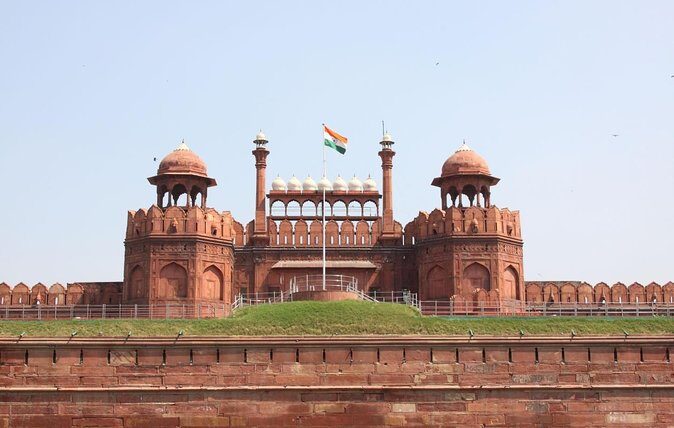
- Red Fort: the Mughal power base you can’t skip
- Jama Masjid: big mosque views and a calm moment in motion
- Chandni Chowk market: shopping lanes meet landmark proximity
- Raj Ghat: a memorial stop with real meaning
- Humayun’s Tomb: UNESCO gravitas without needing a whole day
- Lotus Temple: modern spiritual architecture, quick stop
- Qutub Minar: the 72-meter landmark and the UNESCO complex
- Gandhi Smriti, India Gate, and Rashtrapati Bhavan: the New Delhi finish
- Price and what $45 actually buys you
- Who this tour fits best
- Small tips that make the day smoother
- Should you book this Delhi private city tour?
Key highlights worth planning around
- Private guide for up to four people so questions don’t get lost in the crowd
- A/C car with pickup and drop-off from Delhi makes a huge difference in a long day
- Three UNESCO stops that anchor both Old Delhi and New Delhi
- Old Delhi market time at Chandni Chowk, where shopping energy is part of the experience
- Bottled water included for that hot, long, walking-around reality
How this Delhi private city tour really plays out
This is the kind of day that’s designed for focus. You start in the morning and you don’t just bounce between landmarks—you get guided context as you move through Delhi’s two faces: the dense lanes of Old Delhi and the grand, government-and-monument axis of New Delhi.
Because the group is capped at four, your guide can adjust the flow. If you’re more into monuments, you’ll spend your time differently than someone chasing street scenes and photos. That small group size also makes the “getting there” part feel less stressful. Delhi traffic is real; having a driver who handles it while you sit back and plan your next stop keeps the day from turning into a commute marathon.
You can also read our reviews of more city tours in New Delhi


Pickup, vehicle comfort, and why it matters in Delhi
Starting at 8:00 am with pickup from your hotel, airport, or railway station is a big value point. It removes the annoying part of city touring—finding the right meeting point, negotiating transport, or trying to guess which route looks fastest.
You’ll be in a chauffeur-driven A/C private vehicle, with fuel, parking, tolls, and interstate taxes handled. Even if you’re only there for a day or two, that single cost-and-logistics bundle helps your money go into the experience rather than transport headaches.
Practical note: bottled water is included. It sounds small, but after a few stops of walking and heat, it’s the kind of detail you’ll actually notice.
Red Fort: the Mughal power base you can’t skip
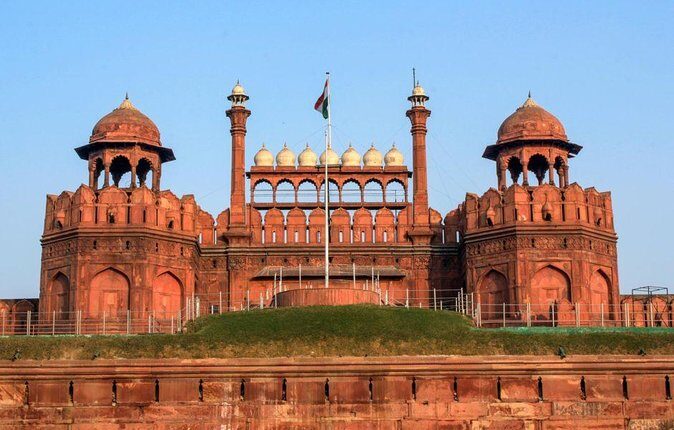
Red Fort is the centerpiece of Old Delhi’s Mughal-era story. It served as the residence of Mughal emperors for nearly 200 years, and today it’s still a major cultural hub with multiple museums inside. You’ll have about 30 minutes here.
What I’d do with your time:
- Walk the area for photo angles first, then settle into the details your guide points out.
- If you care about museum content, ask your guide what’s most worth it in the time window, since this stop is timed.
Entrance fees aren’t included for this one, so plan on paying at the site if you want to go in. The good news: even without lingering, the scale and setting are impressive.
Jama Masjid: big mosque views and a calm moment in motion
Next up is Jama Masjid, one of India’s largest mosques, known formally as the Masjid-i Jahān-Numā. This stop is also around 30 minutes, and admission is free.
This is where the day changes pace slightly. In Old Delhi, you get sound, motion, and crowds—but in and around a major place of worship, you can also find a quieter focus for photos and observation. Your guide can help you understand what you’re seeing so your pictures come with meaning, not just architecture.
If you’re planning what to wear, treat this as a sacred-space stop. Keep clothing respectful, and be ready to follow any on-site guidance.
Chandni Chowk market: shopping lanes meet landmark proximity
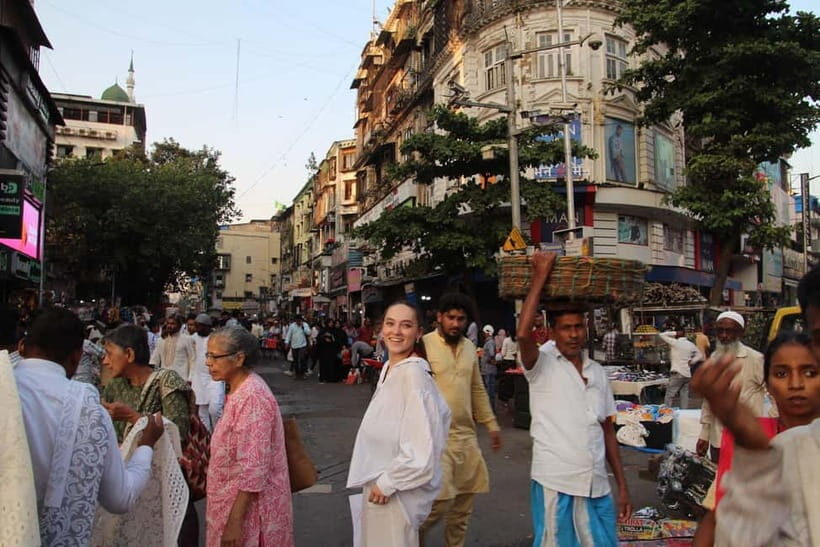
Chandni Chowk is one of the oldest and busiest markets in Old Delhi. You’ll get about 30 minutes here, and entry is free.
This is a “look, notice, and taste” kind of stop—if you go in with the right expectations. The market is close to Old Delhi Railway Station, and the Red Fort is located within the market area. That proximity makes it feel like you’re stepping into the city’s historical center rather than visiting isolated monuments.
What to do in a limited time window:
- Pick a small target: spices, textiles, or souvenirs you actually want to carry.
- Use your guide to navigate the most efficient path so your 30 minutes doesn’t evaporate at every turn.
If you’re sensitive to crowding, you might still enjoy Chandni Chowk, but keep your priorities clear: see what you came for, then step back when you need air.
You can also read our reviews of more private tours in New Delhi





Raj Ghat: a memorial stop with real meaning
Raj Ghat is a memorial to Mahatma Gandhi, and it’s tied to the Yamuna river ghats that existed historically. You’ll have about 20 minutes here, and admission is free.
This is a reflective pause in the middle of the “photo-heavy” part of the day. It’s also a useful contrast to the Mughal and market stops: you get a different thread of Indian history, one connected to modern leadership and ideals.
If you want to make the most of the short time, don’t rush through it like a checklist. Take a minute to look, then let your guide put it into context.
Humayun’s Tomb: UNESCO gravitas without needing a whole day
Humayun’s Tomb is one of the UNESCO World Heritage anchors of the route, built in 1569–70 by order of Humayun’s son Akbar, with design attributed to Mirak Mirza Ghiyas. You’ll get about 30 minutes, and admission is not included.
This is a strong stop for architecture lovers and photo hunters. Even with limited time, the tomb complex has a way of “holding” attention—symmetry, layout, and the feeling of a carefully planned space.
Entrance fees aren’t included, so expect to pay if you want full access. If you’re on a strict budget, this is one of the places where it’s still worth spending your paid entry time thoughtfully.
Lotus Temple: modern spiritual architecture, quick stop
The Lotus Temple is a Bahá’í House of Worship completed in 1986. It’s shaped like a flower and serves as the Mother Temple of the Indian subcontinent. You’ll have about 20 minutes, and admission isn’t included.
This stop tends to feel different from the Mughal tomb and the mosque. It’s more modern, more geometric, and often a welcome change when you’ve spent the morning in older districts.
Because your time is short, I’d focus on getting your best exterior angles and then using your guide for any quick orientation so you’re not just looking at shapes without context.
Qutub Minar: the 72-meter landmark and the UNESCO complex
Qutub Minar rises to 72 meters and is described as the tallest brick minaret in the world. It sits within the Qutub Complex, a UNESCO World Heritage Site. You’ll have about 20 minutes here, and admission isn’t included.
Even if you’re not the type to read every plaque, Qutub Minar is one of those places where you can feel the scale fast. The trick is not to waste your few minutes by zooming into details too early. Get the full minaret in your frame first, then move closer for the texture and design your guide points out.
Entrance fees aren’t included, so factor that into your spending. If you do pay and go in, keep your route simple so you don’t lose time recalculating where you are inside the complex.
Gandhi Smriti, India Gate, and Rashtrapati Bhavan: the New Delhi finish
Your late-day sequence is heavy on iconic New Delhi stops:
- Gandhi Smriti: a museum dedicated to Mahatma Gandhi, housed in what used to be Birla House. You’ll have about 20 minutes, and admission isn’t included.
- India Gate: a war memorial on Rajpath, with about 20 minutes.
- Rashtrapati Bhavan: the official home of the President of India, with about 30 minutes.
For these three, you’ll get the “see it and get your bearings” version more than a deep, sit-and-study experience. That’s not a problem—it fits the tour’s structure. By this point, you’ve already anchored the day with major UNESCO sites, so this is about placing Delhi’s symbols in your head.
If you want the most from the last stops, treat them like three quick chapters:
- Gandhi Smriti = modern remembrance
- India Gate = national memorial axis
- Rashtrapati Bhavan = the seat of official power
It helps you understand why New Delhi looks so ceremonial compared to Old Delhi’s organic maze.
Price and what $45 actually buys you
At $45 per person for about 8 hours, the deal is less about “cheap sightseeing” and more about removing friction.
Included:
- Hotel/airport/railway station pickup and drop-off
- Chauffeur-driven A/C private vehicle
- Professional guide
- Fuel, parking, tolls, and taxes
- Bottled water
- Mobile ticket and group discounts
Not included:
- Monument entrance fees (a few key stops are marked as ticketed)
So the value math depends on how many sites you choose to enter versus view from outside. Since multiple monuments on the route list admission as not included, it’s smart to keep a buffer for on-site fees. Still, when you add up guide time plus the private car, you’re paying for convenience and a smoother day, not just access.
If you’re traveling as a small group (and this tour caps at four), this price can feel even more reasonable because the private vehicle and guide don’t scale up to a larger group cost.
Who this tour fits best
This one works especially well if:
- You have limited time in Delhi and want both Old and New Delhi highlights in a single day
- You prefer a small group and a guide who can tailor pacing
- You want logistics handled, with pickup, vehicle, and water covered
It can also be a good “first Delhi day” tour because it gives you an overview of what matters. Then, if you want to return later, you’ll know what to target.
If you hate time pressure, adjust expectations. Stops are short, so this is for visitors who like to see a lot and learn fast.
Small tips that make the day smoother
- Start with a plan for your must-see: pick 2–3 priorities (for many people, it’s Red Fort, Humayun’s Tomb, and Qutub Minar).
- Pack light but dress respectfully for mosque visits.
- Keep some cash or a card ready for entrance fees at the stops marked as not included.
- Wear shoes you can walk in. The day includes market wandering and monument walking.
- If you’re booking for kids, plan around the rule that children must be accompanied by an adult.
And if you’re sensitive to schedule changes: free cancellation is available if you cancel at least 24 hours before the experience start time.
Should you book this Delhi private city tour?
I’d book it if you want a well-structured full-day hit of Delhi with private guiding, A/C comfort, and a route that balances Old Delhi’s landmarks and New Delhi’s ceremonial monuments. For many visitors, the combination of UNESCO stops plus a market walk makes the day feel complete without dragging into an all-day confusion session.
Skip it or adjust expectations if you strongly prefer deep, slow visits with long museum time. This tour is built for efficiency. You’ll see plenty, but you won’t have hours inside every attraction.
If your goal is to get your bearings in one day and leave with a clear mental map of Delhi’s big themes—Mughal power, spiritual architecture, Gandhi’s legacy, and New Delhi’s official face—this is a solid choice.