REVIEW · JAIPUR
Pink City Plates: Food Walk Through Jaipur’s unique Eateries
Book on Viator →Operated by Vedic Walks Rajasthan · Bookable on Viator
Food tastes better on foot. This 2.5-hour Jaipur walk threads together Masala Chai brewing, classic street snacks, and market-to-kitchen food culture in the Pink City. I love the way the tour pairs eating with on-the-ground architecture talk, and I love the variety of stops, from tea in earthen pots to sweets and dairy favorites.
One thing to consider: you will be walking through narrow lanes for about 2 hours 30 minutes, and the food is very much in the street-food style (so plan for spice and pace).
In This Review
- Key things to look forward to
- Price and value for a 2.5-hour old-city food walk
- Where you start and how the route feels in real life
- Stop 1: Golcha Cinema as your first Jaipur clue
- Stop 2: Sahu Tea Shop and masala chai in earthen clay pots
- Stop 3: Paani puri, heeng ki kachori, and Mohan thal in the old lanes
- Stop 4: Tripolia Bazar, the spice market with 250-year old shops
- Stop 5: RamChandra Kulfi, dairy markets, and lassi
- Stop 6: Laxmi Misthan Bhandar bakery finish (and a camera moment)
- How the guide makes this tour work (especially for food + architecture)
- Small practical details that matter more than you think
- Is it worth booking early?
- Who this Jaipur food walk suits best
- Should you book Pink City Plates?
- FAQ
- How long is the Pink City Plates food walk?
- What does it cost per person?
- Where do I start and where does the tour end?
- What’s included in the tastings?
- Do I get a mobile ticket?
- Is this tour private?
- What if the weather is bad?
- Are service animals allowed?
Key things to look forward to

- Clay-pot masala chai at Sahu Tea Shop, run by a family across generations
- Old-city lane walking with snack stops tied to real architectural sights
- Tripolia Bazar spice market with shops said to be 250+ years old
- A bakeries-and-dairy finish at Laxmi Misthan Bhandar, a classic sweet shop stop
- Palace of Winds photo moment from a less-common viewpoint
- Five local tastings plus two extra tastings connected to the market-to-kitchen segment
Price and value for a 2.5-hour old-city food walk
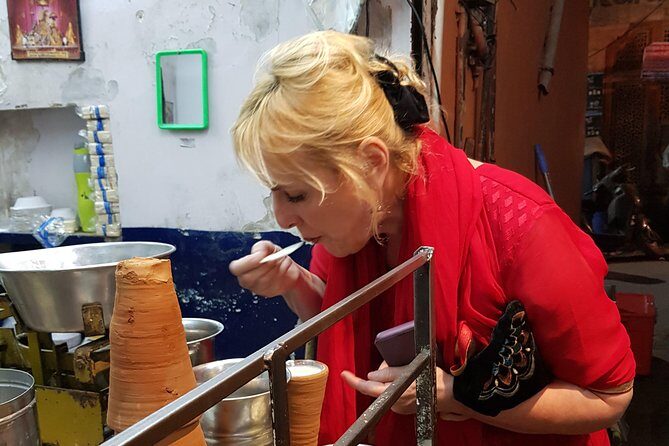
At $33.97 per person for roughly 2 hours 30 minutes, this is priced like a focused, guided experience rather than a long-day tour. You also get one packaged drinking water, plus guidance from an English-speaking city explorer/food enthusiast, which matters in Jaipur’s old quarters where the best eating is tied to local knowledge.
The big value here is that the tour doesn’t just send you from one place to another. It builds a route that makes sense on foot: you start at an old landmark (Golcha Cinema), then move through bazaars where the food is part of daily life. Tastings are built in—five local delicacies overall, and two additional tastings in the market-to-kitchen portion—so you’re not stuck hunting for snacks on your own.
You can also read our reviews of more walking tours in Jaipur

Where you start and how the route feels in real life
You’ll meet at Golcha Cinema on Chaura Rasta Road, near New Gate in Bapu Bazar (the Pink City). The walk ends in Johari Bazaar, which is convenient if you’re continuing your day toward more shopping and evening street energy.
This isn’t a drive-through tour. It’s a walking loop through narrow old-city lanes and market areas, so the experience feels immediate: you’ll hear the markets, see spice and produce activity up close, and watch street-food routines in motion. You’ll also have a camera moment planned for the Palace of Winds, which turns a sightseeing stop into something more photogenic than a quick peek from the main road.
Stop 1: Golcha Cinema as your first Jaipur clue
The tour kicks off with a short stop at Golcha Cinema, one of Jaipur’s older cinema halls. The admission ticket here is free, and the visit is brief—think of it as a local context stop to set the vibe before you get serious about eating.
In practice, this kind of opening works well. You get oriented in the old city first, so later when you’re walking past lanes and shopfronts, you understand how the neighborhood connects to daily culture instead of feeling like you’re just passing by random storefronts.
Stop 2: Sahu Tea Shop and masala chai in earthen clay pots
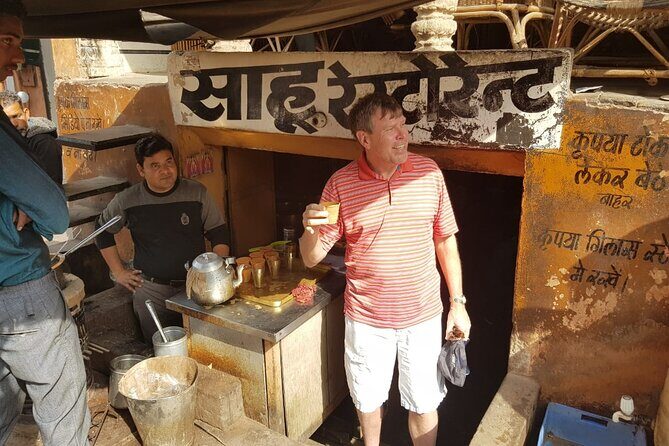
Your first food stop is Sahu Tea Shop, described as Jaipur’s oldest chai outlet, operating for over 60 years and run by the family’s third generation. The chai is served hot in earthen clay pots, and you’ll watch the process in a way that makes chai feel less like a drink order and more like a ritual.
I like this stop because it anchors the whole tour. Chai is comforting, it keeps you steady for spicy bites, and it also gives you a baseline flavor to recognize later—cardamom-forward warmth, tea strength, and the way the tea pot changes the experience versus a bottle or takeaway cup.
Stop 3: Paani puri, heeng ki kachori, and Mohan thal in the old lanes
After tea, you move into the old city’s narrow by-lanes where the guide connects food with architecture and street detail. This is where the walk stops being only about taste and becomes more about seeing Jaipur properly.
You’ll try several classic local delicacies, including:
- Paani puri
- Heeng ki kachori
- Mohan thal
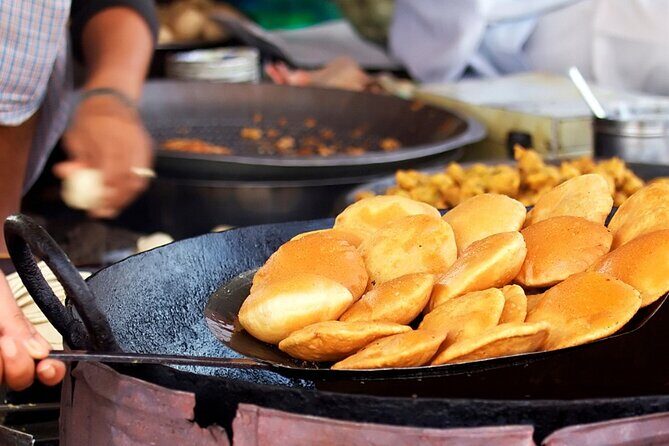
What to expect: the flavors here are bold and direct. Paani puri is the quick-hit crunch-and-splash moment. Heeng ki kachori brings a deep, spiced profile, and Mohan thal adds sweetness and richness that can act like a palate reset.
A practical note: because you’re tasting multiple items in close succession, you don’t need to force big bites. Take your time. If you’re sensitive to heat, tell your guide early so the pace and portioning feel comfortable.
You can also read our reviews of more food & drink experiences in Jaipur






Stop 4: Tripolia Bazar, the spice market with 250-year old shops
Next comes Tripolia Bazar, described as the oldest spice market of Jaipur. The route passes spice shops said to be as old as 250 years, so you’re not just buying spices—you’re walking through a place that has long been part of the supply chain for how local food tastes.
Even if you don’t plan to shop, this stop is useful. You’ll start noticing how spices are stored, displayed, and sold here, and that helps when you later recognize spice blends in snacks. It also makes your tasting points feel less random. You’ll be able to say to yourself: ah, that’s why it tastes like that.
If you do want to shop: keep it simple. Choose a couple of spices or blends you can pack easily, and don’t overbuy just because the smells are persuasive.
Stop 5: RamChandra Kulfi, dairy markets, and lassi
The tour keeps moving through old lanes to a dairy-focused phase. You’ll taste items including:
- RamChandra Kulfi
- Lassi
- Samples connected to an old market of dairy products
Kulfi is a smart middle-stop because it cools you down after spiced snacks. Lassi can do the same thing, and it gives you a creamy counterpoint to the more crunchy, fried textures earlier.
I also like that this segment is anchored in dairy culture rather than only sweets. It makes the tour feel more complete: Jaipur isn’t just sugar and deep-fried snacks. It’s also milk-based comfort foods with regional style.
Stop 6: Laxmi Misthan Bhandar bakery finish (and a camera moment)
The walk ends at Johari Bazaar at Laxmi Misthan Bhandar, described as one of the oldest traditional Indian bakery outlets in Jaipur. The final tastings and the bakery stop matter because it gives your day a satisfying close: sweetness, baked goods or bakery-style items, and that classic old-shop feel.
There’s also a special highlight built into the overall experience: a strong photo opportunity of the Palace of Winds, lit up from a lesser-known spot. You get the kind of angle that usually takes longer to find on your own. Bring your camera, but also bring your eyes. The lighting can make the monument feel closer than you expect.
How the guide makes this tour work (especially for food + architecture)
This experience includes an English-speaking city explorer cum food enthusiast, and the route is designed so you’re not only tasting—you’re learning what you’re tasting and why it belongs in this neighborhood.
One of the clearest praised strengths in this type of walk is how the guide connects snack stops with the buildings and street structure around you. That transforms the experience from a snack sampler into a guided walk where your brain files away real Jaipur details instead of just remembering flavors.
If you care about street culture but also want explanations that help you understand the places you’re in, this is a good match.
Small practical details that matter more than you think
A few things in the setup are genuinely helpful:
- Private group setup: it’s a private tour/activity, meaning only your group participates. That usually makes it easier to ask questions and move at a comfortable pace.
- Mobile ticket: you get a mobile ticket, which is handy if you don’t want to manage printed confirmations while walking.
- Weather matters: the experience requires good weather. If it’s canceled due to poor weather, you’ll be offered another date or a full refund.
- Good for most people: service animals are allowed, and the tour notes that most people can participate.
What I recommend for your side: wear comfortable shoes with grip. The route is mostly on foot through old lanes, and you’ll appreciate good footing more than you expect. Also, don’t overpack your day with another long activity immediately after—2.5 hours of tastings adds up fast.
Is it worth booking early?
The tour is typically booked around 90 days in advance, so if your dates are fixed, I’d lock it in early. Jaipur is a popular stop and food walks can fill up, especially with private-group formats.
If you’re traveling in peak season or around major holidays, early booking is even more important. You’ll have more flexibility to pick the time that best fits the rest of your sightseeing plan.
Who this Jaipur food walk suits best
This is a strong pick if you want:
- a guided old-city food route without spending your time figuring it out
- tastings built into the timeline (not random stopping)
- a mix of market-food culture and short architecture explanations
- a photo moment tied to Palace of Winds at night-lighting
It’s also a good option if you like your travel experiences active but not exhausting: you’re walking, yes, but in a planned structure where stops do the heavy lifting for you.
If you only want to eat at modern restaurants with long sit-down meals, this likely won’t match your style. This tour is street-food centered and market centered.
Should you book Pink City Plates?
Yes, if you’re going to Jaipur’s old quarter anyway and you want a route that feeds you while teaching you how the city works. The strongest reason to book is the way the day is assembled: chai in earthen pots, classic snacks you’ll remember, spice-market context, dairy comfort stops, and a bakery finish—plus that Palace of Winds photo opportunity.
Skip it if you hate walking in tight old lanes or if you’re extremely sensitive to spice and don’t want any variation in street-food flavors. In that case, I’d look for a more controlled meal-focused option.
If you do book, tell yourself the goal is not to eat everything. It’s to sample, learn a little, and walk away with real Jaipur taste memories.
FAQ
How long is the Pink City Plates food walk?
The tour lasts about 2 hours 30 minutes.
What does it cost per person?
The price is $33.97 per person.
Where do I start and where does the tour end?
You start at Golcha Cinema on Chaura Rasta Rd near New Gate, Bapu Bazar in the Pink City. The tour ends in Johari Bazaar.
What’s included in the tastings?
You’ll have a food walk that includes tasting of 5 local delicacies, plus an extra market to kitchen tasting of 2 items. A packaged drinking water is also included.
Do I get a mobile ticket?
Yes, the tour includes a mobile ticket.
Is this tour private?
Yes. It’s private, and only your group participates.
What if the weather is bad?
The experience requires good weather. If it’s canceled due to poor weather, you’ll be offered a different date or a full refund.
Are service animals allowed?
Yes, service animals are allowed. The tour also notes that most people can participate.