REVIEW · NEW DELHI
Golden Triangle Tour 3 Days
Book on Viator →Operated by Agra Voyage · Bookable on Viator
Golden Triangle in three days.
What makes this one practical is the pacing: you’re not trying to sprint through Delhi, Agra, and Jaipur on your own, and you still get major hits like the Taj Mahal and historic Old Delhi stops. I especially like the way the tour mixes big landmarks with lived-in places, so your sightseeing feels grounded in how India actually moves day to day. The tour also has private-group flexibility, which usually means fewer delays and more time for questions.
One thing to keep in mind: the overall experience depends on your chosen package (especially the monument-admission option and whether you select accommodation). With that in place, it’s a strong value way to see the Golden Triangle without turning your trip into one long blur.
In This Review
- Key things that make this tour worth a look
- Golden Triangle, Three Cities, One Realistic Schedule
- Day 1 in Delhi: Old City Energy and Mughal-Era Landmarks
- Jama Masjid: Big scale, real atmosphere
- Chandni Chowk: Shopping lanes that feel like a living market
- Rickshaw Tours: Heritage and culture on wheels
- Raj Ghat and the quiet moment
- India Gate: A drive-by that still lands
- Humayun’s Tomb: Mughal architecture you can actually study
- Gurudwara Bangla Sahib and the langar concept
- Rashtrapati Bhavan and Lotus Temple: landmark contrasts
- Overnight in Agra: a smart momentum move
- Day 2 in Agra: Sunrise Taj Mahal and Agra Fort Time
- Taj Mahal at sunrise: softer light, better atmosphere
- Agra Fort: the imperial residence with heavy walls and stories
- Fatehpur Sikri en route to Jaipur: a quick hit
- Overnight in Jaipur: you arrive ready for the palaces
- Day 3 in Jaipur: Palaces, Wind Screens, and Astronomy Instruments
- City Palace: where Jaipur’s royal life meets public space
- Hawa Mahal: a fast but unforgettable facade
- Amber Palace: fort drama plus decorative detail
- Jantar Mantar: astronomy in stone
- Jal Mahal: photos at the water palace
- Back to Delhi: drop at your preferred location
- What You Actually Get: Transport, Guides, and Hotel Choices
- Air-conditioned vehicle and the long-distance reality
- Guide services: when the guide makes the site
- Hotel accommodation (if you choose it)
- Monument admission: pick the package that fits your priorities
- Small Watch-Outs That Can Affect Your Comfort
- Who This Golden Triangle Tour Suits Best
- Should You Book This Golden Triangle Tour?
- FAQ
- What cities does the Golden Triangle Tour cover?
- Is pickup offered?
- Is the Taj Mahal visit scheduled for sunrise?
- Does the tour include monument admission fees?
- Are there hotels included?
- Is there a guide?
- Is this a private tour?
- What transportation and drinks are included?
- What is included in the price and what is not?
- Is cancellation free?
Key things that make this tour worth a look
Private tour, only your group: less waiting, more flexibility for your pace.
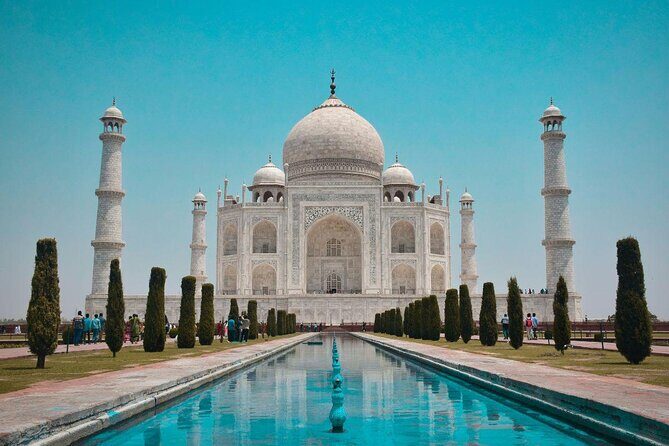
Sunrise Taj Mahal visit: the schedule gives you a chance to see the mausoleum in softer morning light.
Guide-led stops across Delhi’s old and new sides: you get commentary at major sites instead of wandering blind.
Two hotel nights with breakfast (if selected): helps you avoid the hardest part of the Golden Triangle—logistics.
A mix of included and free admission stops: you can balance cost and priorities by choosing the right package.
Golden Triangle, Three Cities, One Realistic Schedule

The Golden Triangle is famous for a reason. Delhi gives you layers of empires and faiths, Agra is where the Mughal story becomes stone and symmetry, and Jaipur feels like color and craft wrapped into fort walls and palace courtyards.
This 3-day version works because it’s built around movement with a guide in your corner. You’re not just collecting photos—you’re also hearing why places look the way they do, what they were used for, and how the design connects to the people who built and used them. That kind of context matters most on trips like this, because the sights can blur together fast if you’re going solo.
The other big advantage is the transportation setup: you get an air-conditioned vehicle for the long drives between cities and for the site-to-site transfers inside the days. In India’s heat (and traffic), that alone can make the schedule feel humane instead of exhausting. Plus, you get unlimited water bottles, which sounds small until you’re grateful for it.
A few more New Delhi tours and experiences worth a look



Day 1 in Delhi: Old City Energy and Mughal-Era Landmarks
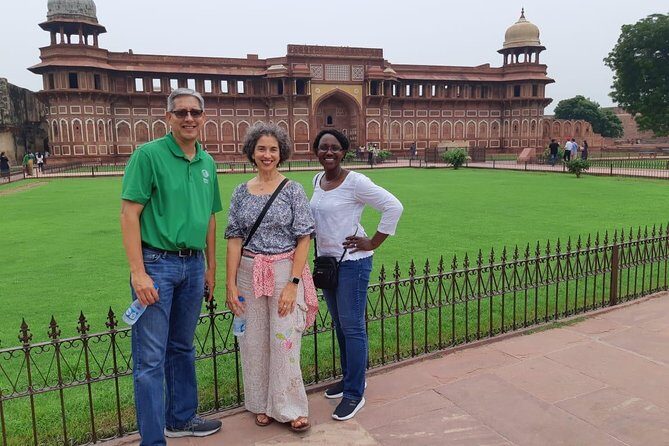
Day 1 is where Delhi starts pulling you in from the first hour. It’s not just monuments; it’s architecture, commerce, and ritual all stacked together.
Jama Masjid: Big scale, real atmosphere
You begin at Jama Masjid, one of Delhi’s largest mosques, built by Mughal emperor Shah Jahan between 1644 and 1656. It’s one of those places where the size isn’t a gimmick—it changes how the space feels. From the outside you notice the monumental proportions; inside you see how the design supports gathering and movement.
Admission is listed as included for this stop, so you can spend time looking rather than negotiating at the gate. Also, a good guide here can make the details click fast—things like why the mosque’s layout works the way it does.
Chandni Chowk: Shopping lanes that feel like a living market
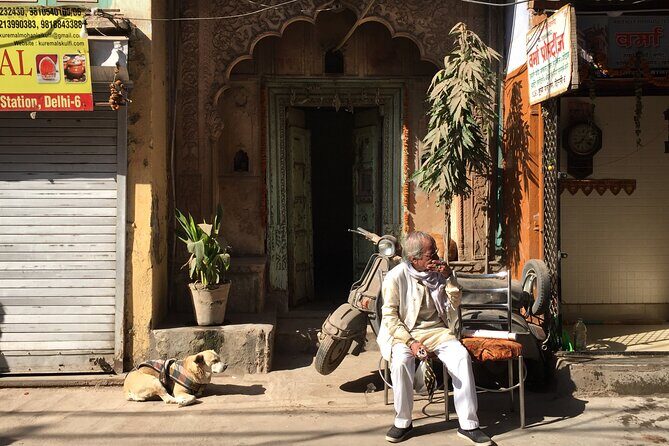
Next is Chandni Chowk, the classic heart of Old Delhi. This is the moment where the tour stops being “sit and listen” and becomes “walk and notice.” Spices, dried fruit, silver jewelry, and saris show up in a way that feels more sensory than textbook.
The plan gives you time here without an admission charge. That’s smart: you can move at your pace, pop into side lanes, and just watch. If you like street-level travel, this is the stop that usually makes people fall a little harder for Delhi.
Rickshaw Tours: Heritage and culture on wheels
Then comes Rickshaw Tours, positioned as a mix of Old Delhi Heritage and culture. Think of this as your orientation tool. You see how streets compress and open, how neighborhoods connect, and how you’d otherwise miss the in-between details.
Admission is listed as included, so you’re not juggling cost mid-day. It’s also a good reset if the morning walk gets tiring.





Raj Ghat and the quiet moment
After the busy streets, you shift to Raj Ghat, the memorial dedicated to Mahatma Gandhi. The black marble platform marks the spot associated with his cremation on 31 January 1948, and there’s an eternal flame.
This is a short stop (about 30 minutes), but it’s the kind of pause that keeps the day from feeling like a checklist. I like that the tour includes at least one reflective stop before you continue.
India Gate: A drive-by that still lands
You drive past India Gate, the war memorial built in memory of soldiers who died in the First World War. It’s brief—about five minutes—but it gives you the sight-line moment so you can recognize it later if you ever revisit.
Humayun’s Tomb: Mughal architecture you can actually study
Then you reach Humayun’s Tomb, an important marker in Mughal architecture and the early extant specimen of the Mughal garden-tomb idea, with causeways and channels.
Admission is listed as included here, and that makes sense. This isn’t a place you should hurry through. Even at a comfortable pace, you can spend time noticing how the garden layout and the monument reinforce each other.
Gurudwara Bangla Sahib and the langar concept
Next is Gurudwara Bangla Sahib, a prominent Sikh gurdwara tied to Guru Har Krishan. The tour notes the idea of langar, the community meal concept connected to Sikh tradition.
A good guide can explain what you’re seeing without turning it into a lecture. This stop works well if you’re curious about how faith shows up as community practice, not only as buildings.
Rashtrapati Bhavan and Lotus Temple: landmark contrasts
You also see Rashtrapati Bhavan (the President of India’s residence, formerly Viceroy’s House) and then the Lotus Temple, a Baháʼí House of Worship dedicated in December 1986 with its lotus-like form.
Both are listed as free admission stops in the plan. I like the contrast: one is a government-facing landmark built in a specific colonial-era style; the other is religious architecture designed to be visually striking and welcoming in a very different way.
Overnight in Agra: a smart momentum move
After Delhi sightseeing, the day ends with the drive to Agra for an overnight stay. Getting the overnight right away is what helps this tour avoid the usual “too much driving, too little sleep” trap.
Day 2 in Agra: Sunrise Taj Mahal and Agra Fort Time
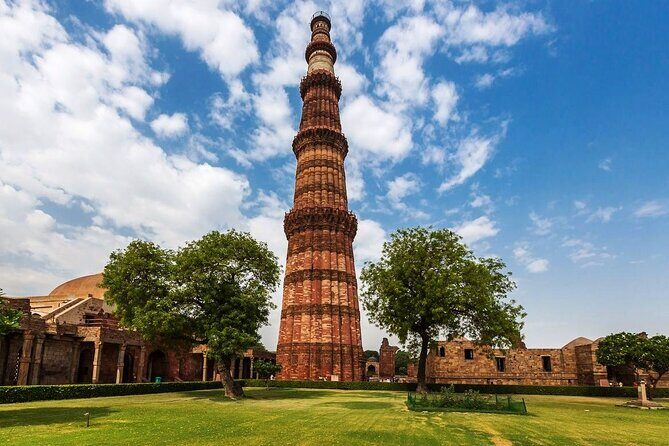
Agra is where the Golden Triangle earns its reputation. And the timing on Day 2 matters.
Taj Mahal at sunrise: softer light, better atmosphere
You get an early morning visit to the Taj Mahal at sunrise time. The Taj Mahal is described as an ivory-white marble mausoleum on the south bank of the Yamuna River, commissioned in 1632 by the Mughal emperor.
Sunrise is your best bet for a calmer feel and a more flattering look of the marble. Even if you don’t consider yourself a “sunrise person,” the schedule here is built around the idea that the morning gives you a better experience than late-day crowd chaos.
Admission is included, so you can focus on timing your own viewing rather than handling tickets at the start.
Agra Fort: the imperial residence with heavy walls and stories
Next is Agra Fort, the former imperial residence of the Mughal dynasty and a UNESCO World Heritage site. You’ll have about two hours.
This is one of those places where the Taj Mahal gets all the attention, but the fort helps you understand the bigger picture: power, defense, and court life all under one heavy structure. If you like architecture and want more than a single iconic view, the fort is a great follow-up.
Fatehpur Sikri en route to Jaipur: a quick hit
On the drive from Agra to Jaipur, you stop at Fatehpur Sikri. The city is described as founded in 1569 by Akbar and served as the capital of the Mughal Empire from 1571 to 1585, with a relatively short visit time.
Admission is listed as free for this stop. That makes it a good add-on: you get a sense of Mughal planning and scale without the cost stacking up. It’s not a deep linger the way some people want, but it’s a solid “oh wow” moment that keeps your Golden Triangle feeling full.
Overnight in Jaipur: you arrive ready for the palaces
You finish the day with the drive to Jaipur and an overnight stay. Timing is everything here—Jaipur is the city where every hour matters for outdoor viewing, so arriving in daylight helps.
Day 3 in Jaipur: Palaces, Wind Screens, and Astronomy Instruments
Day 3 is where Jaipur feels most like a movie set—except it’s real, and you can see how people live alongside the monuments.
City Palace: where Jaipur’s royal life meets public space
Start with City Palace, described as including Chandra Mahal and Mubarak Mahal palaces and other buildings. Admission is included and you get about two hours.
What makes City Palace worthwhile is that it’s not only one building. It’s a complex, and you can take your time walking through spaces that feel layered rather than repetitive. If you like understanding how royal power worked daily (not just how kings looked in paintings), this stop tends to satisfy.
Hawa Mahal: a fast but unforgettable facade
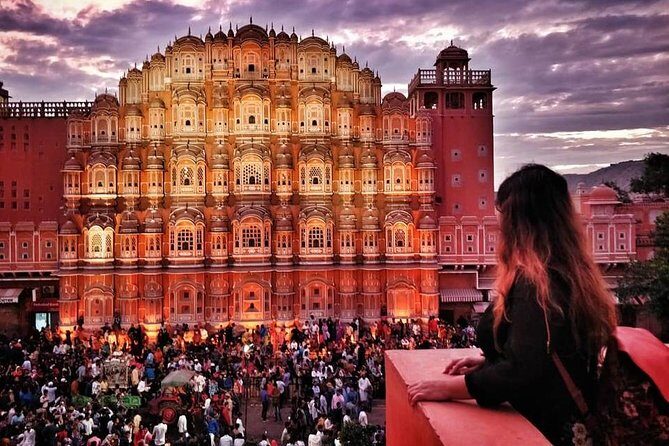
Next is Hawa Mahal, the Palace of Wind. It’s named for a high screen wall designed so women of the royal household could observe street festivals while staying unseen from outside.
This stop is brief—about 15 minutes—but it’s one of Jaipur’s most recognizable silhouettes. I suggest using this time to study the facade closely, not just snap photos. A guide can help you understand why this design made sense socially and architecturally.
Amber Palace: fort drama plus decorative detail
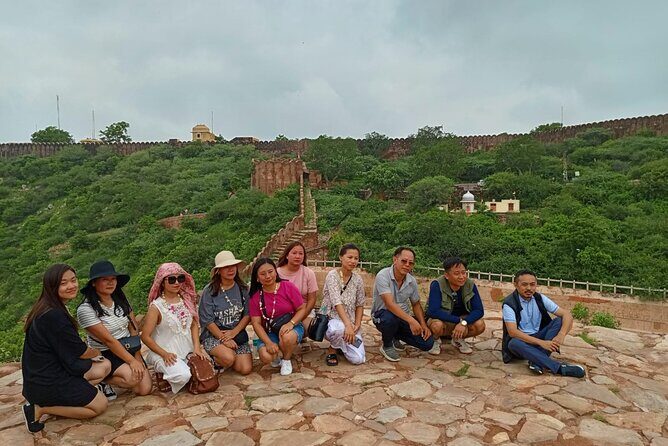
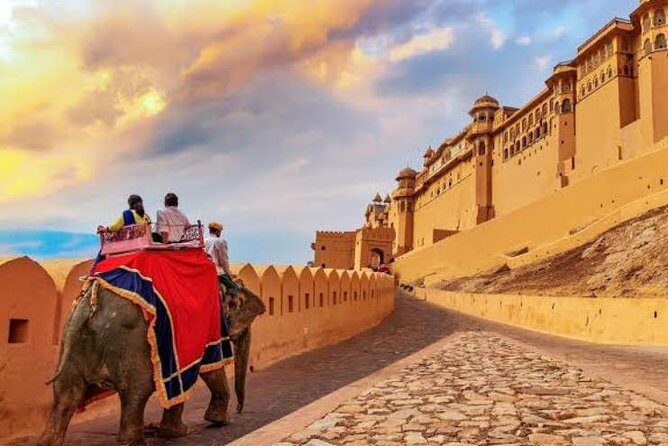
Then comes Amber Palace (Amber Fort), located on top of the Aravali Hills. It’s described as a mix of Indo-Islamic architecture, with gold-plated painting, mirror work, and European architecture influences.
Admission is included, and you get about two hours. This is often the highlight for people who want “something more than a single landmark view.” Amber gives you both setting and decoration. If you’re into craft details—mirror work especially—this is where you’ll spend time looking up.
Jantar Mantar: astronomy in stone
The tour includes Jantar Mantar. It’s described as containing 13 architectural astronomy instruments, with the name meaning instruments for measuring the harmony of the heavens.
This is a short stop in the plan (listed around one minute for duration), which is the only part that may feel a bit rushed depending on your interests. If you’re the type who likes science and design together, I’d take your time here anyway—at least long enough to understand what kind of measuring these structures were designed for.
Jal Mahal: photos at the water palace
Finally, you get a photo stop at Jal Mahal, the Water Palace located in the middle of Man Sagar Lake in Jaipur.
Time is short—about 10 minutes—so think of it as a scenic break and a chance to capture the reflection with the right angle. It’s also a good moment to refuel mentally before the big travel leg at the end of the day.
Back to Delhi: drop at your preferred location
After Jaipur sightseeing, the drive returns you to New Delhi, with drop-off at your preferred location. That’s convenient, because it keeps your final day from turning into an extra navigation problem.
What You Actually Get: Transport, Guides, and Hotel Choices
Here’s where this tour starts to feel like good value instead of just “cheap on paper.”
Air-conditioned vehicle and the long-distance reality
The Golden Triangle involves real driving time between Delhi, Agra, and Jaipur. This tour includes an air-conditioned vehicle and water bottles, which means you can handle heat and traffic without spending your energy on logistics.
Even on a schedule that’s packed, comfort helps. It keeps you from turning cranky halfway through, which is usually when people start missing details.
Guide services: when the guide makes the site
Your itinerary includes guide services throughout. The reviews highlight how much guests appreciate strong guidance, including patience and deep explanations.
You may be paired with guides such as Kaushal Pandey (Delhi guide in one highlighted review), or team members named Vishal (driver) and others including Indu, Kalim, and Nameera. The point isn’t the names—it’s the pattern: the tour is designed around commentary, not just transport.
Hotel accommodation (if you choose it)
Accommodation is optional in the provided inclusions: 3/4/5 star hotels with breakfast if you select that option. Since the itinerary includes overnight stays in Agra and Jaipur, choosing the hotel package can reduce stress dramatically.
Also note: breakfast is listed as included twice (Breakfast 2). So if you choose the accommodation option, you’re likely getting at least a couple of solid starts.
Monument admission: pick the package that fits your priorities
This is the big variable. The tour notes that monument fees can be included if you select that option, and it also lists admission status for specific stops (some included, some free).
Because you might pay more with the monument-admission option, I recommend thinking like this:
- If Taj Mahal and the big palace/fort sites are your top priorities, it usually makes sense to choose the package that includes monument admission.
- If you want to control costs tightly and are okay with skipping paid entries where possible, then review which sites are shown as free in this plan.
The tour price is $20 per person, but your real “total cost” depends on what you select for monument fees and hotel.
Small Watch-Outs That Can Affect Your Comfort
I’ll be straight with you—this tour is popular and well rated, but a few considerations can change your experience.
First, Day 3 includes multiple outdoor palace and fort stops. If you’re sensitive to heat or sun, plan for slower pacing during the midday segments, even if the schedule is tight.
Second, one stop time is very short: Jantar Mantar is listed with an extremely brief duration. If you’re fascinated by architecture and astronomy, you may want to spend a little longer than the schedule suggests, as long as your guide is okay with it.
Third, the tour is “private” for your group only, which is great for attention—but private tours can still feel fast-paced if your group wants to see everything. If you prefer lingering, say so early so the guide can adjust the pace.
Who This Golden Triangle Tour Suits Best
This tour is a good match if you:
- Want to cover Delhi, Agra, and Jaipur in a short window without self-planning every transfer.
- Appreciate guided commentary at major sites, especially for architecture and cultural context.
- Prefer a private-group setup rather than joining a crowded bus plan.
- Like a mix of landmark stops and street-level energy (Delhi’s market and mosque mix is a strong example).
You might not love it as much if you:
- Want lots of free time each day to wander completely on your own.
- Expect a slow, unhurried pace at every stop.
- Plan to spend significant time deep inside every palace/fort structure beyond the included time blocks.
Should You Book This Golden Triangle Tour?
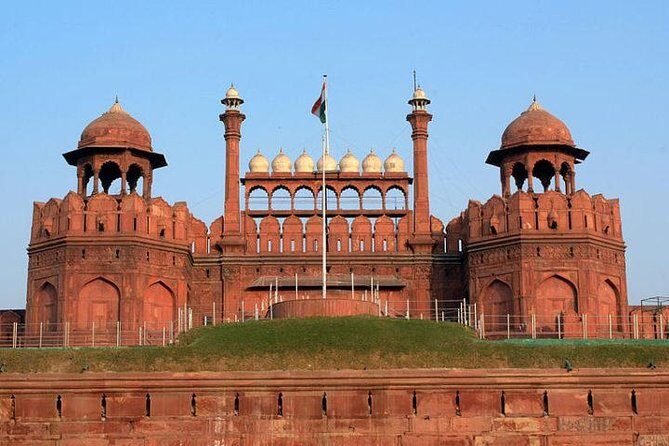
If your goal is a smooth first Golden Triangle experience—big icons, real local Delhi texture, and enough structure to keep you moving—this is worth booking. The strongest reasons are the sunrise Taj Mahal timing, the guide-led stops that help you understand what you’re looking at, and the logistics made simple with air-conditioned transport plus optional hotel nights.
My advice: choose your package thoughtfully. Confirm whether you’re selecting the monument-admission option and whether you want the hotel tier with breakfast. With those decisions clear, the tour price becomes a lot more meaningful, because you’re paying for the whole bundle of transport, guidance, and sight coverage instead of piecing it together yourself.
If you tell me your travel month and whether you care most about Taj Mahal photos, forts, or street markets, I can help you pick the right package level and pace for your style.
FAQ
What cities does the Golden Triangle Tour cover?
It covers New Delhi, Agra, and Jaipur over about three days.
Is pickup offered?
Yes, pickup is offered.
Is the Taj Mahal visit scheduled for sunrise?
Yes, the Taj Mahal is listed as an early morning visit at sunrise time.
Does the tour include monument admission fees?
Monument fee inclusion depends on the package option you select. The tour also lists some stops as included admission and others as free.
Are there hotels included?
Hotel accommodation is included if you select that option, with breakfast included as part of the accommodation package.
Is there a guide?
Yes, guide services are included.
Is this a private tour?
Yes. Only your group participates.
What transportation and drinks are included?
An air-conditioned vehicle is included, and there are unlimited water bottles.
What is included in the price and what is not?
Included items list the vehicle, guide services, and options like hotel with breakfast and monument fees (if selected). Tips/gratuities are not included.
Is cancellation free?
The tour lists free cancellation, with a full refund if you cancel at least 24 hours before the experience starts.