REVIEW · NEW DELHI
Private Old and New Delhi Full-Day Guided Tour all Inclusive
Book on Viator →Operated by Driver India Private Tours · Bookable on Viator
Delhi in one long day works.
This private tour strings together Old Delhi landmarks and big modern icons without making you figure anything out. You’ll start with a cycle rickshaw ride in Old Delhi, then ride in an air-conditioned private vehicle to major sights like Jama Masjid and Qutub Minar. One consideration: it’s a long, packed day, so you’ll want comfortable shoes and patience for traffic and crowds.
What I like most is the real all-inclusive setup. Entry and camera fees are covered at the stops, and lunch is included at no extra cost, so you can focus on the sights instead of calculating ticket lines.
In This Review
- Key things that make this Delhi day feel worth it
- Starting at Jama Masjid: the morning you can’t fake
- The cycle rickshaw ride through Old Delhi
- Swaminarayan Akshardham: a big campus with a different feel
- Humayun’s Tomb: more than a quick photo stop
- Lotus Temple and Qutub Minar: two icons, two very different tempos
- Gurudwara Bangla Sahib: a calm cultural stop that breaks the day
- India Gate and Rashtrapati Bhavan: finishing on the Rajpath axis
- All-inclusive details that save real time (and some money)
- The private-guide advantage: why names like Saurabh and Jyotshana stand out
- What the 7–9 hour day feels like in practice
- Who this tour fits best
- Should you book this Old and New Delhi full-day tour?
- FAQ
- How long is the Old and New Delhi full-day guided tour?
- What time does the tour start and where does it begin?
- Does the tour include hotel pickup and drop-off?
- Is there a private guide?
- What sights are included in the route?
- Are entry tickets and camera fees included?
- Is lunch included, and is it free?
- What transport is used during the day?
- Is alcohol included with lunch?
- What is the cancellation policy?
Key things that make this Delhi day feel worth it
- Licensed local guide: you get context fast, not just signpost facts.
- Old Delhi on a cycle rickshaw: a short ride that helps you get the feel of the area.
- Monument entry plus camera fees included: fewer surprises at gates.
- Lunch included: no hunt for a “proper” meal mid-tour.
- Air-conditioned private transport with water and umbrellas: comfort matters in Delhi’s weather swings.
Starting at Jama Masjid: the morning you can’t fake
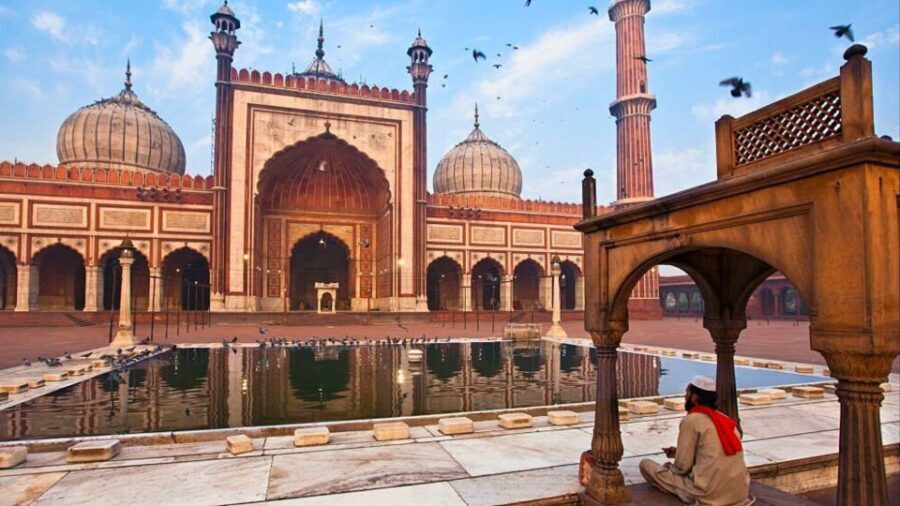
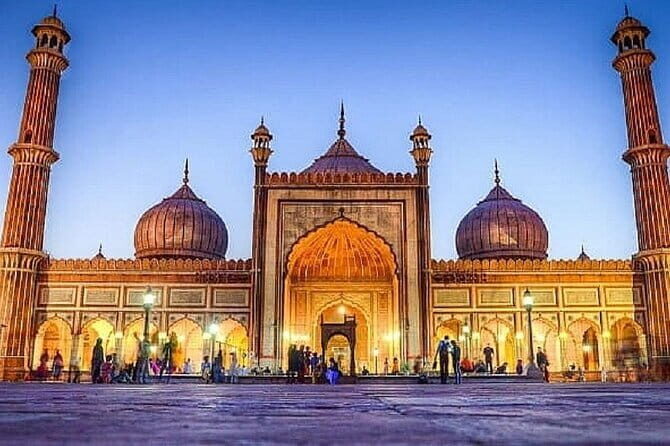
Your day kicks off at Jama Masjid in Old Delhi around 9:00 am, with pickup and drop-off handled through the tour. This is a good way to start, because you hit one of the city’s biggest religious landmarks when the light is nicer and the streets are already awake.
Jama Masjid is built by Mughal Emperor Shah Jahan, taking shape between 1650 and 1656, and it’s known for scale. Even if you’re not a mosque architecture super-fan, you’ll feel the size of the place the moment you arrive. This stop is also time-efficient: you’ll spend about 45 minutes, which is enough to see the main prayer spaces and get your bearings.
A practical bonus here: the tour includes entry and camera fees, so you don’t need to worry about last-minute cash or whether your phone or camera will be treated differently at the gate. Add in the fact you’re traveling with a local, government-licensed guide, and you’ll likely get quick explanations of what you’re seeing as you move through the complex.
One smart mindset for this part of the day: treat it as orientation. Old Delhi can feel like information overload, so getting your first landmark right helps the rest of the route click.
You can also read our reviews of more guided tours in New Delhi


The cycle rickshaw ride through Old Delhi
Right after Jama Masjid, you get an included cycle rickshaw ride in Old Delhi. This isn’t a long transport strategy. It’s a taste—short, memorable, and very specific to the neighborhood.
Why that matters: a ride like this puts you in the lane of the local street rhythm. You notice how shops front the road, how people move, and how the area’s layout funnels you toward major sights. It’s also a break from walking, which helps later when you’re touring multiple large complexes.
Keep expectations realistic. You’ll be on a schedule, not roaming freely. Still, it’s the kind of included experience that usually costs extra on DIY days. Here, it’s baked into the package, along with the included monument access.
If you’re sensitive to crowds or tight spaces, ask your guide to help you plan where you’ll pause and where you’ll take photos. In Delhi, that kind of small pacing advice can make a huge difference.
Swaminarayan Akshardham: a big campus with a different feel
Next up is Swaminarayan Akshardham, a major Hindu temple and spiritual-cultural campus in New Delhi, located near the border with Noida. This stop usually runs about 1 hour, which gives you time to take in the setting and still keep the day moving.
Akshardham is one of those places that can feel surprisingly modern in how it’s presented, even though it’s deeply tied to religious tradition. If you like contrast in a single day, this is a good pivot: you go from one of Old Delhi’s historic power centers to a large campus designed for visitors to experience the site as a whole.
The practical win again is inclusion. Admission tickets are included, so you can focus on what you want to see instead of worrying about cost or whether your plan matches ticket rules.
Also note the value of having a guide here. When a site is large, someone who knows where visitors naturally drift can save you time and keep you from wandering in circles.
Humayun’s Tomb: more than a quick photo stop
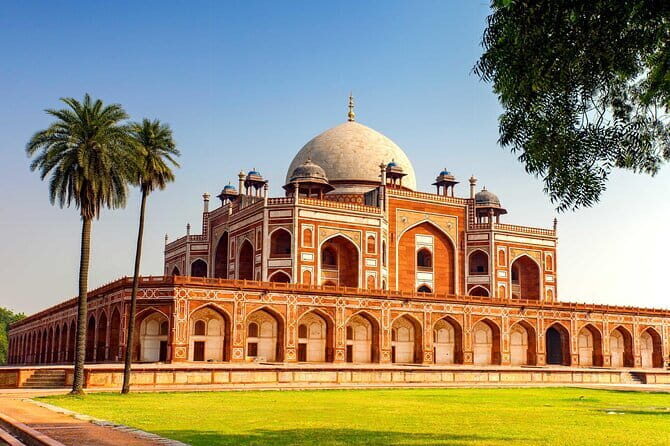
After Akshardham, you’ll head to Humayun’s Tomb, another Mughal-era landmark, spending about 1 hour here.
Humayun’s Tomb is the tomb of Mughal Emperor Humayun, commissioned in 1558 by Empress Bega Begum, and designed by Mirak Mirza. That mix of dates and named people matters because it turns the visit from generic sightseeing into a sense of how the place fits the broader Mughal story.
You’ll likely notice a calm, architectural rhythm here—tombs invite slower looking than a street market. It’s a good mid-day stop, and it gives you a break from the most visually chaotic neighborhoods.
A key benefit for photography: camera fees are included, so you’re not balancing photo time against payment. Guides also help with timing and positioning, which comes in handy when you’re trying to capture a monument without constantly asking strangers for space.
If you care about monuments that look good from multiple angles, this is one of the stops where spending the full allotted time pays off.
Lotus Temple and Qutub Minar: two icons, two very different tempos
After Humayun’s Tomb, the itinerary shifts to two famous icons.
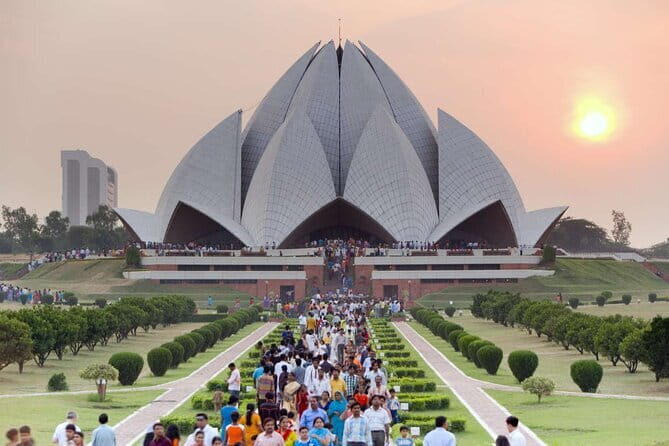
First is the Lotus Temple, a Baháʼí House of Worship dedicated in December 1986. You’ll have about 45 minutes. Its flowerlike form is the headline, but the main point for a visitor is how it feels: bright, airy, and visually striking. It’s also a nice contrast after the Mughal tomb stop, because the design reads differently in person.
Then comes Qutub Minar, part of the Qutb complex and a UNESCO World Heritage Site in the Mehrauli area. This is your 1-hour monument stop. Qutub Minar is a minaret and “victory tower,” and it’s one of those places where scale hits quickly. Even if you’ve seen pictures, standing there helps you understand why it’s such a landmark.
Two practical tips for these middle-to-late stops:
- Wear shoes that handle uneven ground. These complexes vary in surface and spacing.
- Keep your camera ready, because the day’s lighting can change fast, especially after time in the open.
The guide’s job here is more than narration. A good guide helps you keep momentum while still letting you slow down long enough to actually see.
You can also read our reviews of more private tours in New Delhi





Gurudwara Bangla Sahib: a calm cultural stop that breaks the day
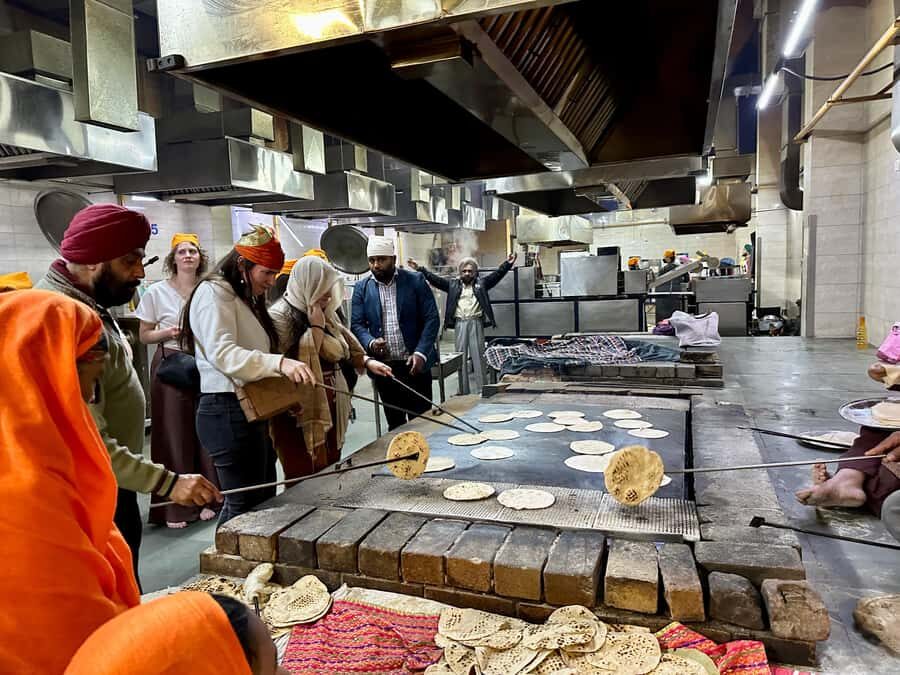
Next is Gurudwara Bangla Sahib, one of Delhi’s most prominent Sikh gurdwaras. It’s associated with Guru Har Krishan, and you’ll spend about 1 hour.
This is a welcome pause. You’ve had large monument energy, plus a lot of movement by vehicle. A gurdwara visit offers a different kind of attention—less about towering structures and more about atmosphere, ritual, and how visitors experience the space.
Because entry is included, you don’t have to manage costs or decide which gate to use. That’s a small thing, but it prevents decision fatigue later in the day.
If you enjoy learning from people who know how worship spaces work for visitors, this is also a great stop for asking questions. The guide can help you understand what you’re seeing and how to behave respectfully without turning your visit into a strict checklist.
India Gate and Rashtrapati Bhavan: finishing on the Rajpath axis
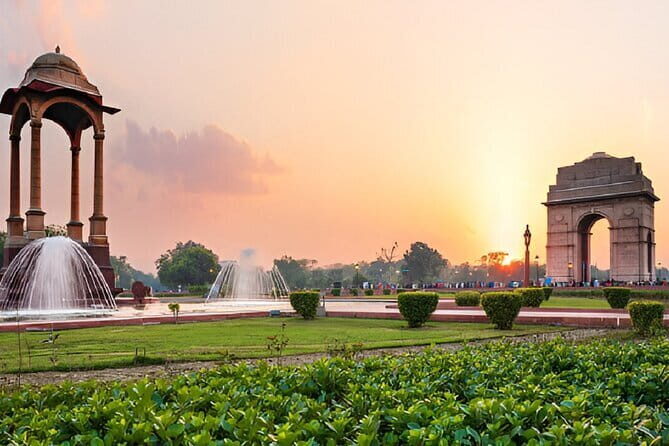
To close, you’ll head toward India Gate and see Rashtrapati Bhavan on the Rajpath ceremonial axis.
India Gate is a war memorial located astride Rajpath, on the eastern edge of the ceremonial axis. Expect about 30 minutes. It’s not a “wandering” stop; it’s a landmark stop where you take in the scale and context.
Rashtrapati Bhavan is the official residence of the President of India, at the western end of Rajpath. Even if your time here feels brief, it helps you connect the day’s stops to the way Delhi is planned and presented.
This is a good finale because it wraps the day in a different kind of story—less about the past you step inside, more about the city’s formal identity and the axis that organizes the central area.
All-inclusive details that save real time (and some money)
The price for this private full-day tour is $69 per person, and the “all-inclusive” part matters more than it sounds.
Here’s what you’re not paying separately:
- Hotel pickup and drop-off
- Local government-licensed guide
- Entry and camera fees for the monuments
- Transport in an air-conditioned private vehicle
- Lunch included
- Water bottles and umbrellas
- Tuk-tuk/cycle rickshaw ride in Old Delhi
When you add up how often entry fees and local guides cost on their own, this package starts to look like a practical value play—especially if you’d otherwise be figuring out which tickets to buy and whether you’re allowed to photograph. The lunch inclusion also keeps you from losing time later to finding a place that works for both your schedule and your preferences.
Small caution: alcoholic beverages aren’t included. If you want a drink with lunch or at the end of the day, you’ll need to budget for it.
The private-guide advantage: why names like Saurabh and Jyotshana stand out
One of the strongest parts of this tour is the human support. A private guide isn’t just reading facts off a wall. They help you move efficiently, explain what matters, and handle photo moments without turning your day into a frantic scramble.
On this tour, I’ve seen guides like Saurabh and Jyotshana praised for knowing the places well and adapting to the group. If your priority is photos, a guide who understands the best angles and helps you position yourself quickly can make your camera time feel less stressful.
Drivers matter too. One driver name that comes up is N Ajit, and the theme is consistent: caring, smooth handling, and keeping you feeling safe as you hop between neighborhoods.
If you like tours where the pace matches your interests, this is the right setup: you’re not negotiating a group’s energy level with strangers. It’s just you and your guide.
What the 7–9 hour day feels like in practice
The duration is listed as 7 to 9 hours, and with so many major stops, that range makes sense. You’re spending time at:
- Jama Masjid (about 45 minutes)
- Akshardham (about 1 hour)
- Humayun’s Tomb (about 1 hour)
- Lotus Temple (about 45 minutes)
- Qutub Minar (about 1 hour)
- Gurudwara Bangla Sahib (about 1 hour)
- India Gate (about 30 minutes)
- Plus the Rashtrapati Bhavan stop/view at Rajpath
Between stops, you’re traveling by car in traffic. That’s why the tour includes air-conditioning—you’ll feel it.
My advice for the best experience:
- Drink water even if you don’t feel thirsty. The tour provides bottled water, but you still need to use it.
- Plan for a full day rhythm: this isn’t a “slow sightseeing and coffee” option.
- Keep your schedule in mind if you have an evening plan. You may finish later depending on traffic.
Who this tour fits best
This tour is a great match if:
- You want major Old and New Delhi highlights in one day.
- You prefer not to manage tickets, entrances, or route planning.
- You like the idea of an included Old Delhi rickshaw ride plus monument time that actually gets used.
It may be less ideal if you want a very relaxed pace with lots of independent wandering. The day is designed to hit many landmarks, so you’ll mostly follow the route and timing.
Should you book this Old and New Delhi full-day tour?
I think this is a smart buy if you’re weighing two options: DIY transit versus a guided day. For $69, you get a licensed guide, AC transport, monument entry plus camera fees, lunch, and a real Old Delhi street experience by cycle rickshaw. That’s a lot of planning removed from your plate.
Book it if you want a one-day framework for Delhi: start with Old Delhi, see Mughal-era giants, then contrast with modern spiritual and iconic architecture. You’ll walk away with a clearer mental map of the city.
Skip it only if you’re already confident navigating Delhi on your own and want maximum free time per stop. In that case, you might prefer fewer stops and more independence.
In short: if you want value plus structure, this full-day tour is a practical way to get oriented fast—without cutting corners on the essentials.
FAQ
How long is the Old and New Delhi full-day guided tour?
The tour runs about 7 to 9 hours.
What time does the tour start and where does it begin?
It starts at 9:00 am at Jama Masjid, Old Delhi, Delhi 110006.
Does the tour include hotel pickup and drop-off?
Yes. Hotel pickup & drop-off are included.
Is there a private guide?
Yes. This is a private guided tour with a local government licensed guide.
What sights are included in the route?
The tour includes Jama Masjid, Swaminarayan Akshardham, Humayun’s Tomb, Lotus Temple, Qutub Minar, Gurudwara Bangla Sahib, India Gate, and a stop/view at Rashtrapati Bhavan.
Are entry tickets and camera fees included?
Yes. Entry and camera tickets for the monuments are included.
Is lunch included, and is it free?
Yes. Lunch is included with no extra cost.
What transport is used during the day?
You’ll travel in an air-conditioned private vehicle and there’s an included cycle rickshaw ride in Old Delhi.
Is alcohol included with lunch?
No. Alcoholic beverages are not included.
What is the cancellation policy?
You can cancel for a full refund if you cancel at least 24 hours before the experience’s start time.