REVIEW · NEW DELHI
5 Days Golden Triangle Tour. Delhi-Agra-Jaipur-Delhi
Book on Viator →Operated by INDIA through my eyes · Bookable on Viator
Golden Triangle, with room to breathe. This private 5-day circuit links Delhi, Agra, and Jaipur with an air-conditioned car and a guide, so you can see the big hitters without turning your trip into a sprint. You’ll hit UNESCO sites, major temples, and classic Mughal sights—then end with the Taj Mahal at sunrise.
What I like most is that it includes three-star hotel stays with breakfast, which cuts down on decision fatigue. I also like the mix of monument-heavy mornings and more everyday-feeling moments, like Chandni Chowk by rickshaw—plus several stops where entry is free.
One possible drawback: many major monuments are marked as not included for admission tickets, so you should budget extra for entries at places like Humayun’s Tomb, Qutub Minar, Amber Palace, Agra Fort, and the Taj Mahal.
In This Review
- Key takeaways before you go
- Why this 5-day Golden Triangle feels easier than you’d expect
- Delhi Day 1: Jama Masjid, Chandni Chowk by rickshaw, and the Mughal stack
- Delhi Day 1 as a whole: the smart order (and the heat reality)
- Delhi Day 2: Birla Mandir in the evening, with a cultural side
- Jaipur Day 3: Amber Palace, City Palace, and the science stop at Jantar Mantar
- Agra Day 4: Chand Baori’s 3,500 steps and Agra Fort’s Mughal-era backbone
- Day 5: Taj Mahal at sunrise, and how to make the early start worth it
- What you’re actually paying for with this $300 per person price
- Who this tour suits (and who might want a slower option)
- Practical advice so your days feel smooth
- Should you book this Golden Triangle tour?
- FAQ
- Is this tour private or shared with other groups?
- What cities are included in the 5 days?
- What does the tour price include?
- Are monument entry tickets included?
- Can this trip be customized to more or fewer days?
- Can I cancel for a full refund?
Key takeaways before you go
- Private transportation that keeps you flexible: comfortable, air-conditioned, and timed to the day’s sights
- Free standout sights: Jama Masjid, Raj Ghat, Lotus Temple, Birla Mandir (based on the tour schedule)
- Taj Mahal at sunrise: early timing for softer morning light and a calmer start
- A guide who handles the moving pieces: route, timing, and on-the-ground support
- Entry tickets are on you for many monuments: so the final cost depends on what you choose to enter
Why this 5-day Golden Triangle feels easier than you’d expect
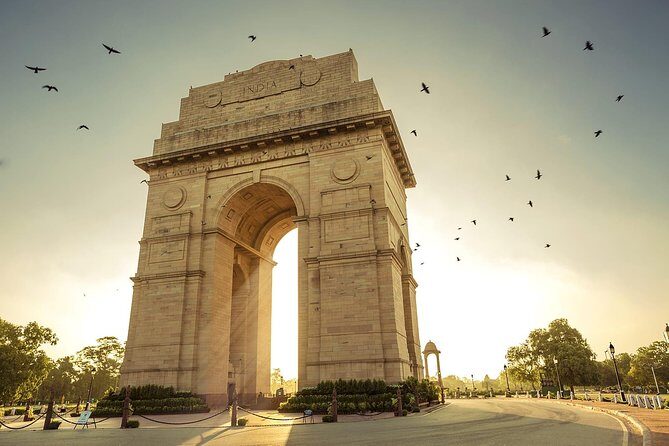
The Golden Triangle is famous for being busy. This version is designed to feel manageable. You’re not just hopping between cities; you’re riding in a comfortable private car, with a city tour guide, and a day plan that makes room for breaks and slower moments.
I also like the rhythm of the days. Delhi gives you a heavy hit of Mughal-era landmarks and iconic religious sites. Jaipur shifts gears into Rajput architecture and planning science at Jantar Mantar. Agra then brings you the fortress history and, finally, the big finale: the Taj Mahal at sunrise.
And because it’s private, it’s easier to adjust your pace than it is on big group buses. If your feet get tired, you can often slow down at a stop. If you’re photo-happy, your guide can usually help you time it better.
A few more New Delhi tours and experiences worth a look


Delhi Day 1: Jama Masjid, Chandni Chowk by rickshaw, and the Mughal stack
Day 1 is Old Delhi energy, paired with Central Delhi architecture. You start at Jama Masjid, with about 45 minutes on-site. Admission is free, and the courtyard can hold more than 25,000 people. The scale is the point here: it’s one of those places where your brain keeps trying to measure the size, then gives up and just takes it in.
From there you head to Chandni Chowk for a rickshaw ride (around 30 minutes). This is one of the oldest markets in Old Delhi, built in the 17th century by Shah Jahan’s era. You’ll feel the shopping streets as a living system—snacks, textiles, and the kind of sidewalk chaos that only happens when a city has been doing the same thing for centuries.
A quick note: riding a rickshaw in a busy market is fun, but it’s not the time to wear brand-new sneakers. I’d bring shoes that you can trust.
Next up is Humayun’s Tomb (about 45 minutes). This is a UNESCO Heritage Site and the first garden-tomb on the Indian subcontinent. The gardens and the symmetry help you understand how Mughal architecture borrowed and refined ideas. Admission isn’t included on this schedule, so plan to pay that entry separately if you want to go in.
Then comes Raj Ghat (about 30 minutes). Admission is free. This is the resting place of Mahatma Gandhi, and it has a quiet, reflective mood compared with the market streets you started the day with. It’s a good change of pace—also a good reminder that India’s major landmarks aren’t only about buildings.
After that you’ll visit Qutub Minar (about 45 minutes). This one is about height and stonework: it’s described as the tallest brick minaret in the world. Admission isn’t included, so again, budget for entries.
Finally, you end at Lotus Temple (about 45 minutes). Admission is free, and it’s open to all religions. The building is shaped like a lotus flower, and it’s a calm, modern-feeling contrast to the older Mughal sites you’ve just been touring. It’s also a good spot to slow down and reset before dinner.
Delhi Day 1 as a whole: the smart order (and the heat reality)
This day is packed, but the sequence makes sense. You’re going from Jama Masjid into Chandni Chowk, then gradually stepping into larger, more planned monuments like Humayun’s Tomb and Qutub Minar. Raj Ghat and Lotus Temple close the loop with quieter, spacious feelings.
The main consideration is timing and comfort. You’ll be outside for a lot of the day, and Delhi can be intense. If you’re traveling in warmer months, plan for sun protection and plenty of water. The tour includes packaged drinking water, which helps, but you’ll still want to pace yourself.
Delhi Day 2: Birla Mandir in the evening, with a cultural side
Day 2 is lighter in structure. You get Birla Mandir Temple in the evening for about 45 minutes, with admission free. The temple is dedicated to Lord Vishnu (Narayan), along with Lakshmi. This is a nice change from the heavy monument days, because evening temple time often feels more atmospheric than midday sightseeing.
If your group is museum fatigue–prone, this day is a breather. If you love architecture, it’s still worth it—just don’t expect the grand scale of the big Mughal complexes. It’s more about the mood and the ritual setting than about towering stonework.
Jaipur Day 3: Amber Palace, City Palace, and the science stop at Jantar Mantar
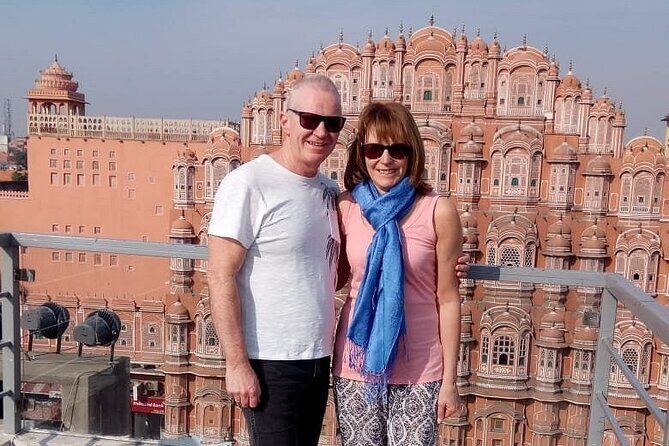
Jaipur day leans into Rajput power and Mughal-influenced design. You start with Amber Palace for about 1 hour 30 minutes. Admission isn’t included. Amber is the kind of attraction where the setting matters as much as the building itself, and the architecture shows strong Mughal influence. It was the residence of the Rajput Maharajas and their families, so it’s not just a pretty palace—it’s the political center of a former world.
Next comes Jal Mahal, the water palace. You can drive past it and, if you want, stop for pictures for about 10 minutes. Admission is free for this quick stop. Don’t plan on a deep visit here. Think of it as a scenic postcard moment on the route.
Then you move to City Palace of Jaipur (about 1 hour). Admission isn’t included. The complex ties directly to the city’s founding: Jaipur was established by Maharaja Sawai Jai Singh II, and the palace complex grew alongside it. You’ll see multiple buildings, courtyards, and galleries, which means it rewards slow walking more than rushing from room to room.
After that is Jantar Mantar (about 45 minutes). Admission isn’t included. It’s described as an equinoctial sundial. The big teaching point: this place used giant instruments to track time and celestial movements. If you’re the type who likes seeing how people used math and astronomy before smartphones, this stop will click.
There’s also a picture stop for about 10 minutes. Short stops like this are sometimes forgotten on other tours. Here they’re built in, which helps you catch photos without turning the day into a constant stop-and-go.





Agra Day 4: Chand Baori’s 3,500 steps and Agra Fort’s Mughal-era backbone
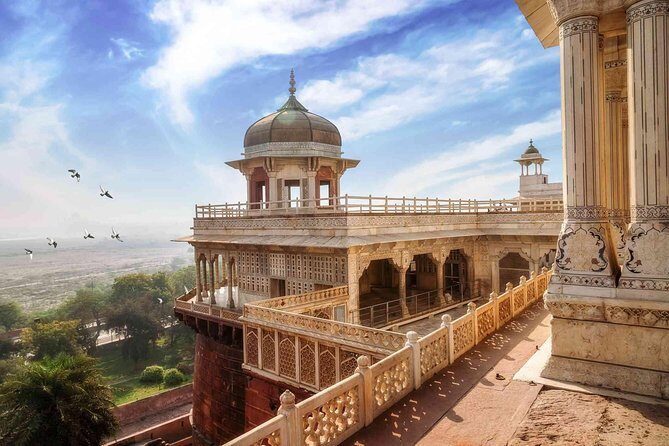
On Day 4 you get out of the main city sweep and into something very specific: Chand Baori in Abhaneri. It’s a step well with about 30 minutes on-site. Admission isn’t included. The numbers are striking: 3,500 narrow steps over 13 stories, and it extends roughly 30 meters into the ground.
Even if you don’t go into step wells at home, this is worth it. It shows how practical water storage could also become architecture. You’ll likely spend time just looking down and absorbing the geometry.
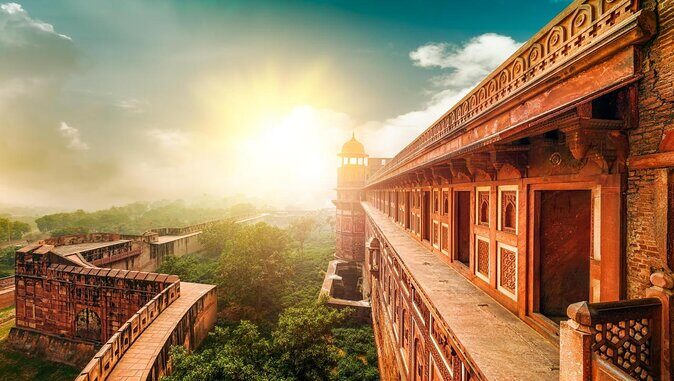
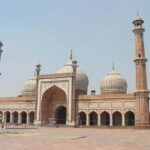
Then you head to Agra Fort (about 1 hour 30 minutes). Admission isn’t included. The fort is a UNESCO World Heritage Site and was built between 1565 and 1573 for Mughal Emperor Akbar. Forts like this are great because they help you understand the city’s power structure—who controlled the land, where authority lived, and how defense shaped daily life.
The drawback on Day 4 is simple: you’ve got two big history stops, and both involve real walking. If you’re carrying camera gear, keep it light. If you hate crowds, this is still manageable, but you’ll want comfortable shoes either way.
Day 5: Taj Mahal at sunrise, and how to make the early start worth it
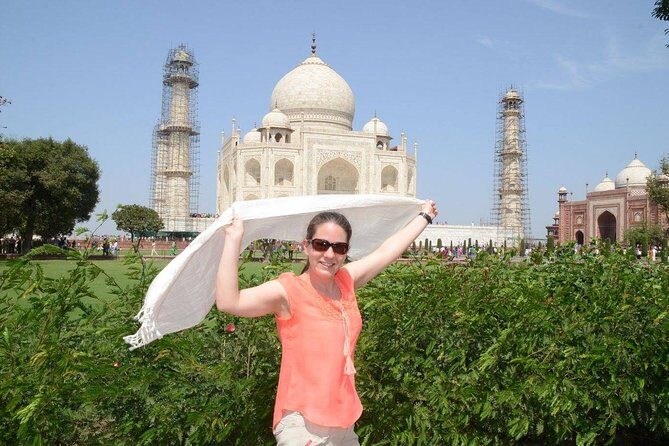
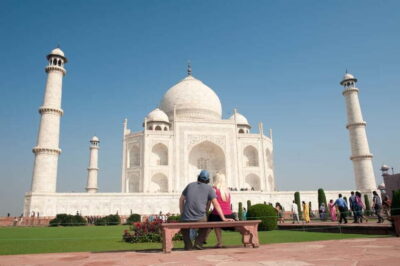
You finish with Taj Mahal for about 2 hours. Admission isn’t included. The key idea here is the timing: sunrise is described as the best time, partly because the early light turns the dome a soft golden color.
You’re trading comfort for atmosphere. But if you’ve ever visited a famous site mid-day, you know how that goes: heat, sharper shadows, and more noise. Sunrise is often calmer, and the light makes the Taj feel more sculptural. I’d treat the early start as part of the magic.
This is also the day where your guide’s support matters. Strong guides know how to manage timing so you spend more of your Taj Mahal window actually looking, rather than waiting around. Some guides have even gone beyond for photo needs, including helping set up a photo moment at the Taj, which is the kind of extra thought you feel for the rest of your trip.
What you’re actually paying for with this $300 per person price
At $300 per person, the value comes from the overall package—not just one famous monument. Here’s what’s included in the tour framework:
- Air-conditioned private transportation
- A city tour guide
- Packaged drinking water
- All fees and taxes (as listed for the tour)
- Pickup offered
- Mobile ticket
- Three-star hotel accommodation with breakfast (as stated in the tour overview)
What’s not included:
- Monument entry tickets for many of the big names (Humayun’s Tomb, Qutub Minar, Amber Palace, City Palace, Jantar Mantar, Chand Baori, Agra Fort, Taj Mahal)
So your budget has two parts: the fixed tour price, plus the variable monument entries you choose to take in during the day. That’s normal for these circuits, but it’s worth planning ahead so you don’t feel surprised once you’re on-site.
If you hate organizing logistics, this is where the money usually pays off. Private car + guide means fewer taxi negotiations and less guesswork about timing. For first-time visitors to North India, that can be a big deal.
Who this tour suits (and who might want a slower option)
This tour is a great fit if you want:
- A first trip into Delhi, Agra, and Jaipur with major landmarks covered
- A private setup where you’re not packed shoulder-to-shoulder in the car
- A balance of big-ticket sights and free stops, so not every hour revolves around paid tickets
- Sunrise Taj Mahal as the finale, not a mid-morning gamble
It may not be ideal if you:
- Want zero extra spending on top of the tour price for monument entries
- Prefer ultra-slow travel with lots of free time between stops
- Hate early mornings (because Day 5 is built around sunrise)
Also, if you’re very sensitive to heat or crowds, treat the day plans like a workout plan: doable, but you’ll feel it if you ignore pacing.
Practical advice so your days feel smooth
A few things I’d do before you go:
- Expect walking at nearly every major stop, especially at fort and palace sites.
- Bring sun protection and plan your water intake—Delhi and sunrise can be a tricky mix.
- Keep some cash or a backup payment method for monument entry tickets that are marked as not included.
- If you care about photos, tell your guide early. Guides who manage timing well can help you get better photo moments without turning it into a marathon.
Should you book this Golden Triangle tour?
If you want a strong first pass through Delhi, Agra, and Jaipur with a private air-conditioned car, hotel breakfasts, and a guide who helps you keep the days moving, this is an easy yes. The free highlights (Jama Masjid, Raj Ghat, Lotus Temple, Birla Mandir) help you see a lot without paying for every single stop.
I’d book it if the sunrise Taj Mahal is on your must-do list and you’re okay with paying separate monument entry tickets for many of the headline sites. If that extra cost would annoy you, then consider budgeting in advance or shopping for a version that explicitly bundles monument admissions.
FAQ
Is this tour private or shared with other groups?
It’s a private tour/activity, which means only your group participates. You also get private transportation.
What cities are included in the 5 days?
The tour runs on the Golden Triangle route: Delhi–Agra–Jaipur–Delhi.
What does the tour price include?
The tour includes an air-conditioned vehicle, city tour guide, private transportation, packaged drinking water, and all fees and taxes. The overview also states accommodation in three-star hotels with breakfast, plus a pickup offer and mobile ticket.
Are monument entry tickets included?
No. The tour notes that monument tickets are not included, including major sites such as Humayun’s Tomb, Qutub Minar, Amber Palace, City Palace, Jantar Mantar, Chand Baori, Agra Fort, and the Taj Mahal.
Can this trip be customized to more or fewer days?
Yes. The tour description says it can be customized to a minimum of four and a maximum of eight days.
Can I cancel for a full refund?
Free cancellation is offered up to 24 hours in advance for a full refund. If you cancel less than 24 hours before the start time, the amount paid is not refunded.