REVIEW · NEW DELHI
Golden Triangle Tour 3 Days with Accommodation & Entrance fee
Book on Viator →Operated by Taj Mahal Private Tours · Bookable on Viator
Three cities. One tight schedule. No planning.
This Golden Triangle tour is built for first-time visitors who want the big names—Delhi’s monuments, the Taj Mahal, and Jaipur’s forts and palaces—without stitching together trains, tickets, and hotel check-ins on your own. You get pickup, air-conditioned private transport, and a guided day of sightseeing so you can get your bearings fast.
I especially like that entrance fees are included across Delhi, Agra, and Jaipur, and that your days are guided with stops that actually line up with how most people experience the Golden Triangle. A possible drawback: with only three days, the pace is brisk, so you’ll want to go in ready for early starts and long drives between cities—and remember that food and drinks aren’t included, so budget for meals.
In This Review
- Key things I’d watch before you book
- Why this 3-day Golden Triangle feels easier than DIY
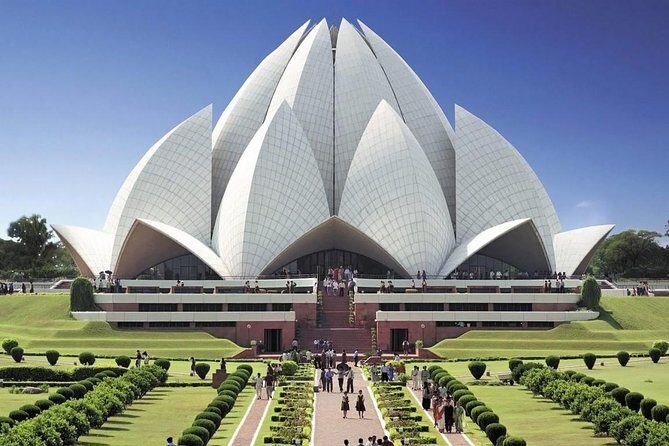
- Day 1 in Delhi: India Gate, Lotus Temple, and Qutub Minar
- Agra Morning: Taj Mahal at the right pace, Agra Fort without rushing
- The transfer from Agra to Jaipur: a long move you don’t have to manage
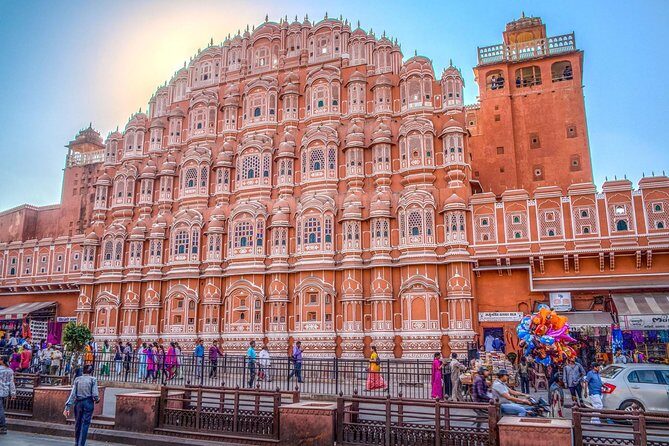
- Jaipur in one day: Amber Palace, Hawa Mahal views, Jal Mahal, City Palace
- Hotels and breakfast: what you get, what you’ll still pay for
- Guides and entrance fees: where your tour time really goes
- Transportation comfort and private transfers: the value behind the price
- Who should book this Golden Triangle tour, and who should think twice
- Practical tips to make the most of your 6:00 am start
- Should you book this 3-day Golden Triangle with accommodation and entrance fees?
- FAQ
- What’s the duration of the Golden Triangle tour?
- Is hotel pickup and drop-off included?
- What time does the tour start?
- How many nights of accommodation are included?
- Are monument entrance fees included?
- What meals are included?
- Is there an option for private touring?
- How do you receive tickets?
- What’s the cancellation policy?
- Is this tour in air-conditioned comfort with private transport?
Key things I’d watch before you book
- Private pickup and round-trip transfers: less time figuring out logistics, more time on sights.
- 2 hotel nights in double/triple sharing: good value if you’re okay with shared rooms.
- Monument tickets included: you won’t waste time hunting prices or ticket offices mid-trip.
- Taj Mahal + Agra Fort in one morning: helps you see two major Agra sights back-to-back.
- Jaipur hits in a focused loop: Amber Palace, Hawa Mahal area views, Jal Mahal, and City Palace all in one day.
- Guides get real praise: Mr Javed Khan, Adnan, Vinny, and driver Ali are specifically called out for professionalism and making the visits memorable.
Why this 3-day Golden Triangle feels easier than DIY
If you’ve only got a short window in India, the Golden Triangle is the fastest way to see the headline sights. The trick is that it can also become a planning headache: multiple cities, different ticket systems, unfamiliar pickup points, and the daily question of where to be and when. This tour answers that with pickup, private vehicle transport, and pre-planned guided stops.
You also get the kind of structure that helps you travel smarter. In just three days, you’re not only seeing the monuments—you’re moving between Delhi, Agra, and Jaipur with a chauffeur and a built-in plan for your sightseeing time. That matters because the “lost time” of DIY travel adds up fast, especially on tight itineraries.
A few more New Delhi tours and experiences worth a look



Day 1 in Delhi: India Gate, Lotus Temple, and Qutub Minar
Delhi can feel loud and complex on day one. This day starts with a classic orientation circuit, then shifts into two Delhi sights that are different in style and mood.
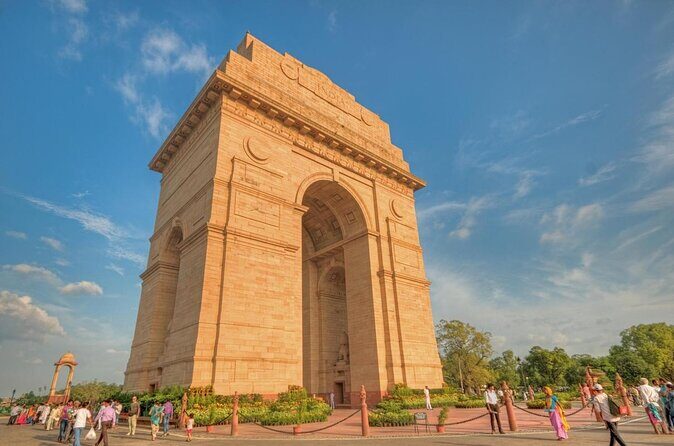
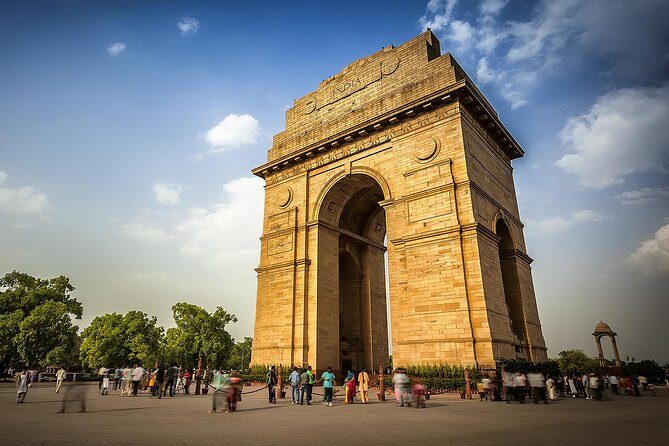
India Gate sits on the ceremonial axis of New Delhi (Rajpath). It’s a war memorial, and even if you’re not a history nerd, it’s a useful landmark for understanding how New Delhi was laid out.
Next come views tied to the government zone: Rashtrapati Bhavan (the President’s official residence) and the Parliament House area. The architecture is part of the reason these stops are on the list—designed by British architects Sir Edwin Lutyens and Sir Herbert Baker in the early 1910s as part of New Delhi’s administrative-capital plan.
Then you get a sharp contrast with spirituality and lightness: Lotus Temple. It’s a Bahá’í House of Worship dedicated in December 1986, famous for its lotus-flower shape. One practical advantage here is that the visit is straightforward: admission is included, and you don’t need to figure out timings or ticket rules on your own.
Finally, Qutub Minar brings you into the UNESCO Qutb complex. This is a tall tapering minaret—73 meters high, with five storeys. It’s the kind of sight where a guide helps you notice details you’d easily miss on your own, and the entry is included in your tour.
Practical note: Delhi sightseeing can mean lots of standing and walking, especially at Qutub Minar. Wear comfortable shoes and bring water—your tour includes bottled water, which helps.
Agra Morning: Taj Mahal at the right pace, Agra Fort without rushing
Agra is where the Golden Triangle earns its reputation. The big draw is the Taj Mahal, and your schedule protects that moment by placing it early and giving it real time.
You’ll visit the Taj Mahal in the morning for about 2 hours, with entrance included. The Taj Mahal is an ivory-white marble mausoleum commissioned in 1632 by Mughal emperor Shah Jahan for his wife Mumtaz Mahal. It also houses Shah Jahan himself. That dual connection is worth remembering while you’re there, because it changes how you read the monument’s emotion: it’s love story plus imperial legacy, all in one.
Then you continue to Agra Fort for about 2 hours. This fort was the main residence of Mughal emperors until 1638, when the capital shifted from Agra to Delhi. Before British capture, the last Indian rulers to occupy it were the Marathas. Again, a guide can make this less of a random collection of walls and more of a place with layers of power changing hands.
One thing I like about this structure is that you avoid the common “Taj today, nothing else tomorrow” problem. Seeing Agra Fort the same day gives your Taj experience more context and makes the story feel less isolated.
The transfer from Agra to Jaipur: a long move you don’t have to manage
After Agra sightseeing, the plan is to drive to Jaipur, with a chauffeur transferring you to your hotel for the night.
The value here is simple: you don’t spend your evening trying to figure out transport, changing schedules, or where you’ll sleep once you arrive. When you’re doing three cities in three days, smoothing out the travel part makes the whole trip feel less stressful.
Jaipur in one day: Amber Palace, Hawa Mahal views, Jal Mahal, City Palace
Jaipur is a city of palaces, and this day concentrates on the most memorable shapes and settings—fort on a hill, pink sandstone in the city, and a palace sitting over water.
Start with Amber Palace (Amer Fort) for about 2 hours. Amber is about 11 kilometers from Jaipur, and it’s located high on a hill, so you get that “arrive at something grand” feeling. It’s the main tourist attraction in Jaipur, and the time allocation is enough to take it in without feeling like you’re only snapping photos from the gate.
Next is Hawa Mahal, the famous palace of red and pink sandstone. It sits on the edge of the City Palace and extends toward the zenana (women’s chambers). It was built in 1799 by Maharaja Sawai Pratap Singh, grandson of Sawai Jai Singh, the founder of Jaipur. Even if you only get a short look, this stop helps you understand Jaipur’s identity: a city designed as much for display and ceremony as for daily life.
Then comes Jal Mahal. This palace is in the middle of Man Sagar Lake, and the palace and surrounding lake area were renovated and enlarged in the 18th century by Maharaja Jai Singh II. Your scheduled time here is about 30 minutes. That’s short, but it’s often the right amount for a photo-focused stop where the setting is the main event.
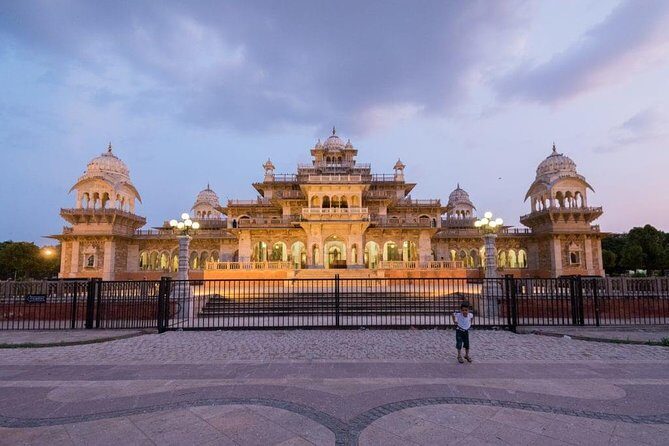
Finally, City Palace of Jaipur rounds out the day for about 2 hours. It was established when Jaipur was founded, by Maharaja Sawai Jai Singh II, who moved his court from Amber to Jaipur in 1727. If you want a sense of how the city formed around power and palace life, this is the place to connect the dots.
Small realism check: Jaipur day can feel full. If you like to linger in shops or pause for long tea breaks, you may find the schedule tight. If you’re okay staying focused on the main sights, it works well.





Hotels and breakfast: what you get, what you’ll still pay for
You get 2 nights accommodation with double or triple sharing. Breakfast is included at the hotel for both mornings.
That’s a practical win on a short trip—breakfast reduces morning stress and keeps you from hunting for food right away. Your tour also includes bottled water, which is helpful in hot weather or between outdoor stops.
What isn’t included is food and drinks beyond that. If you’re the type who likes to eat between sights rather than take quick bites, plan ahead so the day doesn’t feel like you’re constantly deciding where to spend money.
Guides and entrance fees: where your tour time really goes
This is one of the most underrated parts of packaged travel: a local guide helps you spend time looking, not searching.
You also get monument entrance fees included in Delhi, Agra, and Jaipur. That means you can keep moving from one highlight to the next without the awkward pause of ticket lines or figuring out which ticket you need. For places like Qutub Minar and the Taj Mahal, that kind of time-saving matters.
And the guiding itself looks to be a strong point. Past departures highlight guides such as Mr Javed Khan for a professional Taj Mahal presentation, and Adnan for making the Taj visit memorable. In Agra, Vinny is specifically mentioned for helping make the Agra and Jaipur combination work smoothly. Even the driving portion gets praise too—Ali is noted for handling an early pick-up and getting travelers to a resting spot before heading out.
Transportation comfort and private transfers: the value behind the price
At $680 per person for three days, it isn’t a budget whim. The reason it can still feel like good value is that it bundles the stuff that’s hard to DIY quickly: private vehicle transport between cities, accommodation for two nights, and entrances plus breakfast.
To put it plainly: if you tried to replicate this on your own, you’d pay for lodging anyway, but you’d also spend extra time (and often more money) coordinating transport and tickets across cities. Here, you’re paying for coordination and a plan that keeps the trip moving.
It also helps that the tour offers pickup from hotel or airport and hotel drop-off, plus a mobile ticket. Those details reduce the “where do I go now?” moments that can drain energy on short trips.
Who should book this Golden Triangle tour, and who should think twice
This tour is a strong match if:
- You want major highlights with minimal planning.
- You’re a first-time visitor to India and want guidance through big-city sightseeing.
- You prefer private transfers and don’t want to manage city-to-city logistics.
You might think twice if:
- You’re the kind of traveler who needs lots of downtime or long, unstructured wandering time.
- You don’t like early mornings or compressed days with lots of stops.
- You’re very flexible on food spending and want full control over every meal—since meals are not included except breakfast.
Practical tips to make the most of your 6:00 am start
Your day starts early, with a 6:00 am start time. That’s not just a random number; it’s what makes it possible to fit Delhi sightseeing and still reach Agra and Jaipur in time.
A few habits help a lot:
- Wear layers. Morning outdoor time can start cooler and warm up quickly later.
- Plan for shoes that can handle stone steps and long walks.
- Bring a small snack if you’re the type who gets hungry between breakfast and lunch, since only breakfast is included.
- Keep your camera battery charged and your tickets handy on the mobile ticket option.
And if you care about photos, Taj Mahal in the morning is usually the most comfortable time to spend outside. You’ll want time to look slowly, not just sprint through.
Should you book this 3-day Golden Triangle with accommodation and entrance fees?
If your goal is to see the Golden Triangle’s headline monuments without wrestling schedules, this is the kind of trip that makes sense. The big reason to book is that you’re not just buying transportation—you’re buying the structure: private transfers, guided sightseeing, two hotel nights, breakfast, and entrance fees all handled for you.
Skip this tour if you crave total freedom, hate a packed schedule, or want to design every detail yourself. Otherwise, for a first trip, the balance here is hard to beat: you get real sights in a tight window, with less time wasted on logistics.
FAQ
What’s the duration of the Golden Triangle tour?
The tour is listed as 3 days (approx.).
Is hotel pickup and drop-off included?
Yes. The tour includes hotel pickup and hotel drop-off, and it also includes pickup from the airport.
What time does the tour start?
The start time is 6:00 am.
How many nights of accommodation are included?
You get 2 nights of accommodation on double/triple sharing.
Are monument entrance fees included?
Yes. Monument entrance fees for Delhi, Agra, and Jaipur are included.
What meals are included?
Breakfast is included for 2 mornings. Food and drinks are not included unless specified.
Is there an option for private touring?
Yes. It’s a private tour/activity, and only your group participates.
How do you receive tickets?
A mobile ticket is included.
What’s the cancellation policy?
Free cancellation is available. You can cancel up to 24 hours in advance for a full refund.
Is this tour in air-conditioned comfort with private transport?
It includes transport by private vehicle and mentions air-conditioned comfort in the tour description.