REVIEW · AGRA
Agra: Taj Mahal Living History Private Experience
Book on GetYourGuide →Operated by Travel With Us - TWX · Bookable on GetYourGuide
The Taj Mahal makes more sense when someone explains it. This Living History private visit pairs a licensed heritage guide with close-up architecture talk and real royal context, so you’re not just taking photos. I especially like the way the guide connects the marble work and garden geometry to power and ambition, and how guides such as Ali Akbar and Saif focus on details and even help with great pictures. The flexible pacing (and choice of when you start) is a big win for anyone who hates being rushed at monuments.
One thing to plan around: the Taj Mahal stays closed every Friday, and if you’re aiming for an early sunrise start, winter fog can sometimes shift sunrise timing to daytime for better visibility.
In This Review
- Key points worth knowing before you go
- Why this Taj Mahal visit feels different from a standard tour
- Picking your start time: morning, midday, afternoon, or sunrise
- The smooth start: pickup and the short rules you should follow
- Taj Mahal gardens and guided storytelling in real time (about 2 hours)
- The Taj Mahal itself: symbolism, ambition, and craftsmanship you can actually read
- Agra Fort: royal courts and the view tied to Shah Jahan’s last years (about 1 hour)
- Lunch and tickets: basic vs all-inclusive, and when each makes sense
- Price and value: what $15 per person really buys you
- Timing and temperature: the small things that can make or break your comfort
- Logistics: tickets, cash, and the Friday closure reality check
- Who should book this Taj Mahal and Agra Fort experience
- Should you book it?
- FAQ
- How long is the Living History Taj Mahal and Agra Fort experience?
- What time options are available for starting the tour?
- Does the sunrise option include breakfast instead of lunch?
- Is lunch included?
- Are entry tickets included?
- Is the Taj Mahal open every day?
- What’s included in the private transport?
- What languages are the guides available in?
- Are large bags allowed during the visit?
- Is the experience wheelchair accessible?
Key points worth knowing before you go

- Flexible start times let you fit the Taj Mahal into your day without feeling dragged along.
- Licensed storytelling guide turns architecture and symbolism into a clear, human story.
- Two focused stops: Taj Mahal gardens for about 2 hours, then Agra Fort palaces for about 1 hour.
- Optional all-inclusive upgrade adds entry tickets plus a premium restaurant lunch.
- Private vehicle pickup and drop-off keeps the experience calm and makes it easier with families or couples.
Why this Taj Mahal visit feels different from a standard tour
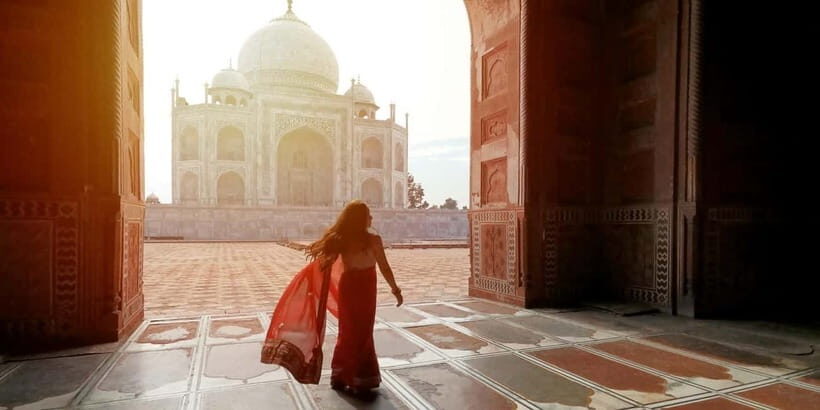
Most Taj Mahal trips follow the same script: arrive, look, snap, move on. This experience changes the rhythm. Your guide slows the moment down just enough to show what you’re actually looking at, and why it matters. Expect clear explanations about craftsmanship, symbolism, and the imperial story behind what you see in front of you.
I like that the tour is built for meaning, not speed. You’re walking the formal Mughal gardens with time to notice how geometry, spirituality, and power show up in the layout. Then you get up close enough to appreciate marble inlay work and how master artisans achieved precision long before modern tools.
And it’s private. That matters more than people think in Agra, where getting your bearings and navigating crowds can eat up energy. With a private vehicle, you start when you choose, not when a group’s bus decides to be late.
You can also read our reviews of more private tours in Agra



Picking your start time: morning, midday, afternoon, or sunrise

You get multiple starting times during the day, so you can choose what fits your energy. Morning can be calmer. Midday can work if you want to get it over with and keep your afternoons free. Afternoon is a good option if you’re traveling between sights and want something more relaxed than an early wake-up call.
If you pick the 5:30 AM start, it becomes a sunrise visit. Sunrise visits swap lunch for a buffet breakfast, so you’ll fuel up before you head out. In winter months (Dec–Jan), seasonal fog can affect visibility, and sunrise timing may shift to daytime to help you see better.
One more practical note: the Taj Mahal remains closed every Friday. If your plans fall on a Friday, this tour won’t work for the Taj part, so you’ll want to pick another day.
The smooth start: pickup and the short rules you should follow

The tour begins with pickup in Agra from your hotel or accommodation within city limits. Plan to wait about 10 minutes in your lobby, and you’ll meet your driver in a clean, air-conditioned vehicle. The driver will ask for your name at reception, which keeps the check-in straightforward.
There’s also a simple restriction: luggage or large bags aren’t allowed. If you’re traveling light, you’ll be fine. If you have bigger items, plan to keep them elsewhere so you don’t get stopped at entry.
Vehicle size depends on your group size. For 1–2 guests you’ll travel in a 3-seater sedan (Toyota Etios or similar). For 3–5, it’s a 6-seater wagon (Toyota Innova or similar). For 6–10, expect a 10-seater van (Tempo Traveler or similar). Either way, you get the comfort of A/C and the convenience of private transport.
Taj Mahal gardens and guided storytelling in real time (about 2 hours)

At the Taj Mahal, the experience isn’t just a walk around the main building. Your time is designed to build understanding from the ground up. You’ll enter with your guide and spend about 2 hours on a guided visit, including the gardens and key viewpoints.
Here’s what I’d pay attention to during this part:
- The formal Mughal garden layout, and how symmetry and geometry guide your eyes.
- The way the guide ties garden design to spirituality and to power, not just aesthetics.
- Marble inlay details you can only appreciate when someone points out what to look for.
This is also where the private format helps you move at a comfortable pace. You’re not stuck waiting for the slowest person in a group, and you’re not being pulled along so fast you can’t absorb what you see.
And yes, photography becomes easier with the right guidance. In particular, guides named Ali Akbar and Saif were mentioned for helping guests take strong photos, not just delivering facts. If you care about pictures, this is the type of tour where you’ll likely stop at the right moments instead of fighting for the best angle.
The Taj Mahal itself: symbolism, ambition, and craftsmanship you can actually read

You’ll get more than a surface-level explanation of what looks beautiful. The tour focuses on how and why the Taj Mahal was created, including imperial ambition and the symbolism behind its design. Your guide’s storytelling helps you connect details that many first-time visitors miss.
Look closely at the marble inlay work. Up close, you can better understand why skilled artisans could achieve such precision centuries ago. That craftsmanship story matters, because it turns the monument from a postcard into a human achievement.
This part also benefits from the fact that the tour is built to match your interests. If you’re into architecture, you’ll likely get more technical explanations. If you care more about political history, the guide will steer the narrative toward power and succession themes.
One logistics perk that’s worth noting: the experience includes skipping the ticket line. For the basic option, your guide helps you with ticket purchases if needed, which still keeps things smoother than doing it all yourself while juggling directions and crowds.
You can also read our reviews of more historical tours in Agra






Agra Fort: royal courts and the view tied to Shah Jahan’s last years (about 1 hour)

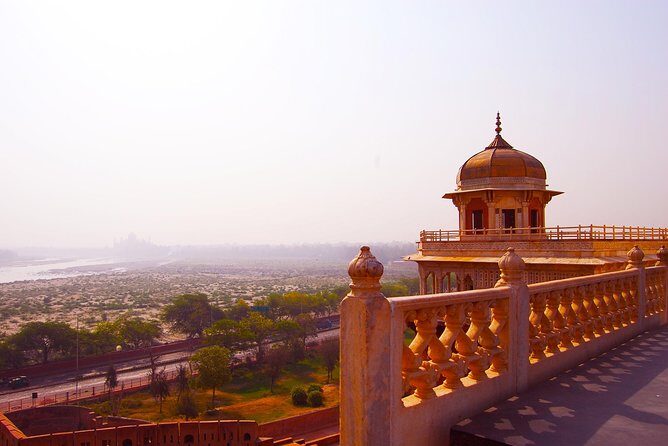
After the Taj Mahal, you’ll head to Agra Fort for about 1 hour of guided visiting. Agra Fort is where the Mughal story turns from monumental romance into governance and control.
This stop is special because it gives you context for the Taj. Instead of treating the Taj Mahal as a standalone masterpiece, the guide connects it to the center of Mughal administration. You’ll explore royal courts, private chambers, and riverside balconies, with stories about succession and power struggles.
One of the strongest parts of this segment is the way it frames Shah Jahan’s final years while looking toward the Taj Mahal. Even if you think you already know the story, seeing the political setting around it changes how you interpret the symbolism.
Agra Fort can feel like a maze if you’re wandering alone. Here, the guided pacing helps you spot the important spaces and understand their role. You come away with a clearer sense of how rulers lived, not just how monuments were built.
Lunch and tickets: basic vs all-inclusive, and when each makes sense
There are two formats, and they change what you’ll handle yourself.
Living History (basic) includes the private vehicle, hotel pickup/drop-off, the licensed guide, and guided visits to both sites. Entry tickets and lunch are not included. If you go this route, your guide assists with ticket purchases at the monument.
Living History All-Inclusive adds entry tickets for the Taj Mahal and Agra Fort plus a lunch at a carefully selected premium restaurant. The idea is simple: you explore, you take a calmer break, and you keep the day from turning into admin work.
One smart detail: for sunrise visits, lunch gets replaced by a buffet breakfast. So if you choose sunrise, you’re trading late-day convenience for early-morning fuel.
Also, beverages aren’t included, so bring a bit of cash or plan to buy water on-site if you need it.
Price and value: what $15 per person really buys you
The price listed is $15 per person for this private Living History experience. What makes that number feel reasonable is not just the guide, but the full package: hotel pickup and drop-off in Agra, a private air-conditioned vehicle, and guided time at both major sites.
Many Taj Mahal tours cost more once you add private transport, guided interpretation, and ticket handling. Here, those core elements are part of the experience from the start. The difference between basic and all-inclusive mostly comes down to whether you want to add tickets and lunch into one smoother bundle.
So the value test for you is straightforward:
- If you’re comfortable purchasing tickets and you want to keep costs tight, the basic option may fit well.
- If you want fewer moving parts and prefer the lunch included after walking, the all-inclusive format is likely the smarter convenience choice.
Timing and temperature: the small things that can make or break your comfort
You’ll do a fair amount of walking and standing, especially around the Taj Mahal area. Comfortable walking shoes are strongly recommended. If you’re sensitive to sun or heat, sunglasses and sunscreen are also worth it, particularly during warmer months.
Even if the guide keeps your pace steady, the sites themselves come with practical constraints: time outdoors, lots of steps, and changing light. Think of your clothes and shoes as part of the tour quality.
If you go for sunrise, dress for morning chill. If you go midday or afternoon, plan for stronger sun and longer exposure.
Logistics: tickets, cash, and the Friday closure reality check
Tickets are included only if you choose the all-inclusive option. In the basic format, your guide helps with ticket purchases at the monument. Some ticket counters may accept cash in INR only, so it’s wise to have some INR on hand just in case.
And remember the scheduling constraint: the Taj Mahal is closed every Friday. This tour includes Taj Mahal time, so you’ll want to avoid Fridays or choose a different plan.
If you’re traveling with a wheelchair user, wheelchair-accessible pathways are available at the Taj Mahal. If special assistance is required, you should inform the provider in advance.
Who should book this Taj Mahal and Agra Fort experience
This is ideal if you want more than postcard sightseeing. If you’re the type who likes context—architecture, symbolism, craftsmanship, political history—this tour gives you a story you can carry with you.
It’s also a strong choice for:
- Couples who want a calmer, more meaningful pace than a group schedule
- Small families who need private attention and flexibility
- First-time visitors who would otherwise struggle with what they’re seeing
- People who care about photography and appreciate guidance for better angles
If your goal is purely quick photos and you don’t care about understanding what you’re looking at, then a shorter or self-guided approach might feel more efficient. But if you’re here to understand the Taj Mahal, this is the format that makes that possible in a few hours.
Should you book it?
Yes, if you want the Taj Mahal explained clearly and you care about the story behind the marble. The private pacing, the guide-led focus on gardens and craftsmanship, and the follow-up context at Agra Fort are what make this feel like a real experience instead of a checklist.
Book especially if:
- You like flexibility and want to choose your start time
- You’d rather spend 4 hours learning than 4 hours rushing
- You value guidance that helps with both understanding and photos
Skip or reconsider if:
- Your travel day is a Friday
- You’re traveling with large bags you can’t leave behind
- You prefer no-structure sightseeing at all
If you go in expecting a guided story with time to look closely, this is a strong way to experience Agra with less stress and more meaning.
FAQ
How long is the Living History Taj Mahal and Agra Fort experience?
The experience runs for about 4 hours, with time at the Taj Mahal and Agra Fort plus lunch only for the all-inclusive format.
What time options are available for starting the tour?
You can choose from multiple start times during the day, including an early 5:30 AM option that becomes a sunrise visit.
Does the sunrise option include breakfast instead of lunch?
Yes. If you choose the 5:30 AM sunrise start, lunch is replaced by a buffet breakfast.
Is lunch included?
Lunch is included only with the all-inclusive experience. The basic option does not include lunch.
Are entry tickets included?
Entry tickets are included only if you choose the all-inclusive option. With the basic option, your guide helps with ticket purchases.
Is the Taj Mahal open every day?
No. The Taj Mahal remains closed every Friday.
What’s included in the private transport?
The tour includes a private air-conditioned vehicle and hotel pickup and drop-off within Agra city limits.
What languages are the guides available in?
Guides are available in English, German, Russian, French, and Spanish.
Are large bags allowed during the visit?
No. Luggage or large bags aren’t allowed.
Is the experience wheelchair accessible?
Wheelchair-accessible pathways are available at the Taj Mahal. Inform the provider in advance if special assistance is required.